

Acting
Sebastião Vasconcelos
Born — Died
1927-05-21 — 2013-07-15
Place of birth
Pocinhos, Paraíba, Brazil
Known for
Acting
Credits
47 titles
Sebastião Vasconcelos Costa (21 May 1927 — 15 July 2013) was a Brazilian actor.
Known for
 8.0
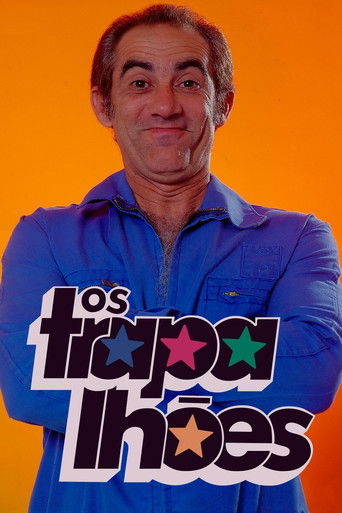
Os Trapalhões was a Brazilian comedy group and also a Brazilian television series created by Wilton Franco. Its members were Dedé Santana, Zacarias, Mussum and their leader Didi Mocó, that was played by Renato Aragão. The name Trapalhões is derived from the Portuguese verb atrapalhar, which means the opposite of helping, to do something the wrong way or to Those that confuse. The name is translated "Tramps" in English DVD subtitles. It was aired by Rede Globo from 1977 to 1999. On March 18, 1990, Zacarias died due to respiratory failure, but the group and the series didn't come to an end until July 29, 1994, when Mussum died due to an unsuccessful heart transplant.
The Trapalhões
1977
 8.1
Human cloning. The Islamic world. Two young people, two different cultures, two different beliefs. An impossible love story that not even time could erase. During a trip to Morocco, Lucas has a forbidden romance with Jade. He returns to Brazil after the death of his twin brother Diogo. A close family friend, scientist Albieri uses this situation to produce the first human clone using cells taken from Lucas. Twenty years later, Jade, Lucas and his clone form an odd love triangle.
The Clone
2001
 8.0
Helena is a sweet, honest, sensitive and a warrior woman who faces the premature pregnancy of her daughter Joyce, who in turn is abandoned by her boyfriend, the irresponsible Caio. The biggest problem is the girl's father, Assunção, Helena's ex-husband, who does not accept the situation. Lonely and alone, Helena awakens a passion for the endocrinologist Carlos Alberto, and has her feelings matched. But Carlos is committed to the possessive Paula. The girl's parents, Zuleika and Rômulo, anxiously await their daughter's wedding with Carlos, who will save the family from financial decay. But Carlos is the type of man that women don't really forget. Even married to Paula and in love with Helena, he is still harassed by ex-wife Sheyla, who is not satisfied with having lost him and dreams of a rapprochement.
História de Amor
1995
 8.4
The adventures of a man with amnesia who struggles to rediscover his past while learning to live in the present.
Andando nas Nuvens
1999
 8.2
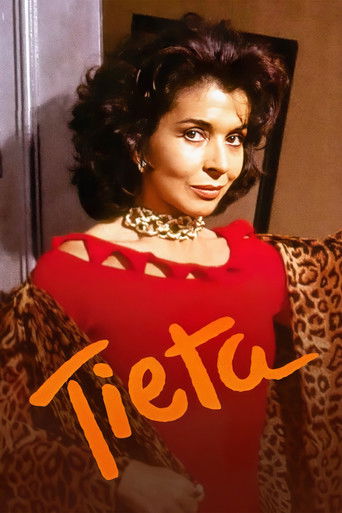
Inspired on Jorge Amado's romance "Tieta do Agreste", the plot is set on the fictional city of Santana do Agreste, at Brazil's northwest, and has as main theme Tieta's life turnarounds. Twenty-five years after being chased out of town by her father Zé Esteves, she returns to her home town seeking revenge against everyone who mistreated her and laugh at her face in the past.
Tieta
1989
 8.4
Fátima Accioly is a young, callous woman who wants to be rich and successful at any price. After selling her family's house in the country, she heads to Rio and gets to know dress man César who is unscrupulous himself. Meanwhile, her mother Raquel stays behind without home and money, but finally tries to find her daughter in the big city. Both women come in contact with the rich Roitman family which changes their lives forever.
Vale Tudo
1988
Film credits
1990s · 2 titles


1980s · 3 titles
 5.2
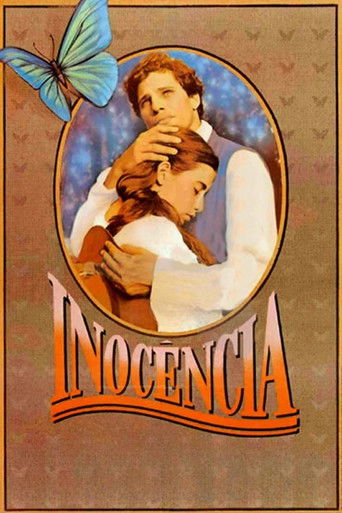
In the 19th century, a country girl is seduced by a young doctor who's staying at her house for a few days, caring for her, and tries to hide the forbidden romance from her father, who disapproves of the relationship.
Innocence
1983
 5.0
A military man picks up a Native Brazilian woman and heads to a gold panning site where he has undisclosed business to attend to.
Índia, a Filha do Sol
1982
 8.6
The saga of Severino, a poor guy living in the back country of Northeast Brazil, leaving for the big city of Recife, in search of a better life.
Morte e Vida Severina
1981
1960s · 4 titles
 8.0
Bruno is a physician whose license had been revoked, due to some ethical problems in the past. He gathers some criminals to kidnap the children of two powerful bankers. While the police faces contradictory evidence and clues, Bruno starts killing the other criminals, to keep the ransom for himself.
Os Raptores
1969
 9.0
No synopsis available yet.
Assassinato em Copacabana
1962
 8.0
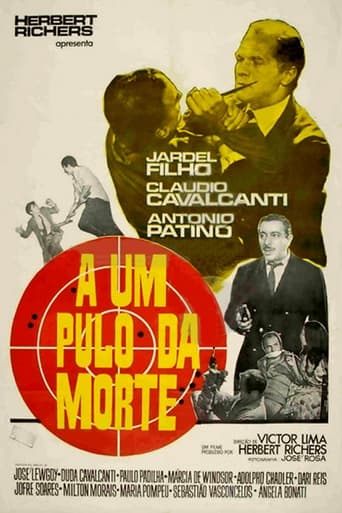
No synopsis available yet.
A Um Pulo da Morte
1968
 6.6
Foreign agents from an unidentified nation clandestinely install radio and TV antennas in Rio de Janeiro devices that emit subliminal waves that alter the perception of the population. They aim to transform the people into an aggressive and imbecile mass, leading the country to chaos, allowing the government to be taken to usurp Brazil's natural wealth. A journalist, Carlos, accompanied by chemist Laura Leal, begins to investigate a series of facts and discovers those responsible for the disturbances.
The Fifth Power
1962
Series credits
8.0Os Trapalhões was a Brazilian comedy group and also a Brazilian television series created by Wilton Franco. Its members were Dedé Santana, Zacarias, Mussum and their leader Didi Mocó, that was played by Renato Aragão. The name Trapalhões is derived from the Portuguese verb atrapalhar, which means the opposite of helping, to do something the wrong way or to Those that confuse. The name is translated "Tramps" in English DVD subtitles. It was aired by Rede Globo from 1977 to 1999. On March 18, 1990, Zacarias died due to respiratory failure, but the group and the series didn't come to an end until July 29, 1994, when Mussum died due to an unsuccessful heart transplant.
The Trapalhões
1977
8.1Human cloning. The Islamic world. Two young people, two different cultures, two different beliefs. An impossible love story that not even time could erase. During a trip to Morocco, Lucas has a forbidden romance with Jade. He returns to Brazil after the death of his twin brother Diogo. A close family friend, scientist Albieri uses this situation to produce the first human clone using cells taken from Lucas. Twenty years later, Jade, Lucas and his clone form an odd love triangle.
The Clone
2001
8.0Helena is a sweet, honest, sensitive and a warrior woman who faces the premature pregnancy of her daughter Joyce, who in turn is abandoned by her boyfriend, the irresponsible Caio. The biggest problem is the girl's father, Assunção, Helena's ex-husband, who does not accept the situation. Lonely and alone, Helena awakens a passion for the endocrinologist Carlos Alberto, and has her feelings matched. But Carlos is committed to the possessive Paula. The girl's parents, Zuleika and Rômulo, anxiously await their daughter's wedding with Carlos, who will save the family from financial decay. But Carlos is the type of man that women don't really forget. Even married to Paula and in love with Helena, he is still harassed by ex-wife Sheyla, who is not satisfied with having lost him and dreams of a rapprochement.
História de Amor
1995
8.4The adventures of a man with amnesia who struggles to rediscover his past while learning to live in the present.
Andando nas Nuvens
1999
8.2Inspired on Jorge Amado's romance "Tieta do Agreste", the plot is set on the fictional city of Santana do Agreste, at Brazil's northwest, and has as main theme Tieta's life turnarounds. Twenty-five years after being chased out of town by her father Zé Esteves, she returns to her home town seeking revenge against everyone who mistreated her and laugh at her face in the past.
Tieta
1989
8.4Fátima Accioly is a young, callous woman who wants to be rich and successful at any price. After selling her family's house in the country, she heads to Rio and gets to know dress man César who is unscrupulous himself. Meanwhile, her mother Raquel stays behind without home and money, but finally tries to find her daughter in the big city. Both women come in contact with the rich Roitman family which changes their lives forever.
Vale Tudo
1988
 7.4
Twin sisters with contrasting personalities, Ruth and Raquel, rival in the fictional Pontal D'Areia, on the coast of Rio de Janeiro.
Secrets of Sand
1993
 7.8
Helena and Álvaro fall in love, but she marries someone else. Years later, they meet again and Helena becomes pregnant, but keeps it a secret because Álvaro is now the one who is engaged.
Happiness
1991
 5.6
No synopsis available yet.
Caminhos do Coração
2007
 7.5
The story's theme is spiritualism, viewed through the lens of past-life regression. Floriano Ferraz is a skeptical sculptor tormented by severe shoulder pain and visions of a woman dying at his feet. Exhausted, and encouraged by his master and friend, the craftsman Quirino, he seeks the help of psychiatrist Ulisses. Through regression techniques, he discovers that in 1880, in the city of Petrópolis, in the mountainous region of Rio de Janeiro, he was Lieutenant Belmiro, in love with the young Valentina. The young woman, married to an older man, is seriously injured while trying to flee with her beloved. After suffering a sword blow, she loses her balance and falls from the third floor of a mansion, at Belmiro's feet. Before dying, however, Valentina arranges a meeting with the lieutenant in the future. The experience completely transforms Floriano's life, and he decides to abandon everything, including his girlfriend Antônia, to pursue his past.
Anjo de Mim
1996
 6.2
In an action-packed plot set in São Paulo, Ana gives birth to a child in Tonico's car, but abandons the baby to escape the police after becoming involved in a robbery.
Bebê a Bordo
1988
 7.3
Brasil República, 1918. Luís Jerônimo is a rich young man. Womanizer, spends all night on the street drinking and having fun with prostitutes, the boy finds out that he has an injury to his right lung. Advised by Edmundo Esteves, his doctor, he decides to spend a season at a cousin's farm in the small town of Vila da Mata in Espírito Santo, in search of fresh air, to prevent the disease from developing into tuberculosis.
Cabocla
2004
 7.2
Cristiano Vilhena is a young man from the countryside who dreams of high society, risking his happiness alongside Simone.
Selva de Pedra
1986
 7.0
Farmer Selena is a strong-willed young woman who won't rest until she uncovers a secret kept by her mother Camila: the identity of her father.
Summer Affair
1998
 7.0
No synopsis available yet.
Tempo de Viver
1972
 8.3
Brava Gente was a television series aired by TV Globo in Brazil between 2000 and 2003, initially as a special year-end. The program was adapted from stories and national stories, and plays by famous playwrights, screenwriters and signed by a number represented by several actors and actresses. The genres of the stories varied each week with the style of each director or author. Brava Gente in the stories ranged from comedies and dramas. In all 53 episodes were shown, broadcast on Tuesday nights.
Brava Gente
2000
 7.0
In 1970, during a glittering New Year's Eve party attended by the aristocracy, a young pantry maid named Zaíra is mysteriously murdered. Thirteen years later, the prime suspect—Gastão, a humble waiter and former colleague of the victim—seeks to prove his innocence with the help of his son, Nil, becoming entangled in the lives of the other party guests. The story also follows a cunning pair of jewel thieves: the sophisticated Antônia Regina and João Maria—a criminal lawyer and member of the declining aristocracy who takes up the cause of Nil's father.
Champagne
1983
 9.0
No synopsis available yet.
Sétimo Sentido
1982
 NR
No synopsis available yet.
Bandeira 2
1971
 8.3
Saramandaia is a Brazilian telenovela originally written by Dias Gomes in 1976. It's considered remarkable because of the Magic Realism (used by the author to subtly criticize the Military Regime of the time) and had 160 chapters. The story centers on the name change that the city undergoes, promoted by the younger citizens and reviled by the older ones. It also focuses on the lives of the city's quirky residents.
Saramandaia
1976
 7.7
No synopsis available yet.
O Grito
1975
 7.0
Sisters Cotinha, Das Graças, Rosário, and Dorzinha work as domestic servants in Rio de Janeiro and face difficulties in their struggle for a better life.
Sem Lenço, Sem Documento
1977
 NR
No synopsis available yet.
A Rainha Louca
1967
 8.0
No synopsis available yet.
Eu Compro Essa Mulher
1966
 8.7
When the men go to war, the women also battle. This tale takes place in the XIX century, during a terrible civil war. Italy’s revolutionary leader Garibaldi must choose between two loves: a sweet aristocratic lady or a brave woman who leaves her husband to accompany him into battle. This super-production recounts the saga of women who do not go to war but must bear pain, solitude and new passions while their husbands and fathers fight the battles.
Seven Women
2003
 8.0
No synopsis available yet.
Obrigado, Doutor
1981
8.0No synopsis available yet.
Obrigado, Doutor
1981
 NR
No synopsis available yet.
O Sheik de Agadir
1966
 8.0
'Cuca Legal' tells the story of Mário Barroso, a single aviator involved with three women at the same time: Virgínia, Irene, and Fátima. Virgínia is a wealthy businesswoman obsessed with the direction of her late father's business; Irene is a middle-class young woman who gives private piano lessons; and Fátima is a poor widow. Mário can't decide which of them is the ideal woman to give him a child with a "cool head" (cuca legal). Things get even more complicated when Maria Joaquina, nicknamed Kinu, Virgínia's mother, also catches the aviator's attention. To escape the troubles he constantly gets into, Mário relies on the help of his mother, Dalva, and Jacaré, his great friend.
Cuca Legal
1975
 9.0
The central theme of the soap opera is the struggle for political control in the interior of Bahia between the two most powerful *coronéis* (landowning bosses) of the cocoa region: Sinhô Badaró and Horácio da Silveira. Virgílio, an ambitious lawyer, is summoned to the town by Colonel Horácio but ends up becoming involved with Ester, the colonel's wife. Captain João Magalhães is a card sharp who poses as a military engineer, successfully deceiving the entire town. He falls in love with Sinhô Badaró's daughter, Donana. By the end of the story, he reveals that he had only gotten close to the Badarós out of opportunism. After numerous clashes with Sinhô Badaró, Colonel Horácio secures political power in the town of Ferradas, with the acknowledgment of the local population.
Terras do Sem Fim
1981
 7.0
During the Golden Age of radio, Isa dreams of a singing career. When her uncle is arrested, she moves to Rio de Janeiro and becomes entangled in a love triangle with Hélio and Mário.
Aquarela do Brasil
2000
 7.6
In a fishing village, Grandma Manuela, gifted with mystical powers, protects her grandson Nô from love. But the arrival of Eduarda completely changes the young man's destiny.
Riacho Doce
1990
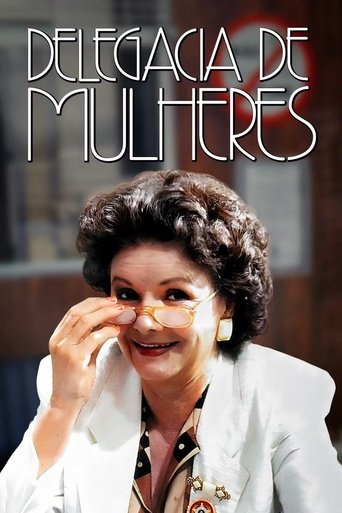 8.6
On her first day at the Women's Police Station, Detective Belinha surprises everyone, including Detective Celeste. Together, they confront cases of assault and unusual situations.
Delegacia de Mulheres
1989
 7.8
Maria Moura loses her father in childhood and at the age of 17 finds her mother dead at home. Believing her stepfather to be the killer, Maria seeks revenge for her mother's death.
Memorial de Maria Moura
1994
 8.0
Diana is woman who lost her child for her Husband. A evil man behind a series of crime operations. Searching for her son, Diana is hired for a underground organization to fight crimes all over Brazil. Now, Diana has the meanings to locate her former husband and search for her son.
A Justiceira
1997
 7.9
A cowboy narrates his 'jagunço' life of disputes, revenges, loves and deaths, through the years that he traveled central-east Brazil, in the first decades of the 20th century, while federal troops were in conflict with provincial forces.
Grande Sertão: Veredas
1985
 8.8
When accused of disobeying Church norms and having his priestly rights suspended, Father Cícero intensifies his political activity in fulfilling his pastoral mission.
Padre Cícero
1984