

Acting
Rubens Correia
Born — Died
1931-01-23 — 1996-01-22
Place of birth
Aquidauana, Mato Grosso do Sul, Brazil
Known for
Acting
Credits
24 titles
Rubens Alves Corrêa (Aquidauana, January 23, 1931 — Rio de Janeiro, January 22, 1996) was a Brazilian actor and theater director.
Known for
 8.0
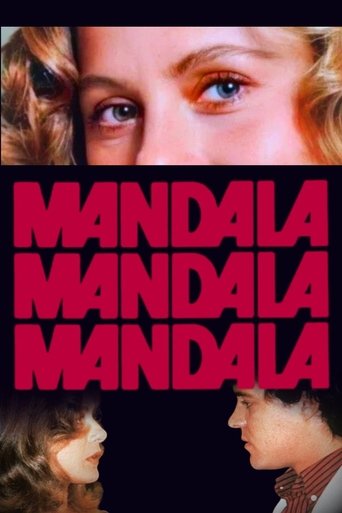
Jocasta, an 18-year-old sociology student and daughter of communist activist Túlio Silveira, is actively involved in the country's political landscape. She is in love with Laio—her polar opposite—a disengaged, esoteric young man who lives off his wealthy father's allowance. A mystic, Laio makes no move without consulting his guru and friend Argemiro, whom he turns to upon learning of Jocasta's pregnancy. The cowrie shell reading reveals that his son is destined to kill him and enter into a romantic relationship with his mother. Terrified, Laio disappears with the child immediately after birth, aided by Argemiro—who loves Laio and loathes Jocasta. Twenty-five years later, Jocasta is a successful yet restless woman searching for her missing son. She is estranged from Laio, who has spent recent years expanding his father's fortune through involvement in underground gambling. On a highway, he encounters Oedipus, unaware that the young man is his son.
Mandala
1987
 6.6
No synopsis available yet.
Pantanal
1990
 8.5
No synopsis available yet.
Kananga do Japão
1989
 4.4
No synopsis available yet.
Amazônia
1991
 8.5
The lives of people living in contrasting environments in the South Zone and the suburbs of Rio de Janeiro intertwine, with a focus on female characters, samba, and organized crime.
Partido Alto
1984
 7.3
The story begins with the arrival of millionaire Antônio Carlos Volpone in Brazil. After living in Cairo for 18 years, he returns to his homeland for two reasons: first, to clarify the murder of his father-in-law, Dr. Telles, of which he was accused; second, to get closer to his ex-wife Estela, now married to Orlando Aranha. The millionaire also attracts media attention, and reporter Amélia Bicudo decides to investigate his life. To mislead his enemies and move freely, Volpone uses numerous disguises: the executive Anabela Freire, the doctor Nilo Peixe, the industrialist Augusto Melo Sampaio, and the driver André Silva. With the help of his loyal secretary and friend, Mosca, he confronts his main rival, Orlando Aranha, and Renata, Orlando's sister, who holds secrets about the murder of Estela's father.
Um Sonho a Mais
1985
Film credits

1980s · 6 titles
 5.0
The youngest daughter of a rich man has been raped by five black men in the slums of Rio de Janeiro, and her father arranges her marriage to one of his employees in order to save the family’s honor.
Cute but Ordinary
1981
 7.5
Film based on Manoel de Barros poetry. Story about poet's life in the swamp area of Brazil (Pantanal) and its wildlife; & his obsession with the sea and his new life in the big metropolis in Brazil.
Caramujo-Flor
1988
 4.8
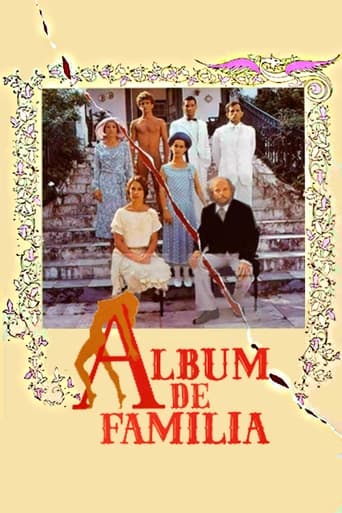
Follows the decadence of an incestuous oligarch family in a rural Brazilian household through the years during the early 20th century.
Family Album
1981
 5.7
Glorinha, a middle-class 15 year old girl, always thought her mother Judite had killed herself, and that her father Gilberto has gone crazy as result. Her friend Nair takes her to a high-class bordello, where she wants to work. When uncle Raul, who raised her, discovers her prostitution, he decides to finally tell her all the truth about her parents' story.
Perdoa-Me Por Me Traíres
1983
No synopsis available yet.
A Última Canção do Beco
1984
The dictator of a small Caribbean island receives the New York Times daily, sent by a nephew. Through the newspaper, he gets in touch with the world. Guerrilla groups try to neutralize this information system.
Tanga (Deu no New York Times?)
1987
1970s · 2 titles
 7.5
After years lost in a ingrate job, Hugo decides to take a drastic measure: to compensate for the time he lost, he will rob the bank in which he worked all his life. Everything goes well in the execution of the plan, but the appearance of the firm's cleaner can put everything to waste.
Na Boca da Noite
1971
 5.0
The idiosyncratic adventures of a group of individuals who share the same house.
Madrepérola
1978

Series credits
8.0Jocasta, an 18-year-old sociology student and daughter of communist activist Túlio Silveira, is actively involved in the country's political landscape. She is in love with Laio—her polar opposite—a disengaged, esoteric young man who lives off his wealthy father's allowance. A mystic, Laio makes no move without consulting his guru and friend Argemiro, whom he turns to upon learning of Jocasta's pregnancy. The cowrie shell reading reveals that his son is destined to kill him and enter into a romantic relationship with his mother. Terrified, Laio disappears with the child immediately after birth, aided by Argemiro—who loves Laio and loathes Jocasta. Twenty-five years later, Jocasta is a successful yet restless woman searching for her missing son. She is estranged from Laio, who has spent recent years expanding his father's fortune through involvement in underground gambling. On a highway, he encounters Oedipus, unaware that the young man is his son.
Mandala
1987
6.6No synopsis available yet.
Pantanal
1990
8.5No synopsis available yet.
Kananga do Japão
1989
4.4No synopsis available yet.
Amazônia
1991
8.5The lives of people living in contrasting environments in the South Zone and the suburbs of Rio de Janeiro intertwine, with a focus on female characters, samba, and organized crime.
Partido Alto
1984
7.3The story begins with the arrival of millionaire Antônio Carlos Volpone in Brazil. After living in Cairo for 18 years, he returns to his homeland for two reasons: first, to clarify the murder of his father-in-law, Dr. Telles, of which he was accused; second, to get closer to his ex-wife Estela, now married to Orlando Aranha. The millionaire also attracts media attention, and reporter Amélia Bicudo decides to investigate his life. To mislead his enemies and move freely, Volpone uses numerous disguises: the executive Anabela Freire, the doctor Nilo Peixe, the industrialist Augusto Melo Sampaio, and the driver André Silva. With the help of his loyal secretary and friend, Mosca, he confronts his main rival, Orlando Aranha, and Renata, Orlando's sister, who holds secrets about the murder of Estela's father.
Um Sonho a Mais
1985
 8.0
No synopsis available yet.
Obrigado, Doutor
1981
No synopsis available yet.
Guerra Sem Fim
1993
 7.0
The story begins during the French Revolution, at the end of the 18th century. Jean Valjean steals a loaf of bread to feed his younger sister and ends up imprisoned for it. Released many years later, he tries to start his life anew and redeem himself. He becomes a rich man, but always lives in the shadow of his "criminal" past. While trying to escape the pursuit of Inspector Javert, Jean meets the poor girl Cosette. Treated as a slave, he takes her into his home to raise her as his daughter.
Os Miseráveis
1967
 NR
The series Companhias do Teatro Brasileiro (Brazilian Theater Companies) offers a documentary overview of the evolution of theatrical art in Brazil. The history of Brazilian theater is told through the testimonies of artists, historians, and researchers. Drawing on extensive archival material—including photographs, as well as audiovisual and audio recordings—the series revisits influential companies and groups such as Cia. João Caetano, Teatro Brasileiro de Comédia, Teatro Experimental do Negro, Teatro Oficina, and Grupo Galpão. Across 15 episodes, the series showcases these iconic groups, highlighting their artistic styles, repertoires, and the work of their actors and directors.
Companhias do Teatro Brasileiro
2023
No synopsis available yet.
O Guarani
1991
 8.2
Expelled from the mansion where he was raised, driver Mariel becomes wealthy as a religious leader, while the Tavares Branco family goes into financial ruin.
Decadence
1995
 8.0
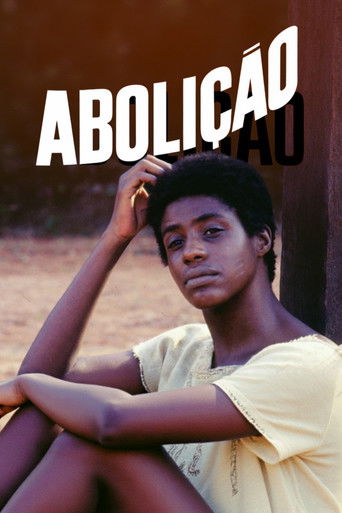
'Abolição' shows how much the liberation of the enslaved transformed the structures of Brazilian society, both in the countryside and in the city, and the changes generated in the lives of black people themselves. The narrative is centered on the period in which the Lei Áurea was about to be signed by Princess Isabel, on May 13, 1888. At that time, the abolitionist theme was widely discussed in urban centers, while in rural areas slavery relations were still established. The enslaved Iná Inerã, spiritual leader and warrior, represents the fight to maintain African identity at any price, paid with her own life, if necessary. Journalist Lucas, in turn, is a freed black man who believes in peaceful integration between whites and blacks.
Abolição
1988
No synopsis available yet.
Ilha das Bruxas
1991