
Directing
Gaston Méliès
Born — Died
1852-02-12 — 1915-04-09
Place of birth
Paris, France
Known for
Directing
Credits
44 titles
Known for
After graduating from an Indian school where he has acquired an education and schooling in the ways of the white man. Ta-wa-wa, a young Indian, returns to his native territory and far western home. On the way to the tribe's encampment he stops at Vail's ranch, meets Kawista, his boyhood sweetheart, who greets him cordially and with a frank admiration for his gentlemanly appearance. While they are exchanging greetings the postman enters and hands a letter to Mr. Vail from Col. Leigh, an Englishman, stating that he will visit the ranch with Lord Wyndham, an English lord who expresses a desire to see a real Indian powwow.
The Return of Ta-Wa-Wa
1910
"Business is on the Fritz," nothing to do but complain and everything seems to be going to the "demnition bow-wows." "If things get much worse I'll close up," says the restaurateur to his waiter. "And I'll give up me job," says the waiter, "if I can't get any money out of the place." What's that? It's a "joy wagon" with a crowd of tourists: they're headed for the restaurant. Immediately the proprietor and the waiter hurriedly get a move on and hustle our to receive the guests who are soon conducted into the dining-room, served, dined and wined with alacrity that is almost magical. The host and his waiter are all smiles and are astonished as well as pleased at the liberal way in which their customers order everything and anything.
Generous Customers
1910
 4.9
Three friends are playing cards in a beer garden. One of them orders drinks. The waitress comes back with a bottle of wine and three glasses on a tray. The man serves his friends. They clink glasses and drink. Then the man asks for a newspaper. He reads a funny story in it and the three friends burst out laughing while the waitress merely smiles.
Playing Cards
1896
 NR
In 1912-1913, movie pioneer Gaston Méliès, brother of Georges Méliès, did a ten month long trip around Asia-Pacific, shooting both documentaries and fictions on location in Polynesia, New Zealand, Australia, Java, Singapore, Cambodia and Japan. He wanted the “real” thing” he filmed, with the locals, being one of the first to give Polynesians, Maoris, Aborigines and Khmers a chance to appear on screen. His hybrid cinema dealt with questions of alterity, identity and representation.
Gaston Méliès and his Wandering Star Film Company
2005
Bill and Jim are lifelong friends in love with Nellie, who marries Bill. After they have a daughter, Bill and his father-in-law tragically die in a mining accident. Six years later, Nellie is a hardworking widow, and Jim remains a devoted family friend. When their daughter falls down a cliff, Jim heroically rescues her. While the child recovers, Jim proposes to Nellie. Urged by her daughter, Nellie accepts, making Jim the protector of his late pal’s family.
Uncle Jim
1910
In order to photograph this film, the cameraman placed his equipment on a broad sidewalk in the business district of a large city, probably New York. As the action begins, a woman dressed in the fashion of the time is seen approaching the camera position. She stops in front of the window of a mercantile store. While she is scrutinizing the merchandise, a purse snatcher comes from the rear, grabs her handbag, turns, and makes off with it in the opposite direction. The woman causes quite a commotion, waves her arms and yells attracting a large crowd, including some policemen. The cameraman changed his position and the last scene shows the woman, escorted by two policemen and followed by a group of people, walking down the sidewalk into a building that might be a police station.
Stop Thief!
1905
Film credits
1910s · 2 titles
 9.0
Mary Jane had nursed Black Bill's wife through a spell of fever and Bill was grateful with all the fullness of his rough nature. He sent Mary Jane a necklace and a note in which he promised on his honor to someday discharge his debt. It happened later, that one of Bill's horses was stolen. Bill and his friends found the thief, and were bringing him into town to a handy tree, when they passed Mary Jane, drawing water from the old well. Bill had a drink and Mary, in pity, raised the cup to the lips of Bob Ford, the horse thief, whom she had never seen before.
The Kiss of Mary Jane
1911
 NR
A lost silent film depicting the battle of the Alamo. Filmed in San Antonio.
The Immortal Alamo
1911
Behind the camera
After graduating from an Indian school where he has acquired an education and schooling in the ways of the white man. Ta-wa-wa, a young Indian, returns to his native territory and far western home. On the way to the tribe's encampment he stops at Vail's ranch, meets Kawista, his boyhood sweetheart, who greets him cordially and with a frank admiration for his gentlemanly appearance. While they are exchanging greetings the postman enters and hands a letter to Mr. Vail from Col. Leigh, an Englishman, stating that he will visit the ranch with Lord Wyndham, an English lord who expresses a desire to see a real Indian powwow.
The Return of Ta-Wa-Wa
1910
"Business is on the Fritz," nothing to do but complain and everything seems to be going to the "demnition bow-wows." "If things get much worse I'll close up," says the restaurateur to his waiter. "And I'll give up me job," says the waiter, "if I can't get any money out of the place." What's that? It's a "joy wagon" with a crowd of tourists: they're headed for the restaurant. Immediately the proprietor and the waiter hurriedly get a move on and hustle our to receive the guests who are soon conducted into the dining-room, served, dined and wined with alacrity that is almost magical. The host and his waiter are all smiles and are astonished as well as pleased at the liberal way in which their customers order everything and anything.
Generous Customers
1910
Bill and Jim are lifelong friends in love with Nellie, who marries Bill. After they have a daughter, Bill and his father-in-law tragically die in a mining accident. Six years later, Nellie is a hardworking widow, and Jim remains a devoted family friend. When their daughter falls down a cliff, Jim heroically rescues her. While the child recovers, Jim proposes to Nellie. Urged by her daughter, Nellie accepts, making Jim the protector of his late pal’s family.
Uncle Jim
1910
In order to photograph this film, the cameraman placed his equipment on a broad sidewalk in the business district of a large city, probably New York. As the action begins, a woman dressed in the fashion of the time is seen approaching the camera position. She stops in front of the window of a mercantile store. While she is scrutinizing the merchandise, a purse snatcher comes from the rear, grabs her handbag, turns, and makes off with it in the opposite direction. The woman causes quite a commotion, waves her arms and yells attracting a large crowd, including some policemen. The cameraman changed his position and the last scene shows the woman, escorted by two policemen and followed by a group of people, walking down the sidewalk into a building that might be a police station.
Stop Thief!
1905
Padre Dominguis, the village priest of a quiet little spot in old Mexico, has been on a visit to the daughter of his dead sister and is about to return to his charges. He is much surprised and more than a little pleased to find that his niece is in love with John Brown, a progressive American, who has settled among them, for the Padre is a broad-minded man and knows that Mexico needs the influx of American energy to make her a great country.
The Padre's Secret
1910
Mrs. Damm and her children are seated on the porch when the postman arrives with a letter stating that their wealthy uncle would visit them. Mrs. Damm hustles the children into the house and they all get busy tidying things up for the expected guest. The boy feels the importance of the event but his sister is so lackadaisical she can't enter into the spirit of the occasion. Mrs. Damm, in addition to numerous other provisions, goes to the cigar store and orders a box of "perfectos" sent home. The tobacconist wraps up the box of "smokes" and lays them beside a box of trick explosive birthday cigars ordered by a previous customer, placing the name and address of each customer on the respective boxes.
Birthday Cigars
1910
 NR
Edith Gates, whose father runs the X.Y. Ranch, has a burning desire to become a newspaper woman, but it is not so easy to accomplish as she imagines. She is turned down by one editor after another, and finally is insulted in the office of the "Blade" by Jim Ford, who is one of the star assignment men. Jack Burton, a cub reporter, comes to Edith's assistance, and is discharged for his gallantry. Edith returns to her home, and Jack secures employment on the "Express," the deadly enemy of the "Blade," where he "makes good." A month later the "Limited" is held up and the bandits escape.
In Time for Press
1911
Nora, who is the president of the Bachelor's Club, receives a letter announcing the death of her uncle in the west and that he has made her heir to his immense fortune. Including a ranch at Grey Oaks. Nora decides to go west and take charge of the ranch and run it herself a la suffragette fashion. She invites all the girls to go with her and they start for their new home. Arriving at Grey Oaks they pay no attention to the cowboys who greet them at the station but go at once in the old stage-coach to the ranch. The cowboys follow, approach the ranch, offer their services and are rewarded by being driven from the premises. The boys make up their minds to "get next" to the girls and devise a scheme.
Cowboys and Bachelor Girls
1910
Nell, an independent and somewhat obstinate girl, receives an invitation to attend a dance. She asks her mother for money to buy a new dress. Her mother, a hard working woman, who has to toil from morn to night, feels that her request involves an unnecessary extravagance and she denies it. Nell answers her sharply and leaves in a sullen mood. While working in the hot, broiling sun, the mother is overcome with the heat.
In the Hot Lands
1911
 NR
It was April weather on Lloyd's ranch, but all was not sunshine. The mortgage was due, and while there were enough cattle to sell to pay it, they were woefully short of men to handle them. Finally Lloyd decided to entrust the job to his son, Hal, and detailed El Paso Pete, one of his trusted men, to accompany the boy to Waco. The cattle were rounded up and shipped. Hal sold them to advantage and collected the money and was on his way to settle the mortgage, when he ran into an adventure. Jim Dempsey, a rough gambler, was having an altercation with his daughter, Rose. A Texan will ever respond to the call of beauty in distress and, regardless of the relationship, Hal interfered and followed them to see it safely through. He was led to a dance hall and was surprised and somewhat disappointed to see that Rose was a dancer there, but discovered that her father forced her to thus earn her living.
The Spring Round-Up
1911
Desdemona was not the only woman to have trouble over a handkerchief. It occurred to Mary also. Mary was in love with Bill, who worked on her father's ranch, and was greatly admired by all the boys. Shorty returned from town one day with a fine checkered handkerchief, which he proudly placed about his neck, strutting in front of Bill to attract his notice. The handkerchief was almost loud enough to speak for itself, so Bill noticed it all right. One of the boys sneaked it from about Shorty's neck and hung it on a nail, where Mary found it. Seeing that it was new, she placed it about her own comely neck, but alas, Othello Bill became jealous and accused her of accepting it from Shorty.
Mary's Stratagem
1911
He's a regular "fan" and studies the baseball news as carefully as some people do their Bibles. He comes to breakfast with his dear little wife and finds his morning paper as usual at his plate. "By Jove!" he shouts, as he glances at the news, "a game this afternoon." Then he begins to wax eloquent about the strikes, flies, home runs and base hits, putting his hand in the hominy, knocking the coffee pot from the table and winding up his exposition by pulling the table-cloth off and everything else with it. He has gone the limit and wifey can humor his craze no longer. She swoops down upon him with an umbrella and gets in some "swats" that nearly knock the cover from his dome. He makes a run for the office with a deep laid plan to go to the ball game by pretending he has a toothache.
Baseball, That's All
1910
In happy mood, a rollicking, good-natured party of "Jack Tars" on shore leave are out for a good time, and get themselves well under way in song and general good cheer by visiting the only place of merchandise and refreshment which the little seacoast town affords. Under full sail they are steering their way through the streets of the village, running foul of trees and posts, bowing in humble apology for their seeming rudeness and disturbance. They have apparently lost their "sea legs" and are a little bit unsteady in the joints, but merrily they roll along until they come to a swinging bridge crossing the river. Here is where they strike rough weather.
A Rough Night on the Bridge
1910
Jack Robbins is a gentleman bandit. For months he has been hunted in vain by Bob Ford, the sheriff. Mary Gray, a young lady physician, comes west; Robbins befriends her and, not knowing him to be a bandit, she admires him. One day the sheriff gets close enough to Robbins to seriously wound him and he is in desperate straits. By accident Dr. Gray finds him and he becomes her patient.
The Reformation of Jack Robins
1911
Old Watson the prospector is the proud owner of a mine and a daughter, Ruth, but when Jack Mason, the gambler, comes to town and opens a faro game, Old Watson loses all his money and mortgages this mine to Jim Sanders, a sneak. Ruth Watson accidentally meets Jack Mason and, now knowing his business, she falls in love with him, and Jack, who has a big vein of genuine manhood in his character, loves the trusting little western girl in return. Finally, Old Watson comes home with ruin staring him in the face. He has lost his last dollar.
Jack Mason's Last Deal
1911
 NR
John Burton, a railroad clerk from the east, was spending his vacation hunting in the wild lands about John Walsh's shack. One morning, as he was eagerly following a large hawk, which he had already wounded, he lost his balance on the edge of a cliff and plunged down to the stony ground below. His cries for help attracted Walsh's attention and he was taken to the latter's cabin, where he was tenderly cared for by Walsh and his wife, until he was able to return to his duties in the east. Walsh's wife was the apple of his eye, but, like most things that we love, she did not last, and twenty years later we find him a broken old man, living in the days that are gone.
In the Right of Way
1911
9.0Mary Jane had nursed Black Bill's wife through a spell of fever and Bill was grateful with all the fullness of his rough nature. He sent Mary Jane a necklace and a note in which he promised on his honor to someday discharge his debt. It happened later, that one of Bill's horses was stolen. Bill and his friends found the thief, and were bringing him into town to a handy tree, when they passed Mary Jane, drawing water from the old well. Bill had a drink and Mary, in pity, raised the cup to the lips of Bob Ford, the horse thief, whom she had never seen before.
The Kiss of Mary Jane
1911
Mrs. Bargainday reads of a bargain day sale, takes her baby and starts for the sale to avoid the rush. Arriving at the store she meets at the door Mr. Jones and requests him to hold her baby for her while she goes inside to do some shopping. He consents, supposing she will only be a few minutes, and while standing there with the baby in his arms several of his lady friends, attracted by the bargain sale, pass him by with surprise, and others entirely ignore him or smile with amusement.
Mrs. Bargainday's Baby
1910
"I do hate learnin', but oh! you schoolmarm!" is what the boys at the gulch said when Mary came to town; and, from "Big Bill" down to Hop Lee, the Chink, they all took to study, and to courtship. The rivalry is friendly until the new foreman blows in and takes the inside track, then "Big Bill" gets jealous. At the swell (?) reception the foreman cuts Bill out and Bill decides to "lay for him." The foreman soon discharged a greaser who later robs the paymaster and contrives to fix the blame on the foreman.
The 'Schoolmarm' of Coyote County
1911
The punchers of the XL outfit are wild with joy, 'cause Mary, the idol of the ranch, is comin' home from college. Billy James is Mary's special friend, and goes to bring her from the station, but, suffering snakes! Look what's traveling with her, his nobs, "Sir Percy Granville," who owns the nearby ranch. This gets Bill's goat for a time, but Mary rides and "ropes" with the punchers, and soon shows them she is the same genuine, good-hearted Mary, and doesn't care a whoop for Sir Percy. Sir Percy insists on sticking around, however, and shows his true nature by striking Mary's younger brother, Bobby, when he defends his sister from insult.
Sir Percy and the Punchers
1911
Mary is only the assistant housekeeper of the ranch, but she has a heart as big and faithful as a queen's. Bob, who has been turned from home by his uncle because he has his own notions of marriage, comes to the ranch and Mary falls in love with him. Bill Rank, the foreman, contrives to ruin Bob's good name and make him "do time." Mary is faithful to Bob and makes a big sacrifice to help him in his trouble. Times are dark for a while, but Fate works things out at last. Bill Rank is hurt in a runaway, and, looking death to the face, he confesses the truth. Bob's good name is restored, he marries Mary, and, to cap the climax, he falls heir to a fortune.
Her Faithful Heart
1911
The saying, "If you want to catch a bird put salt on its tail," is a pleasantry of such long standing it is familiar to every man, woman and child in existence. It furnishes a theme for this well-drawn and lively drama of home life, a tramp's gratitude and the cordiality of the little child who loses through an accident the canary bird which was given her by her father. A tramp calls at the child's home for a "hand out." The mother gives him something to eat, the child provides him with a loaf of bread and sends him on his way rejoicing. Shortly after the tramp has taken his departure the little girl tries to hang the cage with the bird in it on a nail on the porch. The cage falls to the ground and the bird escapes. Her mother is provoked and reprimands her for her carelessness.
Salt on the Bird's Tail
1910
Full of booze, bluster, and fight "Black Pete," a big "bad man" of the wild west comes from the local saloon ready to put daylight through anybody and everybody within the range of his voice and the reach of his gun and, to further convince the crowd that he is the terror of the territory, lands on an inoffensive bystander knocking him down. "Billy" is an entirely different sort of a citizen; he is a young chap living with his sister whom he loves very dearly; their love is mutual. Billy has received a letter and stops on his way home in an opening in the woods to read it. While thus engaged, an Indian girl is making her way through the woods. "Black Pete" coming along the pass sees and attacks her. Billy springs to her defense and knocks "Pete" down; in falling he strikes his head on a stone and is killed.
Billy's Sister
1910
 NR
Joe Fuller, the outlaw and bandit, draws rein at a humble cottage and begs refreshment. The traditional hospitality of the west is at once shown him by Jane White, who is alone in the house at the time, with her baby daughter. The bandit is given food and drink, while he is eating which, the baby takes a child-like fancy to him.
The Outlaw and the Baby
1912
Lorna is a woman and she is all business when it comes to running the "L.L." Ranch and she has no trouble in handling it and the "boys" who work for her, especially "Jeff," her foreman, who gives her a hand. She evidently appreciates his services and thinks him a handy and pleasant fellow to have around, her "Runs" are the best in Texas. There is a question of title to her land. Finally the Supreme Court decides against her and she is obliged to turn the "L.L." Ranch over to Sir Reginald Coutts-Harcourt, in whose favor the decision has been made.
The Owner of L.L. Ranch
1911
Three swells stopping at the same hotel, one a bicyclist, the other a horseman and the third a motorist, are ardently in love with the same widow, living in a villa some distance in the country. Each one, eager to woo her, makes an equally strong plea with apparently the same impression, although she seems slightly to favor the horseman. After listening to their declarations of love, she dismisses them with an evasive answer. With no decided preference she is in a quandary. She does not want to lose an opportunity, but how to make a choice is a difficult problem. She has an idea. She writes them a letter and sends it to the hotel: "The first one reaching my home and me can claim me as his bride."
A Race for a Bride
1910
Mary is from Boston, and she doesn't just take to the cow punchers as she would to the "rah-rah boys" of the Hub. Bill, who is a fellow of no small caliber, is looked upon by his companions as a sort of leader, feels a little miffed, but acknowledges she is the real goods and has some occasion to feel proud of herself; at the same time he won't stand for her snubs. The punchers await developments and make up their mind what can't be cured must be endured. The Captain, a classy chap, from a neighboring ranch, puts in his appearance, and asks Mary to go riding with him.
How Mary Met the Cowpunchers
1911
"A senorita. With whom two young matadors, Jose and Pepe, are in love, tries in keep both on the string. She lends each to believe that he is the chosen one, creating a strong jealousy between them. Pepe calls to see the girl and she receives him with a show of great affection and preferment. While they are courting, a caballero, friendly to the other lover, Jose, tells him of the girl's duplicity. In a rage he goes to his inamorata and, demanding an explanation, accuses her of harboring his rival in the house. She cajoles him, and playfully stealing his dagger from him without his knowing it, endeavors to hold his attention by caresses as Pepe tries to make his escape. Unfortunately he is seen and pursued by the enraged Jose, who, coming up with him as he seeks the protection of a priest busy pruning trees in the grounds of the monastery, engages in a terrible struggle in which the priest Is powerless to interfere." - Moving Picture World synopsis excerpt
The Seal of the Church
1910
John Stuart, a young business man of the east, comes to San Antonio to locate for the good of his health. While walking about the city he sees an old padre, or priest, fall from sunstroke. Young Stuart runs to his assistance. At the same time, Marion, a young heiress, is passing in her automobile and stops to lend aid to the stricken man. They lift him into the auto and young Stuart is invited to ride with them to the Mission, where the priest lives. Thus an acquaintance is formed which ripens into an engagement between Marion and John Stuart.
In the Mission Shadows
1910
 NR
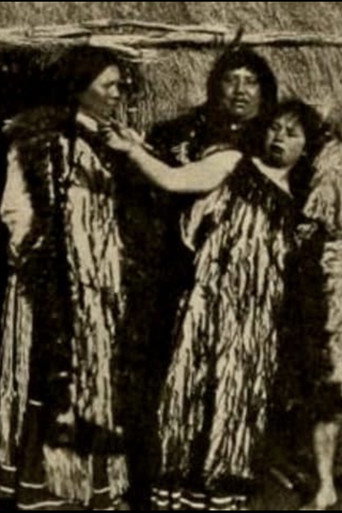
Wena, a Māori princess, is told by a sorceress that "she will marry a white man, tall and handsome, with eyes as fair as the sky and a fair beard". Chadwick a trapper who was hunting in the bush is captured and brought to the pa to be burnt at the stake to provide "white mans meat". Wena recognises Chadwick as that man, but the young chief Te Heuheu arrives to court her. She helps Chadwick escape and they swear eternal love. Chadwick goes through the geysers to his hut on the lake, but they are discovered there by Te Heuheu. Chadwick is threatened with death, so she returns to the tribe. But when she is near death from pining for him her father the chief relents. Chadwick is made a chief, she recovers and the tribe celebrates with a feast.
Loved by a Maori Chieftess
1913
NRWena, a Māori princess, is told by a sorceress that "she will marry a white man, tall and handsome, with eyes as fair as the sky and a fair beard". Chadwick a trapper who was hunting in the bush is captured and brought to the pa to be burnt at the stake to provide "white mans meat". Wena recognises Chadwick as that man, but the young chief Te Heuheu arrives to court her. She helps Chadwick escape and they swear eternal love. Chadwick goes through the geysers to his hut on the lake, but they are discovered there by Te Heuheu. Chadwick is threatened with death, so she returns to the tribe. But when she is near death from pining for him her father the chief relents. Chadwick is made a chief, she recovers and the tribe celebrates with a feast.
Loved by a Maori Chieftess
1913
 NR
Mary lived with her mother at the XX ranch, which was on the Rio Grande, just across from Mexico, and, as there was a ford there, it was easy for persons to cross from either side. One day, while riding on the Mexican side, she heard screams of distress and came upon Juanita, a beautiful Mexican girl, who had been insulted by Jose, a bad man of that vicinity, who commanded a band of guerrillas, who plundered and stole under the guise of insurrectos.
Honor of the Flag
1911
Margie, of the "Flying B" ranch, knew it was to run across a snake in the tall Texas grass, but she did not realize that there are people who, like snakes, conceal themselves until they are ready to sting. Consequently, when a sleek looking tenderfoot asked to become a boarder at the "Flying B" Margie favored him, though her father was suspicious. Margie is soon smitten with the stranger, much to the chagrin of Jack, the foreman, with whom Margie had previously been very friendly. Jack does not get ugly over the matter, but keeps his eyes open.
The Snake in the Grass
1911
 10.0
Dick, an easterner, comes west to try his luck at mining. No sooner does he arrive than Hartley, the local gambler and all-around villain, commences to make sport at his expense. Dick endeavors to bear it patiently, but a clash is inevitable, until the arrival at the village store of Mary Brown, one whom all held in respect, excepting Hartley.
A Western Girl
1911