
Directing
John Douglas
Born 1938-07-13 · Lake Forest, Illinois, USA
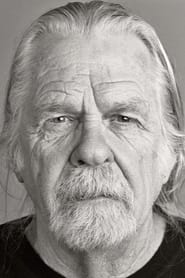
John Douglas was an American filmmaker, photographer visual artist, and activist born on July 13, 1938 in Lake Forest, Illinois. He attended Harvard University for about year, then Studied art at Boston University while working as a painter. In 1961, he was drafted into the United States Army. He subsequentaly bought a farm in Putney, Vermont. In 1967, he met Robert Kramer and joined the activist filmmaking collective Newsreel. That same year, he and Tom Griffinco-directed Strike City, a documentary following plantation workers striking for a livable wage in Mississippi. In 1969, he traveled to Hanoi, North Vietnam, and filmed The People's War. He later co-directed Milestones with Robert Kramer. In 1975, Milestones won the Critics’ Choice at the Cannes Film Festival. In 1981, he moved to Charlotte, Vermont. In 1983, he co-directed Grenada: The Future Coming Towards Us, which documented the new Grenadian democracy under Maurice Bishop. He died on January 25, 2022.
Acting credits
Behind the camera
An old Vermonter works at the garbage dump, plays Santa Claus for a small rural town and celebrates Xmas with wife, 11 children, and 41 grand-children (30min. filmed 1970 - finished 2011).
Cecil
2011
Filmed in Mississippi through the winter and spring of 1966. Six tractor drivers and their families were thrown off the plantation on which they had been working for $6 a day, because they were striking for higher wages. The film follows the families, who lived in tents through the winter, as they began to build their own homes. They were urging people in the surrounding Delta area to go to Washington to demand housing for the many, many others who needed decent and affordable housing. They put up tents across from the White House, hoping to bring the plight of the people of Mississippi before the nation and the world. Made with support from the Delta Ministry, the National Council of Churches, and Neighborhood Developers.
Strike City
1967
 10.0
10.0This documentary provides an in-depth examination of protest activities surrounding the Democratic National Convention in Chicago. It documents draft resistance, the growth of G.I. coffee houses, the development of alternative media and the early days of Newsreel itself. It is particularly useful in its exploration of the problems the movement faced in using mainstream media to broadcast its message. It is also a document of the philosophies, tactics, and problems of the student movement in the crucial year of 1968. It is most useful when background information can also be provided.
Summer '68 (Newsreel #505)
1969
Probably the most widely-viewed of Douglas’s computer-animated creations is the haunting THE WHITEHOUSE (1998/2000), in which skeletal ‘spirits’ engage in a variety of activities (including dancing around a fire, playing the cello, watching television, kissing, conversing via reversed English tracts, and -- more ominously -- wielding firearms, torturing and tossing a blind- folded prisoner out of a black helicopter, etc.) in and around a doorless, windowless ‘white house’ which is slowly engulfed in rising flood waters.
The Whitehouse
2000
 NR
NRNo synopsis available yet.
The Glacier Film
1971
After the invasion of Cambodia in 1970 local folks took over some unused college land for a People's Farm to grow food and meet on weekends to weed, harvest, cook and eat, and party. the college and state police tried to stop it....
Free Farm
1970
 NR
NRExamines the aims and accomplishments of the New Jewel Movement and the reasons for the Fall 1983 U.S. military invasion. The film puts these events in perspective by tracing Grenada's early history, from the annihilation of the indigenous Carib Indians by the European colonial powers which vied for control of the region and then imported African slaves to grow cash crops for European export, to the evolution of modern Grenadian society, including the oppressive regime of Eric Gairy (1974-79).
Grenada: The Future Coming Towards Us
1983
NRExamines the aims and accomplishments of the New Jewel Movement and the reasons for the Fall 1983 U.S. military invasion. The film puts these events in perspective by tracing Grenada's early history, from the annihilation of the indigenous Carib Indians by the European colonial powers which vied for control of the region and then imported African slaves to grow cash crops for European export, to the evolution of modern Grenadian society, including the oppressive regime of Eric Gairy (1974-79).
Grenada: The Future Coming Towards Us
1983
 7.0
7.0Shot in Vietnam in the summer of 1969, this documentary creates a vivid portrait of the countryside and ways of life during the war.
The People's War
1970
 7.2
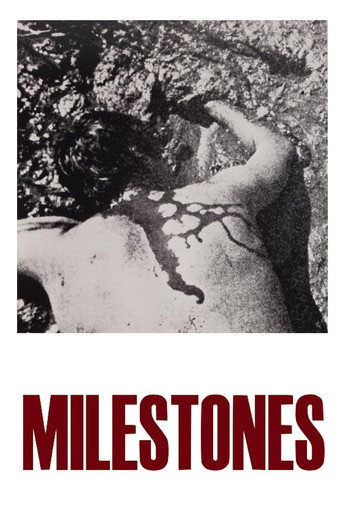
7.2A portrait of those individuals who sought radical solutions to social problems in the United States during the 1960s and 1970s. Cutting back and forth between six major story lines and more than fifty characters. Exploring the lifestyles and attitudes of the American left during the period following the Vietnam War.
Milestones
1975
Two films in one that brings together material from the "national security collection” Sporting an M16 and nothing else, Douglas appears in this series of images as a literal "one-man army" -- duplicated photographically and armed to the teeth in a procession of tableaus that confront the power and impotence of firepower. "Home Security" offers a sardonic dissection of America's current pre-emptive 'go it alone' military foreign policies and a delirious portrait of primal 'citizen soldiers' in native habitats (trailors, tracks, flag-draped coffins, and -- most chilling of all -- seated stoically around a TV set in the darkness, lit only by its cyclopean light). It's brilliant, funny, unnerving, confrontational, disturbing stuff; you haven't lived 'til you've seen a small platoon of nude, armed, and dangerous Douglas clones poised for action.
RIFF 1&2
2007