
Directing
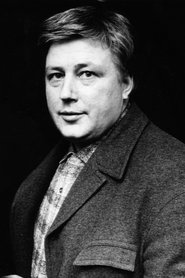
Eino Ruutsalo
Born — Died
1921-09-19 — 2001-04-02
Place of birth
Kymi, Finland
Known for
Directing
Credits
40 titles
Eino Ruutsalo (1921-2001) made mostly documentaries and animated films, in the latter genre he was influenced by Norman McLaren and Stan Brakhage with the idea of painting and scratching directly on the emulsion and then adding a jazz accompaniment to his kinetic images. Ruutsalo had been a fighter pilot during the Second World War and had studied the very au courant Abstract Expressionism after the war in both his own country of Finland and in the United States of America.
Known for
A boat trip in the Helsinki archipelago: images of water, light and people on the cruise. The same people are met in the city in different situations: at work, with their family, in conversations with a circle of friends, meditating and figuring out their duties. Work and aspirations are important and encouraging to them. They all seem to have something personal to say about their time, their views and their imaginations.
Blue-Eyed Helsinki
1963
 6.0
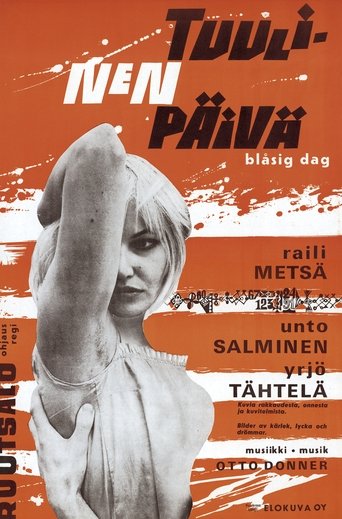
The strange, disjointed love story in the existentialist film Windy Day transported the young lovers to an island off the town of Kotka.
Tuulinen päivä
1962
 9.0
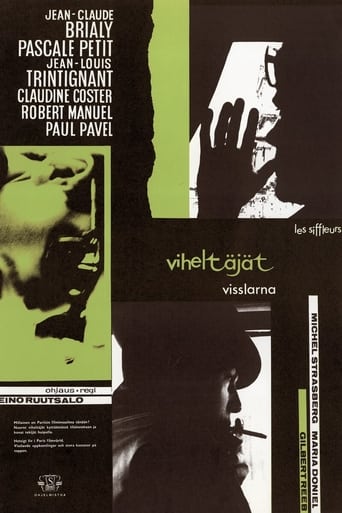
Young actors drift around Paris looking for job opportunities in pursuit of their happiness. The Finnish film, made with a French cast, follows the paths signaled by nouvelle vague and cinéma vérité.
Les Siffleurs
1964
An experimental short film from Finnish director Eino Ruutsalo.
The Jump
1965
A portrait of the renowned Finnish architect and designer Alvar Aalto by the radical experimental filmmaker Eino Ruutsalo. Shot in the summer of 1972 at Aalto’s experimental house in Muuratsalo the film briefly and accurately covers the growth, development and creativity of the master architect, presenting his most important work.
Alvar Aalto: A Finnish Architect
1972
An experimental short film combining modern dance and depiction of sculpting.
The Junk Artist
1965
Behind the camera
A boat trip in the Helsinki archipelago: images of water, light and people on the cruise. The same people are met in the city in different situations: at work, with their family, in conversations with a circle of friends, meditating and figuring out their duties. Work and aspirations are important and encouraging to them. They all seem to have something personal to say about their time, their views and their imaginations.
Blue-Eyed Helsinki
1963
6.0The strange, disjointed love story in the existentialist film Windy Day transported the young lovers to an island off the town of Kotka.
Tuulinen päivä
1962
6.0The strange, disjointed love story in the existentialist film Windy Day transported the young lovers to an island off the town of Kotka.
Tuulinen päivä
1962
6.0The strange, disjointed love story in the existentialist film Windy Day transported the young lovers to an island off the town of Kotka.
Tuulinen päivä
1962
9.0Young actors drift around Paris looking for job opportunities in pursuit of their happiness. The Finnish film, made with a French cast, follows the paths signaled by nouvelle vague and cinéma vérité.
Les Siffleurs
1964
9.0Young actors drift around Paris looking for job opportunities in pursuit of their happiness. The Finnish film, made with a French cast, follows the paths signaled by nouvelle vague and cinéma vérité.
Les Siffleurs
1964
9.0Young actors drift around Paris looking for job opportunities in pursuit of their happiness. The Finnish film, made with a French cast, follows the paths signaled by nouvelle vague and cinéma vérité.
Les Siffleurs
1964
An experimental short film from Finnish director Eino Ruutsalo.
The Jump
1965
A portrait of the renowned Finnish architect and designer Alvar Aalto by the radical experimental filmmaker Eino Ruutsalo. Shot in the summer of 1972 at Aalto’s experimental house in Muuratsalo the film briefly and accurately covers the growth, development and creativity of the master architect, presenting his most important work.
Alvar Aalto: A Finnish Architect
1972
An experimental short film combining modern dance and depiction of sculpting.
The Junk Artist
1965
An experimental short film combining modern dance and depiction of sculpting.
The Junk Artist
1965
An experimental short film combining modern dance and depiction of sculpting.
The Junk Artist
1965
Two chicken is born in the second material. It will continue efforts to find a picturesque expression, which is free to form as described in the film. Business and shape, the execution is so picturesque and cinematic, as the limit is lost. Painted film color effect to increase many times the film projector spotlight
Two Chickens
1965
Documentary film about statue in Helsinki.
Havis Amanda: The Beauty of Helsinki
1982
Documentary film about statue in Helsinki.
Havis Amanda: The Beauty of Helsinki
1982
 NR
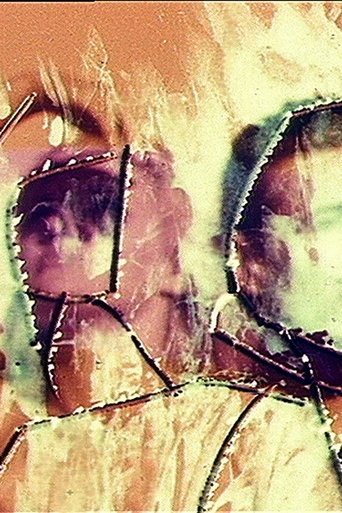
A crazy found-footage collage composed of monotonous, advertising, and playful shots is overlaid with hand-painted illustrations directly on the film emulsion. The outlines of objects peel away from their photographic record and jump into another film. The open refrigerator door spews out its contents until there is a syncopated pause, during which the calf of a leg trembles under the sensual vibration of the word FOOD. “Our food is radioactive. The fallout descends upon our cities and ourselves. It penetrates everywhere. The world takes on new colours, values are upset, and existence involves risk. Only dreams and expectations remain.” — Eino Ruutsalo
Food
1968
An experimental short film based on Don Quixote by Cervantes.
Don Quijote
1961
An experimental short film based on Don Quixote by Cervantes.
Don Quijote
1961
An experimental short film based on Don Quixote by Cervantes.
Don Quijote
1961
Eino Ruutsalo’s cinematic last will and testament. It includes discarded footage from his films and kinetic experiments, as well as unexposed stock. The clips were treated by throwing them on the floor and trampling them.
Kinescope
1991
Eino Ruutsalo’s cinematic last will and testament. It includes discarded footage from his films and kinetic experiments, as well as unexposed stock. The clips were treated by throwing them on the floor and trampling them.
Kinescope
1991
 6.0
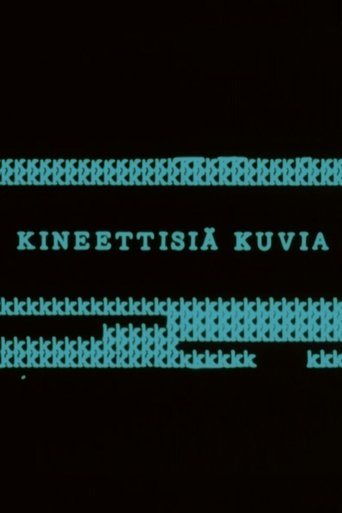
Tree of processed film material is intended to KINEMATOGRAF movement of the backbone using to base the new pictorial movement and phrase. Movie Screen efficacy has been added to paintings. Different kinds of film material is painted, scratched, punched or etched. This has resulted in different directions and at different speeds, functional movement sequences and the "normal film" outside the functional image.
Kinetic Pictures
1962
6.0Tree of processed film material is intended to KINEMATOGRAF movement of the backbone using to base the new pictorial movement and phrase. Movie Screen efficacy has been added to paintings. Different kinds of film material is painted, scratched, punched or etched. This has resulted in different directions and at different speeds, functional movement sequences and the "normal film" outside the functional image.
Kinetic Pictures
1962
Spring is coming. Deaf-mute girl and boy feel the warmth of the sun on their faces, the air is flooded with light. The world of these young people lacks sound and their language is different, but they are happy about spring and each other.
Talking Hands
1959
Spring is coming. Deaf-mute girl and boy feel the warmth of the sun on their faces, the air is flooded with light. The world of these young people lacks sound and their language is different, but they are happy about spring and each other.
Talking Hands
1959
Dance documentary.
The Eagle
—
Dance documentary.
The Eagle
—
 7.2
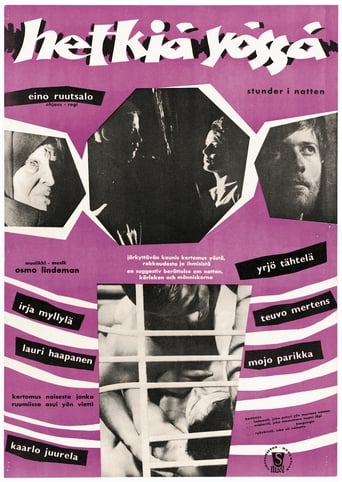
Experimental Finnish movie from 1961, about one night in the city. In 1960, the director Eino Ruutsalo spoke of the movie with these words: "The camera moves around the night - loose images are created - they create memories, consortia in us, or do not create. Man as such is interesting. Woman for a man. Man for a woman. There is no final destiny - there are only events. Different people touch each other - nothing is too solid and not ready. Everything hovers and gets new shapes".
Hetkiä yössä
1961
7.2Experimental Finnish movie from 1961, about one night in the city. In 1960, the director Eino Ruutsalo spoke of the movie with these words: "The camera moves around the night - loose images are created - they create memories, consortia in us, or do not create. Man as such is interesting. Woman for a man. Man for a woman. There is no final destiny - there are only events. Different people touch each other - nothing is too solid and not ready. Everything hovers and gets new shapes".
Hetkiä yössä
1961
A short avant-garde film from Finnish director Eino Ruutsalo.
Plus Minus
1967
A short avant-garde film from Finnish director Eino Ruutsalo.
Plus Minus
1967
The film is made up of news photos and short dramatised fragments which Ruutsalo once again manipulated by painting. One of the greatest features of Teddy is the electronic score composed by Osmo Lindeman which was performed on Dico, an instrument designed by Erkki Kurenniemi.
Is This the World of Teddy?
1969
 3.7
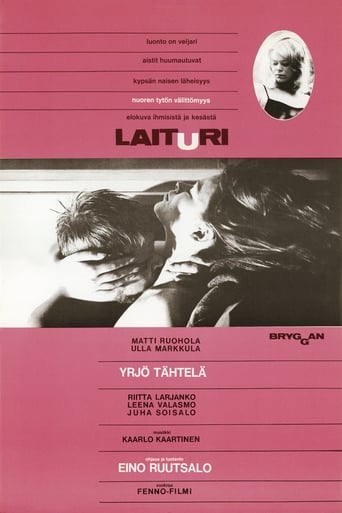
A bohemian writer travels to the countryside for inspiration and falls for a woman who lives in an unhappy marriage.
Laituri
1965
3.7A bohemian writer travels to the countryside for inspiration and falls for a woman who lives in an unhappy marriage.
Laituri
1965
3.7A bohemian writer travels to the countryside for inspiration and falls for a woman who lives in an unhappy marriage.
Laituri
1965
A short collage film inspired by the lettristic movement, created in collaboration by experimental filmmaker Eino Ruutsalo and modernist poet Väinö Kirstinä.
Human Signs
1966