Acting
Mitsugu Terashima
Born — Died
1904-05-30 — 1965-05-25
Known for
Acting
Credits
60 titles
Known for
 NR
No synopsis available yet.
Essay on Conflict
1959
 NR
No synopsis available yet.
Kijo keizu
1959
 NR
No synopsis available yet.
Wearing a Long-Sleeved Kimono
1958
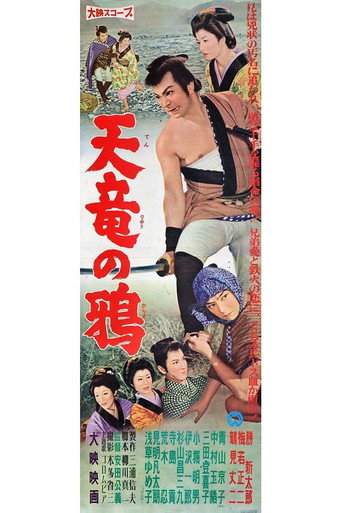 NR
No synopsis available yet.
Tenryū no karasu
1959
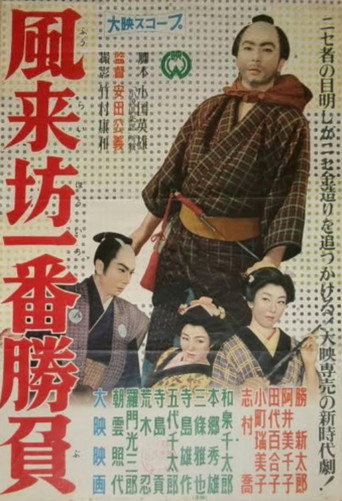 NR
No synopsis available yet.
Fūraibō ichiban shōbu
1958
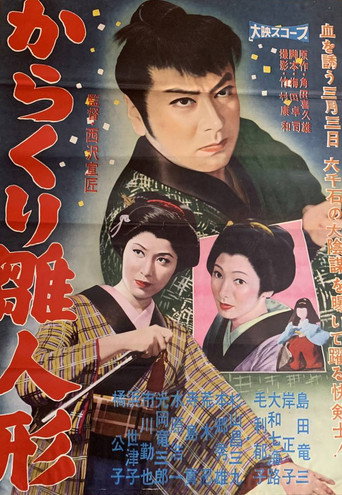 NR
No synopsis available yet.
Karakuri hina ningyō
1959
Film credits
1960s · 12 titles
 7.3
Japan, 1860. The men of the Mito clan, victims of the Ansei purge, anxiously prowl around the Sakurada Gate of Edo Castle with the intention of assassinating Naosuke Ii of Hikone, tairō of the Tokugawa shogunate and responsible for their misfortune.
Samurai Assassin
1965
 10.0
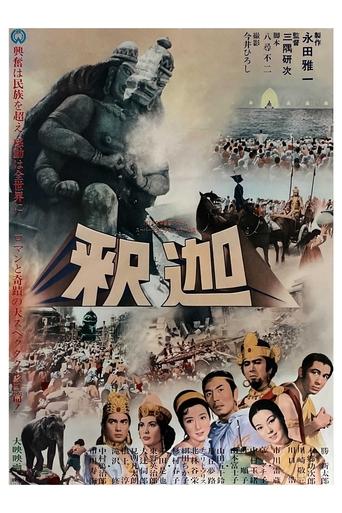
An Indian prince leaves his world of comfort and riches behind to wander and meditate for six years in search of spiritual enlightenment. Siddartha (Cojoin Hong) turns his back on the old religion when people are starving needlessly and holy rituals include human sacrifices. During his meditations, he is tempted by erotic dancing women, demons, and the evil machinations of his criminal cousin. Devastate to attain the spiritual perfection and become the Buddha. He travels to convert followers by his kindness and wisdom, gaining a multitude of believers when he stops an elephant from crushing a local priest. Buddha of course goes on to become one of the great religious leaders of the world.
Buddha
1961
 7.2
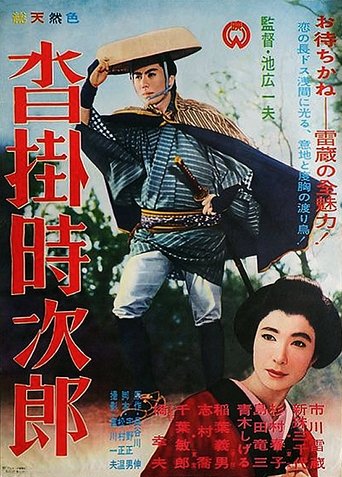
One of Japan's most popular stories is the tale of Kutsukake Tokijiro, a traveling gambler who finds that he must take care of the wife and child of a yakuza he had been forced by the code of the gamblers to fight man to man. In a brilliant performance from super-star Ichikawa Raizo, with strong support from two of the greats from Toho, Shimura Takashi (7 Samurai) and Aratama Michiyo (Sword of Doom) the heartfelt story reaches new heights. Tokijiro, having learned the true nature of the boss to whom he was obligated for having spent a night and eaten at the gang's headquarters takes up arms against them in a running battle fought across the back roads of the entire nation. Another powerful rendition of this superb story, it is not to be missed!
The Gambler's Code
1961
 6.9
This is the story of a blind masseur who tricks people, steals, and kills; he is the anti-Zatoichi.
The Blind Menace
1960
 NR
No synopsis available yet.
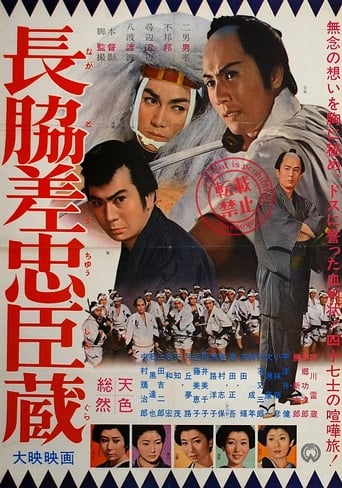
Long Swords of the Loyal Forty-Seven
1962
 7.0
No synopsis available yet.
Koina no Ginpei
1961
 6.5
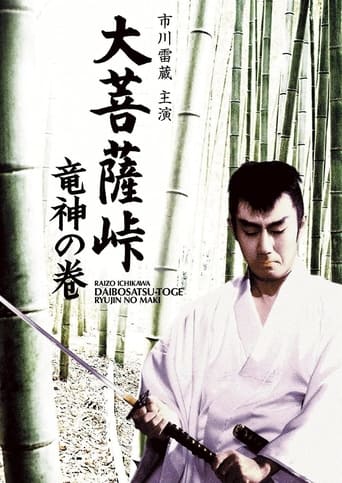
The sequel to Daibosatsu tôge (1960) and the second of the trilogy follows the adventures of Ryunosuke Tsukue after he is blinded.
Satan's Sword II: The Dragon God
1960
 7.0
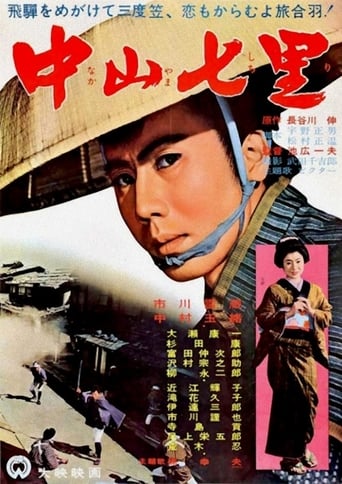
When a corrupt magistrate rapes Oshima, Masa (Raizō Ichikawa) avenges her by killing the officer, becoming thereby a fugitive, haunted and grief-stricken by the fact that Oshima committed suicide. Going underground in the gambling world, perpetually hiding from the law, Masa eventually meets a young woman named Onaka, who looks exactly like Oshima. Tales having two look-alike heroines are a commonplace in Japanese period films, a plot affectation inherited from the kabuki theater. Based on a novel by Shin Hasegawa, Nakayama shichiri was already twice filmed in 1930, one version directed by Namio Ochiai, and from which less than 40 minutes survive, the other directed by Kyotaro Namiki. Both are silent films, preserved by the Makino film institute.
Seven Miles to Nakayama
1962
 NR
No synopsis available yet.
Mission Accomplished
1960
 8.0
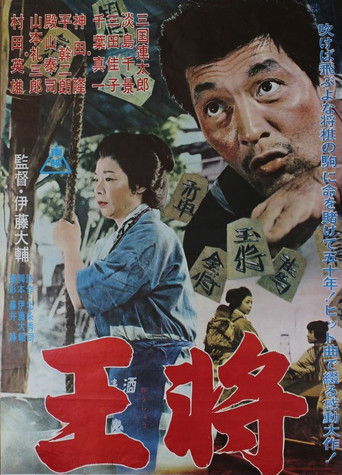
The film takes place at the junction of the two eras of Meiji and Taisho. Sakata Sankichi, an uneducated zori sandal maker, becomes a professional shogi player through his genius shogi skills and lives a fanatically devoted shogi game supported by the love of his family. This is the 3rd adaptation of Hideji Hojo's famous play.
The King
1962
 10.0
Kayama Ichinoshin (Raizo Ichikawa) has been traveling for ten years in search of revenge for his father. One day, Ichinoshin reunites with his younger brother Shinjiro (Yukio Hashi), who has completely changed. Shinjiro abandoned the quiet samurai life and began to lead a Yakuza lifestyle. The older brother is angry at the younger one for his depravity, and the younger one laughs at him for being tied to old-fashioned traditions. As a result, they quarrel. Ichinoshin hears that the person he has to take revenge on has become a Yakuza, and in order to get a hint, he takes care of the Otsu family, to which Shinjiro owes, but later discovers that the boss of Otsu Kanemon is the one he is looking for.
Flowers of Chivalry
1961
 7.0
No synopsis available yet.
Otemoyan
1961
1950s · 34 titles
NRNo synopsis available yet.
Essay on Conflict
1959
NRNo synopsis available yet.
Kijo keizu
1959
NRNo synopsis available yet.
Wearing a Long-Sleeved Kimono
1958
NRNo synopsis available yet.
Tenryū no karasu
1959
NRNo synopsis available yet.
Fūraibō ichiban shōbu
1958
NRNo synopsis available yet.
Karakuri hina ningyō
1959
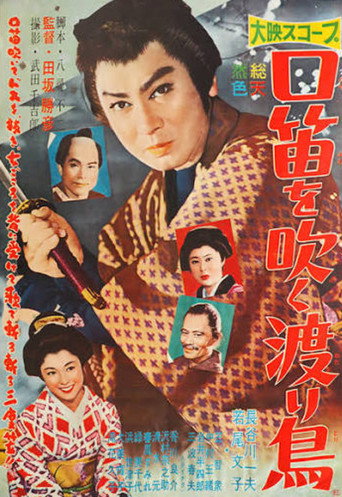 NR
No synopsis available yet.
Kuchibue o fuku wataridori
1958
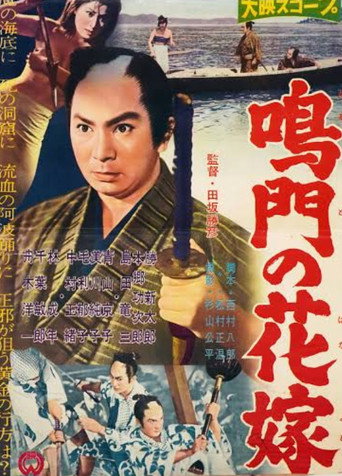 NR
No synopsis available yet.
Naruto no hanayome
1959
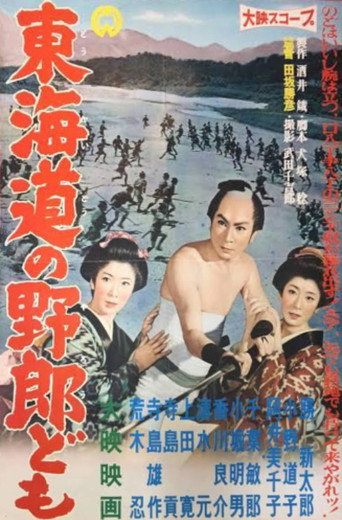 NR
No synopsis available yet.
Tōkaidō no yarōdomo
1958
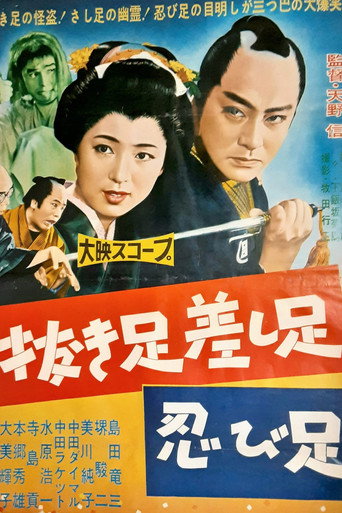 NR
No synopsis available yet.
Nuki ashi sashi ashi shinobi ashi
1958
 NR
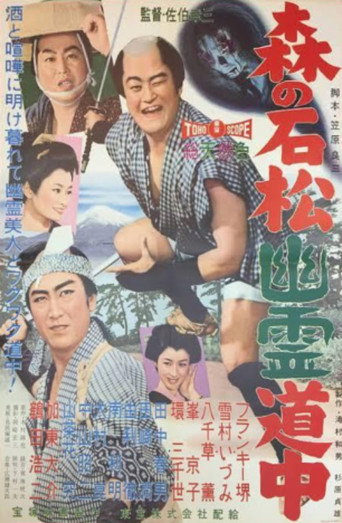
Period comedy with fantasy elements.
Ishimatsu Travels with Ghosts
1959
 NR
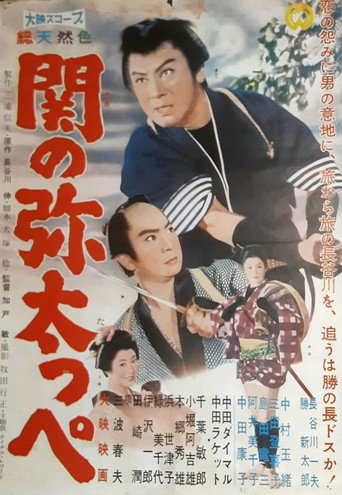
No synopsis available yet.
Seki no Yatappe
1959
 7.0
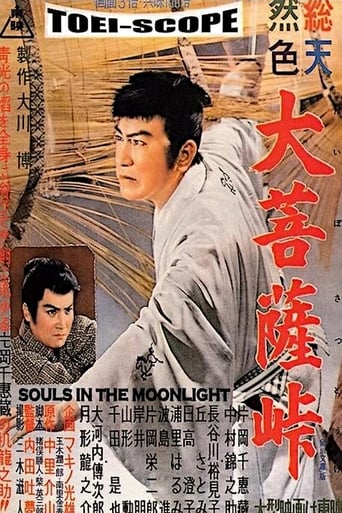
First part of the famous Dai-bosatsu toge trilogy, based on Kaizan Nakazato’s unfinished long series of novels (41 books, written from 1913 to 1941). Set in the last period of the Tokugawa Shogunate, Daibosatsu Toge tells the story of Tsuke Ryunosuke, a nihilistic swordmaster who doesnt hesitate to kill anyone, bad or good. Despite the authors explicit refusal, the series were later made into plays and movies several times.
Souls in the Moonlight
1957
 NR
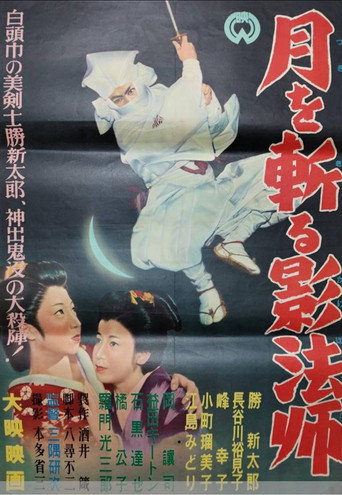
By day, he is a young master whose beauty melts women’s hearts. By night, he is the elusive “White Hood.”
The Shadow That Kills the Moon
1955
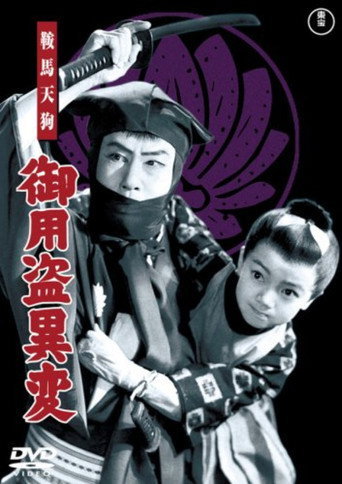 NR
The 39th "Tengu Kurama" feature starring Arashi.
Kurama Tengu: Goyō tō ihen
1956
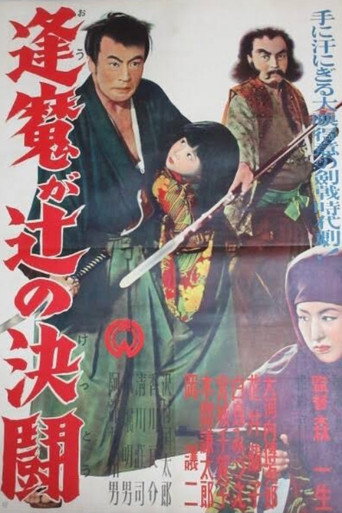 NR
The sword of the chivalrous warrior is drawn amid the struggle for a legendary sword and a plot to assassinate a young princess.
Duel at Omagatsuji
1951
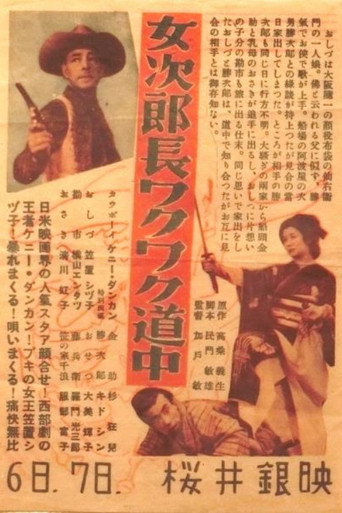 NR
Period comedy.
Onna Jirōchō wakuwaku dōchū
1951
 NR
No synopsis available yet.
Castle of Carnage
1952
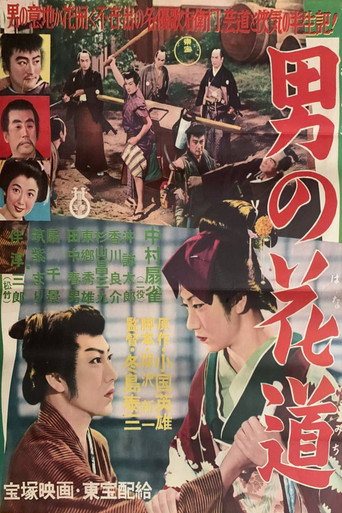 NR
No synopsis available yet.
A Man's Flower Path
1956
 NR
No synopsis available yet.
Super Hawk Volume III
1954
 NR
No synopsis available yet.
Super Hawk Volume II
1954
 7.0
No synopsis available yet.
A Thousand Flying Cranes
1959
 NR
A fierce battle between a vicious train criminal and a police officer.
Tetsuro no dankon
1950
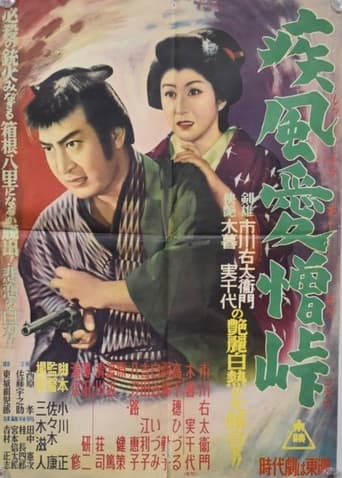 NR
No synopsis available yet.
疾風愛憎峠
1954
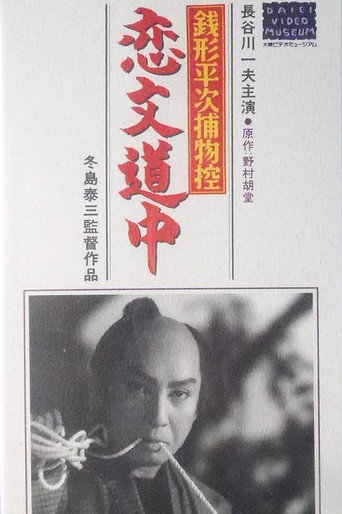 NR
A murder case tied to a missing love letter… Heiji heads west along the Tōkaidō in pursuit of thirteen suspicious individuals.
Zenigata heiji torimono hikae: Koibumi dōchū
1951
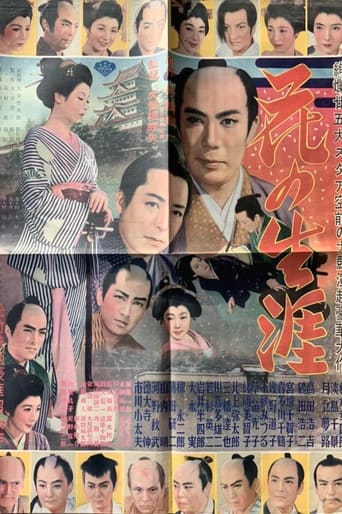 NR
In 1842, in the Umemoku Mansion within Hikone Castle, Naosuke Ii, despite the tumultuous times, was engrossed in the world of tea ceremony. His friend, the Kokugaku scholar Nagano Shuzen, introduced him to a captivating shamisen master named Murayama Taka. Naosuke became deeply infatuated with her, disregarding the jealousy of his consort Shizu and the warnings of his senior retainer, Gaiji. However, upon discovering Taka's relationship with Shuzen, Naosuke promptly ended his ties with her.
Hana no shôgai
1953
 NR
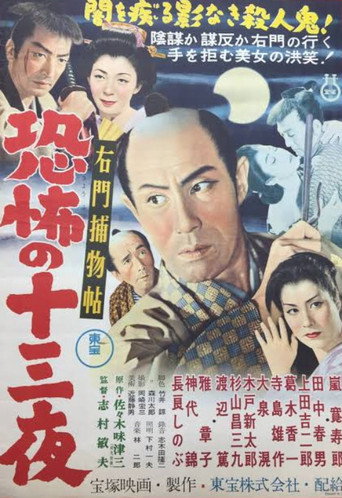
No synopsis available yet.
Terror Stalks by Night
1955
No synopsis available yet.
Zenigata Heiji
1951
 NR
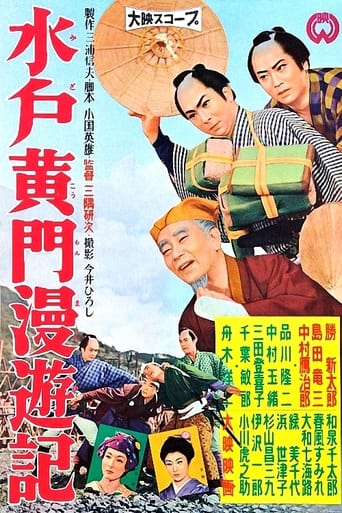
Lord Mito Mitsukuni, the vice-shogun of the whole country, left the family estate and went on a trip to various provinces with his students Sukesaburo Sasaki and Kakunoshin Atsumi. At an inn in Sunagawa, Mitsukuni exposed and punished an evil judge who had fallen in love with a townsman's wife. However, on the night he stayed at Nihonmatsu Castle, Mitsukuni found out that this incident was a performance organized especially for him…
Travels of Lord Mito
1958
 10.0
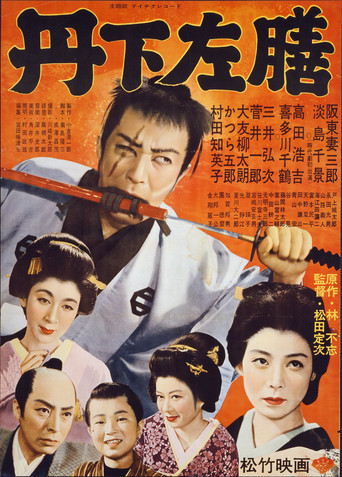
Drama about a famous one-eyed, one-armed samurai swordsman of the middle of the Tokugawa period by the name of Tange Sazen. By chance, Tange gets an old pot in which the secret of the treasure of 1000000 ryos of gold is hidden. However, a bunch of different people hunt for the pot and Tange will have to apply his phenomenal fencing skills with the sword.
Tange Sazen
1952
 NR
No synopsis available yet.
Izayoi kaidō
1951
 NR
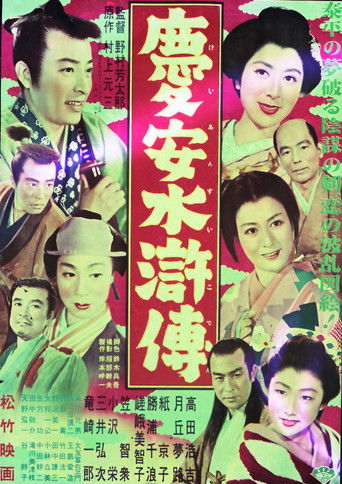
Chikuzen, a ronin named Yoh Daisuke, after pacifying some ruffians at the theater of Onna-Kata Ogino Sawanojiki, formed a bond with the theater's bodyguard, Maruhashi Tadayasu, and Kaku, a priest. He ended up settling at the Kasugaya, the house of Oko, whom he had saved. When Oko decided to go to Edo, where her biological father lived, Daisuke accompanied her. Along the way, at Suruga Abe River, they encountered Sawanojiki's theater group, which had departed from Osaka earlier heading to Edo. A scuffle initiated by Tadayasu over a ferry boat with the students of Yui Masayuki but was amicably resolved through Masayuki's intervention.
慶安水滸傳
1954
 10.0
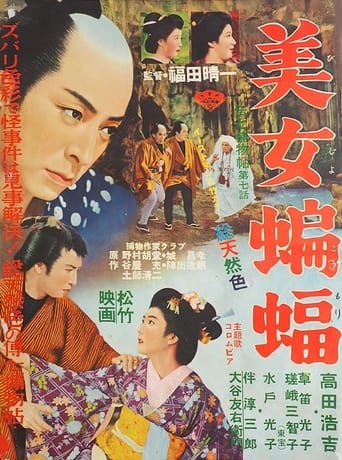
The head of Oshu, Harumichi Honma, was ordered by the boat bugyo (Commissioner of the board) Tajima Kuze to extract five gold coins to the Shogun family in Edo, and put it into Ryujin Maru. However, Tajima, who was the chief retainer of the shogunate, said that he was a member of the board, tetsugoro Funabashi, kumiyumi no Kami ichibei, and his son, masakichi, and others, and in the middle of the night, he killed all the members with poison in the night of the storm, threw Masayoshi, who was a fellow of the city, and masakichi, who escaped from the death of poison, into the sea and sank the boat to eliminate evidence.
The Detective Denshichi Case Files: The Beautiful Bat
1957
 NR
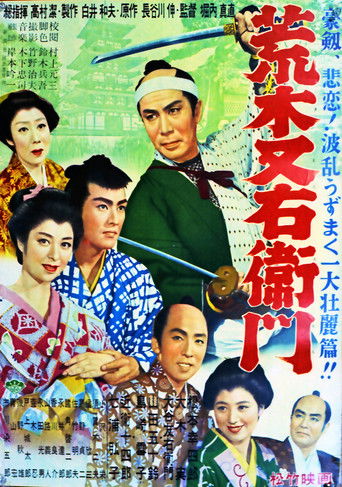
Watanabe Kazuma and Kawai Matagorō from the Bizen Okayama Ikeda clan were close friends, but they inevitably became enemies after Matagorō killed Kazuma's younger brother, Gentayū, and fled. Seeking assistance, Kazuma asked his brother-in-law, Araki Mataemon, for help, but Mataemon refused, saying that it was against the code for a brother to avenge another brother's death. On the other hand, the lord of the clan, Ikeda Tadao, ordered a search for Matagorō, who was found to be sheltered by the Hatamoto, including Andō Jiemon, in Edo. Tadao was furious but unable to act. Matagorō, in Edo, came to regret his birth as a samurai. He met and fell in love with Okō, a bathhouse maid. As the discord between the Hatamoto and the Ikeda clan deepened, Tadao died of illness. Seizing the opportunity to ease the conflict, the shogunate ordered the Ikeda clan to be succeeded by the young lord Katsugorō and to relocate to the Ikeda clan of Inshū Tottori. Meanwhile, Matagorō was exiled from Edo.
荒木又右衛門
1955
1940s · 11 titles
No synopsis available yet.
Sabakareru aijō
1947
The "opinion leader" of the "opinion leaders" is furious at the "opinion leader's" opinion.
Tenka no gyoi kenban o iken suru otoko
1947
 NR
Driven by a murderous intent, he pursues the palanquin carrying the renowned onnagata Kikunosuke, who has taken the place of the princess destined to marry the lord of the Okazaki domain.
Hebi hime dōchū
1949
 NR
A spearman who had long admired the samurai rises up after learning of cruelty of the samurai class.
Yari-odori gojūsantsugi
1946
 NR
No synopsis available yet.
Tōkai suikoden
1945
 NR
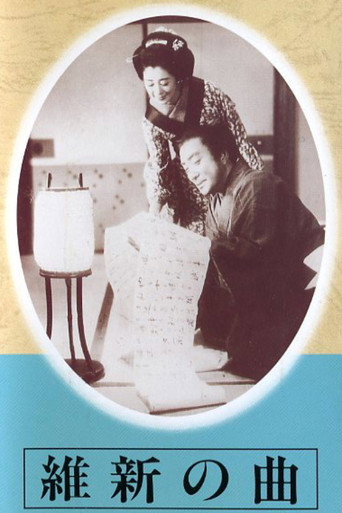
The first film produced by Daiei.
The March of the Restoration
1942
 NR
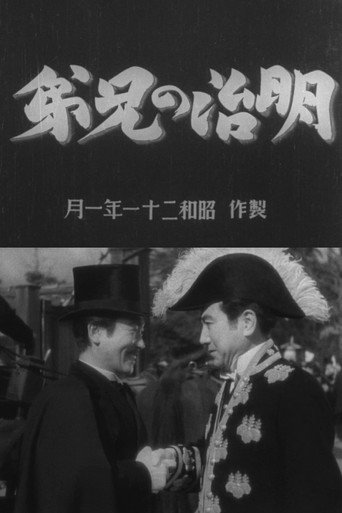
No synopsis available yet.
Meiji no kyōdai
1946
 NR
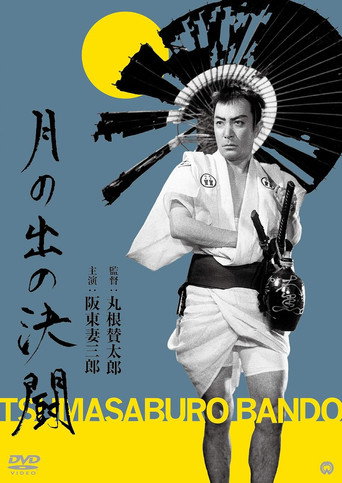
A yakuza bodyguard is persuaded by Ōhara Yūgaku to take the farmers’ side.
Duel at Moonrise
1947
 NR
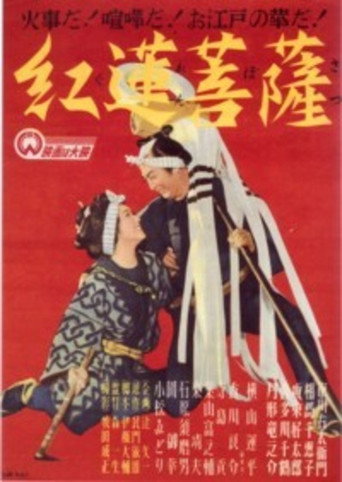
Set against the backdrop of the Great Fire of Edo, this story depicts the conflict between the town fire brigades and the daimyo’s fire brigades.
Guren bosatsu
1949
 NR
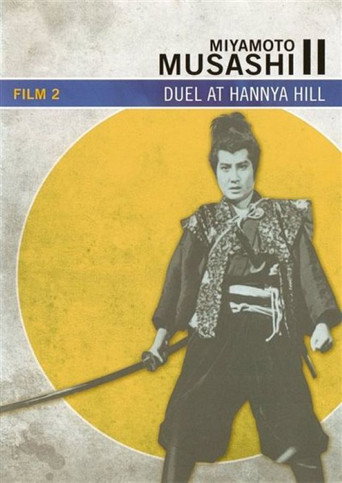
Miyamoto Musashi is challenged by a series of opponents in this follow up to Miyamoto Musashi's Kongoin Ketto (1942, also called Nitoryu Kaigen) also directed by Ito Daisuke.
Miyamoto Musashi - Battle at Han'nya Hill
1943
 9.0
Shogi, a Japanese form of chess, is a game that requires skill and determination. When poor sandal-maker Sakata decides to pursue his dream of becoming the Shogi Grand Master Champion, everything is at stake – including his family. What will it cost for Sakata to follow his passion?
The Grand Master
1948