
Known for
No synopsis available yet.
The Landing
2019
 NR
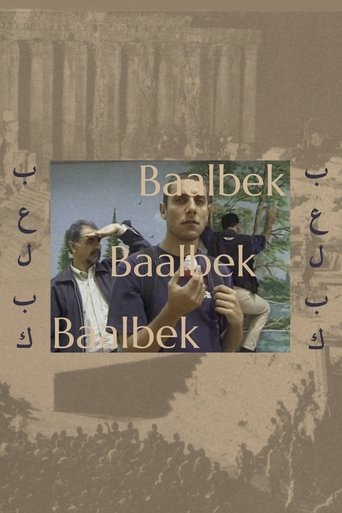
NRA journalist and a photographer drift on their way between Beirut and Baalbeck. Their journey is repeated three times in three different ways to evoke current issues and confusion in Lebanon’s present state.
Baalbek
2001
 NR
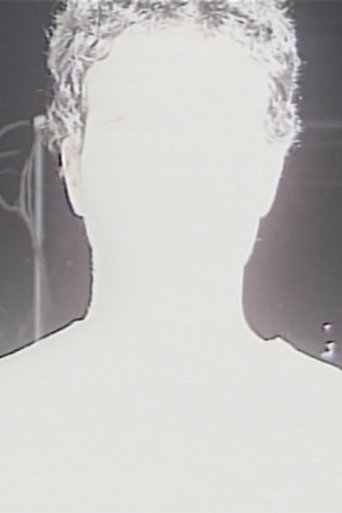
NRHow I Love You is an exploration of sexuality among gay men in Lebanon. A couple and three individuals talk about their sex lives, about commitments and failures, about their relationships to their bodies, about their passions and love in a society where homosexuality is still punished by imprisonment. The video uses light to produce a white veil that obstructs seeing, hence rendering character identification almost impossible. Through this obstruction, the video locates itself within a specific social context.
How I Love You
2004
The Script is born out of the artist’s research into online content connected with the Arab world. Exploring YouTube using relatively neutral search terms such as ‘father and son’, Zaatari discovered multiple videos depicting fathers praying. Despite being produced by different men from different regions in the Middle East, Zaatari observed telling similarities in content which depicted men fulfilling the duty of salah — the ritual of five daily prayers undertaken by practicing Muslims — within a domestic setting. As breaking off from prayer is often frowned upon, the fathers continue praying despite their children’s mischievous attempts to distract them. In The Script, Zaatari presents a filmed re-enactment of these touching moments, paying homage to dual commitment to faith and fatherhood.
The Script
2018
It is a critique of television's promotion of political figures. A candidate running for presidency talks about his political agenda and addresses the public with a general and casual speech on issues such as resistance, cultural heritage, and education.
The Candidate
—
This is a recording of a silent moment, in which 2 men prepare themselves for a military action. While the older one leaves in the end, weapon to his shoulder, the younger one decides to stay. In this video, Zaatari works with a former member of the Lebanese Resistance, Mohammad Abu Hammane, who was featured 11 years ago in his video "All is well on the border" (1997). His reappearance in this work is a transposition in time that evokes the awakening of an older resistant, now revisiting his military gear. This video was shot in Hubbariyeh, a Lebanese village located in the Aarqub area in South Lebanon, where the fidaeyin (Palestinian resistant fighters) based themselves in Lebanon in the late 1960s. The village is only few kilometers away from the Israeli-occupied Shebaa farms, still disputed between Lebanon, and Israel.
Nature Morte
—
Film credits
Behind the camera
No synopsis available yet.
The Landing
2019
NRA journalist and a photographer drift on their way between Beirut and Baalbeck. Their journey is repeated three times in three different ways to evoke current issues and confusion in Lebanon’s present state.
Baalbek
2001
NRHow I Love You is an exploration of sexuality among gay men in Lebanon. A couple and three individuals talk about their sex lives, about commitments and failures, about their relationships to their bodies, about their passions and love in a society where homosexuality is still punished by imprisonment. The video uses light to produce a white veil that obstructs seeing, hence rendering character identification almost impossible. Through this obstruction, the video locates itself within a specific social context.
How I Love You
2004
NRHow I Love You is an exploration of sexuality among gay men in Lebanon. A couple and three individuals talk about their sex lives, about commitments and failures, about their relationships to their bodies, about their passions and love in a society where homosexuality is still punished by imprisonment. The video uses light to produce a white veil that obstructs seeing, hence rendering character identification almost impossible. Through this obstruction, the video locates itself within a specific social context.
How I Love You
2004
The Script is born out of the artist’s research into online content connected with the Arab world. Exploring YouTube using relatively neutral search terms such as ‘father and son’, Zaatari discovered multiple videos depicting fathers praying. Despite being produced by different men from different regions in the Middle East, Zaatari observed telling similarities in content which depicted men fulfilling the duty of salah — the ritual of five daily prayers undertaken by practicing Muslims — within a domestic setting. As breaking off from prayer is often frowned upon, the fathers continue praying despite their children’s mischievous attempts to distract them. In The Script, Zaatari presents a filmed re-enactment of these touching moments, paying homage to dual commitment to faith and fatherhood.
The Script
2018
It is a critique of television's promotion of political figures. A candidate running for presidency talks about his political agenda and addresses the public with a general and casual speech on issues such as resistance, cultural heritage, and education.
The Candidate
—
This is a recording of a silent moment, in which 2 men prepare themselves for a military action. While the older one leaves in the end, weapon to his shoulder, the younger one decides to stay. In this video, Zaatari works with a former member of the Lebanese Resistance, Mohammad Abu Hammane, who was featured 11 years ago in his video "All is well on the border" (1997). His reappearance in this work is a transposition in time that evokes the awakening of an older resistant, now revisiting his military gear. This video was shot in Hubbariyeh, a Lebanese village located in the Aarqub area in South Lebanon, where the fidaeyin (Palestinian resistant fighters) based themselves in Lebanon in the late 1960s. The village is only few kilometers away from the Israeli-occupied Shebaa farms, still disputed between Lebanon, and Israel.
Nature Morte
—
This work deals with the discovery of light and of its power to reconstruct images. Through a boy who discovers the possibilities of framing and manipulating light with a mirror, the idea of making images appears in the daily life of the children living in the old streets of Saida. Reflected light becomes a knowledge that is transmitted from child to child and a source of friendship and curiosity.
Lumiere
—
 NR
NRGIFT discusses the idea of public space : on a public beach, right across from a residential block, a young boy begs the filmmaker to let him join soccer players in order to appear on television. The faces of the passers-by staring at the camera and the supporter's shouts communicate the identity of a public space.
Gift
1995
TEACH ME is an interpretation of iconic images. This short essay is built on the ascription of a new meaning to TV news footage. The mingling of news soundtracks with dialogues from old Egyptian films enriches the meaning of the images.
Apprends-Moi
—
 NR
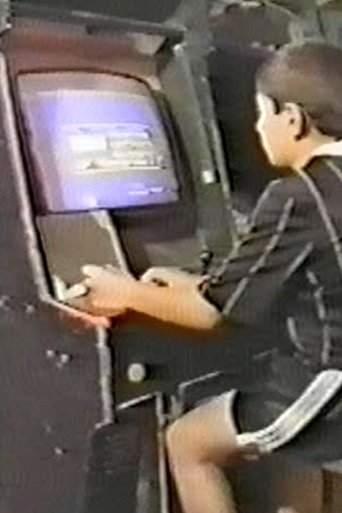
NRAn eleven-minute film by Akram Zaatari from 1995. Memories and images of childhood are reflected both on the screen and in the small mirror that a young boy plays with. Filmmaker and video artist Akram Zaatari was born in Saida, Lebanon in 1966 and currently lives in Beirut. His art practice also includes photography, installation, critical writing and curating.
Reflection
1995
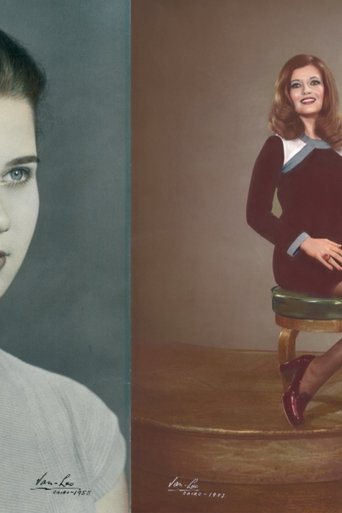
This portrait of famed Armenian-Egyptian studio photographer Van Leo, whose career spanned some 50 years, is also a reflection on transformations in the practice of photography, from hand-developing to digital manipulation. As Zaatari puts it, "Van Leo used photography to display multiple images of himself, assuming different identities. At a time when nationalism was rising in Egypt, Van Leo was plotting, encouraging, and promoting multiple subjectivities.”
Her + Him Van Leo
2001
 NR
NRIn 1998, Akram Zaatari interviewed Egyptian photographer Van Leo in Cairo. In 2001 he made the video Her + Him Van Leo and based it on the story of a woman who once entered Studio Van Leo and asked the artist to take pictures of her naked. At the time, Zaatari had access to a few of the woman's twelve pictures. In 2010 Zaatari came across the entire series showing "Nadia" undressing in twelve poses and expanded the original work into this re-edited, remastered version.
Her + Him
2012
Unravels a dual journey – extroverted in place, introverted in memory. Beginning with a photograph taken in the 1950s by historian Jibrail Jabbour the film journeys further into Jabbour’s photographic archives, then into the filmmaker’s personal photo-diary of the Israeli invasion of his hometown, Saida. Zaatari probes that obscure compulsion to document one’s environs, in the everyday or when enduring a potentially fatal event.
This Day
2003
Shot on Gouraud Street in Gemayzeh and edited by Zaatari in Beirut, Lebanon.
Countdown
1995
 8.0
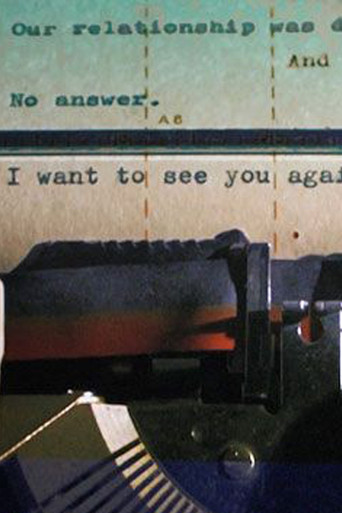
8.0A late night online chat between two men who haven't met since the turn of the millennium leads to their reunion after ten years of separation. The film navigates against time with an unsettling use of communication, recording technologies and temporal gaps.
Tomorrow Everything Will Be Alright
2010
 NR
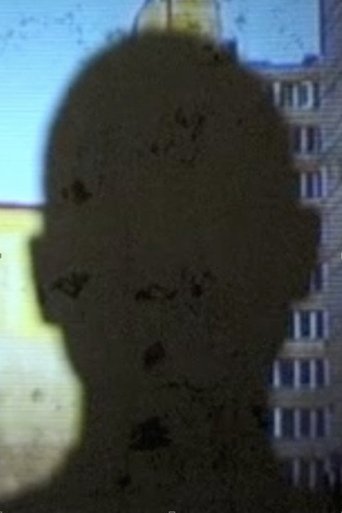
NRRED CHEWING GUM recounts a story of separation between two men. It is a video letter that is set in the context of the changing Hamra, a formerly booming commercial center. It examines the tool of video and image making in relationship to consumption, age, desire and power as they all compare to one of the characters' attempt to capture, hence possess, fleeting time.
Red Chewing Gum
2000
 NR
NRA documentary crew digs up a letter from a Lebanese socialist resistance fighter.
In This House
2004
On Photography, People and Modern Times is a two-channel video installation that tracks photographic records that Akram Zaatari researched and collected for the Arab Image Foundation between 1998 and 2000. It is a meditation on the two lives of photographs: once in the hands of the people who cherished them, and then in an environment that secures their preservation. Cutting across temporal and geographic borders, the film probes the nature of humans’ relationships with photographs and highlights the limits of standard preservation.
On Photography, People and Modern Times
2010
A reflection on film and television, this video travels the globe mixing footage of real-life war and reel entertainment. COUNTDOWN explores our sense of real-time transmission and movement through space as we experience them in televised images of breaking news.
Comptes a Rebours
—
 NR
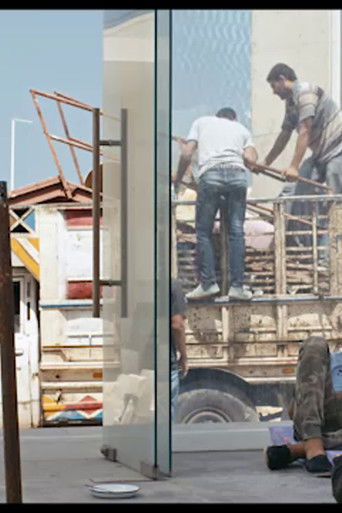
NRIn a city post-apocalypse, young men communicate only through smart devices. They make home out of urban debris. They can’t speak to each other, but are still able to dream.
Beirut Exploded Views
2014
 NR
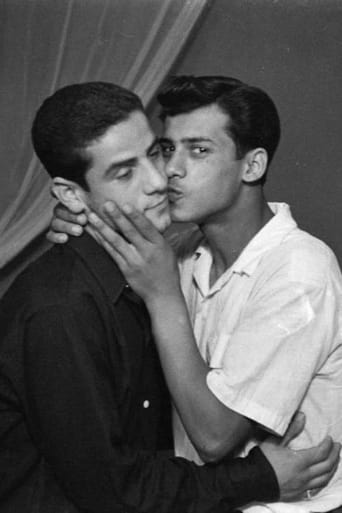
NRSet in the industrial suburbs of Beirut, Majnounak explores male sexuality through interviews with men who recount one of their sexual relationships. Attentive to details of body and sexual language, songs, indications of each interlocutor’s erotic imaginary, the film tries to sketch a portrait of the ”male” they identify with. Patterns emerge, as do norms, but also an unsuspected map of Beirut’s sites of sexual encounters.
Crazy of You
1997
 NR
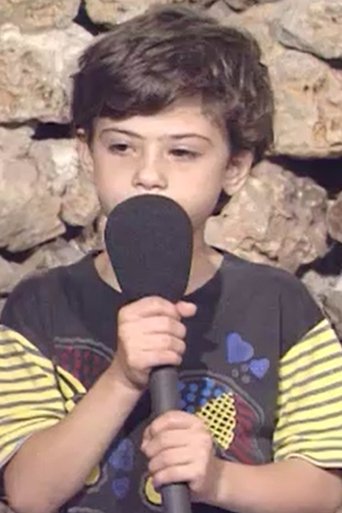
NR"Zaatari got his start in the freewheeling and somewhat rough-and-tumble world of Lebanese television in the mid-1990s. Zaatari was hired in 1995 as the executive producer of a morning television program for Future TV. Lebanon’s television industry had just been reorganized to curb the broadcasting excesses of the previous era; every party and militia across the political spectrum had set up its own station during the civil war. When the conflict ended, the government reduced the more than fifty channels to around ten. Future TV was one of the newer, more professional stations that aggressively recruited young creative types and gave them unfettered access to equipment, along with relative freedom to produce highly experimental documentaries. Zaatari’s earliest videos were originally screened as filler between the morning show’s segments."
Mourning Images
1995
One of Zaatari’s earliest experiments in documentary video, All Is Well on the Border emerged from the filmmaker’s desire to understand Israel’s occupation of Southern Lebanon following the 1982 Lebanon War. The video presents a series of testimonies by Lebanese citizens who were detained during the occupation, each presenting an image of resistance that falls outside the dominant narrative of liberation and solidarity promoted by the Lebanese left. At the same time, by actively resisting the tendency in political documentary filmmaking to give a voice to those who do not have one, Zaatari adopts a form of self-critique similar to the one used by Godard and Miéville twenty years earlier in Here and Elsewhere.
All is Well on the Border
1997
 NR
NRLebanese artist-filmmaker Zaatari conducts both an investigation and a stirring tribute to an act of resistance (or forbearance) that marked his childhood memories: the refusal of an Israeli pilot to bomb a boys' high school in south Lebanon in 1982.
Letter to a Refusing Pilot
2013
NRLebanese artist-filmmaker Zaatari conducts both an investigation and a stirring tribute to an act of resistance (or forbearance) that marked his childhood memories: the refusal of an Israeli pilot to bomb a boys' high school in south Lebanon in 1982.
Letter to a Refusing Pilot
2013
 NR
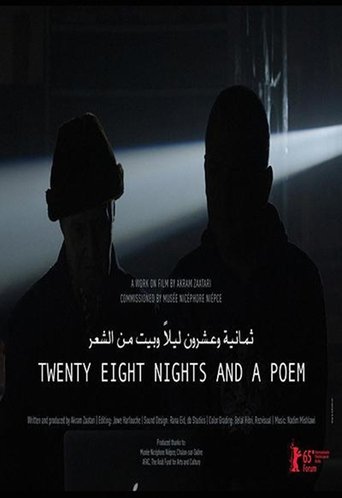
NRTwenty-Eight Nights and a Poem explores the work of photographer Hashem el Madani, who has run a commercial photography studio in southern Lebanon for the last five decades. After spending years photographing people in front of their shops, in public squares or at the beach, el Madani opened the studio in response to his community’s desire to appear before the camera. Moving between el Madani’s studio in Saïda and the Arab Image Foundation – an image archive in Beirut now housing the majority of el Madani’s photographic collection – the film examines the changing sites, status and function of photographic practice and preservation though various analogue and digital media.
Twenty-Eight Nights and a Poem
2015
 NR
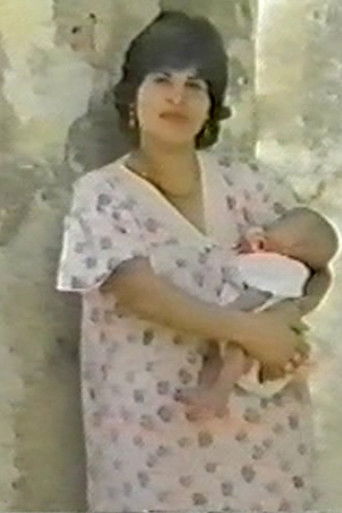
NRIn the courtyard of an old house in Saida, a woman is rehearsing a scene from a movie. She introduces her family, and the camera records both moments from her family's everyday life and scenes from the upcoming movie.
Portrait de Famille
—
Taking the idea of loss and dispossession as a starting point, this film is a reflection on photography and its people. It looks at the position of the individual within the context of war and displacement, as well as how photographs have become the sole record of that displacement, at the risk of them being dispersed as well. The film takes us on a journey from the point of view of a reproduction stand and a white backlit frame on which stories of war and loss unfold, from photographer Van Leo talking about the Armenian genocide of 1915 to the funeral of the assassinated Lebanese political leader Maarouf Saad filmed with a Super 8 camera in Saida in 1975. Between them, accounts of displacement and struggle of Palestinians are told through the photographs of Astra Abu Jamra, Samiyyeh Khairi and Abdel Salam Ujayli.
On Photography, Dispossession and Times of Struggle
2017
 NR
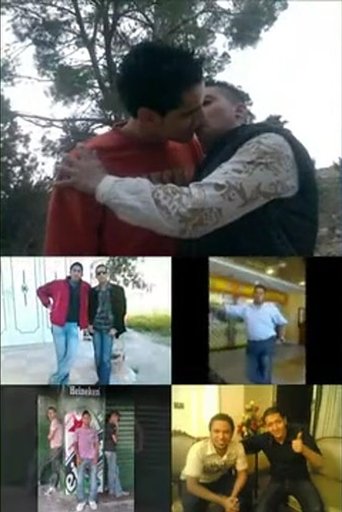
NR"A 4 channel video installation based on youtube material made by individuals filming themselves in Egypt, the United Arab Emirates, Saudi Arabia, Palestine, Yemen, and Libya."
Dance to the End of Love
2011