
Acting
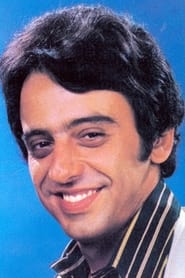
Luiz Armando Queiroz
Born — Died
1945-02-22 — 1999-05-16
Place of birth
Recife, Pernambuco, Brazil
Known for
Acting
Credits
42 titles
Known for
 8.0
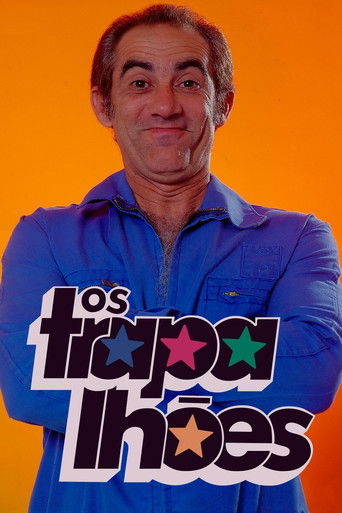
Os Trapalhões was a Brazilian comedy group and also a Brazilian television series created by Wilton Franco. Its members were Dedé Santana, Zacarias, Mussum and their leader Didi Mocó, that was played by Renato Aragão. The name Trapalhões is derived from the Portuguese verb atrapalhar, which means the opposite of helping, to do something the wrong way or to Those that confuse. The name is translated "Tramps" in English DVD subtitles. It was aired by Rede Globo from 1977 to 1999. On March 18, 1990, Zacarias died due to respiratory failure, but the group and the series didn't come to an end until July 29, 1994, when Mussum died due to an unsuccessful heart transplant.
The Trapalhões
1977
 7.0
No synopsis available yet.
Os Imigrantes
1981
 8.8
In the tiny poor town of Asa Branca, in the middle of Brazilian Northeast, Roque Santeiro is worshiped as a saint. He was supposedly killed by a bandit, 18 years ago, trying to save the local church. After his disappearance, local leaderships such as landowner Sinhozinho Malta and mayor Florindo, took profit on that to control the humble population. They even make up a widow, Porcina, who should have married Roque secretly before his death. What they don't expect is that Roque is alive, and he's back to, allegedly, "save his people". Now Malta, Florindo, Porcina, and others must hold him down and explain the "truth" to their commoners, in a desperate attempt to save their own bottoms. Meanwhile, mysterious facts surround Asa Branca, such as a Werewolf, a film crew who are trying to shoot a movie about Roque's story, and violent murderers.
Roque Santeiro
1985
 9.0
No synopsis available yet.
A História de Ana Raio e Zé Trovão
1990
 9.1
Amidst an unresolved crime, Simone protects Cristiano and falls in love with him. However, the couple faces ambition and betrayals that tear them apart. Presumed dead, she returns under a new identity seeking revenge.
Selva de Pedra
1972
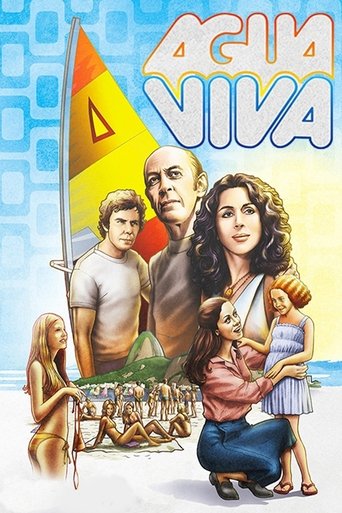 8.2
No synopsis available yet.
Água Viva
1980
Film credits
1990s · 3 titles
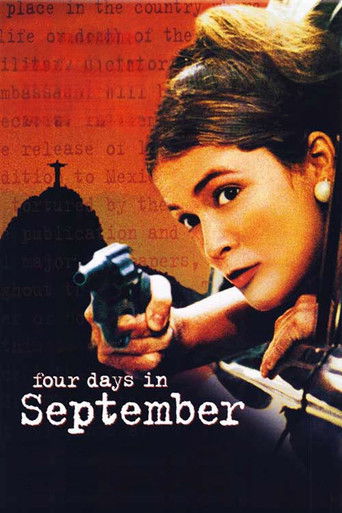 7.5
Fernando, a journalist, and his friend César join terrorist group MR8 in order to fight Brazilian dictatorial regime during the late sixties. César, however, is wounded and captured during a bank hold up. Fernando then decides to kidnap the American ambassador in Brazil and ask for the release of fifteen political prisoners in exchange for his life.
Four Days in September
1997
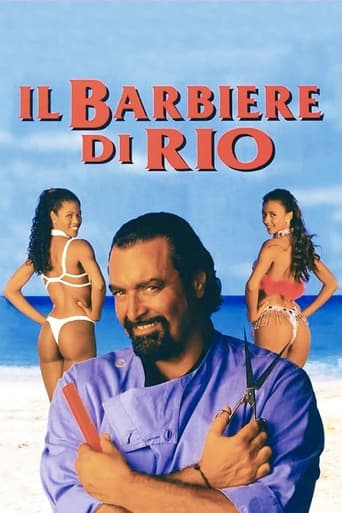 5.6
Matteo is a Roman barber whose business is full of debts. He decides to escape from this depressing reality by accepting his sister's invitation to Brazil.
Il barbiere di Rio
1996
No synopsis available yet.
O Marajá
1993
1980s · 6 titles
 3.3
A young girl runaway from home to join the circus.
Janete
1983
 NR
No synopsis available yet.
O Natal da Grande Família
1987
 6.6
In the small town of Taperoá João Grilo and confusion Chicó live setting, addressing a sacristan and a humble baker. Everyone lives under the excesses of the bishop, the priest and the major. Until an attack on the city, all die at the hands of the bandit Severino and must stand trial in the sky, which puts everyone before God and the Virgin Mary.
Os Trapalhões no Auto da Compadecida
1987
 8.0
No synopsis available yet.
The Serpent Woman and the Flower
1983
 7.3
Mid-1970s. When the military regime's "economic miracle" and the victory of the Brazilian football team on the World Cup serve as a distraction for the persecution of opposition leaders by the political police of the dictatorship. Under this context, Jofre Godoi da Fonseca, an alienated middle-class man, is mistaken for Sarmento, a political activist he met at an airport prior to his assassination. He is then arrested for being "subversive".
Go Ahead, Brazil!
1982
 6.5
A circus clown's life spirals out of control when his wife, a trapeze artist, dies during a performance, and, to his chagrin, their son vows to follow in his mother's footsteps.
O Grande Palhaço
1980
1970s · 4 titles
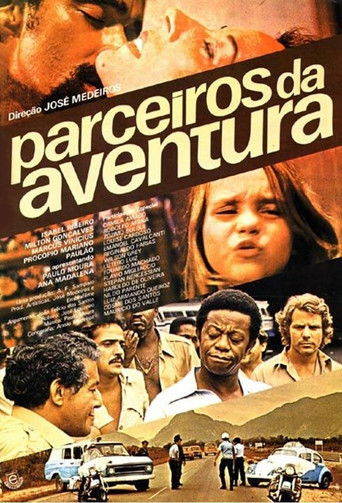 9.0
Rio de Janeiro crooks rove about, performing petty tricks to survive, and get involved with a woman who steals cars.
Parceiros da Aventura
1979
 4.3
Based on the true events that took place in the 70s, in Rio de Janeiro. The body of beautiful girl Cláudia Lessin Rodrigues, actress Márcia Rodrigues's sister, was found in the seashore. After Police investigation, it was found she had been murdered on a party by a rich industrialist's son and his socialite hairdresser buddy, after much sex, alcohol and drugs, specially Mandrax (methaqualone). She'd probably resisted being raped and the killers threw away the body in the water. One of the guys tried to escape flying to Switzerland.
The Claudia Case
1979
 9.0
No synopsis available yet.
Os Alegres Vigaristas
1974
No synopsis available yet.
Achamento da Terra Brasilis
1971
Series credits
8.0Os Trapalhões was a Brazilian comedy group and also a Brazilian television series created by Wilton Franco. Its members were Dedé Santana, Zacarias, Mussum and their leader Didi Mocó, that was played by Renato Aragão. The name Trapalhões is derived from the Portuguese verb atrapalhar, which means the opposite of helping, to do something the wrong way or to Those that confuse. The name is translated "Tramps" in English DVD subtitles. It was aired by Rede Globo from 1977 to 1999. On March 18, 1990, Zacarias died due to respiratory failure, but the group and the series didn't come to an end until July 29, 1994, when Mussum died due to an unsuccessful heart transplant.
The Trapalhões
1977
7.0No synopsis available yet.
Os Imigrantes
1981
7.0No synopsis available yet.
Os Imigrantes
1981
8.8In the tiny poor town of Asa Branca, in the middle of Brazilian Northeast, Roque Santeiro is worshiped as a saint. He was supposedly killed by a bandit, 18 years ago, trying to save the local church. After his disappearance, local leaderships such as landowner Sinhozinho Malta and mayor Florindo, took profit on that to control the humble population. They even make up a widow, Porcina, who should have married Roque secretly before his death. What they don't expect is that Roque is alive, and he's back to, allegedly, "save his people". Now Malta, Florindo, Porcina, and others must hold him down and explain the "truth" to their commoners, in a desperate attempt to save their own bottoms. Meanwhile, mysterious facts surround Asa Branca, such as a Werewolf, a film crew who are trying to shoot a movie about Roque's story, and violent murderers.
Roque Santeiro
1985
9.0No synopsis available yet.
A História de Ana Raio e Zé Trovão
1990
9.1Amidst an unresolved crime, Simone protects Cristiano and falls in love with him. However, the couple faces ambition and betrayals that tear them apart. Presumed dead, she returns under a new identity seeking revenge.
Selva de Pedra
1972
8.2No synopsis available yet.
Água Viva
1980
No synopsis available yet.
Telerromance
1981
No synopsis available yet.
Telerromance
1981
No synopsis available yet.
Telerromance
1981
 7.3
The story begins with the arrival of millionaire Antônio Carlos Volpone in Brazil. After living in Cairo for 18 years, he returns to his homeland for two reasons: first, to clarify the murder of his father-in-law, Dr. Telles, of which he was accused; second, to get closer to his ex-wife Estela, now married to Orlando Aranha. The millionaire also attracts media attention, and reporter Amélia Bicudo decides to investigate his life. To mislead his enemies and move freely, Volpone uses numerous disguises: the executive Anabela Freire, the doctor Nilo Peixe, the industrialist Augusto Melo Sampaio, and the driver André Silva. With the help of his loyal secretary and friend, Mosca, he confronts his main rival, Orlando Aranha, and Renata, Orlando's sister, who holds secrets about the murder of Estela's father.
Um Sonho a Mais
1985
 8.5
Carlão is a taxi driver who experiences a drama of conscience after fleeing bank robbers leave a suitcase with stolen money in his car: he doesn't know whether to hand it over to the police, running the risk of being accused of being an accomplice in the robbery, or whether to use the money to solve his problems.
Pecado Capital
1975
 7.7
No synopsis available yet.
Sinal de Alerta
1978
 7.5
No synopsis available yet.
Nina
1977
 8.5
The story is set in the fictional city of Albuquerque, in the interior of São Paulo, in the early 1960s – a time marked by changing behaviors in much of the world. There, young people enjoy the sounds of rock and twist on the dance floors, follow the fashion of jeans and leather jackets, and show off on Lambrettas and motorcycles through the city streets. In this context, Maria Tereza, a student teacher, dreams of living in the capital and being elected Miss Brazil, but clashes with her boyfriend, João. An idealistic young man who intends to pursue a career in journalism, he is consumed by jealousy of his beloved.
Estúpido Cupido
1976
No synopsis available yet.
Dinheiro Vivo
1979
 10.0
Eugênio Fontes is a medical student striving for upward social mobility. His impoverished childhood left him with an inferiority complex that hinders him in both his career and his romantic life; consequently, his struggles and dreams are entirely focused on achieving financial security. Deeply conflicted, he feels unable to love his parents, Alzira and Ângelo, to whom he owes his education. While in medical school, Eugênio meets Olívia Miranda, and the two fall in love. However, he ultimately marries Eunice—a beautiful, wealthy young woman and the daughter of the industrialist Cintra. Through his marriage to Eunice, Eugênio secures a good job and gains influential connections, such as a friendship with Felipe Lobo, a respected architect and associate of his father-in-law. Yet, as time goes by, the young doctor begins to question his marriage.
Olhai os Lírios do Campo
1980
 8.0
'Cuca Legal' tells the story of Mário Barroso, a single aviator involved with three women at the same time: Virgínia, Irene, and Fátima. Virgínia is a wealthy businesswoman obsessed with the direction of her late father's business; Irene is a middle-class young woman who gives private piano lessons; and Fátima is a poor widow. Mário can't decide which of them is the ideal woman to give him a child with a "cool head" (cuca legal). Things get even more complicated when Maria Joaquina, nicknamed Kinu, Virgínia's mother, also catches the aviator's attention. To escape the troubles he constantly gets into, Mário relies on the help of his mother, Dalva, and Jacaré, his great friend.
Cuca Legal
1975
 6.0
On the eve of the Republic, the clash between the monarchist Aristarco and his son Jorge, a defender of the republican cause, enlivened the Ateneu College and sparked passions and persecutions.
Memórias de Amor
1979
No synopsis available yet.
Guerra Sem Fim
1993
 7.0
No synopsis available yet.
Plantão de Polícia
1979
 8.3
The miniseries portrays the greed for money, power and prestige through the rise and fall of Alex Torres, a consequence of the schemes of the unscrupulous banker Frederico Scorza.
Avenida Paulista
1982
No synopsis available yet.
O Guarani
1991
 8.0
No synopsis available yet.
A Grande Família
1972
No synopsis available yet.
Filhos do Sol
1991
 8.0
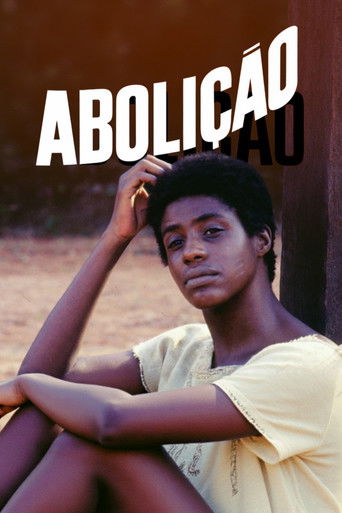
'Abolição' shows how much the liberation of the enslaved transformed the structures of Brazilian society, both in the countryside and in the city, and the changes generated in the lives of black people themselves. The narrative is centered on the period in which the Lei Áurea was about to be signed by Princess Isabel, on May 13, 1888. At that time, the abolitionist theme was widely discussed in urban centers, while in rural areas slavery relations were still established. The enslaved Iná Inerã, spiritual leader and warrior, represents the fight to maintain African identity at any price, paid with her own life, if necessary. Journalist Lucas, in turn, is a freed black man who believes in peaceful integration between whites and blacks.
Abolição
1988
 NR
No synopsis available yet.
A Idade da Loba
1995