
Writing
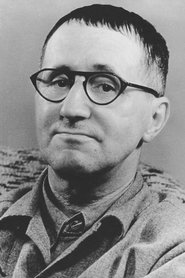
Bertolt Brecht
Born — Died
1898-02-10 — 1956-08-14
Place of birth
Augsburg, Germany
Known for
Writing
Credits
42 titles
Eugen Berthold Friedrich Brecht (10 February 1898 – 14 August 1956), known as Bertolt Brecht and Bert Brecht, was a German theatre practitioner, playwright, and poet. Coming of age during the Weimar Republic, he had his first successes as a playwright in Munich and moved to Berlin in 1924, where he wrote The Threepenny Opera with Elisabeth Hauptmann and Kurt Weill and began a lifelong collaboration with the composer Hanns Eisler. Immersed in Marxist thought during this period, Brecht wrote didactic Lehrstücke and became a leading theoretician of epic theatre (which he later preferred to call "dialectical theatre") and the Verfremdungseffekt. When the Nazis came to power in Germany in 1933, …
Known for
 9.0
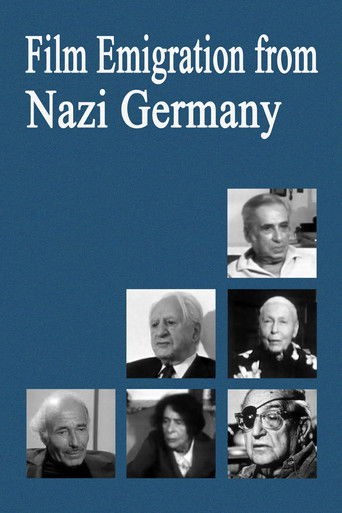
9.0Based on extensive interviews, shot on 16mm in a series of static long takes, Filmemigration aus Nazideutschland, is one of the most fascinating examples of "Film history on film" ever produced. Straschek devoted years to researching the topic and accumulating both film and non-film materials. Apart from some radio features and articles, however, this 290-minute TV programme remains the only published trace of Straschek's lifelong work on the emigration of film personnel. He had intended to publish a three-volume book, encompassing all available data about 3,000 emigrants originating from the centre and peripheries of film production, but the book never materialised.
Film Emigration from Nazi Germany
1975
 9.0
9.0"The Century of the Theater" - From the "birth of the director" to the "heroes of modernity" - an overview of the world of theater - illuminates the interaction with the history of the past hundred years is also shown.
Das Jahrhundert des Theaters
2002
 5.3
5.3East Berlin, 1956. Bertolt Brecht, revolutionary of the theater and poet of the state, looks back: his exploits as a teenager during the World War I; his romantic adventures during the twenties; the escape of the Nazi regime; the return from exile. The life of a timeless classic, a class fighter, an indefatigable free spirit, a committed artist.
Brecht
2019
 5.8
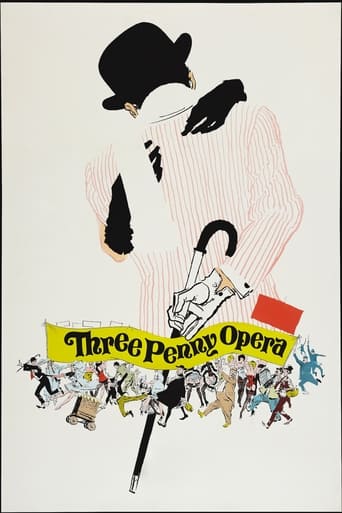
5.8The Gangster Macheath secretly marries the daughter of beggar king Peachum. When Peachum finds out, he instructs the police chief Brown to arrest and hang Macheath. If not, all the beggars of Soho will disturb the upcoming coronation.
The Threepenny Opera
1963
 NR
NRThe hardships faced by a woman trying to survive a bloody civil war while caring for the abandoned child of the deposed former ruler.
The Caucasian Chalk Circle
1985
 6.2
6.2A behind-the-scenes look at The Public Theater's production of Bertolt Brecht's "Mother Courage" that examines the playwright's life and ideas.
Theater of War
2008
Film credits
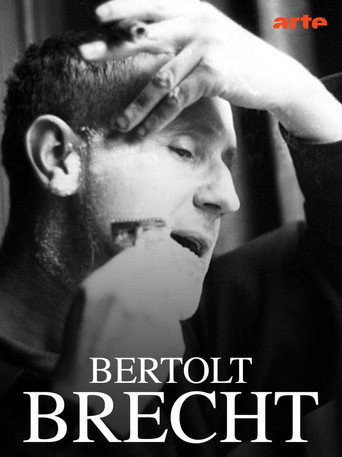
2010s · 1 titles
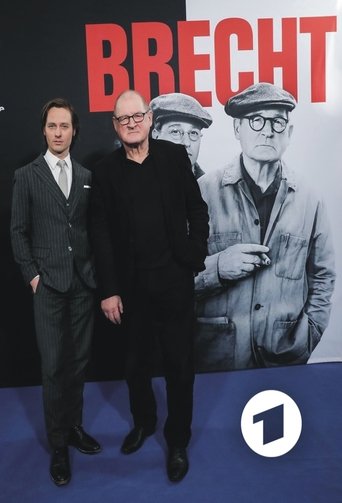
2000s · 2 titles
6.2A behind-the-scenes look at The Public Theater's production of Bertolt Brecht's "Mother Courage" that examines the playwright's life and ideas.
Theater of War
2008
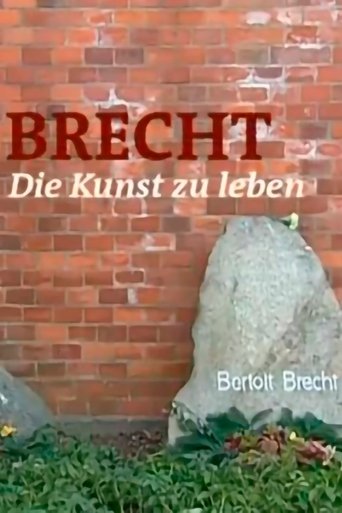 NR
NRHe wanted to revolutionize theater practice and at the same time social awareness: Today Brecht, who was born in Augsburg in 1898 and died in East Berlin in 1956, is one of the most important playwrights of the 20th century.
Brecht - Die Kunst zu leben
2006
Series credits
9.0Based on extensive interviews, shot on 16mm in a series of static long takes, Filmemigration aus Nazideutschland, is one of the most fascinating examples of "Film history on film" ever produced. Straschek devoted years to researching the topic and accumulating both film and non-film materials. Apart from some radio features and articles, however, this 290-minute TV programme remains the only published trace of Straschek's lifelong work on the emigration of film personnel. He had intended to publish a three-volume book, encompassing all available data about 3,000 emigrants originating from the centre and peripheries of film production, but the book never materialised.
Film Emigration from Nazi Germany
1975
9.0"The Century of the Theater" - From the "birth of the director" to the "heroes of modernity" - an overview of the world of theater - illuminates the interaction with the history of the past hundred years is also shown.
Das Jahrhundert des Theaters
2002
5.3East Berlin, 1956. Bertolt Brecht, revolutionary of the theater and poet of the state, looks back: his exploits as a teenager during the World War I; his romantic adventures during the twenties; the escape of the Nazi regime; the return from exile. The life of a timeless classic, a class fighter, an indefatigable free spirit, a committed artist.
Brecht
2019
Behind the camera
5.8The Gangster Macheath secretly marries the daughter of beggar king Peachum. When Peachum finds out, he instructs the police chief Brown to arrest and hang Macheath. If not, all the beggars of Soho will disturb the upcoming coronation.
The Threepenny Opera
1963
NRThe hardships faced by a woman trying to survive a bloody civil war while caring for the abandoned child of the deposed former ruler.
The Caucasian Chalk Circle
1985
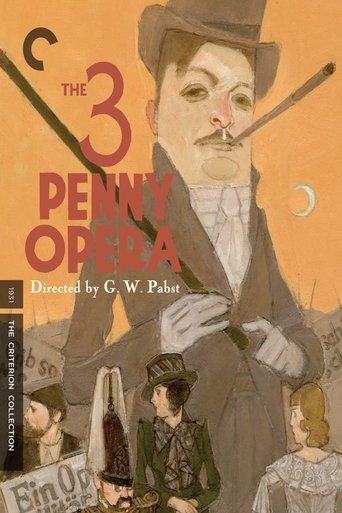 6.9
6.9The French-language version of the The Threepenny Opera with a different cast from the German version.
The Threepenny Opera
1931
On the verge of professional breakthrough, a young Bertolt Brecht reflects on relationships.
Marianne
2013
 6.2
6.2Depicts the consumerism of the mythical city of Mahagonny, conveying all its ripe decadence. A Hollywood Babylon full of pyramidal towers, carved elephants, commodified sex and licensed gluttony. An opera in three acts, live from the Salzburger Festspiele, 1998. Conductor: Dennis Russell Davies. Stage Director: Peter Zadek.
The Rise and Fall of the City of Mahagonny
1998
 6.9
6.9Kuhle Wampe takes place in early-1930s Berlin. The film begins with a montage of newspaper headlines describing steadily-rising unemployment figures. This is followed by scenes of a young man looking for work in the city and the family discussing the unpaid back rent. The young man, brother of the protagonist Anni, removes his wristwatch and throws himself from a window out of despair. Shortly thereafter his family is evicted from their apartment. Now homeless, the family moves into a garden colony of sorts with the name “Kuhle Wampe.”
Kuhle Wampe or Who Owns the World?
1932
An inexplicable showdown between two men and the downfall of a family that has moved from the prairies to the jungle of the big city.
Im Dickicht der Städte
1968
 NR
NRInspired by the work of Bertolt Brecht and filmed in Porto's former industrial slaughterhouse, A Santa Joana dos Matadouros is a meta-cinematic essay about the labor market in times of economic crisis in Europe. The film explores the possibilities of cinema in its relationship with theater and brings together a cast of professional actors, amateurs, renowned artists from various disciplines, and a group of unemployed residents of Vale de Campanhã.
A Santa Joana dos Matadouros
2024
 4.7
4.7Baal is an amoral poetic genius who, after a life of debauchery, betrayal and violence, is about to cut his ties to the world and meet his doom. A high society party is where the end begins.
Baal
1982
 NR
NRThree gods descend from the heavens in search of something truly rare: one good person. In the city of Szechwan, they find Shen Teh, a poor prostitute with a heart of gold, who agrees to take them into her humble home. As a token of gratitude, they gift her a sum of money that enables her to start a new life. But when goodness meets harsh reality, it becomes clear that a generous heart may come at a high cost. To survive, Shen Teh invents an alter ego: a tough cousin named Shui Ta, who can do all those things she herself wouldn't dare do. As she falls in love with a melancholic pilot, the internal rift between her two selves further deepens. Can one remain good in this world? And if so—at what price?
The Good Person of Szechwan
2025
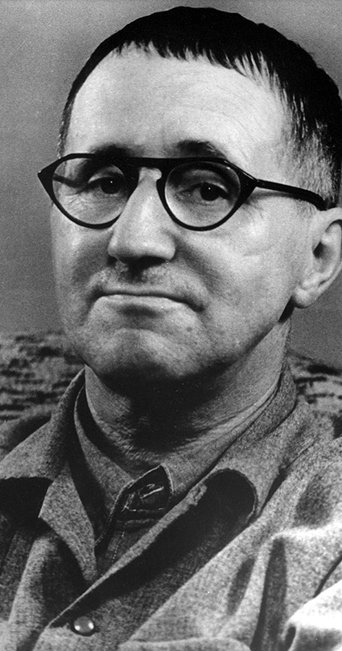 NR
NRBrecht's company of actors tells the story of Bertolt Brecht: his theatre, plays, poetry and his life.
Brecht and Co
1979
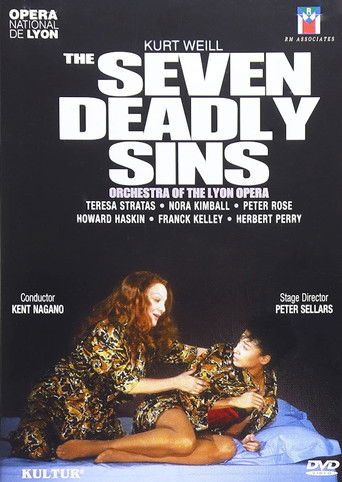 7.0
7.0Anna I and Anna II set out on a seven year journey that takes them through a series of varied life experiences while their parents and two brothers remain behind.
The Seven Deadly Sins
1993
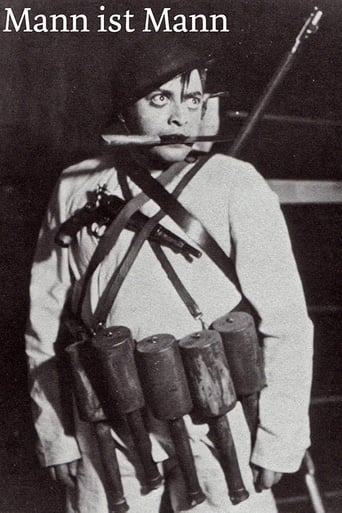 6.4
6.4About a civilian who is press-ganged into a machine-gunner's squadron and transformed into the perfect soldier.
A Man's a Man
1931
6.4About a civilian who is press-ganged into a machine-gunner's squadron and transformed into the perfect soldier.
A Man's a Man
1931
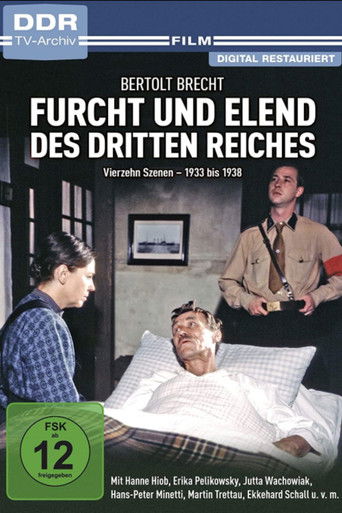 NR
NRFilm adaptation of Berthold Brecht's play of the same name, in which he depicts everyday life in Nazi Germany in loosely connected scenes.
Fear and Misery of the Third Reich
1981
 NR
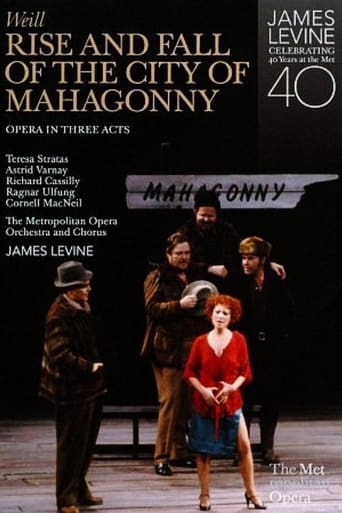
NRJohn Dexter’s brilliant production, James Levine’s masterful conducting of the eclectic score, and a sensational cast come together to make this Kurt Weill–Bertolt Brecht masterpiece a riveting evening of music theater. At the center of the action is Jimmy Mahoney (Richard Cassilly), a logger who stumbles onto the city of Mahagonny, where (almost) anything is allowed. Teresa Stratas gives a mesmerizing performance as Jenny, the prostitute who takes up with Jimmy, until he is executed for the greatest of all crimes in Mahagonny—to not have any money. The legendary Astrid Varnay, in her final Met appearances, is Leocadia Begbick, and Cornell MacNeil sings Trinity Moses.
Rise and Fall of the City of Mahagonny
1979
 6.3
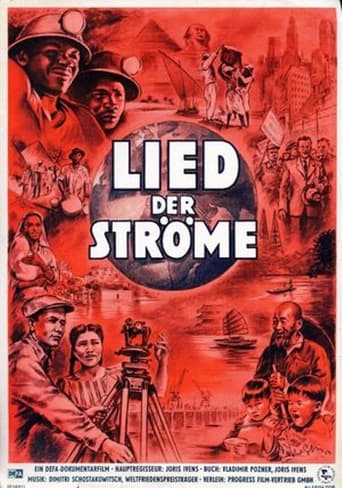
6.3An allegorical documentary about the workers of the world, whose common destinies and hopes for peace are symbolically united by the rivers that run through their respective lands. The film was shot on the Volga, the Mississippi, the Nile, the Yangtze, the Amazon and the Ganges and combines these images of five continents with the music of Dmitri Shostakovich and the poetry of both Bertolt Brecht and Paul Robeson.
Song of the Rivers
1954
 NR
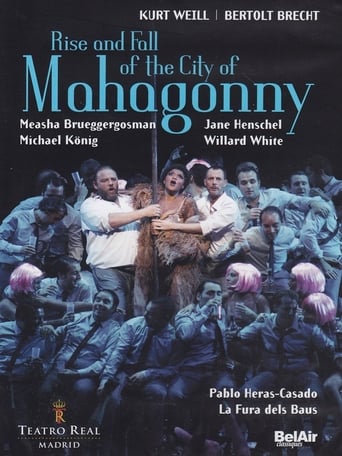
NRA hard-hitting new production of Kurt Weill’s Rise and Fall of the City of Mahagonny by the Catalan collective La Fura dels Baus at the Teatro Real de Madrid. Composed in the 1930s by Kurt Weill and Bertolt Brecht, this is a mordant satire on capitalism and the inexorable industrialisation of a society in which the ultimate crime is not having money. In twenty scenes the authors tell the story of a city lost in the middle of a desert and run by three thugs; in Mahagonny food, sex, gambling and violence rule supreme.
The Rise and Fall of the City of Mahagonny
2011
 6.0
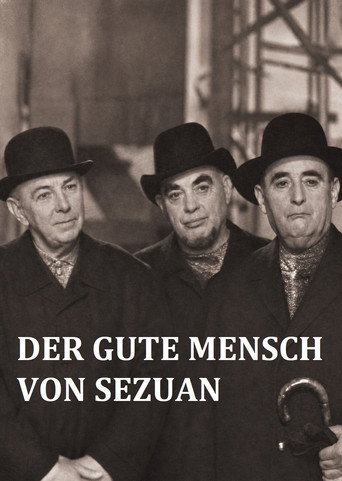
6.0No synopsis available yet.
Der gute Mensch von Sezuan
1966
No synopsis available yet.
Mutter Courage und ihre Kinder
1957
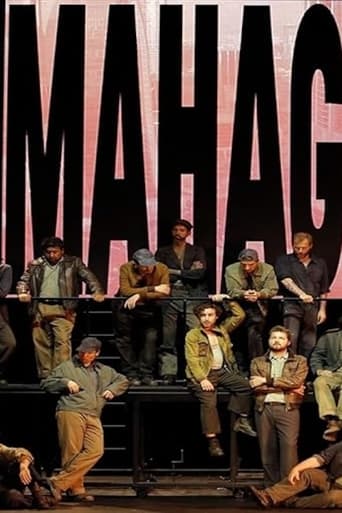 NR
NRComposed in the 1930s by Kurt Weill and Bertolt Brecht, this is a mordant satire on capitalism and the inexorable industrialization of a society in which the ultimate crime is not having money
Rise and Fall of the City of Mahagonny
2019
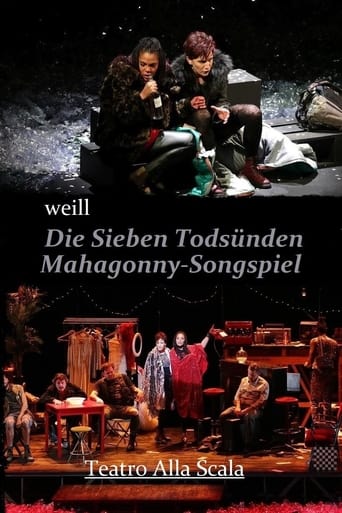 NR
NRThe Seven Deadly Sins tells the story of two sisters, Anna I and Anna II. The sisters set out from the banks of the Mississippi River in Louisiana to find their fortune in the big cities, intending to send their family enough money to build a little house on the river. Along the way they encounter the seven deadly sins. Meanwhile, the fleshpots of Mahagonny attract many visitors, but prove disappointing and expensive; God orders the inhabitants to hell, but they revolt, claiming they are there already"
The Seven Deadly Sins / Mahagonny Song Play - Teatro Alla Scala
2021
 5.7
5.7The absurd goings-on of a by no means ordinary hair salon, where men with great beards wait in vain for a shave while the barber takes a nap.
The Mysteries of a Hairdresser's Shop
1923
5.7The absurd goings-on of a by no means ordinary hair salon, where men with great beards wait in vain for a shave while the barber takes a nap.
The Mysteries of a Hairdresser's Shop
1923
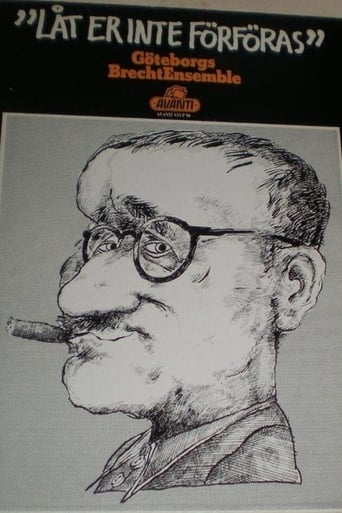 NR
NR"Don't Be Seduced" - Gothenburg's Brecht-ensemble performs songs and texts of Bertolt Brecht, Kurt Weill and Hanns Eisler.
Låt er inte förföras
1978
Harry Smith’s final film; an epic four-screen projection. Smith worked on this cinematic transformation of Kurt Weill and Bertolt Brecht’s opera Rise and Fall of the City of Mahagonny (1929) for over ten years and considered it his magnum opus. The film was shot from 1970 to 1972 and edited for the next eight years. The “program” of the film is meticulous, with a complex structure and order. The Weill opera is transformed into a numerological and symbolic system. Images in the film are divided into categories— portraits, animation, symbols and nature— to form the palindrome P.A.S.A.N.A.S.A.P. The film contains invaluable cameos of important avant-garde figures such as Allen Ginsberg, Patti Smith, and Jonas Mekas, intercut with installation pieces from Robert Mapplethorpe’s studio, New York City landmarks of the era, and Smith’s visionary animation.
No. 18: Mahagonny
1980
No synopsis available yet.
Der Hofmeister
1976
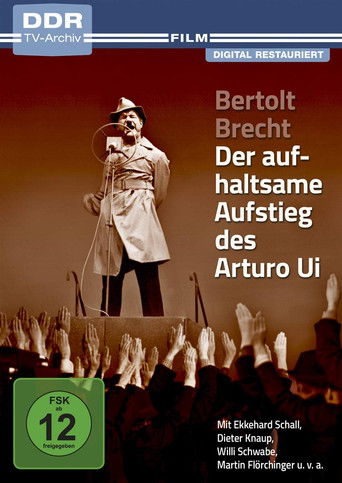 NR
NRHitler's seizure of power in 1933 and his rule in the years that followed are transferred to the North American criminal world of the 1930s in a parable. Gangster boss Ui needs the protection of the ruling class to achieve his goals and offers his help to their representatives. They initially hesitate, but join forces after Ui violently gains their respect. His victory is perfect and the people fall silent before the revolvers of their "protectors". Ui takes the raised hands as a sign of approval... Bertolt Brecht wrote the play in 1941 in a Finnish asylum - the premiere only took place in Stuttgart after his death in November 1958. It has been staged at the Berliner Ensemble since 1959 - Ekkehard Schall has played Ui over 500 times since then. On January 13, 1974, the play was shown for the last time, recorded in color by GDR television.
Der aufhaltsame Aufstieg des Arturo Ui
1974
The Alter Bahnhof Video Walk was designed for the old train station in Kassel, Germany as part of dOCUMENTA (13). Participants are able to borrow an iPod and headphones from a check-out booth. They are then directed by Cardiff and Miller through the station. An alternate world opens up where reality and fiction meld in a disturbing and uncanny way that has been referred to as “physical cinema”. The participants watch things unfold on the small screen but feel the presence of those events deeply because of being situated in the exact location where the footage was shot. As they follow the moving images (and try to frame them as if they were the camera operator) a strange confusion of realities occurs. In this confusion, the past and present conflate and Cardiff and Miller guide us through a meditation on memory and reveal the poignant moments of being alive and present.
Alter Bahnhof Video Walk
2012
 7.0
7.0The city of Mahagonny, founded by three criminals, becomes a place for people looking for their luck or money. One among them is the lumberjack Jim Mahoney. However, he is disappointed by what the city is.
Mahagonny
1974
 NR
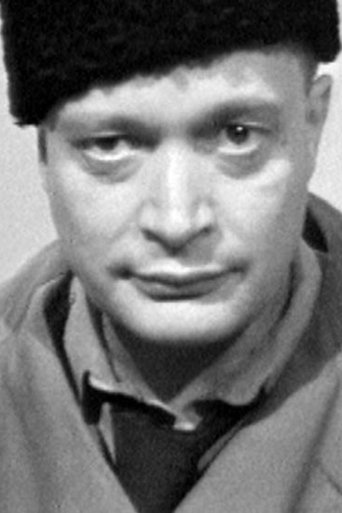
NRA television drama about a trial against a merchant who killed one of his employees.
Regeln och undantaget
1968
 NR
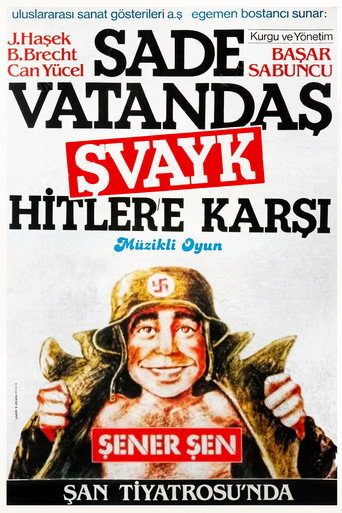
NRDuring World War II, Şvayk, a seemingly ordinary, hapless dog-seller, finds himself entangled with the Nazi regime.
Sade Vatandaş Şvayk Hitler'e Karşı
1984
 NR
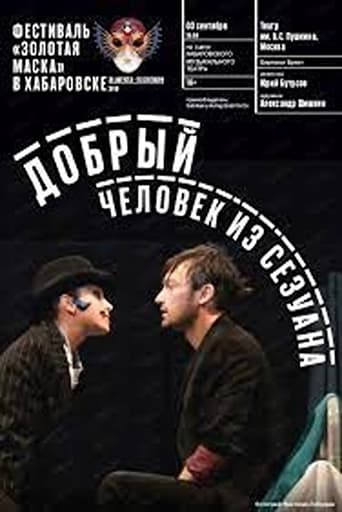
NRIn the search for a single good person in the province of Sezuan, three gods finally find only poor street girl Shen Te, whom they reward with a large gift of money. Now wealthy, Shen Te is now so exploited by all men that she has no choice but to slip into the shoes of her hard-hearted cousin, Shui Ta. Accused of murdering the missing Shen Te, the supposed Shui Ta confesses his dual role and the gods avoid a conviction. But Shen Te aka Shui Ta is now abandoned by all humans and also by the gods – helpless in the world.
The Good Man from Szechuan
2020