
Directing
Deann Borshay Liem
Place of birth
Korea
Known for
Directing
Credits
10 titles
Deann Borshay Liem (born Kang Ok Jin) is an Emmy Award-winning documentary filmmaker internationally known for her landmark adoption films, First Person Plural, In the Matter of Cha Jung Hee, and Geographies of Kinship. She has directed, produced, and executive produced a variety of award-winning documentaries and is the director/editor of a series of videos for legaciesofthekoreanwar.org, a web-based oral history project giving voice to memories of Korean Americans whose lives were shaped by the Korean War.
Known for
 8.0
8.0When veteran film editor Vivien Hillgrove discovers that she is losing her sight, she embarks on an unconventional documentary memoir.
Vivien’s Wild Ride
2025
Equipped with DNA kits and allies around the world, a group of mixed race adopted Koreans search for their original families. Relative Strangers follows their journeys as they confront their complicated pasts and uncover the hidden truths that determined their fate.
Relative Strangers
—
In hopes of putting an end to the 70-year war that still does not have the peace treaty, a group of internationally renowned women peacemakers come together to plan a march to cross the Demilitarized Zone (DMZ) from North to South Korea. Veteran documentarian, Deann Borshay Liem, tells an exquisitely touching and crucial story that advocates for peace.
Crossings
2022
 NR
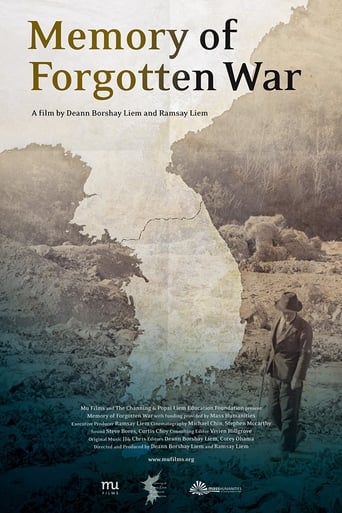
NRUnknown or forgotten by most Americans, the Korean War divided a people with several millenniums of shared history. Memory of Forgotten War conveys the human costs of military conflict through deeply personal accounts of four Korean American survivors whose experiences and memories embrace the full circle of the war: its outbreak and the day-to-day struggle for survival, separation from family members across the DMZ, the aftermath of a devastated Korean peninsula, and immigration to the United States. Each person reunites with relatives in North Korea conveying beyond words the meaning of four decades of family loss. Their stories belie the notion that war ends for civilians when the guns are silenced and foreshadow the futures of countless others displaced by ongoing military conflict today.
Memory of Forgotten War
2013
 6.7
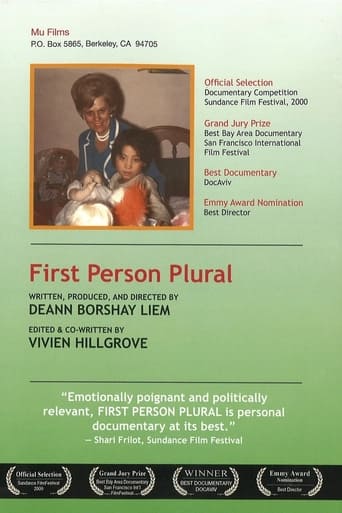
6.7In 1966, Deann Borshay Liem was adopted by an American family and sent from Korea to her new home in California. There, the memory of her birth family was nearly obliterated, until recurring dreams led her to investigate her own past, and she discovered that her Korean mother was very much alive. Bravely uniting her biological and adoptive families, Borshay Liem embarks on a heartfelt journey in this acclaimed film that first premiered on POV in 2000. First Person Plural is a poignant essay on family, loss and the reconciling of two identities.
First Person Plural
2000
 6.0
6.0Her passport said she was Cha Jung Hee. She knew she was not. So began a 40-year deception for a Korean adoptee who came to the United States in 1966. Told to keep her true identity secret from her new American family, the 8-year-old girl quickly forgot she had ever been anyone else. But why had her identity been switched? And who was the real Cha Jung Hee? In the Matter of Cha Jung Hee is the search to find the answers, as acclaimed filmmaker Deann Borshay Liem ("First Person Plural," POV 2000) returns to her native Korea to find her "double," the mysterious girl whose place she took in America. A co-production of ITVS in association with the Center for Asian American Media and American Documentary/POV.
In the Matter of Cha Jung Hee
2010
Film credits
Behind the camera
Equipped with DNA kits and allies around the world, a group of mixed race adopted Koreans search for their original families. Relative Strangers follows their journeys as they confront their complicated pasts and uncover the hidden truths that determined their fate.
Relative Strangers
—
In hopes of putting an end to the 70-year war that still does not have the peace treaty, a group of internationally renowned women peacemakers come together to plan a march to cross the Demilitarized Zone (DMZ) from North to South Korea. Veteran documentarian, Deann Borshay Liem, tells an exquisitely touching and crucial story that advocates for peace.
Crossings
2022
NRUnknown or forgotten by most Americans, the Korean War divided a people with several millenniums of shared history. Memory of Forgotten War conveys the human costs of military conflict through deeply personal accounts of four Korean American survivors whose experiences and memories embrace the full circle of the war: its outbreak and the day-to-day struggle for survival, separation from family members across the DMZ, the aftermath of a devastated Korean peninsula, and immigration to the United States. Each person reunites with relatives in North Korea conveying beyond words the meaning of four decades of family loss. Their stories belie the notion that war ends for civilians when the guns are silenced and foreshadow the futures of countless others displaced by ongoing military conflict today.
Memory of Forgotten War
2013
6.7In 1966, Deann Borshay Liem was adopted by an American family and sent from Korea to her new home in California. There, the memory of her birth family was nearly obliterated, until recurring dreams led her to investigate her own past, and she discovered that her Korean mother was very much alive. Bravely uniting her biological and adoptive families, Borshay Liem embarks on a heartfelt journey in this acclaimed film that first premiered on POV in 2000. First Person Plural is a poignant essay on family, loss and the reconciling of two identities.
First Person Plural
2000
6.7In 1966, Deann Borshay Liem was adopted by an American family and sent from Korea to her new home in California. There, the memory of her birth family was nearly obliterated, until recurring dreams led her to investigate her own past, and she discovered that her Korean mother was very much alive. Bravely uniting her biological and adoptive families, Borshay Liem embarks on a heartfelt journey in this acclaimed film that first premiered on POV in 2000. First Person Plural is a poignant essay on family, loss and the reconciling of two identities.
First Person Plural
2000
6.7In 1966, Deann Borshay Liem was adopted by an American family and sent from Korea to her new home in California. There, the memory of her birth family was nearly obliterated, until recurring dreams led her to investigate her own past, and she discovered that her Korean mother was very much alive. Bravely uniting her biological and adoptive families, Borshay Liem embarks on a heartfelt journey in this acclaimed film that first premiered on POV in 2000. First Person Plural is a poignant essay on family, loss and the reconciling of two identities.
First Person Plural
2000
6.0Her passport said she was Cha Jung Hee. She knew she was not. So began a 40-year deception for a Korean adoptee who came to the United States in 1966. Told to keep her true identity secret from her new American family, the 8-year-old girl quickly forgot she had ever been anyone else. But why had her identity been switched? And who was the real Cha Jung Hee? In the Matter of Cha Jung Hee is the search to find the answers, as acclaimed filmmaker Deann Borshay Liem ("First Person Plural," POV 2000) returns to her native Korea to find her "double," the mysterious girl whose place she took in America. A co-production of ITVS in association with the Center for Asian American Media and American Documentary/POV.
In the Matter of Cha Jung Hee
2010
 NR
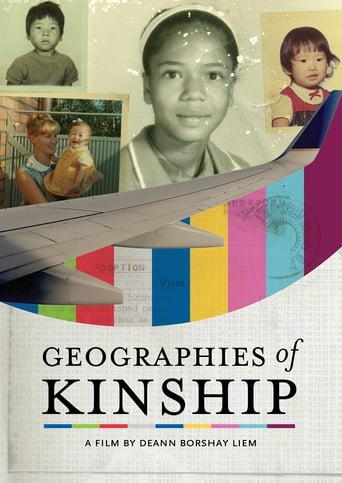
NRIn this powerful tale about the rise of Korea’s global adoption program, four adult adoptees return to their country of birth and reconnect with their roots, mapping the geographies of kinship that bind them to a homeland they never knew.
Geographies of Kinship
2019