

Known for
 9.0
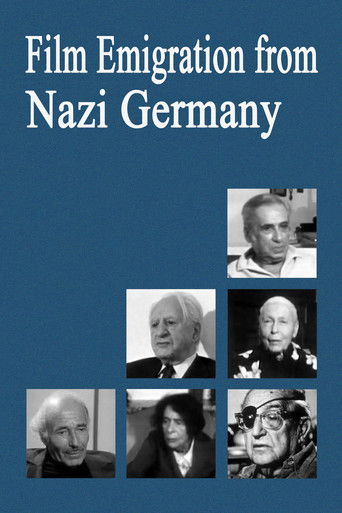
Based on extensive interviews, shot on 16mm in a series of static long takes, Filmemigration aus Nazideutschland, is one of the most fascinating examples of "Film history on film" ever produced. Straschek devoted years to researching the topic and accumulating both film and non-film materials. Apart from some radio features and articles, however, this 290-minute TV programme remains the only published trace of Straschek's lifelong work on the emigration of film personnel. He had intended to publish a three-volume book, encompassing all available data about 3,000 emigrants originating from the centre and peripheries of film production, but the book never materialised.
Film Emigration from Nazi Germany
1975
 6.0
At first, the demolition of a biography. Shortly before his death, Fejos tells his life story. His voice, the melody of his Hungarian-accented English, his humour and his ability to tell stories lead us through the short documentation. Then it becomes an ethno-drama. The film travels from Sweden to Siam and poetically and powerfully shows how much work it is for a young couple to produce a handful of rice.
Fejos Memorial
1963
 NR
Bernhard Frankfurter, a young Austrian filmmaker, follows the trails and roots of several German-speaking filmmakers who had been forced into exil by Hitler faschism. He interviewed prominent and less well-known artists who were forced to leave their (artistic) heimat because they were politically or racially no longer "acceptable"... A documentary film in which the personal commitment of the filmmaker is purposely brought to the attention of the viewer.
On the Road to Hollywood
1982
 7.0
Artist Jackson Pollock is seen at work painting a large canvas, then later on painting on a large sheet of glass.
Jackson Pollock 51
1951
 NR
The styles of Henri Matisse's works range from impressionism to fauvism to an almost abstract technique. He, along with Picasso, are regarded as two of the giants of 20th century art. This installment of the Museum of Modern Art series depicts the works of Matisse, and is the only film record of the landmark exhibition in Paris in 1970. All of his works, including the seldom-seen paintings from the Russian collections are shown here. Rare footage of the master painter at work is also offered. Matisse scholar Pierre Schnieder narrates.
Matisse: Centennial at the Grand Palais
1970
Painting-based reenactment.
Lincoln Speaks at Gettysburg
1950
Film credits
Series credits
Behind the camera
6.0At first, the demolition of a biography. Shortly before his death, Fejos tells his life story. His voice, the melody of his Hungarian-accented English, his humour and his ability to tell stories lead us through the short documentation. Then it becomes an ethno-drama. The film travels from Sweden to Siam and poetically and powerfully shows how much work it is for a young couple to produce a handful of rice.
Fejos Memorial
1963
7.0Artist Jackson Pollock is seen at work painting a large canvas, then later on painting on a large sheet of glass.
Jackson Pollock 51
1951
NRThe styles of Henri Matisse's works range from impressionism to fauvism to an almost abstract technique. He, along with Picasso, are regarded as two of the giants of 20th century art. This installment of the Museum of Modern Art series depicts the works of Matisse, and is the only film record of the landmark exhibition in Paris in 1970. All of his works, including the seldom-seen paintings from the Russian collections are shown here. Rare footage of the master painter at work is also offered. Matisse scholar Pierre Schnieder narrates.
Matisse: Centennial at the Grand Palais
1970
Painting-based reenactment.
Lincoln Speaks at Gettysburg
1950
Assignment: Tel-Aviv (Paul Falkenberg; United Palestine Appeal) is the clearest effort among the four to appeal to non-Jews. It is also the least effective. It is no more than a slightly humanized travelogue, in uneven color, narrated by the glossily chummy voice of Quentin (London Can Take It) Reynolds.
Assignment: Tel-Aviv
1947