
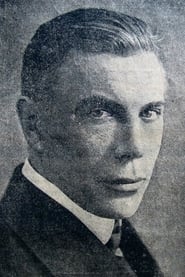
Directing
Pyotr Chardynin
Born — Died
1873-02-08 — 1934-08-14
Known for
Directing
Credits
61 titles
Known for
A dramatization of a wedding in 16th-century Russia, between members of two prominent boyar families (based on paintings by Konstantin Makovskii): Three matchmakers first visit the family of the prospective bride, and then do the same with the prospective bridegroom's family. Later, as the time of the wedding draws near, the bride is dressed with great formality and prepared for the ceremony, as the guests get ready to celebrate the upcoming wedding.
A Sixteenth Century Russian Wedding
1909
The happiness of two lovers is ruined by the composer's obsessive jealousy. Lost movie.
Soul Mates
1915
 NR
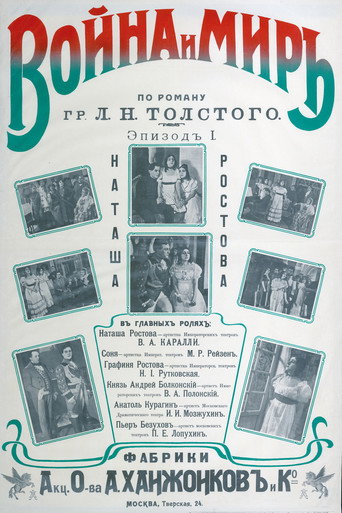
NRLost film based on Leo Tolstoy's story from War and Peace novel.
Natasha Rostova
1915
 10.0
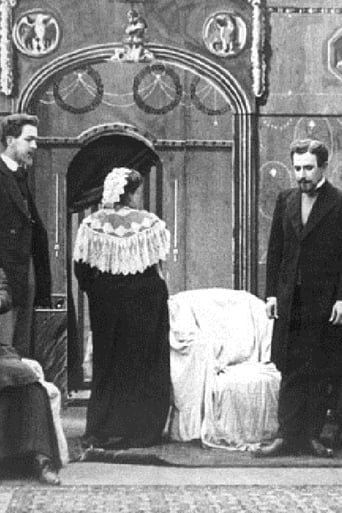
10.0A historic milestone in Russian cinema, recognized as the very first film adaptation of Fyodor Dostoevsky's famous 1869 novel.
The Idiot
1910
 NR
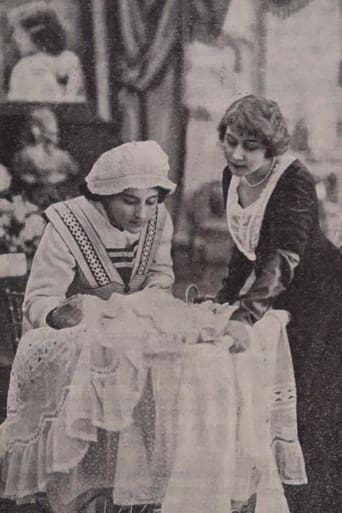
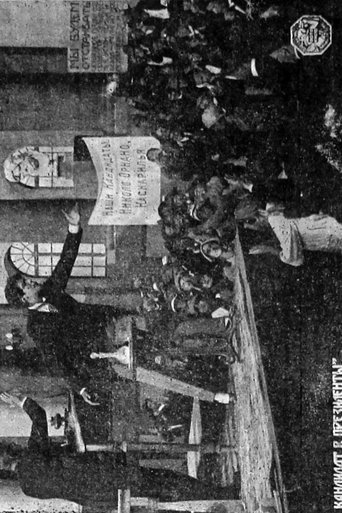
NRNo synopsis available yet.
The Nurse
1914
 NR
NRBased on the novel "Three Thieves" by Italian writer Umberto Notari. The banker's wife Ornano gives the key to her house to her lover Count Guido. The swindler Cascariglia uses this situation in his own way - he steals three million in money and his wife from the banker. In order to recover at least part of the stolen money (perhaps only the first part), the banker helps the adventurer get elected to parliament.
You're not a Thief Until You're Caught
1924
Film credits
1910s · 13 titles
 NR
NRNo synopsis available yet.
The Country Man, or The Involuntary Tragedian
1911
Filming of the collection of donations during the cinematic film week "To a Soldier in the trenches" in Moscow at the A. Khanzhonkov Theater on November 30, 1915.
Cinema — for the Soldier
1915
 NR
NRNo synopsis available yet.
Volga And Siberia
1914
Based on the drama by Dmitry Averkiev. The reign of Tsar Ivan Vasilyevich the Terrible. Boyar Vorotynsky loudly expresses his indignation at the untruth. Many agree with the boyar in their hearts, only Malyuta hates him and dreams of revenge. Having whispered to Grozny about Vorotynsky, he receives an order to arrest him.
Vasilisa Melentievna and Tsar Ivan the Terrible
1911
Based on the plot of L. Mey's play "The Pskovite Woman". A poetic legend about the arrival of Tsar Ivan the Terrible and his oprichniki in Pskov. Having destroyed Novgorod, the tsar moved to free Pskov, the city was waiting for the same fate. But the city was not ruined - the Terrible met in Pskov his illegitimate daughter Olga, whose existence he did not even suspect.
Choosing A Bride For The Tsar
1910
Comedy vaudeville based on the play-joke by R. Chinarov "Dear Kiss".
What A Kiss!
1911
 7.0
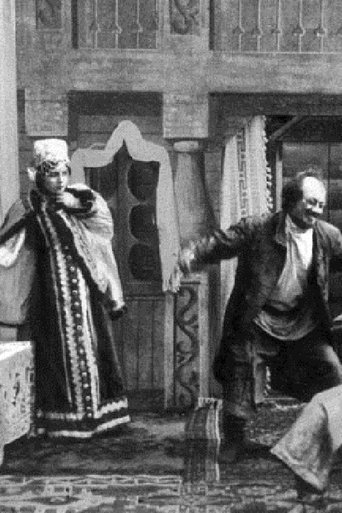
7.0Based on Lermontov's poem of the same name, Boyarin Orsha (Peter Chardynin) leaves the service of Ivan the Terrible.
Boyarin Orsha
1910
 6.0
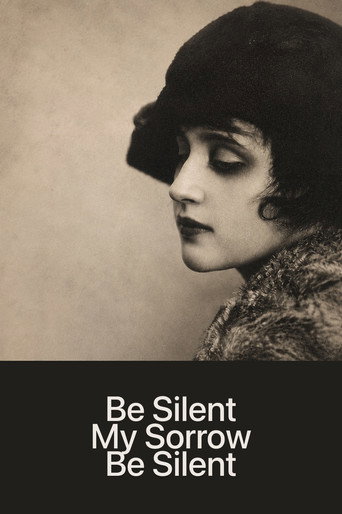
6.0Paula is a circus performer married to the alcoholic clown-acrobat Lorio. Lorio's heavy drinking leads to him being severely injured during a performance. This forces Paula and the now-crippled Lorio to become street musicians. This film formerly ran to 81 minutes – regrettably, the second half is considered lost.
Be Silent, My Sorrow, Be Silent
1918
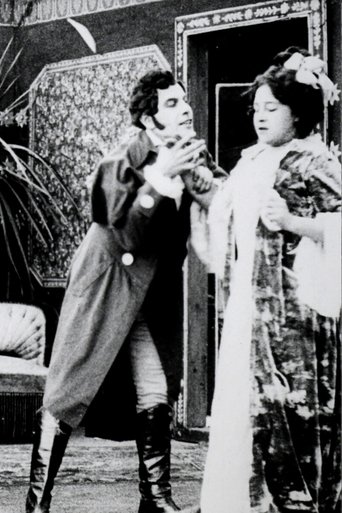 10.0
10.0No synopsis available yet.
Eugene Onegin
1911
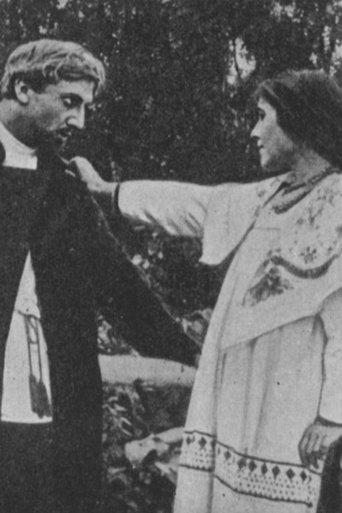 5.0
5.0Two peasants in feudal Russia wish to marry but tragedy strikes. A grim if familiar depiction of the precarious condition of the rural life.
The Peasants' Lot
1912
 7.0
7.0The Kreutzer Sonata is a 1911 Russian silent film directed by Pyotr Chardynin. The film is considered lost.
The Kreutzer Sonata
1911
 7.5
7.5No synopsis available yet.
Do You Remember?..
1914
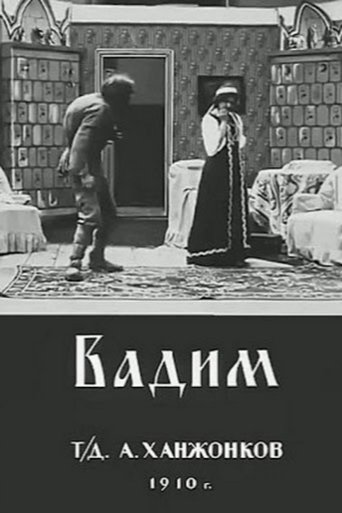 5.0
5.0The landowner Palitsyn (Chardynin) long and successfully sues the neighbor. The lawsuit led to the ruin. He died, leaving orphans children — humpback a young boy Vadim (Speransky) and three-year Olga. In order to avoid condemnation, the Palitsyn takes the girl to the pupils. The young man vows to take revenge on the offender and leaves this region. Several years pass. Olga (Goncharova) becomes the beauty and object of desire of the elderly Palitsyn. Comes the hour of revenge. Returned and did not learn of Vadim goes to the Lord in slaves. Soon he reveals to Olga the truth about the real family. The girl agrees to help Vadim. Meanwhile, the younger Palitsyn — son Yuri returns to the estate. Olga falls in love with the young landowner and refuses to help her brother. Finally angry Vadim decides to finish with the whole hated family. He goes to the camp of Pugachev to later return to the estate of Palitsyn and take revenge.
Vadim
1910
1900s · 7 titles
A dramatization of a wedding in 16th-century Russia, between members of two prominent boyar families (based on paintings by Konstantin Makovskii): Three matchmakers first visit the family of the prospective bride, and then do the same with the prospective bridegroom's family. Later, as the time of the wedding draws near, the bride is dressed with great formality and prepared for the ceremony, as the guests get ready to celebrate the upcoming wedding.
A Sixteenth Century Russian Wedding
1909
Two gypsy lovers sneak away from camp at night. The man proposes, the woman refuses. He then murders her with a knife. The body is immediately discovered. The distraught man then leaps off a cliff to the rocks below.
Drama in a Gypsy Camp Near Moscow
1908
An actress is given a telegram in her theater bathroom in the presence of a fan: she has won the trial and can receive one hundred thousand rubles. The actress and a fan drive around Moscow in a troika, entering and exiting the entrances of luxury restaurants.
Drama in Moscow
1909
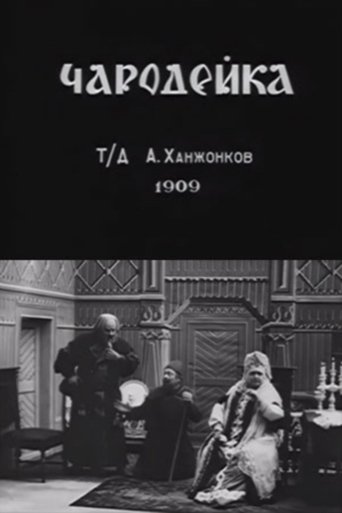 10.0
10.0This tragedy depicts a father and son in love with the same woman, who is an enchantress. She keeps them both in subjection with her charms, butthe mother and wife of the victims kills the seducer. However, both the father and the son are severely affected by her actions, which they cannot forgive.
The Enchantress
1909
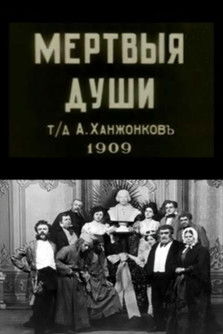 7.0
7.0Film adaptation of excerpts from Nikolai Gogol's novel of the same name. Only two episodes are recreated faithfully: Chichikov's visit to Sobakevich and Chichikov's visit to Plyushkin. These episodes are followed by a series of scenes in which other characters appear without any connection with the plot. In the finale, everyone is photographed next to the bust of Gogol.
Dead Souls
1909
 NR
NRFirst known Russian film adaptation of Leo Tolstoy's work, and reportedly the directorial debut of Pyotr Chardynin.
The Power of Darkness
1909
 9.0
9.0No synopsis available yet.
The Song of the Merchant Kalashnikov
1909
Behind the camera
The happiness of two lovers is ruined by the composer's obsessive jealousy. Lost movie.
Soul Mates
1915
NRLost film based on Leo Tolstoy's story from War and Peace novel.
Natasha Rostova
1915
10.0A historic milestone in Russian cinema, recognized as the very first film adaptation of Fyodor Dostoevsky's famous 1869 novel.
The Idiot
1910
NRNo synopsis available yet.
The Nurse
1914
NRNo synopsis available yet.
The Nurse
1914
NRBased on the novel "Three Thieves" by Italian writer Umberto Notari. The banker's wife Ornano gives the key to her house to her lover Count Guido. The swindler Cascariglia uses this situation in his own way - he steals three million in money and his wife from the banker. In order to recover at least part of the stolen money (perhaps only the first part), the banker helps the adventurer get elected to parliament.
You're not a Thief Until You're Caught
1924
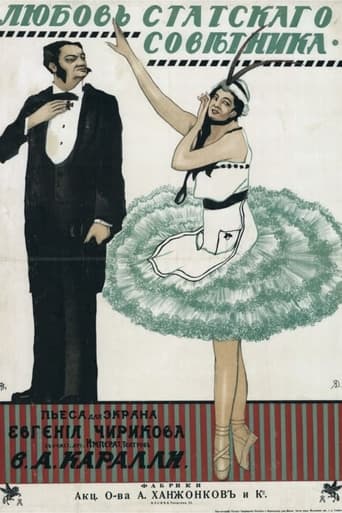 10.0
10.0Silent film from 1915 which draws on the story of Carmen
Love of a State Councillor
1915
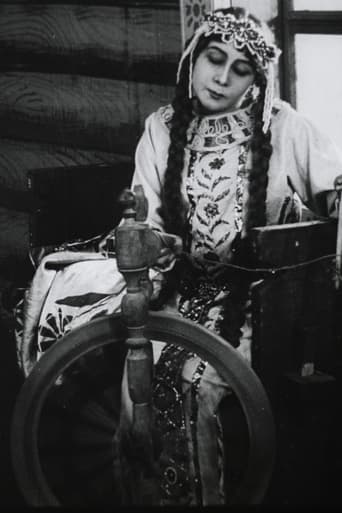 NR
NRNo synopsis available yet.
The Tale of the Sleeping Princess and the Seven Knights
1914
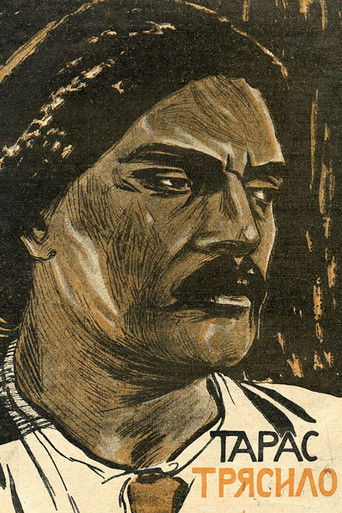 NR
NRIt's the 17th century, when social antagonism is at its peak. The poverty of peasants and poor Cossacks is opposed to the lavish lifestyle of the Ukrainian and Polish noblemen, priests, and Cossack officers. Cossacks fight off Tatars’ attacks, however, they start to realise that the real enemy is much closer. Taras Triasylo raises Cossacks to help the rebellious peasants.
Taras Tryasylo
1927
 NR
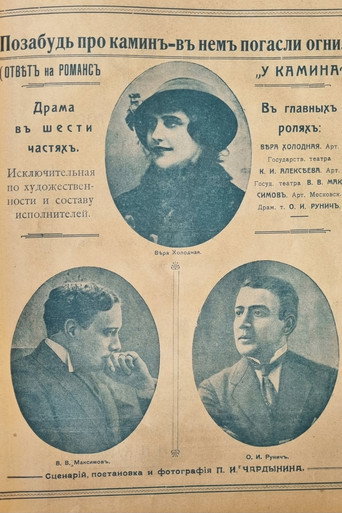
NRContinuation of Chardynin's drama By the Fireplace. Lost film.
Forget the Fireplace; the Lights Went out in It ...
1917
NRContinuation of Chardynin's drama By the Fireplace. Lost film.
Forget the Fireplace; the Lights Went out in It ...
1917
 NR
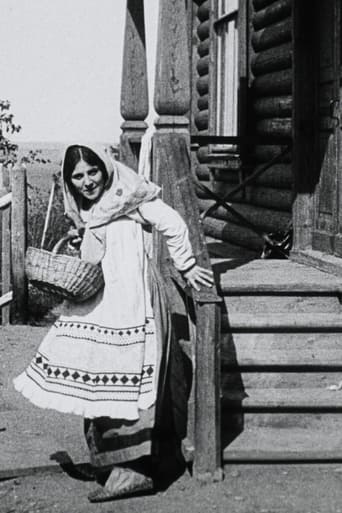
NRNo synopsis available yet.
Miss Peasant
1912
 4.8
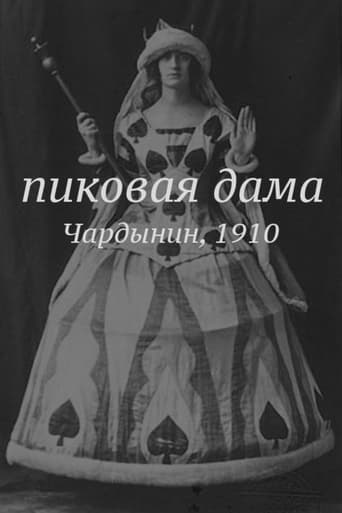
4.8Based on Pushkin's short story: When his friends play faro, Hermann always enjoys watching, but he never gambles himself. One day, as he is watching their game, he learns that an elderly countess staying nearby is said to possess a secret for winning a fortune at the game. Hermann is determined to learn this secret from her, and he initiates a romance with her granddaughter Liza, in order to improve his chances.
The Queen of Spades
1910
4.8Based on Pushkin's short story: When his friends play faro, Hermann always enjoys watching, but he never gambles himself. One day, as he is watching their game, he learns that an elderly countess staying nearby is said to possess a secret for winning a fortune at the game. Hermann is determined to learn this secret from her, and he initiates a romance with her granddaughter Liza, in order to improve his chances.
The Queen of Spades
1910
After a lethargic dream, the general of the Tsarist army finds himself in Soviet Russia in 1927. Lost movie.
The General from Other World
1925
 NR
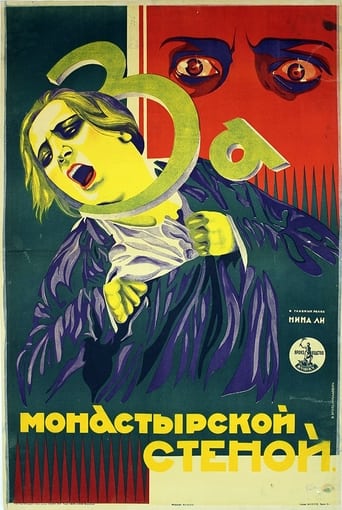
NRThe old nunnery owns the best lands. Nuns rent out the land to local rich men, and exploiting peasants they have a wealthy life. The peasants live in misery. Especially, the family of the peasant named Levin. He is forced to give away his last horse, his son Andrii is imprisoned, his daughter Nastia becomes a maid of a rich landlord. Trying to prevent the master’s harassment, Nastia escapes and gets to the nunnery. She can see the other life of the nuns who manufacture false relics, drink alcohol and kill children. Nastia ends up in the basement for resisting one of the “spiritual pastors.” Meanwhile, her brother Andrii escapes from prison. He stirs up a rebellion and saves his sister. The film is lost.
Behind the Monastery Wall
1928
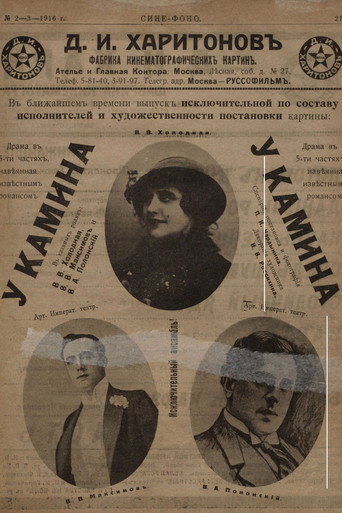 NR
NRLost film.
By the Fireplace
1917
NRLost film.
By the Fireplace
1917
 NR
NRNo synopsis available yet.
Behind The Doors Of The Salon
1913
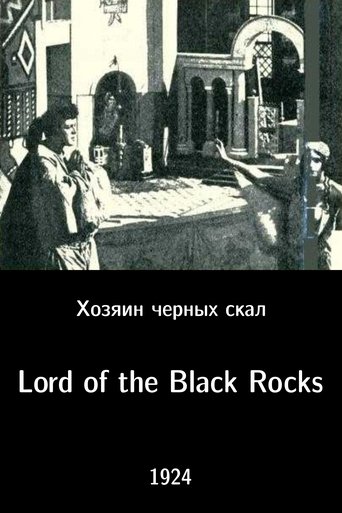 NR
NRThe film takes place somewhere abroad. One of the characters in the film, novice Morne, rescues a fisherman girl, Armela, who loses her mind from terror and seriously begins to believe that she is the "goddess of the winds". The monks of the monastery use this not without benefit. Armela's father finds his daughter and takes her home. Morne, in love with the girl, leaves the monastery and returns to his former profession of an artist. Soon Armela recovers and marries Morne.
Lord of the Black Rocks
1924
Selection of scenes from Nikolay Gogol's comedy of the same name. Lost movie.
Marriage
1909
Selection of scenes from Nikolay Gogol's comedy of the same name. Lost movie.
Marriage
1909
 NR
NRNo synopsis available yet.
The Last Day of Today
1915
NRNo synopsis available yet.
The Last Day of Today
1915
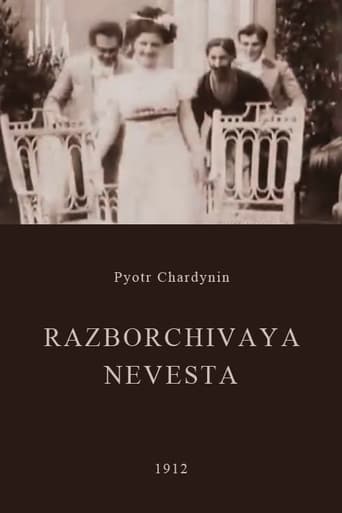 4.0
4.0About a young pretty bride, who cannot choose between all the grooms that circles around her...
The Fastidious Bride
1912
 NR
NRThe first Ukrainian adventure detective story. The action takes place in Odesa in 1920, occupied by Denikin's troops. The White Guard counterintelligence conducts a fruitless search for the Bolshevik agent "7+2". The search is led by officer Enger. Dizzying races, disasters, and murders further confuse the agent's trail. It is only with the arrival of the Bolsheviks that the case is solved. Incompletely preserved
Ukrasia
1925
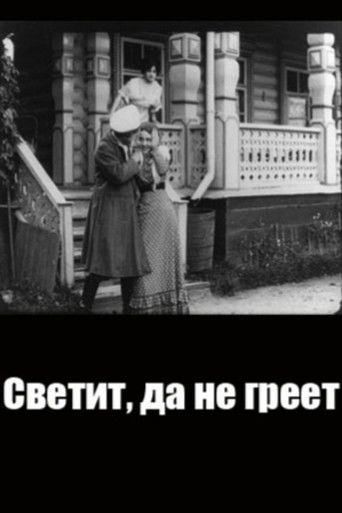 NR
NRNo synopsis available yet.
It Shines But It Doesn't Warm
1911
NRNo synopsis available yet.
It Shines But It Doesn't Warm
1911
Based on the drama by Dmitry Averkiev. The reign of Tsar Ivan Vasilyevich the Terrible. Boyar Vorotynsky loudly expresses his indignation at the untruth. Many agree with the boyar in their hearts, only Malyuta hates him and dreams of revenge. Having whispered to Grozny about Vorotynsky, he receives an order to arrest him.
Vasilisa Melentievna and Tsar Ivan the Terrible
1911
Based on the drama by Dmitry Averkiev. The reign of Tsar Ivan Vasilyevich the Terrible. Boyar Vorotynsky loudly expresses his indignation at the untruth. Many agree with the boyar in their hearts, only Malyuta hates him and dreams of revenge. Having whispered to Grozny about Vorotynsky, he receives an order to arrest him.
Vasilisa Melentievna and Tsar Ivan the Terrible
1911
10.0This tragedy depicts a father and son in love with the same woman, who is an enchantress. She keeps them both in subjection with her charms, butthe mother and wife of the victims kills the seducer. However, both the father and the son are severely affected by her actions, which they cannot forgive.
The Enchantress
1909
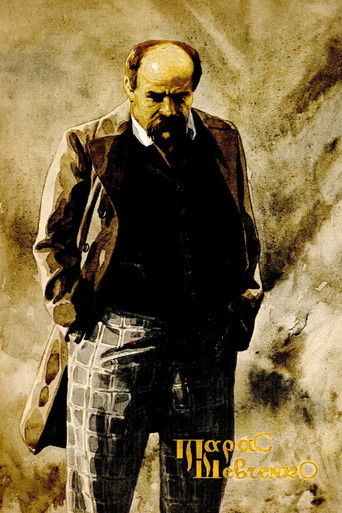 NR
NRThe film adaptation of Taras Shevchenko’s biography of 1925 is the first Ukrainian biopic. At that time, it was one of the most expensive films, as for the first time experts in history, ethnography, and literary studies were involved in pre-production. Consisting of numerous short stories, the film that shows the life of Shevchenko as an adolescent, a soldier, a poet, was successfully demonstrated in Ukraine and abroad and became the most acknowledged cinema project of 1926.
Taras Shevchenko
1926
Based on the novel of the same name by Ivan Goncharov. Raisky falls in love with his second cousin Vera, but she coldly rejects his advances. He soon learns that Vera is having an affair with exiled official Mark Volokhov, with whom She is secretly dating. One day, Vera, in a fit of passion, gives herself to Volokhov, which she immediately regrets doing. Raisky and Tatyana Markovna suffer along with her having learned about Vera’s situation. Volokhov invites Vera to marry him but she refuses his proposal. After all these passions, calm comes and in the final frames of the picture, Raisky draws a portrait of Vera, and then sits down to write a long-planned novel.
The Precipice
1913
7.0Film adaptation of excerpts from Nikolai Gogol's novel of the same name. Only two episodes are recreated faithfully: Chichikov's visit to Sobakevich and Chichikov's visit to Plyushkin. These episodes are followed by a series of scenes in which other characters appear without any connection with the plot. In the finale, everyone is photographed next to the bust of Gogol.
Dead Souls
1909
7.0Film adaptation of excerpts from Nikolai Gogol's novel of the same name. Only two episodes are recreated faithfully: Chichikov's visit to Sobakevich and Chichikov's visit to Plyushkin. These episodes are followed by a series of scenes in which other characters appear without any connection with the plot. In the finale, everyone is photographed next to the bust of Gogol.
Dead Souls
1909
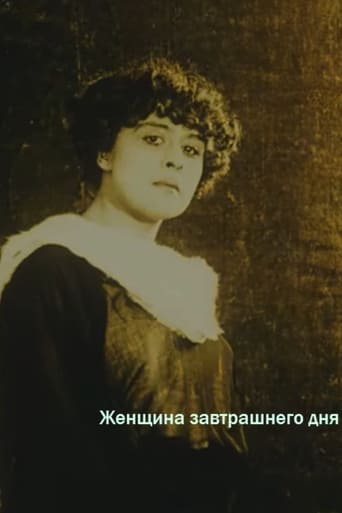 5.4
5.4A female doctor is so busy with her work that she has too little time for her fiancé. He falls in love with a waitress and the two have a child. Though considered by some to be a proto-feminist yarn, the film dwells on the consequences that equal rights for women may generate rather than openly champion suffrage. Similar in to Ibsen's The Doll House in many ways, the film provides mannered, solemn melodrama, ably acted by Mosjoukine and Yureneva.
Woman of Tomorrow
1914
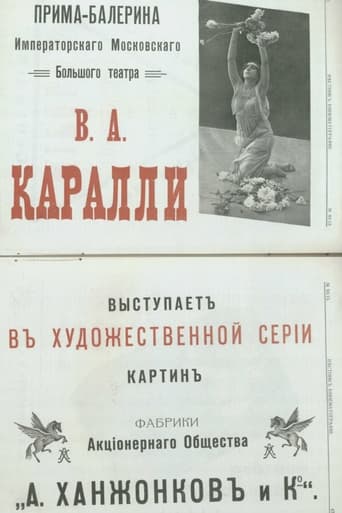 6.3
6.3A tragic story of a ballerina.
Chrysanthemums
1914
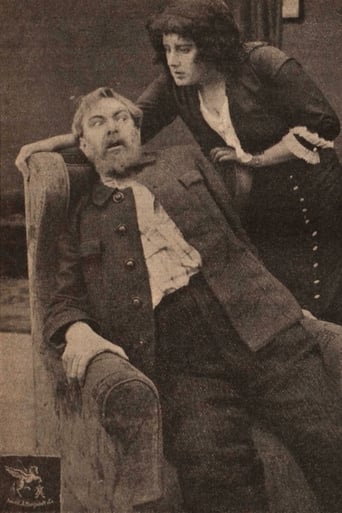 NR
NRNo synopsis available yet.
Life As It Is
1913
7.0Based on Lermontov's poem of the same name, Boyarin Orsha (Peter Chardynin) leaves the service of Ivan the Terrible.
Boyarin Orsha
1910
7.0Based on Lermontov's poem of the same name, Boyarin Orsha (Peter Chardynin) leaves the service of Ivan the Terrible.
Boyarin Orsha
1910