
Writing
Antonín Máša
Born — Died
1935-07-22 — 2001-10-04
Place of birth
Višňová, Czechoslovakia [now Czech Republic]
Known for
Writing
Credits
28 titles
Antonín Máša was a Czech screenwriter, director, and playwright, known for his contributions to Czechoslovak New Wave cinema. After studying journalism in Prague, he transitioned into filmmaking, collaborating with notable directors such as Evald Schorm. Máša's work often delved into the complexities of human relationships and societal norms. Notable films include Courage for Every Day (1964), The Return of the Prodigal Son (1967), and The End of a Priest (1969). His films are recognized for their introspective narratives and critical examination of contemporary society, contributing significantly to the cultural landscape of Czech cinema.
Known for
Television series Golden Sixties examines new insights into Czech and Slovak cinema of the 1960s and the role of the Czechoslovak New Wave. Each episode focuses on a different filmmaker.
Golden Sixties
2009
 10.0
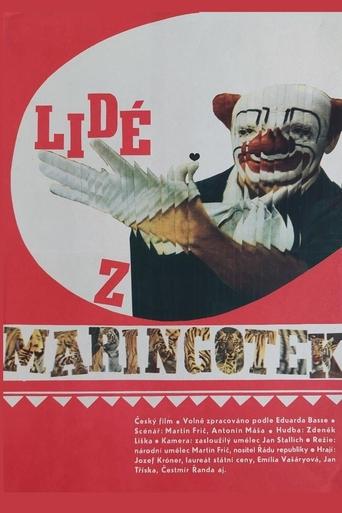
10.0Story about the people around the circus and the unfortunate love of a young man an acrobat. Before the dispute escalates so much that, according to the old clown, Vincek ends up with a noose on his back and Lotyš in a bass, fate intervenes and the young acrobat is called up to the war, where he serves with the dragoons. After serving his time and being released into civilian life, he sets out to find the National with his beloved Nina. However, she has not been with the circus for almost a whole year. Her parents took her away and Vincek, to the chagrin of his friends and the principal, decides to go looking for her. After a long journey, he finds his beloved in the Russian Kuznecki circus, but she has changed a lot during the years of separation. A simple girl in love has turned into a calculating, ambitious woman who desires money above all. But Vincek doesn't have you.
People From Caravans
1966
The theatre director encounters the disinterest and irresponsibility of the acting troupe, whose members are scheming and looking for side income. The tired and sick artist wants to finish his work at any cost.
Byli jsme to my?
1991
 7.0
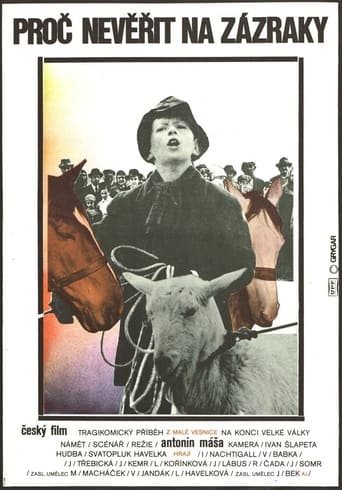
7.0Wartime events from a child's perspective were a popular theme during the previous regime - here it is a twelve-year-old village boy who experiences dangerous situations with retreating Nazi troops in picturesque South Bohemia... Any attempt to achieve a more believable depiction is destroyed by the staging's grandeur, and in the end the result is an awkward piece, suitable at most for celebrating the relevant national holidays. A longer copy with a tragic ending is stored in the NFA. Milda is shot unnoticed by an SS major.
Proč nevěřit na zázraky
1978
Young script-writer Frantisek (Petr Cepek) is hired to write a film script based on the successful novel Looking Back. He meets with the novel's female author, a University professor and writer named Olga Machová (Jirina Trebická), approximately ten-years-older than him. In the beginning, they do not understand each other at all. Frantisek is a skeptic experiencing a moral crisis, unsatisfied with both his work and his private life - he lives separated from his wife and has no deeper feelings for his numerous lovers. He even gets drunk from time to time and breaks the public peace. Olga is lonesome, too, but considers her life fulfilled.
Looking Back
1969
No synopsis available yet.
Zápas o člověka Nelibu
1991
Film credits
Series credits
Behind the camera
10.0Story about the people around the circus and the unfortunate love of a young man an acrobat. Before the dispute escalates so much that, according to the old clown, Vincek ends up with a noose on his back and Lotyš in a bass, fate intervenes and the young acrobat is called up to the war, where he serves with the dragoons. After serving his time and being released into civilian life, he sets out to find the National with his beloved Nina. However, she has not been with the circus for almost a whole year. Her parents took her away and Vincek, to the chagrin of his friends and the principal, decides to go looking for her. After a long journey, he finds his beloved in the Russian Kuznecki circus, but she has changed a lot during the years of separation. A simple girl in love has turned into a calculating, ambitious woman who desires money above all. But Vincek doesn't have you.
People From Caravans
1966
The theatre director encounters the disinterest and irresponsibility of the acting troupe, whose members are scheming and looking for side income. The tired and sick artist wants to finish his work at any cost.
Byli jsme to my?
1991
The theatre director encounters the disinterest and irresponsibility of the acting troupe, whose members are scheming and looking for side income. The tired and sick artist wants to finish his work at any cost.
Byli jsme to my?
1991
7.0Wartime events from a child's perspective were a popular theme during the previous regime - here it is a twelve-year-old village boy who experiences dangerous situations with retreating Nazi troops in picturesque South Bohemia... Any attempt to achieve a more believable depiction is destroyed by the staging's grandeur, and in the end the result is an awkward piece, suitable at most for celebrating the relevant national holidays. A longer copy with a tragic ending is stored in the NFA. Milda is shot unnoticed by an SS major.
Proč nevěřit na zázraky
1978
7.0Wartime events from a child's perspective were a popular theme during the previous regime - here it is a twelve-year-old village boy who experiences dangerous situations with retreating Nazi troops in picturesque South Bohemia... Any attempt to achieve a more believable depiction is destroyed by the staging's grandeur, and in the end the result is an awkward piece, suitable at most for celebrating the relevant national holidays. A longer copy with a tragic ending is stored in the NFA. Milda is shot unnoticed by an SS major.
Proč nevěřit na zázraky
1978
Young script-writer Frantisek (Petr Cepek) is hired to write a film script based on the successful novel Looking Back. He meets with the novel's female author, a University professor and writer named Olga Machová (Jirina Trebická), approximately ten-years-older than him. In the beginning, they do not understand each other at all. Frantisek is a skeptic experiencing a moral crisis, unsatisfied with both his work and his private life - he lives separated from his wife and has no deeper feelings for his numerous lovers. He even gets drunk from time to time and breaks the public peace. Olga is lonesome, too, but considers her life fulfilled.
Looking Back
1969
Young script-writer Frantisek (Petr Cepek) is hired to write a film script based on the successful novel Looking Back. He meets with the novel's female author, a University professor and writer named Olga Machová (Jirina Trebická), approximately ten-years-older than him. In the beginning, they do not understand each other at all. Frantisek is a skeptic experiencing a moral crisis, unsatisfied with both his work and his private life - he lives separated from his wife and has no deeper feelings for his numerous lovers. He even gets drunk from time to time and breaks the public peace. Olga is lonesome, too, but considers her life fulfilled.
Looking Back
1969
No synopsis available yet.
Zápas o člověka Nelibu
1991
No synopsis available yet.
Zápas o člověka Nelibu
1991
 5.4
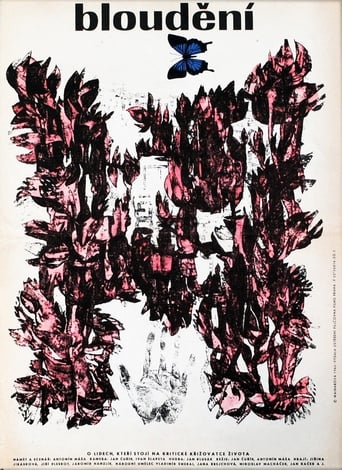
5.4Michal, a disillusioned teenager, clashes with his authoritarian father and runs away from home. Adrift in the city, he navigates a restless journey of fleeting encounters while rejecting the rigid values of his parents' generation.
Searching
1966
5.4Michal, a disillusioned teenager, clashes with his authoritarian father and runs away from home. Adrift in the city, he navigates a restless journey of fleeting encounters while rejecting the rigid values of his parents' generation.
Searching
1966
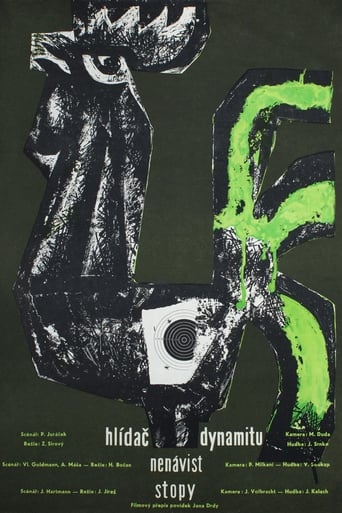 7.0
7.0Three separate short stories by Jan Drda from the collection The Dumb Barricade: The Dynamite Watchman, Hatred and Traces.
The Dynamite Watcher
1963
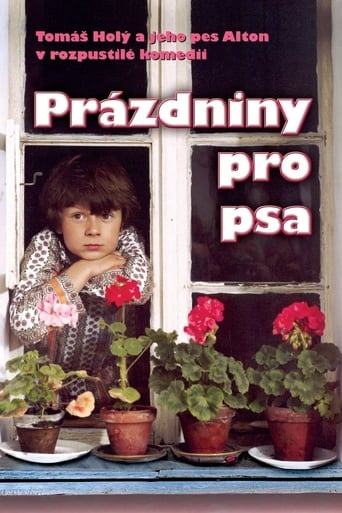 6.2
6.2The Mráz family is preparing for holidays. Parents are traveling to the spa and little Petr is going to the country to his grandparents. In addition, to the chaotic preparations, mother's friend is bringing a dog Blek. She wants Petr to look after it. Grandfather welcomes Petr and the dog with pleasure because he needs the ally against strict grandmother. Grandfather is not very skillful and thus grandmother often experiences troubles with his ideas.
Holiday for a Dog
1981
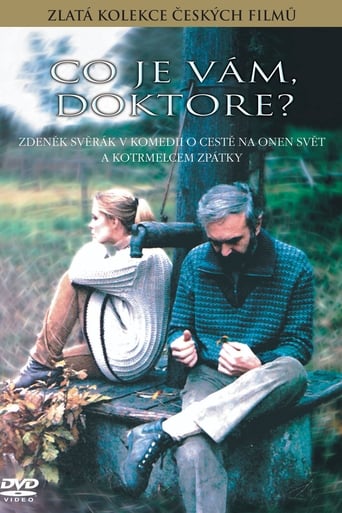 6.4
6.4Bohouš Burda, a forty-year-old idealist disillusioned with city life and his failing marriage, abandons it all to run a mobile dental clinic in the mountains. He meets Terezka, who shares his yearning for a simpler existence, but even in remote nature they must confront unforeseen challenges.
What's Up Doc?
1985
No synopsis available yet.
Návštěvní hodiny
1986
No synopsis available yet.
Rodeo
1973
No synopsis available yet.
Rodeo
1973
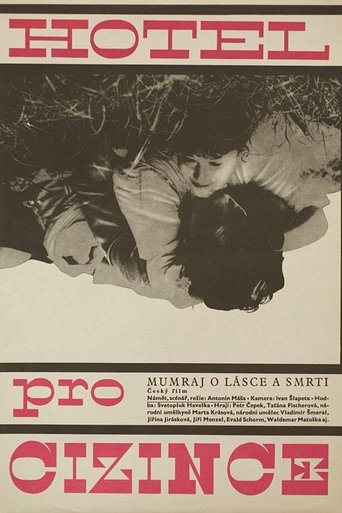 6.2
6.2A gifted poet checks into a Gothic hotel in hopes of meeting the woman with whom he has long been enamored. He is surrounded by a variety of offbeat characters like the hefty homosexual cook, shadowy clerks, snooty waiters, and valets prone to violence. He finally meets the woman of his dreams only to lose her and ultimately meet with tragedy.
Hotel for Strangers
1967
6.2A gifted poet checks into a Gothic hotel in hopes of meeting the woman with whom he has long been enamored. He is surrounded by a variety of offbeat characters like the hefty homosexual cook, shadowy clerks, snooty waiters, and valets prone to violence. He finally meets the woman of his dreams only to lose her and ultimately meet with tragedy.
Hotel for Strangers
1967
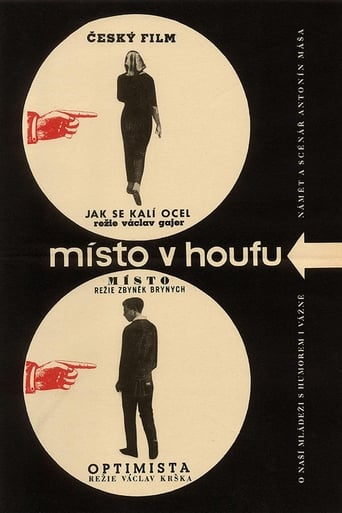 8.0
8.0A film in five episodes, all based on an attempt to show the life of young people today, their feelings and relationships, their behaviour in public and private life.
A Place in the Crowd
1964
The hero of the story is a forty-something intellectual, a sensitive composer of classical music. His exclusive profession, his work, which is actually incomprehensible to those around him, and his deep inner passion set him apart from the conformist milieu. Therefore, he tries to search for the "lark's silence" - a new strength, purity, truth, essence and roots of Czechism. However, on his return from the oppressive, alienated big city to his native village, to his former home, to nature, a deep disillusionment awaits him: he discovers that the once idyllic village has lost not only its face, but also any manifestation of spiritual life in its foolish attempt to resemble the city.
Skřivánčí ticho
1990
The hero of the story is a forty-something intellectual, a sensitive composer of classical music. His exclusive profession, his work, which is actually incomprehensible to those around him, and his deep inner passion set him apart from the conformist milieu. Therefore, he tries to search for the "lark's silence" - a new strength, purity, truth, essence and roots of Czechism. However, on his return from the oppressive, alienated big city to his native village, to his former home, to nature, a deep disillusionment awaits him: he discovers that the once idyllic village has lost not only its face, but also any manifestation of spiritual life in its foolish attempt to resemble the city.
Skřivánčí ticho
1990
Screenwriter Antonín Máša wrote a television production Zurvalec based on Turgenev's short story. It is a psychological drama about the conflicting encounter between Lieutenant Kister and the dangerous duelant Captain Luchkov, who drives away the boredom of an empty life in a backwater province with a series of violent acts. The tense relationship between the two men, expressing a contradiction of creative tolerance and aggression, is exacerbated by their interest in a woman who succumbs to admiration for the "predator" Luchkov. The tragic confrontation of different approaches to life raises the question of the possibilities of defending human decency over evil.
Zurvalec
1993
No synopsis available yet.
Vánoční stromek
1983
No synopsis available yet.
Spoveď
1994
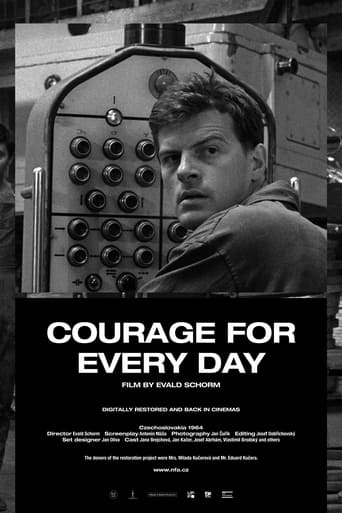 6.2
6.2A passionate communist worker is discouraged by the changing political climate and the failure of his peers to live up to his ideals.
Courage for Every Day
1965