

Directing
Andrea Tonacci
Born — Died
1944-01-01 — 2016-06-16
Place of birth
Rome, Italy
Known for
Directing
Credits
27 titles
Andrea Tonacci (Rome, 1944 - São Paulo, 2016) was an Italian-Brazilian filmmaker, considered one of the main figures of the Cinema Marginal movement of underground filmmaking in 1970s Brazil. He moved with his parents to São Paulo when he was 11 years-old. A few years later, he studied Architecture and Engineering at the Presbiterian University of Mackenzie, but dropped both careers to purchase his dream of becoming a filmmaker. His first feature-lenght film, "Bang-Bang" (1971), was recieved with mixed opinions by the Cinema Marginal movement and was screened at the Director's Fortnight at the Cannes Festival. In 2006, his film "Serras da Desordem" got him the Kikitos for best photography,…
Known for
No synopsis available yet.
Mais Luz
1986
 6.5
6.5A dialogue between the auteur's memories and the images he shot and kept during his long film career - sketches of live that were never shown, never seen, never edited.
Seen, Not Seen
2014
 7.1
7.1An anonymous urban protagonist experiences a series of absurd situations--including a crazy cab ride, an encounter with a wacky criminal gang, and lots of gunplay--infused with a unique anarchic energy, eventually suggesting our true animal nature.
Bang Bang
1971
 6.8
6.8The tensions experienced by three different people during the military dictatorship in Brazil: a politician, a revolutionary and a common citizen.
BLABLABLÁ
1968
 7.5
7.5A film that records the rehearsals of a Brazilian theatre troupe directed by Victor Garcia, and then the conflicts that break out as they tour Iran and France with a performance of Calderon's autos sacramentales. A problem with a scenery prop sparks a crisis in the group and the film chronicles this disaster.
Jouez Encore, Payez Encore
1975
No synopsis available yet.
Castelar e Nelson Dantas no País dos Generais
2008
Film credits

2010s · 3 titles
6.5A dialogue between the auteur's memories and the images he shot and kept during his long film career - sketches of live that were never shown, never seen, never edited.
Seen, Not Seen
2014
 NR
NRNo synopsis available yet.
Andrea Tonacci
2012
 4.6
4.6To start again, one has to destroy.
Young and Miserable or a Man Screaming Is Not a Dancing Bear
2016
2000s · 2 titles
No synopsis available yet.
Castelar e Nelson Dantas no País dos Generais
2008
 7.3
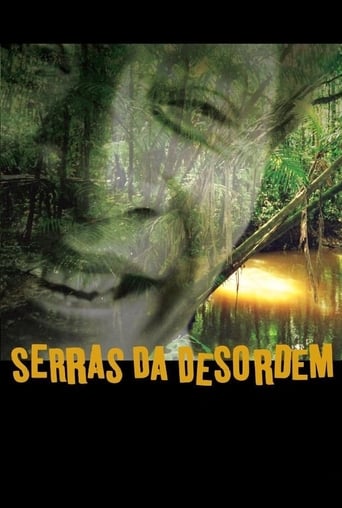
7.3Carapiru is a member of one of Brazil's remaining indigenous peoples, living in harmony with nature and making wise use of the local flora and fauna. But Carapiru is suddenly forced to fend for himself and flees into the nearby rain forest, building a new life for himself with the help some sympathetic settlers. However, after rebuilding his life Carapiru is uprooted once again, this time by government agents. A expressive visual storytelling in this study of the native peoples of Brazil in the 21st century.
The Hills of Disorder
2006
1980s · 1 titles
Behind the camera
6.5A dialogue between the auteur's memories and the images he shot and kept during his long film career - sketches of live that were never shown, never seen, never edited.
Seen, Not Seen
2014
6.5A dialogue between the auteur's memories and the images he shot and kept during his long film career - sketches of live that were never shown, never seen, never edited.
Seen, Not Seen
2014
7.1An anonymous urban protagonist experiences a series of absurd situations--including a crazy cab ride, an encounter with a wacky criminal gang, and lots of gunplay--infused with a unique anarchic energy, eventually suggesting our true animal nature.
Bang Bang
1971
7.1An anonymous urban protagonist experiences a series of absurd situations--including a crazy cab ride, an encounter with a wacky criminal gang, and lots of gunplay--infused with a unique anarchic energy, eventually suggesting our true animal nature.
Bang Bang
1971
6.8The tensions experienced by three different people during the military dictatorship in Brazil: a politician, a revolutionary and a common citizen.
BLABLABLÁ
1968
6.8The tensions experienced by three different people during the military dictatorship in Brazil: a politician, a revolutionary and a common citizen.
BLABLABLÁ
1968
6.8The tensions experienced by three different people during the military dictatorship in Brazil: a politician, a revolutionary and a common citizen.
BLABLABLÁ
1968
7.5A film that records the rehearsals of a Brazilian theatre troupe directed by Victor Garcia, and then the conflicts that break out as they tour Iran and France with a performance of Calderon's autos sacramentales. A problem with a scenery prop sparks a crisis in the group and the film chronicles this disaster.
Jouez Encore, Payez Encore
1975
 NR
NRA reflection on books and culture through testimonies and images from the Rio de Janeiro's National Library. In this work commissioned by the Ministry of Culture, the director forgoes voice-over in favor of a polyphonic discourse, combining more informative speeches from representatives of institutions with speeches by, for example, Sérgio Sant'Anna and Lygia Fagundes Telles, who express, in a different tone, their passion and vocation for books.
Biblioteca Nacional
1997
 5.0
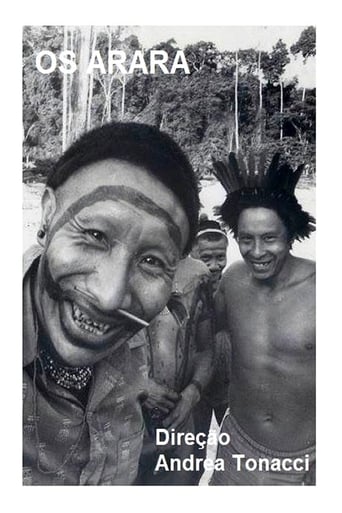
5.0Documentation of the preparations and expeditions of the Frente de Atração Arara da Funai, in the state of Pará, Brazil. With the construction of the Transamazônica, the Arara territory (without contact with the white man) is cut in half, and the Indians react by attacking the workers. Aware that all contact is a creation of dependency, the sertanista Sydney Possuelo, who also reflexively narrates the documentary, leads the expeditions that aim to identify the groups, how many individuals there are, establishing territorial limits to protect the area against invaders and loggers in the region.
Os Arara
1983
 NR
NRReligious beliefs linked to football.
Superstição e Futebol
1969
7.3Carapiru is a member of one of Brazil's remaining indigenous peoples, living in harmony with nature and making wise use of the local flora and fauna. But Carapiru is suddenly forced to fend for himself and flees into the nearby rain forest, building a new life for himself with the help some sympathetic settlers. However, after rebuilding his life Carapiru is uprooted once again, this time by government agents. A expressive visual storytelling in this study of the native peoples of Brazil in the 21st century.
The Hills of Disorder
2006
7.3Carapiru is a member of one of Brazil's remaining indigenous peoples, living in harmony with nature and making wise use of the local flora and fauna. But Carapiru is suddenly forced to fend for himself and flees into the nearby rain forest, building a new life for himself with the help some sympathetic settlers. However, after rebuilding his life Carapiru is uprooted once again, this time by government agents. A expressive visual storytelling in this study of the native peoples of Brazil in the 21st century.
The Hills of Disorder
2006
7.3Carapiru is a member of one of Brazil's remaining indigenous peoples, living in harmony with nature and making wise use of the local flora and fauna. But Carapiru is suddenly forced to fend for himself and flees into the nearby rain forest, building a new life for himself with the help some sympathetic settlers. However, after rebuilding his life Carapiru is uprooted once again, this time by government agents. A expressive visual storytelling in this study of the native peoples of Brazil in the 21st century.
The Hills of Disorder
2006
 NR
NRBy Ministry of Culture.
Theatro Mvnicipal de São Paulo
1997
 NR
NRRecording of the meeting between Sebastião Marinho and a rapper (Smokey D.) from the perspective of looking. Using his device to see “thoughts, emotions, feelings”, Tonacci, in front of the camera, follows them from his production company’s room to "Viaduto do Chá."
Óculos para ver Pensamentos
1994
 6.0
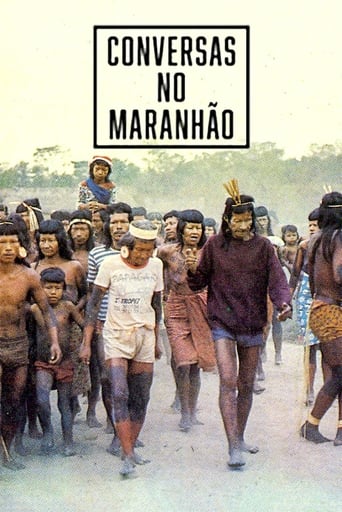
6.0A documentary on the Canela Apãniekra (Timbira) community in Brazil. Showing their daily habits, political struggle, oral tradition and the formation of space in Barra do Corda, Maranhão.
Conversas no Maranhão
1983
 7.1
7.1A group of middle-class friends driving around São Paulo choose one of the women as a bait to attract a victim, object of their alienation and moral aggressiveness.
Eye for an Eye
1966
7.1A group of middle-class friends driving around São Paulo choose one of the women as a bait to attract a victim, object of their alienation and moral aggressiveness.
Eye for an Eye
1966
 NR
NRA documentary about the permanence of brazilian native rituals in nomadic and rural communities among the pervading capitalism.
Benzedeiras de Minas
2008