
Directing
Rudy Burckhardt
Born — Died
1914-04-05 — 1999-08-01
Place of birth
Basel, Switzerland
Known for
Directing
Credits
42 titles
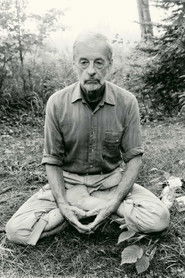
Rudy Burckhardt (April 6, 1914 – August 1, 1999) is best known for his photography of New York and other cities. His signature image explores the quirks of modern urban life, in particular the exuberant life of the streets from the perspective of the pedestrian. He is also celebrated for canonical portraits of New York artists at work, and for his film and collaborations with leading artists, poets and musicians of the New York School. This exhibition, however, shows the private, meditative, less known side of Burkhardt's creative personality, what guest curator Vincent Katz describes as "that essential base of solace that facilitated the cosmpolitan flâneur."
Known for
 NR
A silent screen-type comedy starring Edwin Denby as Hemlock Stinge, the unlovable billionaire.
Money
1968
Elliott Carter’s composition of the same title inspired Rudy Burckhardt, in collaboration with Yvonne Jacquette, to photograph this collage-style film. Mostly shot in New York City, but also in Hong Kong and Searsmont, Maine.
Night Fantasies
1991
 NR
"This filmic slice of life coalesces into an ethnographic view of a possible future: the city as a constantly bubbling, delirious playground where yesterday’s monuments are symbols to be triumphed over, and tomorrow never arrives. Perhaps this is why the ultimate effect is one of wistfulness, due also to the unexpected intrusion of a memento mori in the guise of a nude traversing the Maine woods…" - Trevor Winkfield
Cerveza Bud
1981
 NR
"The movie opens with a banana still-life vignette seen ripening through time-lapse photography for several days on a rooftop. The energy-charged New York Marathon follows, suggesting the rush of locations and pace about to unfold. The sense of traveling is persistent, we are taken from the marathon in New York, to breakfast in Maine, back to busy city streets, to the Grand Canyon, sky, the dancer Dana Reitz working out in the woods, poets posing, and the journey goes on. There is hardly a breather. Lines of David Shapiro's poem 'When a Man loves a Woman' are printed occasionally across the screen In one segment we hear Alice Notley read her poem 'A Woman comes into the Room.' Essentially a collage of images and sound, the precise order of events is unimportant. Overlays of time, season and location become fulfilling and cumulative experience, the particular sequences like cuts on a diamond." – Joe Giordano
Mobile Homes
1979
"The story of a shipwrecked baby reared by a kindly animal. See Tarzam, the beast-man, invent the art of painting. He meets his first human. His scene deepens from innocence to corruption and to final violence. Taylor is sublime, as always. The text is his, of course." – Edwin Denby *Contains a scene where "Tarzam" (played by Mead) gets sick from eating berries and is cured when a missionary doctor, played by Edwin Denby, administers an enema.
Tarzam
1969
 5.1
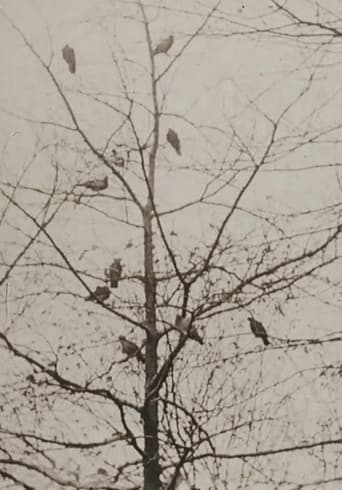
A collaboration between Joseph Cornell and Rudy Burckhardt, Aviary is an impression of Union Square. The location held a particular fascination for Cornell who wanted to establish a foundation for artists and art therapy there. In the film, he treats the park as an outdoor aviary.
The Aviary
1955
Film credits

Behind the camera
NRA silent screen-type comedy starring Edwin Denby as Hemlock Stinge, the unlovable billionaire.
Money
1968
Elliott Carter’s composition of the same title inspired Rudy Burckhardt, in collaboration with Yvonne Jacquette, to photograph this collage-style film. Mostly shot in New York City, but also in Hong Kong and Searsmont, Maine.
Night Fantasies
1991
NR"This filmic slice of life coalesces into an ethnographic view of a possible future: the city as a constantly bubbling, delirious playground where yesterday’s monuments are symbols to be triumphed over, and tomorrow never arrives. Perhaps this is why the ultimate effect is one of wistfulness, due also to the unexpected intrusion of a memento mori in the guise of a nude traversing the Maine woods…" - Trevor Winkfield
Cerveza Bud
1981
NR"The movie opens with a banana still-life vignette seen ripening through time-lapse photography for several days on a rooftop. The energy-charged New York Marathon follows, suggesting the rush of locations and pace about to unfold. The sense of traveling is persistent, we are taken from the marathon in New York, to breakfast in Maine, back to busy city streets, to the Grand Canyon, sky, the dancer Dana Reitz working out in the woods, poets posing, and the journey goes on. There is hardly a breather. Lines of David Shapiro's poem 'When a Man loves a Woman' are printed occasionally across the screen In one segment we hear Alice Notley read her poem 'A Woman comes into the Room.' Essentially a collage of images and sound, the precise order of events is unimportant. Overlays of time, season and location become fulfilling and cumulative experience, the particular sequences like cuts on a diamond." – Joe Giordano
Mobile Homes
1979
"The story of a shipwrecked baby reared by a kindly animal. See Tarzam, the beast-man, invent the art of painting. He meets his first human. His scene deepens from innocence to corruption and to final violence. Taylor is sublime, as always. The text is his, of course." – Edwin Denby *Contains a scene where "Tarzam" (played by Mead) gets sick from eating berries and is cured when a missionary doctor, played by Edwin Denby, administers an enema.
Tarzam
1969
5.1A collaboration between Joseph Cornell and Rudy Burckhardt, Aviary is an impression of Union Square. The location held a particular fascination for Cornell who wanted to establish a foundation for artists and art therapy there. In the film, he treats the park as an outdoor aviary.
The Aviary
1955
 6.0
First shown on January 30, 1967, FOR LIFE AGAINST THE WAR was an open-call, collective statement from American independent filmmakers disparate in style and sensibility but united by their opposition to the Vietnam War. Part of the protest festival Week of the Angry Arts, the epic compilation film incorporated minute-long segments which were sent from many corners of the country, spliced together and projected. The original presentation of the works was more of an open forum with no curation or selection, and in 2000 Anthology Film Archives preserved a print featuring around 40 films from over 60 submissions.
For Life, Against the War
1967
 NR
Rudy Burckhardt shot plenty of film while he was stationed in Trinidad with the Signal Corps in the early 1940s. This short film compiles some of the choicest bits.
Trinidad
1943
 NR
“Happy with his luscious daughter Aurora in a rustic setting, Professor Borealis has devised an improved brain and is ready to transplant it. The humor is tenderly black. Burckhardt's fusion of documentary-type photography with fairytale storyline is nearer Keystone than avant-garde with its visual honesty and particular virtuosity.” — Edwin Denby
Lurk
1965
 4.0
No synopsis available yet.
Body - Earth
1974
 NR
"A pseudo-educational, fictitious documentary survey of the ups, downs, ins and far-outs of Dope. Very funny and slightly sinister, like Red Skelton in the sky with diamonds." - Ron Padgett
Inside Dope
1971
 NR
Rudy Burckhardt’s breezy stop-motion animation follows after a poem by his New York School compatriot Kenneth Koch.
The Apple
1967
 6.2
A travelogue of Port-au-Prince, Haiti concentrating on the daily life and rhythm of tropical island life.
Haiti
1938
 10.0
Short film by Swiss-American film-maker and photographer Rudy Burckhardt, featuring a poem by Kenneth Koch.
On Aesthetics
1999
 NR
A snapshot from the filmmaker's own life in rural Maine.
Julie
1980
About the making of a large commissioned mural painting of an aerial view. From the first drawing out of a circling, single-engine plane, then transferring the studies onto three panels in New York, to the installation of the 27 feet wide, glowing-colored paintings in the post office of Bangor, Maine. With music by Domenico Scarlatti.
Yvonne Jacquette Painting "Autumn Expansion"
1981
 NR
With music by Elliott Carter adding drama and richness, a surreal dance by Dana Reitz and Alice Notley reading her poem "I work in a whorehouse, I seem to like it/it is dark like a cave, with pink light..." We visit briefly New York, Provincetown, Martinique, Hong Kong, ending in the dark woods of Maine, with glimpses of women, peculiar, sometimes erotic, always fleeting.
Wayward Glimpses
1992
 NR
To a poem by Kenneth Koch with Chopin played by Gena Raps. "Rudy's lyrical montage opens and reflects the world the way a poem does. He consistently gets to the essential fragments of an experience or a view. His perspective is that of a pedestrian god of sidewalks, a celebrator of details we might have missed. The films are about desire, bewitched noticing and, most of all, love." – Greg Masters
In Bed
1986
"a film that looks forward to the many collage films Burckhardt has made in the last two decades. Shot in Maine in black and white, it demonstrates Burckhardt's ability to take seemingly slight subjects -- flowers, fields, a pond -- and invest them with consequence by the simple act of looking. Instead of thinking about a daisy, compiling a list of its literary references, and planning a rise-and-fall drama based on a mental construct, Burckhardt simply sets out with his camera and films. As he shoots, he goes closer and closer to his chosen subject, putting the viewer into a trance, intoxicated by textures of petals, the myriad-flowered center, the unchoreographed dance the daisy makes on a breezy day. " - Mobile Homes: The Art of Rudy Burckhardt, Institut d'Art Modern, Centre Julio González, Valencia, Spain,1998.
Daisy
1966
 NR
Made in the final year of his life, Rudy Burckhardt’s Scattered Showers begins its journey in the city he so scrupulously documented in photographs and film for the greater part of his career.
Scattered Showers
1999
A soldier on a weekend pass, with Kodachrome in his camera, takes a leisurely walk on both sides of the tracks. Piano by Earl Hines.
Montgomery, Alabama
1941
 NR
Untilted takes an intrigued look around and reports on how things appeared then and what everyone was up to. Lines from a poem by John Ashbery cross the screen at times and our grasp of his elusive language is strengthened by the accompanying images. The land and people of Maine, New Mexico, and New York City appear to wittily chosen music by Busconi, Duke Ellington, Merle Haggard, Philip Glass, Cecil Taylor, et al. There are heroic hang-gliders soaring over hills, cars streaming sweetly around a corner in Lower Manhattan, and Yoshiko Chuma's dancers in fierce rehearsal, performing with vulnerable whimsey at a traffic intersection and frolicking intently (and unclothed) in the woods.
Untilted
1983
 4.3
A sightseeing portrait of New York, with lively narration taking the viewer aboard the New York elevated and subway trains. Then the view from the windows becomes slightly abstracted, the voice of the commentator becomes uncertain. Featuring Joseph Cotten (credited 'Cotton') Virginia Nicholson Welles, John Becker and Edwin Denby.
Seeing the World: Part One - A Visit to New York, N.Y.
1937
 NR
a travelogue of Peru.
Saroche
1975
 4.0
Larry is a madly energetic, oversexed artist. Jane, a combination of palm reader and psychoanalyst, is trying to straighten him out. John is a straight boy interested in baseball who ends up an abstract painter.
Mounting Tension
1950
 NR
"The New Jersey Turnpike and downtown New York in rain and shine. Trailer trucks, overpasses and industrial wastes become natural wonders. The stream of trucks is often gay but sometimes ominous. After a thunderstorm, the pike gives way to charming and sexy shoppers on 14th Street. Real sounds and wonderful color." - Edmund Leites
Doldrums
1972
No synopsis available yet.
Six Days
1978
 NR
A snow storm – Disney World – self important New York – ox-pull in Maine – a special old man – strip tease – an ant in the woods –wild 14th street – a mugging survived – the end.
City Pasture
1974
a swift tour of subways and streets while it concentrates on a threadbare romantic comedy about a lonely boy and a girl, played by Red and Mimi Grooms
Miracle on the BMT
1964
A fairy tale about a pair of moccasins that take off on their own, through woods and fields into the town of Belfast, Maine. They fall in love, drink beer, dream in the gutter, at last are rescued by the boy on whose feet they belong. - MUBI
Slipperella
1972
"Lurking crime and lingering desire change the atmosphere of this brief but affecting film. The light changes moment by moment. The season is shifting. Figures move like phantoms in the penumbra. Beethoven glowers against the evening; a perfect Alice polishes bronze with her petticoat; traffic in diamonds and rubies twines its way among the trees; snarling youths self-destruct. The false promises of youth, beauty and art are the smoke out the windows of fire along Fifth Avenue." -- Christopher Sweet
Central Park in the Dark
1985
 NR
Since 1970 Simonds has created Dwelling places for an imaginary civilization of “Little People” who are migrating through the streets of neighborhoods in cities throughout the world; New York, Paris, Shanghai, Berlin, London, Dublin among many others. Below is a selection of films of Simonds constructing Dwellings on the Lower East Side of New York.
Dwellings Winter
1974
 NR
Looking down at nature's small works in the woods of Maine, then straight up at the sky, then down again at the daylong journey of an inchworm.
Caterpillar
1973
 NR
"A diary or collage film, ranging from snow in the Catskills, with stop-overs in Boulder, Colorado and San Francisco, to Easter in New York, flowers and cows in Maine, a Caribbean carnival in Brooklyn, country fairs with men splitting wood and women weight-lifting; and a last section with all these combined and more. The film is also about Venus – two of them actually – one a classic Renaissance Venus, the other a Nordic, Gothic one, the Venus of the Broken Trees. The music is a collage too, ranging from Spike Jones to Hector Berlioz' "Nuits d'Ete." - Ron Padgett
Zipper
1987
Red Grooms' retelling of the classic children's story. Shot by the artist Rudy Burckhardt, it stars Mr. Grooms’s daughter, Saskia, and other friends and family members.
Little Red Riding Hood
1978
 10.0
Short film with sound by Rudy Burckhardt, assembled from the footage shot by Joseph Cornell for his own silent "Mulberry Street."
What Mozart Saw on Mulberry Street
1956
 NR
New York streets – Maine woods – New York With poems by Vincent Katz, Dances by Douglas Dunn, Dana Reitz, Grazia Della Terza. Rated M. B. S. T. B. A. (must be seen to be appreciated).
Tree Streets
1995
 NR
The film's title evokes a mundane slice of life but a kindhearted maid catches a lucky break when her enchanted feather duster makes it so that the house cleans itself.
A Day in the Life of a Cleaning Woman
1953
A piano sonata by Josef Haydn and New York City. The first, allegro movement is choreographed by midtown crowds, crossing every which way, often barely avoiding collision. For the long, slow second movement we see quiet, stately buildings, their columns, cornices, portals and ornaments, with only the camera providing movement at times. The very fast, final part is in color, around Times Square, the movement speeded up and frantic.
Millions in Business as Usual
1961
 6.1
Photographer Rudy Burckhardt shows us the ebb and flow of people rushing about Manhattan. Equally exhilarating in his novel approach to snap images quickly on the run, a method he inaugurated and that continues to the present day. In film, he added slow and fast motion, split-screens and superimpositions to his repertory.
Pursuit of Happiness
1940