

Known for
 5.5
Maurice Vallier, nicknamed "Ma Pomme"(which means "myself" in slang), is a cheerful man, well aware that money does not make happiness and who, of all things, prices freedom. Which is why he has become a tramp and he has never regretted his choice of life. Things go smoothly until the day he inherits a huge amount of money. He first refuses it but changes his mind when he realizes that thanks to the inheritance he can help others. Even more enticing is the fact that he must share the big money with a charming air hostess. However once he deems he has done enough good he gives up the money left and resumes his old lifestyle singing along "Ma pomme c'est moi, j'suis plus heureux qu'un roi..."
Just Me
1950
 6.5
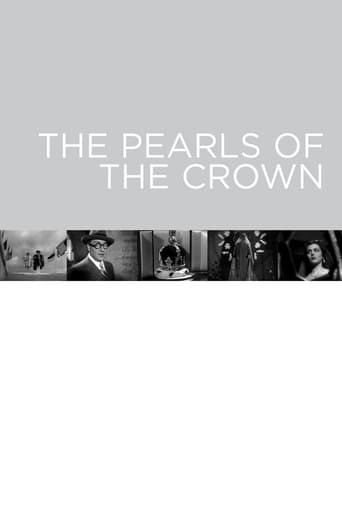
The story of the seven pearls of the English Crown, from Henry VIII to 1937 – three of them missing.
The Pearls of the Crown
1937
 5.0
Somewhat reminiscent of 'Mädchen in Uniform' (1931), the story is set in a private girl's school, populated almost exclusively by children from broken homes. Among the few students who can claim family stability is Micheline Presle, but even her happiness is threatened when her lawyer father Andre Luguet inaugurates an affair with stage actress Jacqueline Debulac. With the help of Debulac's daughter Louisa Carletti, Presle is able to break up her father's romance and deliver him into the open arms of her mother Marcelle Chantal.
Girls in Distress
1939
 7.9
This murder mystery is set in a Parisian cafe and examines the mysterious murder of a famed journalist and extortionist who is killed at his table in the cafe. Though the prime suspects are gathered together( including his wife and her lover, the gun-runner, the creditor, and a playboy) and all of them have motives, none of them did it. So whodunit?
Café de Paris
1938
 5.4
The history of one of France's most famous streets is retold, featuring multiple performances from Guitry himself.
Let’s Go Up the Champs-Élysées
1938
 7.0
Following a heartbreak, Aimée, a young girl is taken in by the owners of a café for whom she starts working, and falls in love with René, a sailor who gave her a taste for life.
Le café du port
1940
Film credits
1950s · 3 titles
5.5Maurice Vallier, nicknamed "Ma Pomme"(which means "myself" in slang), is a cheerful man, well aware that money does not make happiness and who, of all things, prices freedom. Which is why he has become a tramp and he has never regretted his choice of life. Things go smoothly until the day he inherits a huge amount of money. He first refuses it but changes his mind when he realizes that thanks to the inheritance he can help others. Even more enticing is the fact that he must share the big money with a charming air hostess. However once he deems he has done enough good he gives up the money left and resumes his old lifestyle singing along "Ma pomme c'est moi, j'suis plus heureux qu'un roi..."
Just Me
1950
 8.0
Young Anthony Pendrell plays the precocious son of Scotland Yard inspector Norman Shelley. Pendrell's efforts to emulate his father usually results in nothing but irritation for his elders. But when a boarding house becomes the headquarters for a criminal gang, it is Pendrell who cracks the case.
Blind Man's Bluff
1952
 6.5
Anne Maitland, a female lawyer, receives an unexpected late-night visit from ex-boyfriend Guy Ransome. She agrees to let him sleep on the sofa but he must leave the next morning. When he returns home he finds that his girlfriend has been murdered. His former lover agrees to defend him without telling the court that he spent the night with her. Complications ensue.
Never Look Back
1952
1940s · 3 titles
7.0Following a heartbreak, Aimée, a young girl is taken in by the owners of a café for whom she starts working, and falls in love with René, a sailor who gave her a taste for life.
Le café du port
1940
 8.0
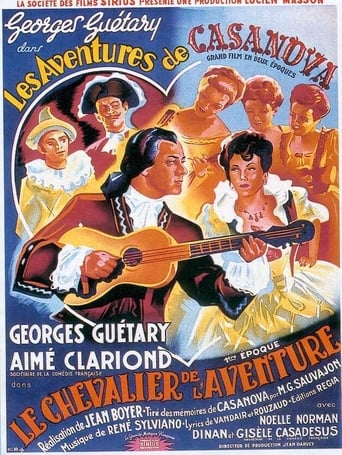
On his way to Paris, Casanova keeps on collecting female conquests, does not shy away from duels and gets into many a colorful adventure. Once in the capital, the fearless knight saves the honor of a great lady, conquers the niece of his implacable enemy but courts disaster for love of Coraline, a faithless opera dancer.
Loves of Casanova
1947
After foiling a robbery, Ben, a window cleaner is hired by Lady Barr-Nunn to guard her valuables. A comedy based on class divisions and snobbery.
High Jinks in Society
1949
1930s · 5 titles
6.5The story of the seven pearls of the English Crown, from Henry VIII to 1937 – three of them missing.
The Pearls of the Crown
1937
5.0Somewhat reminiscent of 'Mädchen in Uniform' (1931), the story is set in a private girl's school, populated almost exclusively by children from broken homes. Among the few students who can claim family stability is Micheline Presle, but even her happiness is threatened when her lawyer father Andre Luguet inaugurates an affair with stage actress Jacqueline Debulac. With the help of Debulac's daughter Louisa Carletti, Presle is able to break up her father's romance and deliver him into the open arms of her mother Marcelle Chantal.
Girls in Distress
1939
7.9This murder mystery is set in a Parisian cafe and examines the mysterious murder of a famed journalist and extortionist who is killed at his table in the cafe. Though the prime suspects are gathered together( including his wife and her lover, the gun-runner, the creditor, and a playboy) and all of them have motives, none of them did it. So whodunit?
Café de Paris
1938
5.4The history of one of France's most famous streets is retold, featuring multiple performances from Guitry himself.
Let’s Go Up the Champs-Élysées
1938
 7.0
Vérotchka, a vivacious theater actress touring in a provincial town, is turned out of her hotel by orders of Monsieur Tricointe, the stern president of the local law court. In a rage, the actress knocks at Tricointe's door with a view to protesting against the treatment she is given. She goes about it so well that she ends up being accommodated by the president himself. This is the moment Jean-Pierre Gaudet, the Minister of Justice, chooses to pay an unannounced visit to his friend Tricointe. There he mistakes Vérotchka for Madame Tricointe and the president does not dare to contradict Gaudet. A lot of absurd situations ensue.
La Présidente
1938