
Known for
 NR
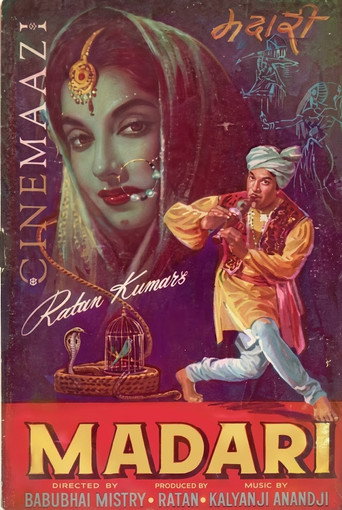
The film follows a classic fantasy-adventure and folkloric style characteristic of Babubhai Mistry's work (known for trick photography and mythological/fantasy cinema). The story features elements of street performance, illusion, and mystical peril—showcasing a madari (street juggler/snake charmer) who performs feats with animals like snakes and parrots, claims to read people's inner thoughts and hearts, and gets entangled in a dramatic adventure involving a mythical villain, distressed villagers, and a quest to rescue captives from a mysterious pit or lair.
Madari
1959
 NR
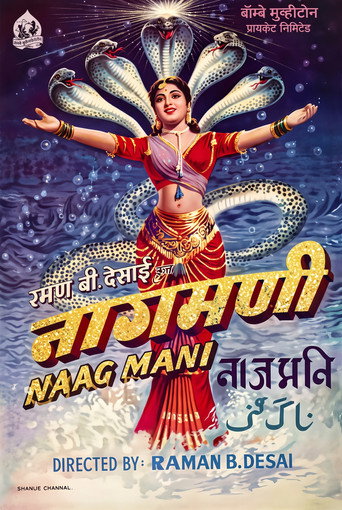
The narrative follows Princess Sukanya, the daughter of King Sharyati, who crosses paths with Chyavan, a young ascetic (tapasvi) with a vow to right a wrong done to the Ashvini Kumars by Indra. Due to the twists of destiny, Sukanya accidentally blinds and causes Chyavan to age into infirmity, marrying him in his broken state. Refusing to let destiny break their spirits, Sukanya rises as a devoted wife to fulfill her husband's mission, restore his youth and eyesight, and bring the three worlds—Akash, Prithvi, and Patal—to their door.
Naag Mani
1957
 NR
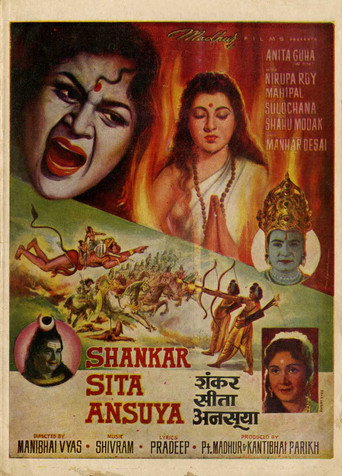
The film blends classic tales from the Shiv Puran and the Ramayana. It begins with the celestial powers of Sati Anusuya, which lead the trinity of gods (Brahma, Vishnu, and Mahesh) to test her virtue, resulting in them temporarily turning into infants at her ashram. Later, the narrative transitions into key events from the Ramayana. Goddess Parvati (Uma) doubts whether Lord Rama is truly an incarnation of Lord Vishnu. She tests Rama by disguising herself as Sita, but Rama respectfully addresses her as Mother, proving his divinity. The second half follows the core events of the epic, including the battle with Ravana, Sita's agnipariksha (trial by fire), her exile, the birth of Lava and Kush, and her eventual return to Mother Earth.
Shankar Sita Ansuya
1965
 6.5
Two warring families in the town of Sajalpur find their generational conflict tested when the arrogant son of one, Raya, falls truly in love with Soni, the daughter of the other, forcing him to confront his reckless nature and sparking a dramatic rivalry with a woman from the jungle also captivated by him.
Madhosh
1951
 8.0
1953 bollywood film
Hazaar Raaten
1953
 8.0
A version of the epic Indian poem "The Mahabharata", telling the story of the war between the families of the Pandavas and the Kauravas, descending from the same ancestor.
Mahabharat
1965
Film credits
1980s · 2 titles
 NR
A mythological movie about Lord Krishna that tells the tale of the prophesized killing of his tyrannical uncle, and his role in the epic battle of the Mahabharat.
Bhagwan Shri Krishna
1985
A snake princess marries the Prince of Lanka, Indrajeet Meghnath, son of King Ravan, and endures the curse of a snake, whose spouse was killed accidentally by Meghnath while riding on their chariot. Also depicts the reincarnation of Lord Vishnu as Lord Ram, Goddess Lakhsmi as Goddess Sita, and Lord Shesh Naag as Lord Lachman, leading to the battle of good versus evil as told in Holy Book: Ramayan.
Sati Naag Kanya
1982
1970s · 4 titles
 9.0
Snake Goddess Mansa is having a bad day. It's her birthday but she is restless and irritated by her followers in Naglok. Fortuitously Nagraj turns up and she manages to cajole him into revealing the name of her father, who is none other than Lord Shiva.
Naag Panchami
1972
A forest conservator works with a tribal clan during the British rule over India. He consciously does several marriages to expose the sly men who are playing with the sacred institution of marriage.
Woh Main Nahin
1974
 6.4
Durga Babu, and his wife, Ganga, comes across Shyam, an orphan, who sings and dances on special occasions, and decide to take him home. Shyam meets with their daughter, Radha, and she slowly falls in love with him, but he thinks that she just wants to be friends. In his eyes, Shyam wants to be a free person, not tied down to anyone or anything, and would like to spend the rest of his life wondering, singing, and dancing. When he finds out that the family intend to get him married, he likens his plight to that of a caged bird, and flees, breaking Radha's heart. Will Shyam ever return? What impact will this have on the family?
Geet Gaata Chal
1975
 5.8
Parents very often want to inject their own likes and dislikes and way of living in their own children. Such impressions leave a deep scar in the subconscious of the child which affects his mental growth and behaviour pattern when he attains the youth. Through the story of Shashi and Arati EK NAO DO KINARE pleads for the independent growth of children.
Ek Nao Do Kinare
1973
1960s · 2 titles
NRThe film blends classic tales from the Shiv Puran and the Ramayana. It begins with the celestial powers of Sati Anusuya, which lead the trinity of gods (Brahma, Vishnu, and Mahesh) to test her virtue, resulting in them temporarily turning into infants at her ashram. Later, the narrative transitions into key events from the Ramayana. Goddess Parvati (Uma) doubts whether Lord Rama is truly an incarnation of Lord Vishnu. She tests Rama by disguising herself as Sita, but Rama respectfully addresses her as Mother, proving his divinity. The second half follows the core events of the epic, including the battle with Ravana, Sita's agnipariksha (trial by fire), her exile, the birth of Lava and Kush, and her eventual return to Mother Earth.
Shankar Sita Ansuya
1965
8.0A version of the epic Indian poem "The Mahabharata", telling the story of the war between the families of the Pandavas and the Kauravas, descending from the same ancestor.
Mahabharat
1965
1950s · 4 titles
NRThe film follows a classic fantasy-adventure and folkloric style characteristic of Babubhai Mistry's work (known for trick photography and mythological/fantasy cinema). The story features elements of street performance, illusion, and mystical peril—showcasing a madari (street juggler/snake charmer) who performs feats with animals like snakes and parrots, claims to read people's inner thoughts and hearts, and gets entangled in a dramatic adventure involving a mythical villain, distressed villagers, and a quest to rescue captives from a mysterious pit or lair.
Madari
1959
NRThe narrative follows Princess Sukanya, the daughter of King Sharyati, who crosses paths with Chyavan, a young ascetic (tapasvi) with a vow to right a wrong done to the Ashvini Kumars by Indra. Due to the twists of destiny, Sukanya accidentally blinds and causes Chyavan to age into infirmity, marrying him in his broken state. Refusing to let destiny break their spirits, Sukanya rises as a devoted wife to fulfill her husband's mission, restore his youth and eyesight, and bring the three worlds—Akash, Prithvi, and Patal—to their door.
Naag Mani
1957
6.5Two warring families in the town of Sajalpur find their generational conflict tested when the arrogant son of one, Raya, falls truly in love with Soni, the daughter of the other, forcing him to confront his reckless nature and sparking a dramatic rivalry with a woman from the jungle also captivated by him.
Madhosh
1951
8.01953 bollywood film
Hazaar Raaten
1953