

Directing
Costas Ferris
Born
1935-04-18 (91)
Place of birth
Cairo, Egypt
Known for
Directing
Credits
26 titles
Costas Ferris is a Greek film director, writer, actor, and producer. He wrote the lyrics of Aphrodite's Child's album 666. His 1983 film Rembetiko won the Silver Bear at the 34th Berlin International Film Festival.
Known for
 7.4
7.4A group of Greek soldiers are assigned to run the Cinematographic Unit of the army in the midst of political unrest.
Loafing and Camouflage
1984
 7.6
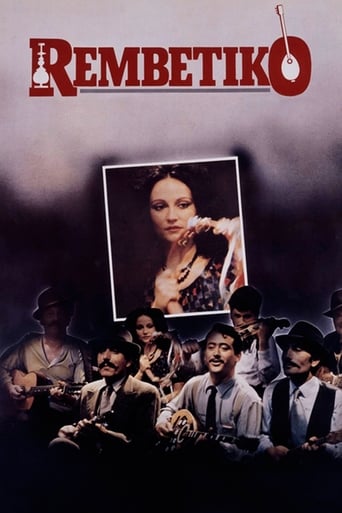
7.6The story of a group of Rembetes, singers and musicians of the Greek equivalent to the blues, in the early decades of the 20th century, seen through the eyes of a young female singer.
Rembetiko
1983
 NR
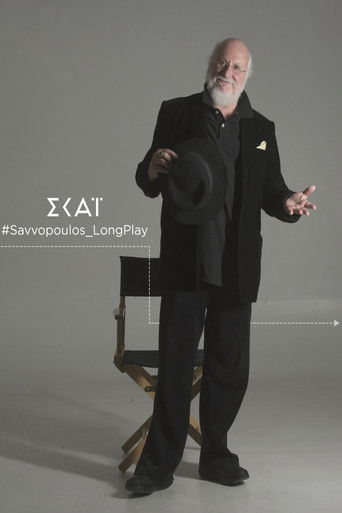
NRThis special six-episode tribute focuses on the discography of Dionysis Savvopoulos, presenting ten of his emblematic albums - a turning point in Greek music. Six total "eras" of musical creation and history. In this documentary, which was to be the last legacy of Dionysis Savvopoulos, he himself tells stories that marked his life and the lives of everyone, from 1965, when he released his first album, to the present day, while for the last time he sings, with his guitar and unique voice, songs that we loved from his discography. In his unique way - the one that sweetly mixes myth with reality - he talks about the "lives" he lived, the people he met, his songs that were loved and left their indelible mark over time. The visual part, is by Alexis Kyritsopoulos, a companion and friend of Savvopoulos from the beginning, with works that he designed especially for this particular tribute, which also come to life through animation.
Savvopoulos Long Play
2026
 7.0
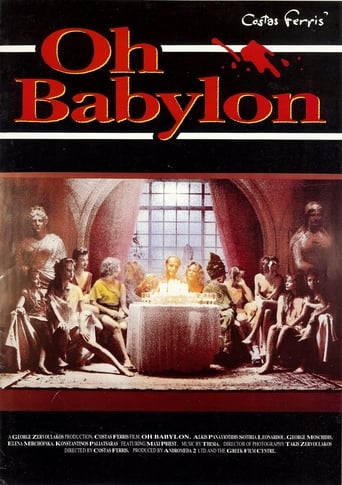
7.0The film adaptation for the modern era of the ancient tragedy The Bacchae. Pentheus is celebrating his birthday, and surreal scenes unfold before his eyes, arousing doubts in the celebrant as to whether the things he is experiencing are real. Written by Greek Film Archive
Oh Babylon
1989
 6.0
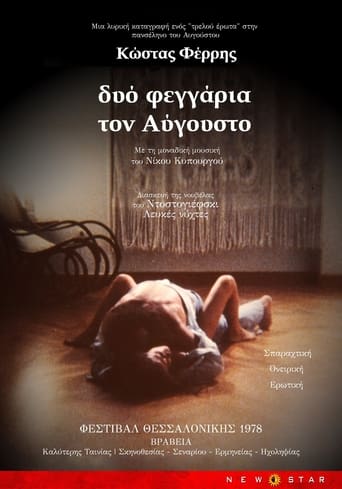
6.0We are in Athens, in August, when the residents are away on vacation. An eccentric music teacher wanders and daydreams in the streets of the half-empty city. In the winds of Plaka, he meets Anna, a strange girl lost in her fantasies, who is always waiting for her beloved to return and take her away, as he promised her exactly one year ago when they met. The two heroes try to get closer to each other, with successive dialogues and monologues that border on the absurd.
Two Moons in August
1978
 4.4
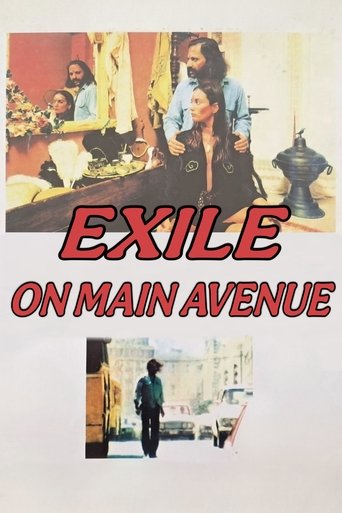
4.4A disillusioned forty-something wanders through a city and his past, rejected by every ideology he once believed in. Neither love nor theory can fill the void—so he stages his own theatrical death.
Exile on Main Avenue
1979
Film credits
2000s · 2 titles
 3.6
3.6A young drifter working on a river barge disrupts his employers' lives while hiding the fact that he knows more about a dead woman found in the river than he admits.
Vitsia gynaikon
2000
 8.5
8.5The Lecco, an art collector, promises to help him, asking him to return to bring him a valuable vase from the archaeological museum of Amorgos, stealing it and replacing it with a copy. Alkis accept and go on Amorgos where he meets a girl, Ariadne. The divine aura of mysterious girl, no one on the island knows or has seen in captivates and entangles in a strange metaphysical conundrum, where added and the sudden death of Lecco.
Ariadni
2002
1980s · 3 titles
7.4A group of Greek soldiers are assigned to run the Cinematographic Unit of the army in the midst of political unrest.
Loafing and Camouflage
1984
7.6The story of a group of Rembetes, singers and musicians of the Greek equivalent to the blues, in the early decades of the 20th century, seen through the eyes of a young female singer.
Rembetiko
1983
 5.8
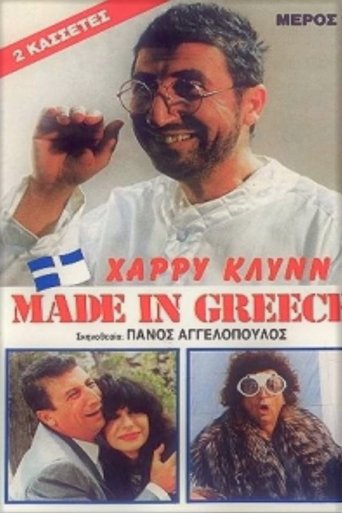
5.8Giannis Giannakis, released from psychiatric hospital after many years, decides to return home to his parents. On his way back he slowly discovers that the outside world is crazier than he thought - and starts to question whether he'd be better off back in the psychiatric ward.
Made in Greece
1987
1970s · 3 titles
4.4A disillusioned forty-something wanders through a city and his past, rejected by every ideology he once believed in. Neither love nor theory can fill the void—so he stages his own theatrical death.
Exile on Main Avenue
1979
 5.8
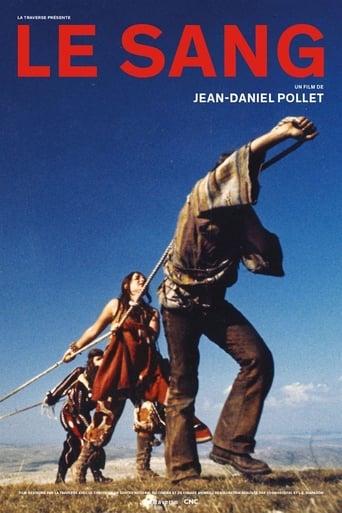
5.8An apocalyptic vision of man after a cosmic catastrophe, this film is a terrifying metaphor of a dehumanized future. The Brazilian Cinema Novo, German expressionism of the twenties, and the ideologically motivated ‘cruelty’ of a Buñuel come together in this ferocious work of a French theatre collective – an ambitious, almost completely successful example of visual cinema at its best.
The Blood
1971
 6.0
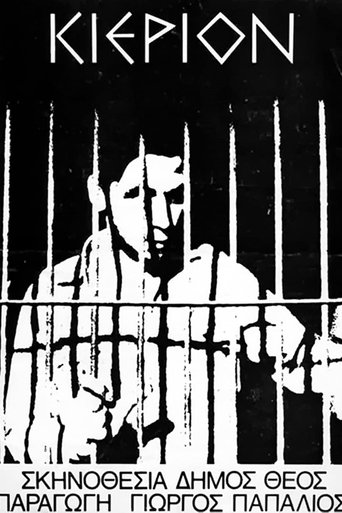
6.0Athens 1967. The political assassinations and the background between the government and foreign powers, on the occasion of the "Polk Case", where an innocent leftist was convicted for the murder of an American journalist in Greece.
Kierion
1974
Series credits
Behind the camera
7.6The story of a group of Rembetes, singers and musicians of the Greek equivalent to the blues, in the early decades of the 20th century, seen through the eyes of a young female singer.
Rembetiko
1983
7.6The story of a group of Rembetes, singers and musicians of the Greek equivalent to the blues, in the early decades of the 20th century, seen through the eyes of a young female singer.
Rembetiko
1983
7.6The story of a group of Rembetes, singers and musicians of the Greek equivalent to the blues, in the early decades of the 20th century, seen through the eyes of a young female singer.
Rembetiko
1983
7.0The film adaptation for the modern era of the ancient tragedy The Bacchae. Pentheus is celebrating his birthday, and surreal scenes unfold before his eyes, arousing doubts in the celebrant as to whether the things he is experiencing are real. Written by Greek Film Archive
Oh Babylon
1989
6.0We are in Athens, in August, when the residents are away on vacation. An eccentric music teacher wanders and daydreams in the streets of the half-empty city. In the winds of Plaka, he meets Anna, a strange girl lost in her fantasies, who is always waiting for her beloved to return and take her away, as he promised her exactly one year ago when they met. The two heroes try to get closer to each other, with successive dialogues and monologues that border on the absurd.
Two Moons in August
1978
6.0We are in Athens, in August, when the residents are away on vacation. An eccentric music teacher wanders and daydreams in the streets of the half-empty city. In the winds of Plaka, he meets Anna, a strange girl lost in her fantasies, who is always waiting for her beloved to return and take her away, as he promised her exactly one year ago when they met. The two heroes try to get closer to each other, with successive dialogues and monologues that border on the absurd.
Two Moons in August
1978
4.4A disillusioned forty-something wanders through a city and his past, rejected by every ideology he once believed in. Neither love nor theory can fill the void—so he stages his own theatrical death.
Exile on Main Avenue
1979
 7.5
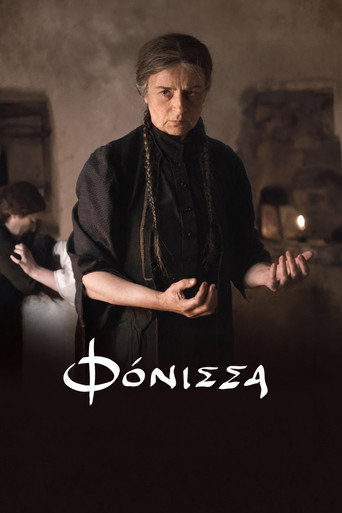
7.5An adaptation of one of the greatest greek novellas ('The Murderess' by Alexandros Papadiamantis). Fragkogiannou (Maria Alkaiou), a hard-done by, deranged woman after a life full of hardship, recalls the past by her newborn girl grandchild’s crib. Her mother was a wicked woman and one of her sons was a criminal. Lost in a haze, she strangles the baby as she is concvinced that girls can cause their family only trouble. Later, she lets a little girl drown in a well, while she drowns three other little girls, one of whom is a newborn baby. This is her way of sparing children and parents of the inevitable suffering in life.
The Murderess
1974
7.5An adaptation of one of the greatest greek novellas ('The Murderess' by Alexandros Papadiamantis). Fragkogiannou (Maria Alkaiou), a hard-done by, deranged woman after a life full of hardship, recalls the past by her newborn girl grandchild’s crib. Her mother was a wicked woman and one of her sons was a criminal. Lost in a haze, she strangles the baby as she is concvinced that girls can cause their family only trouble. Later, she lets a little girl drown in a well, while she drowns three other little girls, one of whom is a newborn baby. This is her way of sparing children and parents of the inevitable suffering in life.
The Murderess
1974
A speculation on power, using the film image to experiment with and explore a combination of elements, such as eastern philosophy, pop culture and music. Based on Aeschylus "Prometheus Bound"
Prometheus Second Person, Singular
1975
A speculation on power, using the film image to experiment with and explore a combination of elements, such as eastern philosophy, pop culture and music. Based on Aeschylus "Prometheus Bound"
Prometheus Second Person, Singular
1975
 NR
NRNo synopsis available yet.
A lot of spectacle, a few words
1987
5.8An apocalyptic vision of man after a cosmic catastrophe, this film is a terrifying metaphor of a dehumanized future. The Brazilian Cinema Novo, German expressionism of the twenties, and the ideologically motivated ‘cruelty’ of a Buñuel come together in this ferocious work of a French theatre collective – an ambitious, almost completely successful example of visual cinema at its best.
The Blood
1971
From Homer to Vamvakaris, the first and definitive History of Rebetiko Song, by Kostas Ferris, as it has never been presented before. Eight hours of enthralling revelation of the secrets of the most important cultural creation of the Greek state, featuring dozens of songs—both original recordings and reinterpretations—and speakers including the most distinguished scholars of Rebetiko and its surrounding themes.
The History of Rebetiko
—
A Costas Ferris' short featuring two of the best greek songs. Back in 1961 this film was expelled from Thessaloniki Film Festival because of the lyrics of these songs. They belonged to the rembetiko genre that used to over-emphasize the pleasure of using drugs. The worst thing was that Acropolis was shown in a plan and that lead the government to completely ban the film as anti-touristic!
Your eyelids shine
1961
A Costas Ferris' short featuring two of the best greek songs. Back in 1961 this film was expelled from Thessaloniki Film Festival because of the lyrics of these songs. They belonged to the rembetiko genre that used to over-emphasize the pleasure of using drugs. The worst thing was that Acropolis was shown in a plan and that lead the government to completely ban the film as anti-touristic!
Your eyelids shine
1961