

Directing
Klaus Wyborny
Born
1945-06-05 (81)
Place of birth
Bittkau, Germany
Known for
Directing
Credits
55 titles
Klaus Wyborny (b.June 5, 1945 in Bittkau bei Magdeburg; lives and works in Hamburg) is a German filmmaker, producer, film director, actor, cameraman and screenwriter, known for his experimental films. Klaus Wyborny studied from 1963 to 1970 Theoretical Physics at the University of Hamburg and the Yeshiva University in New York City. Wyborny was co-founder in 1968, with Hellmuth Costard, Thomas Struck, Werner Nekes, Helmut Herbst, Werner Grassmann, and others, of the Hamburger Filmmacher Cooperative, which took the New American Cinema as an example and would develop an European version of American underground cinema. He worked for the literary journals BOA VISTA and Henry, and was co-founde…
Known for
 8.0
8.0The year was 1972. A commune of Berlin stoners and intellectuals set adrift in space in a packing container clutched in a giant flying hand. Based on Herbst's 1974 animated sci-fi film DIE PHANTASTISCHE WELT DES MATTHEW MADSON.
The Cathedral of New Emotions
2006
 7.0
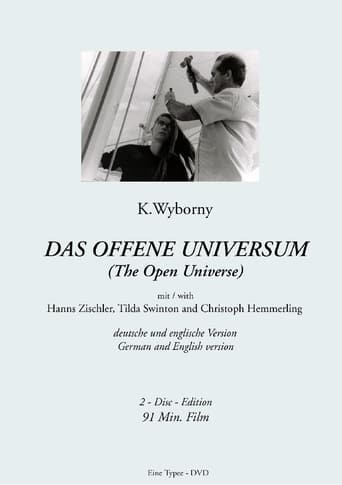
7.0The whole world in one film: Robert, a young Dane, is shanghaied in Marseille, and via Acapulco he is abducted into the South Pacific. There he kills his father and seduces his mother. Then he explores the changing world. The end finds him in a Polynesian village, where the chief bestows him with a girl of his age-class. A novel of adventure, a novel of love, also an oratory of some sort.
The Open Universe
1990
 NR
NRAdaptation of the novel "Bartleby the Scrinener: A story of Wall Street" (1853) by Hermann Melville.
Bartleby
1976
The story of a group that has a difficult time near Bialystok at dawn on July 19, 1944.
Im KZ
1968
 NR
NRHome movies shot on Super 8mm by W+B Hein over 10 years.
Home Movies 1971-81
1985
30 minutes of images with music by Anthony Moore
Chimney Piece
1971
Film credits
1990s · 2 titles
A documentary about the 'critical mass', the Film Coop, a group of young filmmakers in Hamburg during the 1960s - a small group far from the Mainstream or the New German Cinema.
The Critical Mass
1999
 6.5
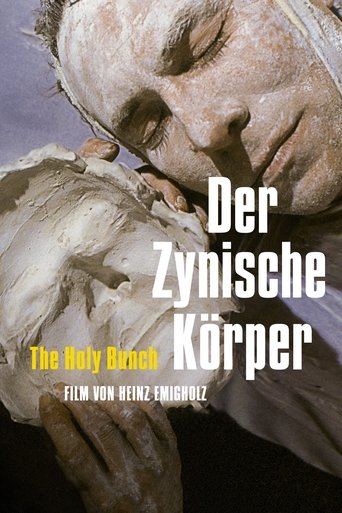
6.5After Roy's demise, five friends try to reconstruct his life by reading through the late editor's notebooks - only to face some very personal demons. The Holy Bunch is a modernist melodrama: beyond-Antonioni in its images, decisively Dreyerian in its spirituality. One of German cinema's few modern (or Modernist) masterpieces.
The Holy Bunch
1991
1980s · 3 titles
NRHome movies shot on Super 8mm by W+B Hein over 10 years.
Home Movies 1971-81
1985
 7.0
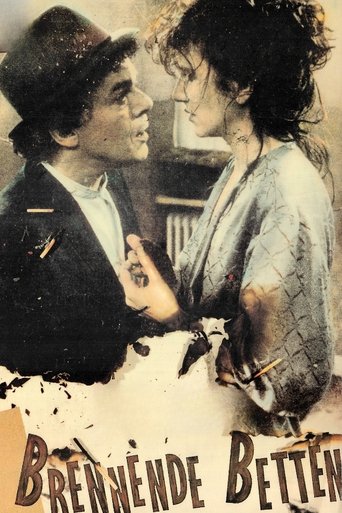
7.0Harry, a timpanist and pyromaniac, and Ginamove into the same apartment due to Hamburg's housing shortage. This is the beginning of a wonderful enmity, with Harry, who has been tried and tested in marital warfare, and relationship terrorist Gina proving to be quite equal opponents.
Burning Beds
1988
A humorous and ironic film that draws attention to the problems of long-distance tourism and European arrogance: A German travels through Africa (Hotel Diana Beach, Mombasa, Kenya); his superficial and clichéd commentary, dictated into a cassette recorder, contrasts with the beauty of the landscape and the fascination of the foreign continent, which cannot be captured by superficial brochure terms. A young tourist who throws herself wholeheartedly into the African adventure succeeds in developing a greater understanding.
Tropiafric - Grüße aus der Wildnis
1983
1970s · 4 titles
 7.3
7.3The film depicts, in an anecdotal, quasi-anthropological style, the efforts of a group of men in a desert to achieve some kind of social organisation. An opening title locates the action in Morocco, in 1911, the date evidently refers to the work of D.W. Griffith.
The Birth of a Nation
1973
 9.0
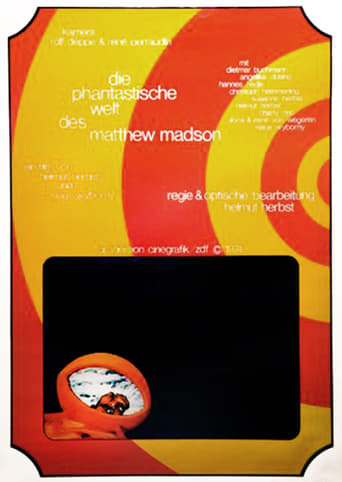
9.0Astronaut Mulligan sets out to find a mysterious planet.
The Fantastic World of Matthew Madson
1974
 7.3
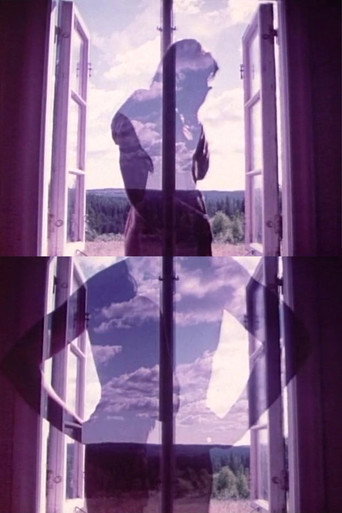
7.3Diwan, a lyric anthology, an outdoor movie with people. With people living in the surrounding precious and very beautifully photographed nature, are neither more nor less than one part of it. What Nekes manages there with landscape, as a cunning and quote many fine artist in a medium that runs in time, as he defeated the time changed, by themselves for change of scenery uses, as it interferes with the laws of chronology through the rewind ability of the camera or destroyed, which is a compelling and highly aesthetic experimental company.
Diwan
1974
 7.0
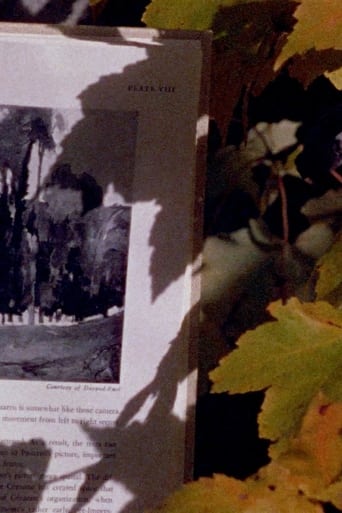
7.0Four four-minute image sections and four four-minute sound sections are linked in all combinations of the sound sections with each of the image sections. This established affinities between each of the image sections to the others, and the sound sections to each other. The image sections are: surveyors measuring the land near my house as seen through an old window, a family of Siamang Gibbon apes in the Washington zoo, an industrial site, and a page turned from a book on Cézanne’s composition showing a diagram of his painting Mardi Gras, filmed against bright leaves. The sound sections are: a dramatic scene from Debussy’s opera “Pelléas et Mélisande”, a passage from William Wordworth’s autobiographical poem “The Prelude,” sounds from rowing on a lake at night, and the sounds of the apes vocalizing.
Four Shadows
1978
1960s · 5 titles
The story of a group that has a difficult time near Bialystok at dawn on July 19, 1944.
Im KZ
1968
An attempt to celebrate Christmas in New York.
Bumps. Shake. Two Hamburgers
1969
A young man decides to leave the country after the 1965 West German parliamentary elections. He hitchhikes out of Hamburg, but makes it only as far as the Lüneburg Heath. There, he meets a woman driving a Jaguar, protects her from an “attack” by a light sport airplane and then helps her sell her car to a shepherd. When doubts arise about the buyer’s solvency, the man and woman take the train back to Hamburg …
One Brachet Close Brachet
1966
The story of a man who never attended Sarah Lawrence College but still made some impact.
A Crowd in the Face
1968
A man-made catastrophe depopulates entire regions. How do survivors observe this event, and how do others react?
Null-Null-Zero
1968
Behind the camera
8.0The year was 1972. A commune of Berlin stoners and intellectuals set adrift in space in a packing container clutched in a giant flying hand. Based on Herbst's 1974 animated sci-fi film DIE PHANTASTISCHE WELT DES MATTHEW MADSON.
The Cathedral of New Emotions
2006
7.0The whole world in one film: Robert, a young Dane, is shanghaied in Marseille, and via Acapulco he is abducted into the South Pacific. There he kills his father and seduces his mother. Then he explores the changing world. The end finds him in a Polynesian village, where the chief bestows him with a girl of his age-class. A novel of adventure, a novel of love, also an oratory of some sort.
The Open Universe
1990
7.0The whole world in one film: Robert, a young Dane, is shanghaied in Marseille, and via Acapulco he is abducted into the South Pacific. There he kills his father and seduces his mother. Then he explores the changing world. The end finds him in a Polynesian village, where the chief bestows him with a girl of his age-class. A novel of adventure, a novel of love, also an oratory of some sort.
The Open Universe
1990
7.0The whole world in one film: Robert, a young Dane, is shanghaied in Marseille, and via Acapulco he is abducted into the South Pacific. There he kills his father and seduces his mother. Then he explores the changing world. The end finds him in a Polynesian village, where the chief bestows him with a girl of his age-class. A novel of adventure, a novel of love, also an oratory of some sort.
The Open Universe
1990
NRAdaptation of the novel "Bartleby the Scrinener: A story of Wall Street" (1853) by Hermann Melville.
Bartleby
1976
The story of a group that has a difficult time near Bialystok at dawn on July 19, 1944.
Im KZ
1968
30 minutes of images with music by Anthony Moore
Chimney Piece
1971
7.3The film depicts, in an anecdotal, quasi-anthropological style, the efforts of a group of men in a desert to achieve some kind of social organisation. An opening title locates the action in Morocco, in 1911, the date evidently refers to the work of D.W. Griffith.
The Birth of a Nation
1973
7.3The film depicts, in an anecdotal, quasi-anthropological style, the efforts of a group of men in a desert to achieve some kind of social organisation. An opening title locates the action in Morocco, in 1911, the date evidently refers to the work of D.W. Griffith.
The Birth of a Nation
1973
9.0Astronaut Mulligan sets out to find a mysterious planet.
The Fantastic World of Matthew Madson
1974
 NR
NRA dozen narrative poems by Durs Grünbein, interpreted in sounds and images. Wyborny treats the texts as sounding boards for his own casual observations about the places Grünbein discusses, at times presenting what the writer saw and at others moving in a completely different direction.
Syrakus
2012
NRA dozen narrative poems by Durs Grünbein, interpreted in sounds and images. Wyborny treats the texts as sounding boards for his own casual observations about the places Grünbein discusses, at times presenting what the writer saw and at others moving in a completely different direction.
Syrakus
2012
The fourth of five parts of Klaus Wyborny's "Lieder der Erde" / "Song of the Earth" cycle of films, whose theme is "the emergence of modern European civilization." The series comprises five large parts, which are in turn divided into various selections or short films.
From the Age of Recklessness (Song of the Earth Part 4)
1994
A short film
Thorium 232
1969
A short film
Thorium 232
1969
 7.0
7.0A German TV movie
Der Ort der Handlung
1977
7.0A German TV movie
Der Ort der Handlung
1977
7.0A German TV movie
Der Ort der Handlung
1977
 NR
NRThe drawings on which the series is based were created in 1969 and served as a template for a slide series in 1970. During its screening, this is interrupted by the film "Percy McPhee Agent of Horror (6th + 7th episode)".
Percy McPhee - Agent des Grauens (6. + 7. Folge)
1970
NRThe drawings on which the series is based were created in 1969 and served as a template for a slide series in 1970. During its screening, this is interrupted by the film "Percy McPhee Agent of Horror (6th + 7th episode)".
Percy McPhee - Agent des Grauens (6. + 7. Folge)
1970
NRThe drawings on which the series is based were created in 1969 and served as a template for a slide series in 1970. During its screening, this is interrupted by the film "Percy McPhee Agent of Horror (6th + 7th episode)".
Percy McPhee - Agent des Grauens (6. + 7. Folge)
1970
Klaus Wyborny’s STUDIEN ZUM UNTERGANG DES ABENDLANDS had its premiere at the Viennale in 2010, where it got rave reviews. Afterwards it was shown at several film festivals where Wyborny documented the cinema situations with a video camera. Out of that he made DAS LICHT DER WELT. In a letter to Harun Farocki he wrote about the result: “It’s a strange 86-minute film, partly in the form of a superimposition of seven image-layers. It has the same music (played sevenfold) and the same light-structure as STUDIES FOR THE DECAY OF THE WEST, but it takes place in seven different locations simultaneously, in front of competely different audiences. So one can see how the film was brought to the DAS LICHT DER WELT, and how the observed viewers are in some sense illuminated by the very light, that exposed my original films between 1979 and 1993. Quite a haunting prospect.”
The Light of the World
2015
Klaus Wyborny’s STUDIEN ZUM UNTERGANG DES ABENDLANDS had its premiere at the Viennale in 2010, where it got rave reviews. Afterwards it was shown at several film festivals where Wyborny documented the cinema situations with a video camera. Out of that he made DAS LICHT DER WELT. In a letter to Harun Farocki he wrote about the result: “It’s a strange 86-minute film, partly in the form of a superimposition of seven image-layers. It has the same music (played sevenfold) and the same light-structure as STUDIES FOR THE DECAY OF THE WEST, but it takes place in seven different locations simultaneously, in front of competely different audiences. So one can see how the film was brought to the DAS LICHT DER WELT, and how the observed viewers are in some sense illuminated by the very light, that exposed my original films between 1979 and 1993. Quite a haunting prospect.”
The Light of the World
2015
Klaus Wyborny’s STUDIEN ZUM UNTERGANG DES ABENDLANDS had its premiere at the Viennale in 2010, where it got rave reviews. Afterwards it was shown at several film festivals where Wyborny documented the cinema situations with a video camera. Out of that he made DAS LICHT DER WELT. In a letter to Harun Farocki he wrote about the result: “It’s a strange 86-minute film, partly in the form of a superimposition of seven image-layers. It has the same music (played sevenfold) and the same light-structure as STUDIES FOR THE DECAY OF THE WEST, but it takes place in seven different locations simultaneously, in front of competely different audiences. So one can see how the film was brought to the DAS LICHT DER WELT, and how the observed viewers are in some sense illuminated by the very light, that exposed my original films between 1979 and 1993. Quite a haunting prospect.”
The Light of the World
2015
A society is described in which everyone only has six days to live. The film follows two of these people through their existence. People are born by appearing, they die by disappearing. When all the people appearing in the film died in a more or less natural way, large telegraph poles announce their work on earth.
Three Days with Janine, Three Days with John
1968
A short film
The Greatest Crime of All Time
1969
 7.0
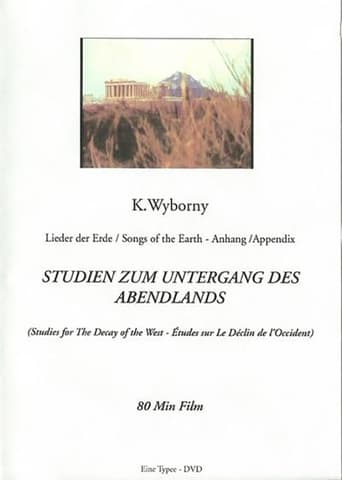
7.0Wyborny’s latest flicker film concentrates on factories, industrial wastelands, waterways, cityscapes, and the bits in between, and has an uncanny emotional resonance. It is “serene, in the manner of ants”—to quote the title of the second section—but it is also elegiac and melancholy. Like two other old cranks (Godard and Straub), the director stays true to ideas about filmic composition gestated over many years and thereby provides a glimpse of a utopian cinema.
Studies for the Decay of the West
2010
7.0Wyborny’s latest flicker film concentrates on factories, industrial wastelands, waterways, cityscapes, and the bits in between, and has an uncanny emotional resonance. It is “serene, in the manner of ants”—to quote the title of the second section—but it is also elegiac and melancholy. Like two other old cranks (Godard and Straub), the director stays true to ideas about filmic composition gestated over many years and thereby provides a glimpse of a utopian cinema.
Studies for the Decay of the West
2010
A silent film
Potpourri from "East of No West"
1979
 NR
NR"In the early 1970s I filmed compact versions of a series of films that came on television and interested me, which should lead to revealing at least essential parts of their structure. In 1974, 30 of those experiments were mounted in sequence - so more or less chronologically - forming a film entitled Elementary Filmhistory. This film was intended to make a broad reading of the direction in which the cinema grew from 1960." (Klaus Wyborny)
Elementary Filmhistory
1974
 NR
NRPart 1 of "3 Miniatures after Melanie Klein" (for Laurence Rickels)
Richard
1981
... Klaus Wyborny's "Six little Pieces on Film" is the type of work that one is more accustomed to see in Sohos's showcases. Its a Structural film comprised of five or six sequences. Within each there are a set number of shots or kinds of shots which are repeated with variations in camera speed, shot length and processing. Wyborny's subjects include a harbor, a house, an urban street and industrial sites. At tiomes the images fly by so fast that we struggle to recognize them. When the cutting slows down, we can begin to get a sense of place but then the editing will speed up again and the images are turned into elaborate rhythmic patterns. The kinds of perceptual experiences the film affords are characteristic of the Structural genre rather than innovative, but pleasurable nonetheless. ....
6 Small Pieces of Film
1977
No synopsis available yet.
Durs Grünbein liest die dritte Satire des Juvenal
2010
 NR
NRWoman with American accent reads German phrases and words from a study book on manipulated and degraded film stock.
Syntax
1976
A meeting with Werner Schroeter. An sequence originally featured in Wyborny's Das letzte Jahr extended here to its own short film.
Begegnung mit Werner Schroeter
2009
A silent film
Window Film
1975
The story of a man who never attended Sarah Lawrence College but still made some impact.
A Crowd in the Face
1968
One of the most complete of the preserved image programs of the Middle Ages, at the same time abstract and full of touching details. The creation story, which begins with the big bang, has perhaps not been recorded more precisely anywhere. Also ingenious is the mosaic of the Alypius portal, in which the transfer of the bones of St. Mark to the building in front of which the viewer stands is depicted. A wonderful archive of the development of European art between 1100 and 1290, in which the Romanesque image is increasingly supplemented by vivid backgrounds and in the “Dream of Moses” a whole landscape is already presented under a romantically lying crescent moon. In addition, you can see in the circular compositions of the domes (with partly already framed picture fields) not only an early form of cinema that reminds of the movement experiments by Marey and Muybridge, but also the prototypes of our DVDs today, a round disc with image storage in mosaic -Pixels. - K. Wyborny
The Narthex-Mosaics of San Marco in Venice
1995
"Wyborny trained as a mathematician, worked as a cameraman on Werner Herzog's Kasper Hauser. He first attracted the attention of the New York and London avant-gardes … for his elliptical narratives, Dallas Texas - After The Gold Rush (1971) and The Birth of a Nation (1973). Their plots, 'collapsed' by the optical transformation and repetition of individual shots, move from anecdotal narrative to an examination of narrative construction itself. His method was analogous, in a way, to that of novelists like Robbe-Grillet (e.g. Jealousy), though Wyborny was far more interested in the actual materials of film than were the french 'new novelists' when they turned to cinema. His work was further characterised by a romantic appreciation for desolate, ruined vistas." - J. Hoberman
Dallas Texas / After the Goldrush
1971
An audio-visual film by Klaus Wyborny that focuses on various houses, their patterns and structures.
Housefilm
1976