
Directing
Ute Aurand
Born
1957-01-01 (69)
Place of birth
Frankfurt, Germany
Known for
Directing
Credits
44 titles
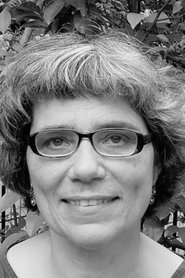
Ute Aurand was born in 1957 in Frankfurt/Main, and grew up in Berlin. She is a teacher and curator, and a devoted 16mm filmmaker since 1980. She studied filmmaking at the Deutsche Film und Fernsehakademie Berlin (dffb) during the years 1979-1985. Since 1985 she began to produce her own films. In 1987 she founded "Ute Aurand Filmproduktion". During 1990-95, she presented the series "Filmarbeiterinnen-Abend" at the Arsenal cinema, Berlin, featuring films made by women, mostly experimental. In 1995-96, organised "Sie zum Beispiel" (Her, for Example) at the Arsenal and Babylon cinemas, in which 12 women filmmakers /artists selected and presented a personal selection of films by other women film…
Known for
 NR
NRPortrait of Canadian artist Susan Turcot in 1993 and 2011.
Susan+Lisbeth
2012
No synopsis available yet.
Noch einmal
1988
 6.0
6.0Throughout her work, Aurand frequently makes her camera and her images felt as an active, moving body—spinning, rushing, departing, returning, expanding, contracting, hanging upside down. In A Walk, her film goes walking. The camera occupies a snowy Swiss setting, as Aurand creates a material, tonal landscape that is both nebulous, serene, and wonderfully energetic.
A Walk
2008
 6.0
6.0A filmic encounter with Brazil, which Aurand visited for the first time in September 2022 for screenings of her films and Margaret Tait’s in São Paulo and Rio de Janeiro. Aurand’s 16mm films are portraits of people and place, often prompted by the discovery and experience of travel. As George Clark has written, the journey is a cornerstone of Aurand’s filmmaking: "“Her work builds out from fragments, detours, refrains and returns; her camera picks up discarded gestures and suspends them in time. Films are always moving, always fleeting, Aurand’s work reminds us. These qualities are as fundamental to lived experience as they are to the cinema. Throughout Ute Aurand’s work we encounter a world animated by her mobile and dynamic camera, following, chasing, leading and dissecting space."
To Brasil
2023
No synopsis available yet.
Für Karl
2012
 6.0
6.0Scenes in the park of the Rietberg Museum in Zurich with its collection of Asian, African and Indian art.
Im Park
2008
Film credits
2010s · 1 titles
Behind the camera
NRPortrait of Canadian artist Susan Turcot in 1993 and 2011.
Susan+Lisbeth
2012
No synopsis available yet.
Noch einmal
1988
6.0Throughout her work, Aurand frequently makes her camera and her images felt as an active, moving body—spinning, rushing, departing, returning, expanding, contracting, hanging upside down. In A Walk, her film goes walking. The camera occupies a snowy Swiss setting, as Aurand creates a material, tonal landscape that is both nebulous, serene, and wonderfully energetic.
A Walk
2008
6.0A filmic encounter with Brazil, which Aurand visited for the first time in September 2022 for screenings of her films and Margaret Tait’s in São Paulo and Rio de Janeiro. Aurand’s 16mm films are portraits of people and place, often prompted by the discovery and experience of travel. As George Clark has written, the journey is a cornerstone of Aurand’s filmmaking: "“Her work builds out from fragments, detours, refrains and returns; her camera picks up discarded gestures and suspends them in time. Films are always moving, always fleeting, Aurand’s work reminds us. These qualities are as fundamental to lived experience as they are to the cinema. Throughout Ute Aurand’s work we encounter a world animated by her mobile and dynamic camera, following, chasing, leading and dissecting space."
To Brasil
2023
No synopsis available yet.
Für Karl
2012
6.0Scenes in the park of the Rietberg Museum in Zurich with its collection of Asian, African and Indian art.
Im Park
2008
 NR
NRShot on 16mm, Ute Aurand documents the archive of Kino Arsenal - Institut für Film und Videokunst before its contents underwent a thorough 'repotting' operation
Arsenal Film Archive
2022
 NR
NROne day in Neubrandenburg, filmed in a small city 130km north of Berlin in September 1995.
Neubrandenburg
1995
 NR
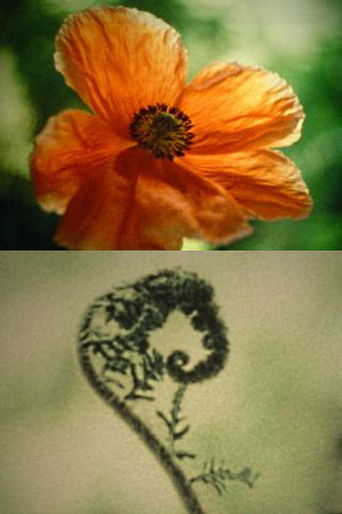
NRShort film featuring images of flowers.
Tulipan
2002
 NR
NRFour women film each other getting dressed in this four-part film. The motive for making the film was to work with a Bolex camera. A protected space is created, to which only women have access – and in which the female gaze is directed towards the female body.
Anziehen
—
 NR
NRFor a year at monthly intervals, Ute Aurand and Bärbel Freund filmed In the Garden, a lovely portrait of a Potsdam-Bornim garden designed in 1910 by gardener and philosopher Karl Foerster. An extraordinary variety of flora, natural lighting effects, textures and colors unfold in this gentle, expertly edited film, which forms a bridge between the natural world and the individual soul.
In the Garden
2002
 7.0
7.0A film structured around Detel Aurand and Jon Sigurgeiersson.
Detel + Jón
1993
ZU HAUSE (At Home) ist the final sequence in TERZEN, playing with the filmmakers shadow and the Bolex camera while filming in her kitchen.
At Home
1998
Maria Lang is my very close filmmaker friend who lives in the southern german countryside. We see her gardening and visiting an exhibition of female impressionist painters.
Maria
2011
 6.0
6.0Experimental film about a train ride. The carriage window becomes a screen, the landscape a mood, the mood a landscape.
Detour
1983
6.0Experimental film about a train ride. The carriage window becomes a screen, the landscape a mood, the mood a landscape.
Detour
1983
 NR
NRA short portrait of the filmmaker Renate Sami.
Renate
2021
"Franz von Lucke is my godchild, and I have filmed him since he was very young. Franz is now 26 years old." U.A.
Franz
2011
 6.0
6.0“In the day after seeing Terzen, there was a surprising sense of the film that developed for me. The rhythms were still present and helped to unify a multitude of impressions. This lead me to reconsider the general tone of the film because, as I reached beyond its quick pace and rhythmic lightness and beyond the everyday content, I realized that its Heiterkeit grows out of a serenity or courage in facing mortality. This is the surprising sense of the film, its inner music. (…) Early in the film I recall a chair held in the strong afternoon sunlight. Even though you show it from many angles, it has a potent stillness. This strikes me as a good example of how you embody an active sense of seeing in your filming, and you reflect back to us the paradox that it is in movement that we create stillness. The eye, constantly moving yet creating stillness." — Robert Beavers
Terzen
1998
The portraits allow the filmmaker to emphasize gestures and private moments beyond narration and documentation. In his work system, he collects images for years before making the decision to compose a portrait, like Franz or Paulina. There are exceptional cases like Lisbeth, filmed on two occasions and little edited in which we see the artist Lisbeth Burri in her garden on the outskirts of Zurich. An instantly fleeting monument.
Lisbeth
2011
 6.0
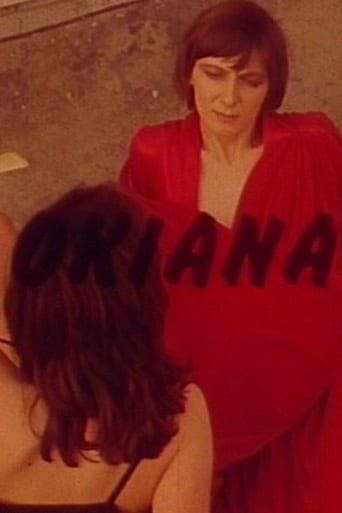
6.0An imaginary journey on a ship. We turned the building of the Film Academy into a ship. Claire and Solange from a Jean Genet piece, a polish woman with her Madonna, screaming sailors are a few of the passengers on this artifical journey.
Okiana
1983
6.0An imaginary journey on a ship. We turned the building of the Film Academy into a ship. Claire and Solange from a Jean Genet piece, a polish woman with her Madonna, screaming sailors are a few of the passengers on this artifical journey.
Okiana
1983
 NR
NRA new short film portrait that, as often in Ute Aurands work, was filmed over several years and in different places, in this case Germany and Japan. "Filming portraits allows me to emphasize private gestures and moments, and thus to transcend the narrative or documenting." (UA)
Lisa
2018
 6.0
6.0No synopsis available yet.
Toying With Strings 3
2013
 6.0
6.0A walk, a moment at the beach... And the Japanese filmmaker Utako Koguchi behind the heard piano.
At the Sea
1995
 6.0
6.0Two memories from a longer visit to New England in Autumn 2012: a group of elderly ladies playing bridge followed by the stormy ocean at Cape Cod in Winter while listening to Etienne Grenier's music practice.
Four Diamonds
2016
 6.0
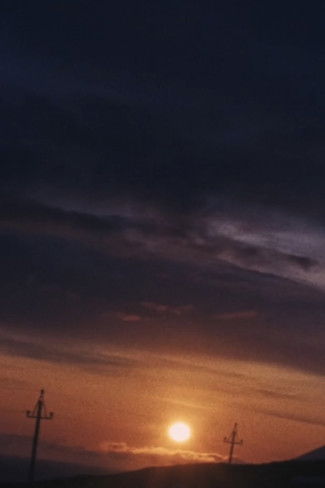
6.0Jón in Akureyri is the second part of Detel + Jón. I filmed Jón Sigrurgeiersson walking through the streets of his childhood, meeting his filmmaker brother and telling childhood stories.
Jón in Akureyri
1993
 6.0
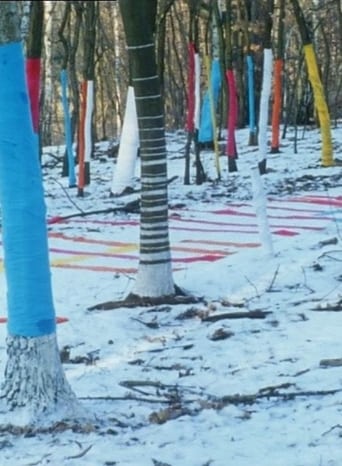
6.0“Fadenspiele 2“ (Toying with String 2) is an animation made with the painter, my sister, Detel Aurand. We filmed inside the studio and outdoors in the forest and fields. From various elements like paper, wood, plastic and fabric come images that continuously change their form. We see one image evolving out of the other, becoming something new.
Toying with Strings 2
2003
 8.0
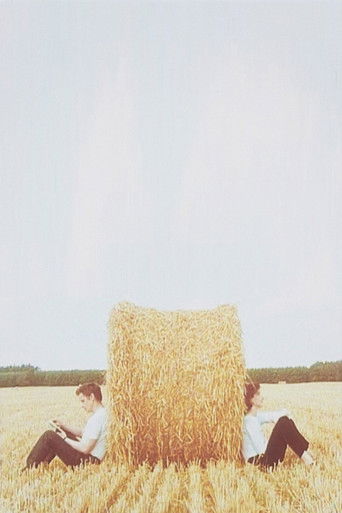
8.0A portrait of the filmmakers Bärbel Freund and Karl Heil like a song in its changing verses, the locations were chosen according to mood and season: in spring, in snow, in Venice, in the flat, alone and together.
Bärbel and Charly
1994
 NR
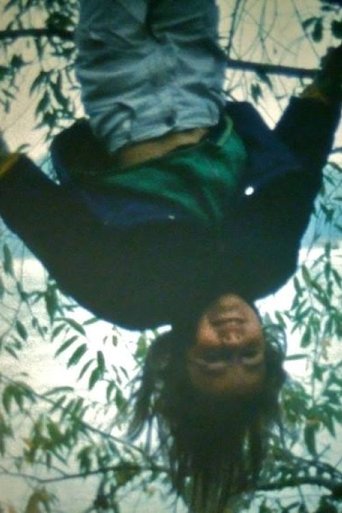
NRPaulina Buda is my godchild, and I have filmed her since she was very young. Filming portraits allows me to emphasize private gestures and moments beyond narration and documentation.
Paulina
2011
A cinematic interpretation of an ancient myth and the visual metaphor of the feminine sea.
Unding Undine
1982
 6.0
6.0"India" developed out of my three journeys to Pune in 2001, 2002 and 2004. I arrived in a forgein country, and felt surprisingly familiar in the foreign. There in the streets, walking among the people, surrounded by their movements, their gestures, by the colors, the light, the beauty. Small things awakened my attention, sometimes only a short glimpse, a hand movement, the color of a sari, a temple hidden in a courtyard. It was like a long hot bath that I took there in Pune's streets - something unique and very beautiful.
India
2005
 NR
NRFor Dreaming the Dark: hands that see, eyes that touch, Ana Vaz invited artists and filmmakers whose work trust cinema’s capacity to transform relationships between the body and the camera to propose works that will engage with both perception and embodiment. Could cinema be an art of embodiment? By what rituals and actions could vision become tactile?
Dreaming In The Dark
2018
 6.0
6.02 minute film about two Japanese ladies.
Sakura, Sakura
2014
 6.0
6.0A collection of fleeting observations that document the passage of time through intimate encounters with friends and family captured between 1999 to 2018.
Rushing Green with Horses
2021
6.0A collection of fleeting observations that document the passage of time through intimate encounters with friends and family captured between 1999 to 2018.
Rushing Green with Horses
2021
Four seasons in four major European cities form a four-part film cycle. This is the third part about autumn in London.
Be an Angel
1988
A film about my friend Maria Lang. The light falls on a few details, chance selections, out of which a place is composed, the place where Maria lives with her mother. A landscape, a village, a kitchen, 25 her room.
Maria und die Welt
1995
 NR
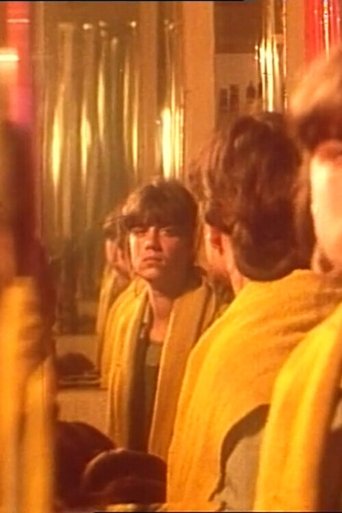
NRA small cinematic poem from subjective street scenes, mirrored faces, and the city passing by, as well as naked female bodies underwater, creating an essay made from observed images.
Silently Engrossed in Conversation
2019
NRA small cinematic poem from subjective street scenes, mirrored faces, and the city passing by, as well as naked female bodies underwater, creating an essay made from observed images.
Silently Engrossed in Conversation
2019