

Directing
Grzegorz Królikiewicz
Born — Died
1939-06-05 — 2017-09-21
Place of birth
Aleksandrów Kujawski, kujawsko-pomorskie, Polska
Known for
Directing
Credits
41 titles
Grzegorz Królikiewicz (5 June 1939 – 21 September 2017) was a Polish film director, screenwriter, and pedagogue. In 1962, he graduated from the Faculty of Law at the University of Łódź. In 1967, he began his studies at the National Film School in Łódź from which he graduated in 1970. He directed a number of documentary films, TV shows as well as feature films. In 1976–78, he directed the television Editorial Office of Facts. Between 1981–1983, he served as the artistic director of the Aneks Film Studio (Zespół Filmowy Aneks). In the years 2003–2005, he worked as director of the New Theatre in Łódź. Since 1981, he also worked as an academic teacher at the Faculty of Film and Television Direc…
Known for
A record of the three-day burial ceremony of Jan Piwnik "Ponury" (1912-1944), which took place in June 1988 in the Cistercian monastery in Wąchock. The funeral rituals consisted of Christian, Slavic and military customs.
Rhapsody
1988
An impressionistic film about bidding farewell to departing army recruits and the end of freedom.
Don't Cry
1972
 6.2
Jan and Maria become a couple in 1930s Kraków. Jan tries to get a job as an architect but fails. They struggle with poverty and extreme humiliation. Their attempt to survive leads to a desperate crime.
Through and Through
1973
Old Faust, a great scholar makes a pact with Mephistopheles - in exchange for his soul, the devil offers him youth and knowledge of the meaning of existence. Faust becomes a beautiful young man. He meets a young, virtuous girl Margaret - he asks Mephistopheles for help in seducing her.
Faust
1976
Bronek Pekosinski lives in Zamosc, Poland. He is probably 83 years old. He has no family and does not really know who he is. Everything about his life is fictitious: symbolic is the date of birth - the day World War II broke out, as well as his surname - after PKOS, an abbreviation of a charitable institution, and the place of birth - the Nazi concentration camp, from where his mother threw him over a barbed wire fence. Even his friends and guardians turned out to be false. Only his loneliness and his hump seem to be authentic. Two great powers have vied for young Bronek's soul: Roman-Catholic church and a totalitarian state. He fell into alcoholism. Partially paralyzed as the effect of cerebral hemorrhage, he is fired with an ambition of acquiring a mastery in a game of chess.
The Case of Bronek Pekosinski
1993
Portrait of Tadeusz Jaworski, one of the first graduates of PWSFTviT, and an unjustly forgotten filmmaker who was expelled from Poland in March '68 for his Jewish origins.
The Eternal Wanderer
2012
Film credits
Behind the camera
A record of the three-day burial ceremony of Jan Piwnik "Ponury" (1912-1944), which took place in June 1988 in the Cistercian monastery in Wąchock. The funeral rituals consisted of Christian, Slavic and military customs.
Rhapsody
1988
A record of the three-day burial ceremony of Jan Piwnik "Ponury" (1912-1944), which took place in June 1988 in the Cistercian monastery in Wąchock. The funeral rituals consisted of Christian, Slavic and military customs.
Rhapsody
1988
An impressionistic film about bidding farewell to departing army recruits and the end of freedom.
Don't Cry
1972
An impressionistic film about bidding farewell to departing army recruits and the end of freedom.
Don't Cry
1972
6.2Jan and Maria become a couple in 1930s Kraków. Jan tries to get a job as an architect but fails. They struggle with poverty and extreme humiliation. Their attempt to survive leads to a desperate crime.
Through and Through
1973
6.2Jan and Maria become a couple in 1930s Kraków. Jan tries to get a job as an architect but fails. They struggle with poverty and extreme humiliation. Their attempt to survive leads to a desperate crime.
Through and Through
1973
Old Faust, a great scholar makes a pact with Mephistopheles - in exchange for his soul, the devil offers him youth and knowledge of the meaning of existence. Faust becomes a beautiful young man. He meets a young, virtuous girl Margaret - he asks Mephistopheles for help in seducing her.
Faust
1976
Old Faust, a great scholar makes a pact with Mephistopheles - in exchange for his soul, the devil offers him youth and knowledge of the meaning of existence. Faust becomes a beautiful young man. He meets a young, virtuous girl Margaret - he asks Mephistopheles for help in seducing her.
Faust
1976
Bronek Pekosinski lives in Zamosc, Poland. He is probably 83 years old. He has no family and does not really know who he is. Everything about his life is fictitious: symbolic is the date of birth - the day World War II broke out, as well as his surname - after PKOS, an abbreviation of a charitable institution, and the place of birth - the Nazi concentration camp, from where his mother threw him over a barbed wire fence. Even his friends and guardians turned out to be false. Only his loneliness and his hump seem to be authentic. Two great powers have vied for young Bronek's soul: Roman-Catholic church and a totalitarian state. He fell into alcoholism. Partially paralyzed as the effect of cerebral hemorrhage, he is fired with an ambition of acquiring a mastery in a game of chess.
The Case of Bronek Pekosinski
1993
Portrait of Tadeusz Jaworski, one of the first graduates of PWSFTviT, and an unjustly forgotten filmmaker who was expelled from Poland in March '68 for his Jewish origins.
The Eternal Wanderer
2012
 5.2
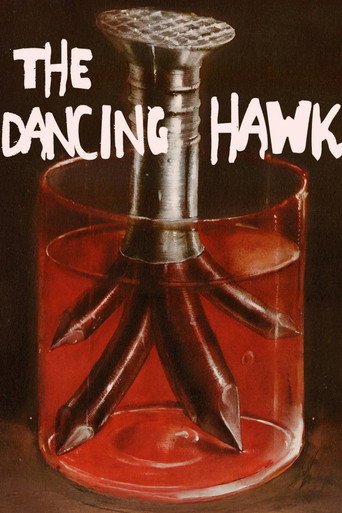
A peasant’s son rises through the ranks of post-war Polish society like none of his ancestors ever could. Moving to the city, he becomes part of a new socialist order. But in leaving his rural roots behind, does he also abandon his soul?
The Dancing Hawk
1978
5.2A peasant’s son rises through the ranks of post-war Polish society like none of his ancestors ever could. Moving to the city, he becomes part of a new socialist order. But in leaving his rural roots behind, does he also abandon his soul?
The Dancing Hawk
1978
A horse is lead into the high mountains by a guide and then killed as an annual offering to save a species of bear threatened with extinction. A metaphor implying Poland's fate.
Go
1989
Józef Kuraś - "Ogień/Fire" - who came from a strong highland family, was born in 1915 and lived in Waksmund. In just four years (1943 - 1947) he became first the brightest and then the most sombre legend of the Tatra Mountains. From his hatred of the Nazis, who murdered his family, through his membership in the Home Army, his "love affair" with the People's Republicans and his "career" in the UB, he arrived at an attitude of extreme opposition to communist rule and, to the end of his admittedly short life (in 1947 he was only 32 years old), he fought with his loyal squad against the people's power.
A potem nazwali go bandytą
2003
A psychodramatic account by some war veterans on the events of 1939 in connection with the defence of Wizna and their commander's attitude, who, being faithful to his oath, committed suicide.
Wierność
1969
 6.5
A captain and lieutenant of the Russian army are buried in the basement of the Przemysl Fortress during the First World War.
Fort 13
1984
6.5A captain and lieutenant of the Russian army are buried in the basement of the Przemysl Fortress during the First World War.
Fort 13
1984
 5.5
Ogrodowa Street in Lódz - just opposite a crowded shopping center, a state-of-the-art museum and a posh hotel - is where some of the city's poorest live, completely forgotten by the world. A heart-warming and funny portrait of people excluded from the mainstream of social life; people who might be more capable of sacrifice and love than those who pushed them to the sidelines of society.
Neighborhooders
2014
5.5Ogrodowa Street in Lódz - just opposite a crowded shopping center, a state-of-the-art museum and a posh hotel - is where some of the city's poorest live, completely forgotten by the world. A heart-warming and funny portrait of people excluded from the mainstream of social life; people who might be more capable of sacrifice and love than those who pushed them to the sidelines of society.
Neighborhooders
2014
No synopsis available yet.
List mordercy
—
 7.0
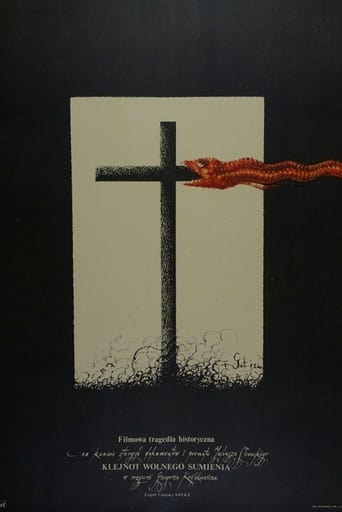
The Republic of Poland of the 16th century. During the period of religious tolerance, the Sieniawski and Bielecki families compete with each other.
Klejnot wolnego sumienia
1983
7.0The Republic of Poland of the 16th century. During the period of religious tolerance, the Sieniawski and Bielecki families compete with each other.
Klejnot wolnego sumienia
1983
 7.0
Franek, a petty criminal and gambler, befriends Rysio, who performs inspections of meat plants. Rysio suspects wrongdoings at the slaughterhouse. Franek, despite his age, cannot find a place in life, with nothing achieved and, what's more, still not knowing what to do.
Permanent Objections
1975
7.0Franek, a petty criminal and gambler, befriends Rysio, who performs inspections of meat plants. Rysio suspects wrongdoings at the slaughterhouse. Franek, despite his age, cannot find a place in life, with nothing achieved and, what's more, still not knowing what to do.
Permanent Objections
1975
Three brothers - gymnastics champions doing their practice. While one of them is performing, the others two spot him to prevent a fall. A subtlety, vitality, tone and perspective of sound contribute an additional dimension to the film.
Brothers
1971
The artist sits at a table over a blank sheet of white paper. He ponders, supported on his elbows; his head in his hands, as if in a vice. The camera, penetrating - it's the veins on his shaved head swelling in deep thought, it's the still empty paper - notices that the sheet shrinks in size until it's a barely visible shred, accidentally swept off the table by someone's breath...
Mam pomysł
2006
An ironic portrait of a military man made during twenty-four hours on duty.
Szef
1970
The documentary presents the presidential election campaign in Poland in 1990.
Człowiek ze studni
1991
The documentary presents the presidential election campaign in Poland in 1990.
Człowiek ze studni
1991
 7.2
A grotesque fairy tale of fantasies in a 21-year old's mind. First he confesses to a priest about killing his aunt. Then he is sending parcels from the post office. Just when it appears that he is going to be arrested, the aunt appears alive and well from her trip. This time though, he decides to go for it...
Killing Auntie
1985
7.2A grotesque fairy tale of fantasies in a 21-year old's mind. First he confesses to a priest about killing his aunt. Then he is sending parcels from the post office. Just when it appears that he is going to be arrested, the aunt appears alive and well from her trip. This time though, he decides to go for it...
Killing Auntie
1985
The social and independence ferment triggered in the fall of 1980 by Solidarity created an opportunity for dialogue between the nation and the ruling communists. Dialogue, not force. As always, students quickly joined the "rebellion and pressure." They wanted autonomy for Polish universities and their own independent representation, as well as sovereignty, without the "leading role of the party." When these dreams were not fulfilled, at the beginning of 1981, students at the University of Łódź went on their first long strike, which ended in success, and when martial law was declared in December 1981, the same students rushed to protest in the form of an occupation strike, which ended in pacification. The film consists of statements by the protagonists and witnesses of those events, archival footage, and staged sequences.
Bardzo krótki strajk. 14-15 grudnia 1981 roku
2007
A squad of new recruits in the process of training.
Mężczyźni
1969
A perverse story about a day in the life of a retired country schoolteacher who once worked for Lenin as a typist. An analysis of distorting the truth which, when stated too ofen, sounds trite.
We Remember Lenin
1970
A visual concoction of model photo-shoots, swimming routines, filmmaking, drowning, death and holocaust.
Everyone Gets What They Don't Need
1966
A visual concoction of model photo-shoots, swimming routines, filmmaking, drowning, death and holocaust.
Everyone Gets What They Don't Need
1966