
Directing
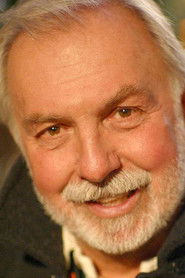
Brian Large
Born
1939-02-16 (87)
Place of birth
London, England, UK
Known for
Directing
Credits
42 titles
Known for
 7.5
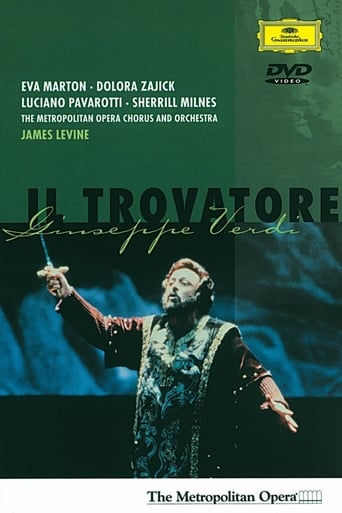
7.5Luciano Pavarotti brings his spectacular voice and artistry to one of the most famous of all tenor roles—Manrico, the ardent troubadour, trapped in an impossible situation by forces beyond his control. The sensational Dolora Zajick, only days after her Met debut, gives an incandescent performance as the demented gypsy Azucena, thirsting for revenge against Count Di Luna (Sherrill Milnes). Eva Marton is the passionate Leonora, desired by both Manrico and the Count, and James Levine brilliantly leads the Met’s orchestra and chorus in some of Verdi’s best-known music.
Il Trovatore
1988
 NR
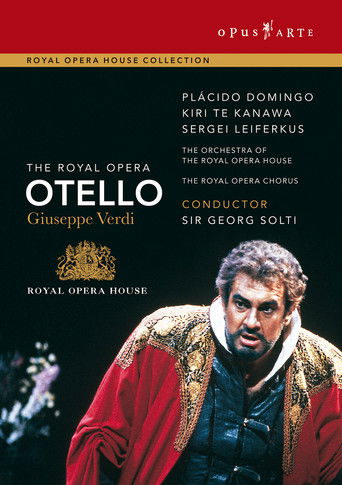
NRIn what many believe to be the finest production of Otello in modern times, Plácido Domingo and Kiri Te Kanawa lead a world-class cast under the exquisite musical direction of Sir Georg Solti. An outstanding performance of the first of Verdi's two late Shakespearian operas, universally regarded as sublime masterpieces of grand opera.
Verdi: Otello
2008
 6.4
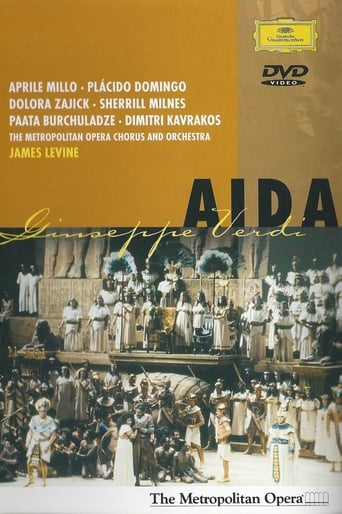
6.4AIDA, an Ethiopian princess, is captured and brought into slavery in Egypt. A military commander, Radamès, struggles to choose between his love for her and his loyalty to the Pharaoh. To complicate the story further, Radamès is loved by the Pharaoh's daughter Amneris, although he does not return her feelings. Sonja Frisell’s production captures all the grandeur and excitement of Verdi’s monumental opera, particularly the great triumphal scene where the Egyptian army, led by Radamès (Plácido Domingo), returns victorious from war. Aprile Millo is Aida, the slave girl whose love for Radamès has her squaring off with Amneris (Dolora Zajick), the Egyptian princess who also loves him. Sherrill Milnes is Amonasro, and James Levine leads The Metropolitan Opera Orchestra, Chorus, and Ballet.
Aida
1989
 8.0
8.0Taped live in Barcelona's Gran Teatre del Liceu on January 31, 2002, this L'Orfeo is both a visual delight and a musically satisfying representation of Monteverdi's opera
L'Orfeo
2002
 7.1
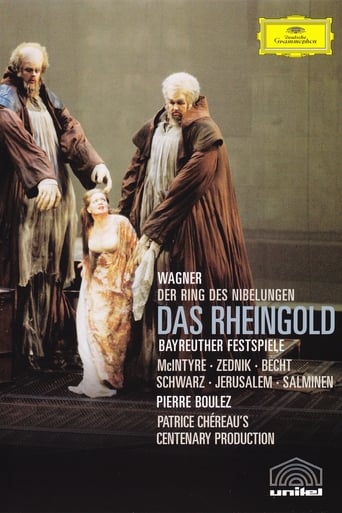
7.1This is a beautifully conducted and thoughtfully staged performance of the first opera (the prologue) in Wagner's Ring Cycle. As soon as the clouds of mist have dissipated, while the daring, long-held opening chord is still reverberating, the screen clears to show not only the River Rhine and the three maidens (dressed like prostitutes in this production) assigned to guard the gold hidden there. It also shows an enormous dam (not mentioned in Wagner's text). This is the underwater base of a hydroelectric plant, and its presence tells us two things immediately: that this production takes the story out of the vaguely medieval fantasy world in which Wagner had placed it, and that a basic theme of the four-opera cycle would be power. Alberich, the Nibelung, is willing to renounce the love of women, after stealing the gold from the Rhine, to become the ruler of the world. Another basic theme is greed.
Wagner: Das Rheingold
1980
 7.5
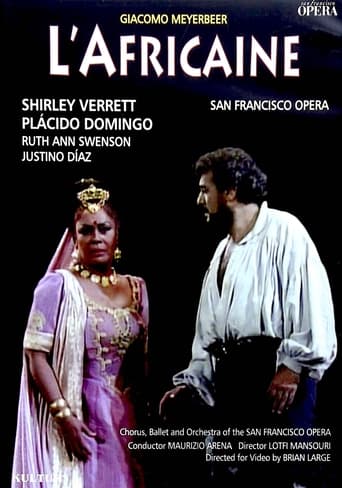
7.5This was a 1988 revival of a 1971 production that teamed Domingo (Vasco da Gama) and Verrett (Selika - both then very much in their prime) in Meyerbeer's discursive swan-song. Seventeen years on, they are more statuesque than sexy, but both give larger-than-life performances that contain moments of completely thrilling vocalism. The casting is very strong, with the exception of Justino Diaz's Nelusko, which has strong presence but not much vocal allure. As Inez, Vasco da Gama's fiancee and rival for Shirley Verrett, Ruth Ann Swneson sings with great beauty and has impressive stage presence, very much holding her own in the confrontation with Verrett in the last act. Domingo is refulgent of tone and dramatically convincing, and he and Verrett strike sparks. She really comes into her own in one of the most preposterous mad-scenes in all opera, where she is slowly poisoned by the scent of a giant tree, contriving to make this dramatically truthful and even moving.
Meyerbeer: L'Africaine
1988
Film credits

Behind the camera
7.5Luciano Pavarotti brings his spectacular voice and artistry to one of the most famous of all tenor roles—Manrico, the ardent troubadour, trapped in an impossible situation by forces beyond his control. The sensational Dolora Zajick, only days after her Met debut, gives an incandescent performance as the demented gypsy Azucena, thirsting for revenge against Count Di Luna (Sherrill Milnes). Eva Marton is the passionate Leonora, desired by both Manrico and the Count, and James Levine brilliantly leads the Met’s orchestra and chorus in some of Verdi’s best-known music.
Il Trovatore
1988
7.5Luciano Pavarotti brings his spectacular voice and artistry to one of the most famous of all tenor roles—Manrico, the ardent troubadour, trapped in an impossible situation by forces beyond his control. The sensational Dolora Zajick, only days after her Met debut, gives an incandescent performance as the demented gypsy Azucena, thirsting for revenge against Count Di Luna (Sherrill Milnes). Eva Marton is the passionate Leonora, desired by both Manrico and the Count, and James Levine brilliantly leads the Met’s orchestra and chorus in some of Verdi’s best-known music.
Il Trovatore
1988
NRIn what many believe to be the finest production of Otello in modern times, Plácido Domingo and Kiri Te Kanawa lead a world-class cast under the exquisite musical direction of Sir Georg Solti. An outstanding performance of the first of Verdi's two late Shakespearian operas, universally regarded as sublime masterpieces of grand opera.
Verdi: Otello
2008
6.4AIDA, an Ethiopian princess, is captured and brought into slavery in Egypt. A military commander, Radamès, struggles to choose between his love for her and his loyalty to the Pharaoh. To complicate the story further, Radamès is loved by the Pharaoh's daughter Amneris, although he does not return her feelings. Sonja Frisell’s production captures all the grandeur and excitement of Verdi’s monumental opera, particularly the great triumphal scene where the Egyptian army, led by Radamès (Plácido Domingo), returns victorious from war. Aprile Millo is Aida, the slave girl whose love for Radamès has her squaring off with Amneris (Dolora Zajick), the Egyptian princess who also loves him. Sherrill Milnes is Amonasro, and James Levine leads The Metropolitan Opera Orchestra, Chorus, and Ballet.
Aida
1989
8.0Taped live in Barcelona's Gran Teatre del Liceu on January 31, 2002, this L'Orfeo is both a visual delight and a musically satisfying representation of Monteverdi's opera
L'Orfeo
2002
7.1This is a beautifully conducted and thoughtfully staged performance of the first opera (the prologue) in Wagner's Ring Cycle. As soon as the clouds of mist have dissipated, while the daring, long-held opening chord is still reverberating, the screen clears to show not only the River Rhine and the three maidens (dressed like prostitutes in this production) assigned to guard the gold hidden there. It also shows an enormous dam (not mentioned in Wagner's text). This is the underwater base of a hydroelectric plant, and its presence tells us two things immediately: that this production takes the story out of the vaguely medieval fantasy world in which Wagner had placed it, and that a basic theme of the four-opera cycle would be power. Alberich, the Nibelung, is willing to renounce the love of women, after stealing the gold from the Rhine, to become the ruler of the world. Another basic theme is greed.
Wagner: Das Rheingold
1980
7.5This was a 1988 revival of a 1971 production that teamed Domingo (Vasco da Gama) and Verrett (Selika - both then very much in their prime) in Meyerbeer's discursive swan-song. Seventeen years on, they are more statuesque than sexy, but both give larger-than-life performances that contain moments of completely thrilling vocalism. The casting is very strong, with the exception of Justino Diaz's Nelusko, which has strong presence but not much vocal allure. As Inez, Vasco da Gama's fiancee and rival for Shirley Verrett, Ruth Ann Swneson sings with great beauty and has impressive stage presence, very much holding her own in the confrontation with Verrett in the last act. Domingo is refulgent of tone and dramatically convincing, and he and Verrett strike sparks. She really comes into her own in one of the most preposterous mad-scenes in all opera, where she is slowly poisoned by the scent of a giant tree, contriving to make this dramatically truthful and even moving.
Meyerbeer: L'Africaine
1988
 8.0
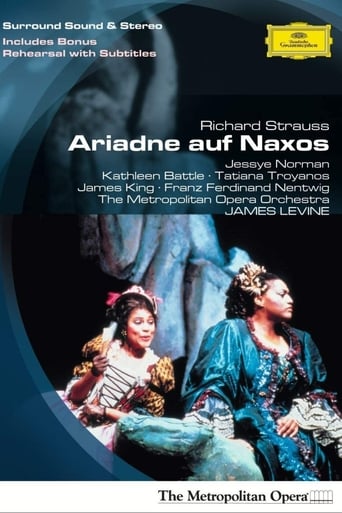
8.0Jessye Norman is a regal Ariadne, the mythological Greek heroine in this opera-within-an-opera, opposite the passionate Bacchus of the great James King. Kathleen Battle delivers the coloratura fireworks of Zerbinetta, the leader of a commedia dell’arte troupe that finds itself stranded on Ariadne’s island. Tatiana Troyanos and Franz Ferdinand Nentwig star as the young Composer and the Music Master in the opera’s prologue. James Levine brings out all the color and charm of Strauss’s brilliant chamber-sized score with its equal amounts of pathos and humor. Bodo Igesz’s production features sets by esteemed designer Oliver Messel.
Ariadne auf Naxos - Metropolitan Opera
1988
 8.0
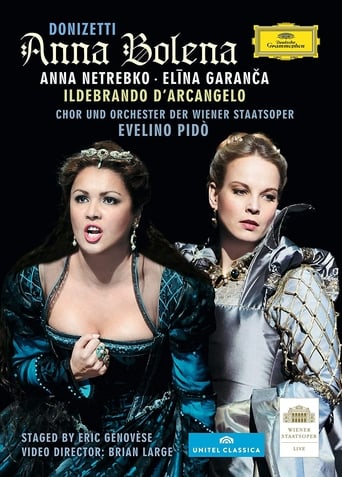
8.0Gaetano Donizetti and his librettist Felice Romani kept the focus of their opera ANNA BOLENA on the personal rather than the political in this fictionalized Tudor tale: Henry VIII of England wants to get rid of his second wife, Anne Boleyn, so that he can marry her lady-in-waiting, Jane Seymour. He brings Lord Richard Percy, Anne's first love, back from exile so that he can find an excuse to accuse her of adultery. With the unwitting aid of Smeaton, a court musician, and Lord Rochefort, Anne's brother, the trap is easily sprung. This 2011 live recording from the Wiener Staatsoper showcases Anna Netrebko as she "scored a personal triumph" in her debut as the hapless Tudor Queen, while her stage partners - notably Elīna Garanča as Jane Seymour and Ildebrando D'Arcangelo as Henry VIII - were likewise showered with critical acclaim.
Anna Bolena - Wiener Staatsoper
2011
 10.0
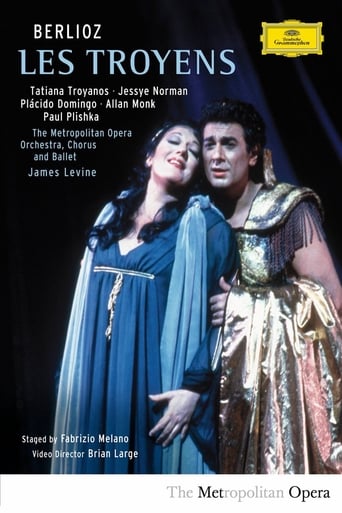
10.0Berlioz’s colossal masterpiece requires stupendous forces—dozens of soloists, enormous chorus, orchestra and ballet, a superb conductor who understands the uniqueness of the score—plus a production that does visual justice to the work. “A stupendous achievement” was one critic’s assessment of Peter Wexler’s inventive production. And with James Levine’s wizardry galvanizing the marvelous all-star cast, this is truly a gem. Plácido Domingo is the legendary hero Aeneas, Jessye Norman the obsessed prophetess Cassandra, and Tatiana Troyanos is Queen Dido, who commits suicide when Aeneas leaves her.
Berlioz: Les Troyens
1983
 8.0
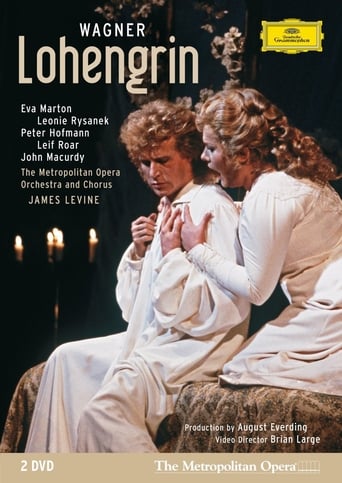
8.0Wagner’s Romantic opera demands singing actors who can truly inhabit their parts, and that’s just what we have here. Is it possible for a Knight of the Holy Grail to look more enticing than Peter Hofmann? No wonder Elsa (Eva Marton) falls in love at first sight. Marton’s heroine is innocent, but she is also a passionate, real-life young woman—which is good, because Leonie Rysanek is positively demented as Ortrud, the sorceress who accuses Elsa and Lohengrin of using magic. With James Levine’s superb conducting, the orchestra and chorus are similarly magical.
Lohengrin - Metropolitan Opera
1986
 10.0
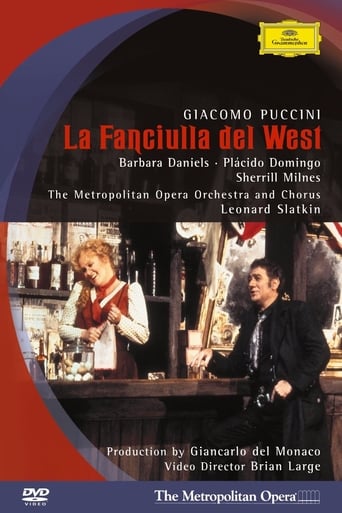
10.0Giancarlo Del Monaco’s atmospheric production brings to colorful life a 19th-century mining camp during the California Gold Rush. At the center of the action is the good-hearted bar owner Minnie, sung by Barbara Daniels, who takes a motherly interest in the miners. Plácido Domingo is Dick Johnson, also known as the bandit Ramerrez, who falls in love with Minnie. Sherrill Milnes sings Jack Rance, the sheriff who is not only determined to capture Ramerrez but also wants Minnie for himself. Bloodshed, a crooked poker game, a snowstorm, and a near lynching ensue before Minnie and her bandit-turned-lover can ride off to start a new life. Leonard Slatkin conducts one of Puccini’s most colorful scores.
La Fanciulla del West
1992
 7.2
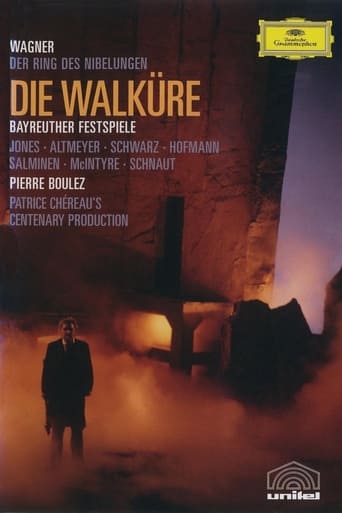
7.2The second part of Patrice Chérau's epoch-making Bayreuth Ring is a radical re-imagining of Die Walküre, unprecedented in its psychological penetration. This production of " Die Walkure," staged as part of Patrice Chereau's Centenary celebration marking the 100th anniversary of the completion of the "Ring," this lavish performance features Donald McIntyre as Wotan, Peter Hofmann as Siegmund, and Gweneth Jones as Brunnhilde; Pierre Boulez conducts the Orchester Der Bayreuther Festspiel.
Wagner: Die Walküre
1980
 6.9
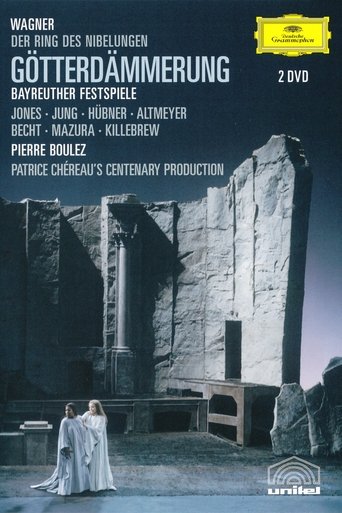
6.9Götterdämmerung, the fourth of Richard Wagner's four Ring operas. The cast features Manfred Jung as Siegfried and Gwyneth Jones as Brünnhilde, with music provided by Bayreuther Festspiele Orchester conducted by Pierre Boulez. This title is available in a boxed set with the other Ring operas, Das Rheingold, Die Walküre, and Siegfried.
Wagner: Götterdämmerung
1980
 NR
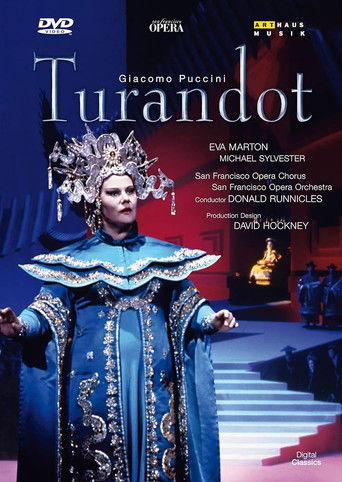
NRDonald Runnicles directs the San Francisco Opera in this lavish production of Giacomo Puccini’s final masterpiece, which was left unfinished upon his death and was later completed by Franco Alfano. Declaring himself a suitor of the beautiful Princess Turandot (Eva Marton), the son of a conquered king (Michael Sylvester) must correctly answer three troublesome riddles. According to tradition, if he fails, it will mean his death.
Puccini: Turandot (San Francisco Opera)
1994
 7.5
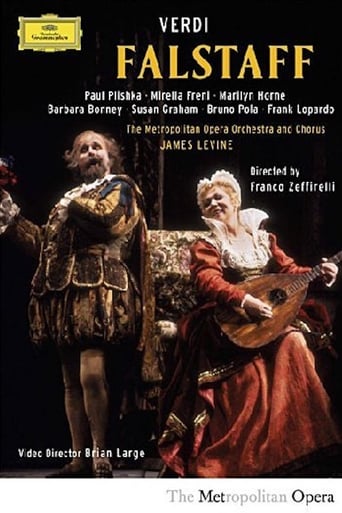
7.5It is to composer and librettist Arrigo Boito and his constant pestering of the octogenarian Verdi that there remained within him one last great comedy fighting to get out that we owe this absolute miracle of an opera. Produced in 1893 as Verdi turned 80 there is much in this masterpiece that can be identified as a modernist neoclassical work. The use of short motifs instead of long arioso melodic lines, the spry and reduced orchestral textures and the lack of a single 'stand and deliver' dramatic declamatory aria all serve to make this more of a 20th century work than an example of 19th century late-Romanticism.
Falstaff
1993
 10.0
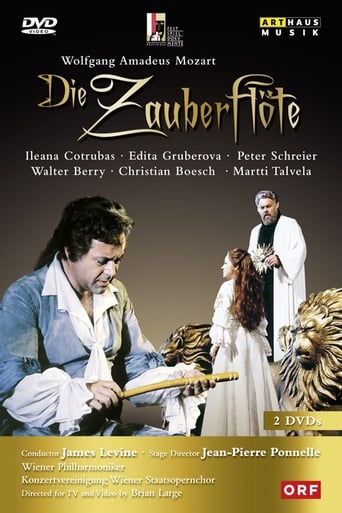
10.0Mozart’s “The Magic Flute”
The Magic Flute
1982
 NR
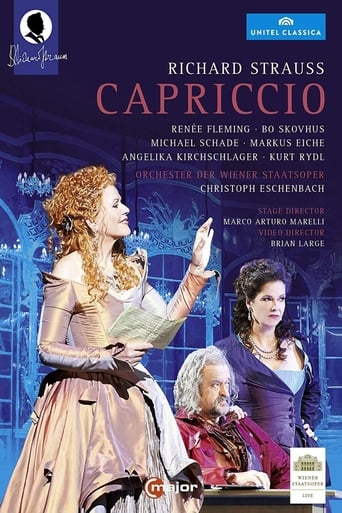
NRRichard Strauss' last stage work is an opera about opera as an art form, depicting the creation of a music drama in a wise and witty way. Which came first the words or the music? That is the question Strauss and his librettist Clemens Krauss address through the story of a Countess torn between a composer and a poet.
Capriccio - Wiener Staatsoper
2013
 3.0
3.0Christian Thielemann conducts the Staatskapelle Dresden in this performance of Wagner's opera recorded live in 2013. The performance was held for the Salzburg Easter Festival and featured vocalists including Johan Botha, Michaela Schuster, Stephen Milling and Wolfgang Koch.
Parsifal - Salzburger Osterfestspiele
2013
 7.0
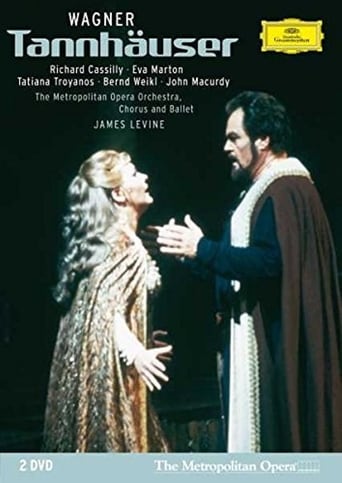
7.0As renowned for its harmonious overture as for its romantic storybook characters, this three-act masterwork features some of the composer’s most groundbreaking and unforgettable music, as well as a theme the young Wagner would revisit again and again later in his career—the redemptive and transcendent power of a woman’s love. The enchanting plot harks back to medieval history: Wolfram is a lovesick troubadour who desires the virtuous Elisabeth. She, however, has eyes for another: the rebellious knight Tannhäuser, who in turn cannot get over an overwhelming sensual experience in the realm of the goddess Venus, and is banished for singing her praises at court. Only saintly Elisabeth’s death can atone for his misdeeds.
The Metropolitan Opera - Wagner: Tannhäuser
1982
A legendary 1990 all-star concert celebrating the 150th anniversary of the composer Tchaikovsky's birth.
Tchaikovsky: 150th Birthday Gala from Leningrad
1990
 7.0
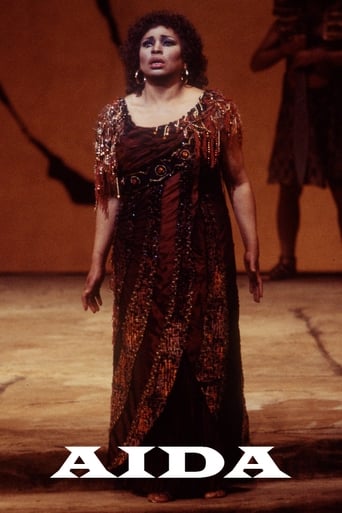
7.0This was one of the most emotional evenings in Met history—the night Leontyne Price bid farewell to opera. Aida is the role that inspired audiences around the world to acclaim her as the greatest Verdi soprano of her time. And this telecast shows why: the famous soaring phrases that seemed to never end, the shimmering top to her lustrous voice, undimmed by the years. But most of all, there is the ennobling heart and soul Price lavished on every performance—captured here forever. With James Levine conducting the Met orchestra, chorus, and ballet.
Aida
1985
 6.2
6.2Depicts the consumerism of the mythical city of Mahagonny, conveying all its ripe decadence. A Hollywood Babylon full of pyramidal towers, carved elephants, commodified sex and licensed gluttony. An opera in three acts, live from the Salzburger Festspiele, 1998. Conductor: Dennis Russell Davies. Stage Director: Peter Zadek.
The Rise and Fall of the City of Mahagonny
1998
 7.0
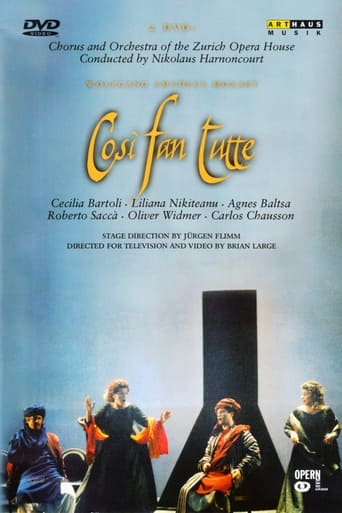
7.0A production of Mozart's opera recorded live at Zurich Opera House in 2000. Cecilia Bartoli leads an all-star cast including Roberto Saccà, Liliana Nikiteanu, and Agnes Baltsa. The conductor is Nikolaus Harnoncourt. Filmed live at the Zurich Opera House in February 2000 on a set which visualises the subtitle "The School for Lovers", the plot revolves around two army officers arguing about the fidelity of their brides, then setting out to test their chastity. Despite the often playful humour, this is not only psychologically telling music-making, but reveals Mozart exploring the structure of opera, discarding convention to mix large ensemble sections with arias for as many different combinations of singers as possible. With Liliana Nikiteanu attractively contrasted with Bartoli, and thoroughly convincing performances by Roberto Sacca (Ferrando) and Oliver Widmer (Guilelmo), this Così has a freshness and flow which, coupled with the timeless romantic themes, feels very contemporary.
Mozart: Così Fan Tutte (Zurich Opera House)
2000
 6.2
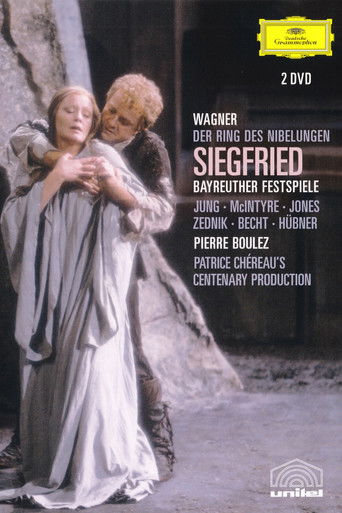
6.2The third opera in Richard Wagner's epic Ring cycle, Siegfried follows the adventures of the son of demigods Siegmund and Sieglinde as he conquers his enemies and rescues the beauteous Brunnhilde with the help of his magic sword. This video preserves the controversial 1976 Bayreuth Centenary production, with Pierre Boulez leading the Bayreuth Festival Orchestra. Manfred Jung leads the cast as Siegfried, with Gwyneth Jones as Brunnhilde, Donald McIntyre as the Wanderer, and Hermann Becht as Alberich.
Siegfried - Bayreuther Festspiele
1980
 NR
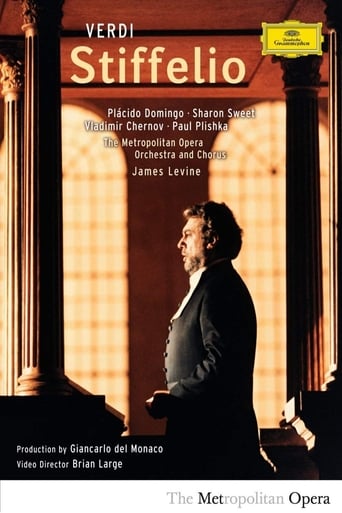
NRGiuseppe Verdi's opera of religion, revenge and redemption gets the star treatment in this 1993 Metropolitan Opera production conducted by James Levine and starring Plácido Domingo as the cuckolded man of God at the center of the tale. Sharon Sweet sings the role of Domingo's adulteress wife and Vladimir Chernov plays the vengeful father in this rarely staged gem directed by Giancarlo del Monaco and filmed by Brian Large.
Stiffelio - The Met
1993
 NR
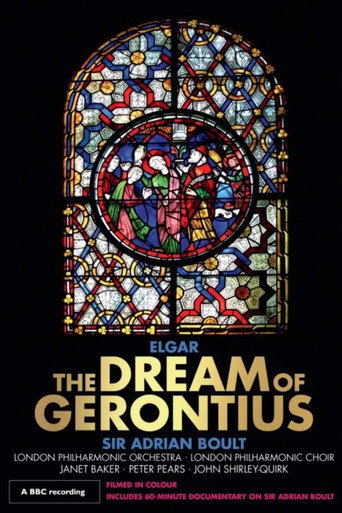
NRLong considered lost footage, this exceptional concert, which originally aired April 14, 1968, on the BBC, is a full-colour performance of Edward Elgar’s The Dream of Gerontius recorded inside the stunning Canterbury Cathedral and featuring three of the greatest voices of the era: mezzo-soprano Dame Janet Baker, tenor Sir Peter Pears, and bass-baritone John Shirley-Quirk. Conducted by Sir Adrian Boult, ardent champion and esteemed interpreter of Elgar’s works, this concert film — which required eight of the nine existing colour cameras in the UK at the time — constitutes a rare and treasured artifact marking the beginning of high-quality colour footage of British operatic productions.
The Dream of Gerontius
1968
NRLong considered lost footage, this exceptional concert, which originally aired April 14, 1968, on the BBC, is a full-colour performance of Edward Elgar’s The Dream of Gerontius recorded inside the stunning Canterbury Cathedral and featuring three of the greatest voices of the era: mezzo-soprano Dame Janet Baker, tenor Sir Peter Pears, and bass-baritone John Shirley-Quirk. Conducted by Sir Adrian Boult, ardent champion and esteemed interpreter of Elgar’s works, this concert film — which required eight of the nine existing colour cameras in the UK at the time — constitutes a rare and treasured artifact marking the beginning of high-quality colour footage of British operatic productions.
The Dream of Gerontius
1968
 7.0
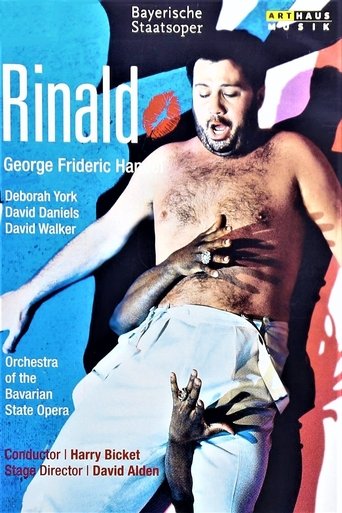
7.0This modern interpretation of Georg Frederick Handel's opera focuses on Rinaldo's attempts to break free from enchantress Armida and reunite with his true love, Almirena. In addition to the live performance, the program also includes a Handel documentary, which explores the composer's career and many achievements.
Rinaldo - Bayerische Staatsoper
2001
 NR
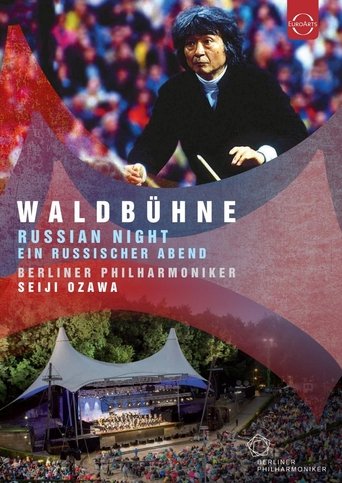
NRSeiji Ozawa conducts the Berlin Philharmonic Orchestra in this 1993 performance at Berlin's Waldbuhne, an amphitheater tucked into a natural valley and modeled on a similar structure in the ancient Greek city of Epidaurus. From this lovely vantage point, viewers are treated to an evening of Russian favorites, including Igor Stravinsky's "Firebird," Pyotr Tchaikovsky's "Nutcracker" suite, Aram Khachaturian's "Sabre Dance" and more.
Waldbühne Berlin: Russian Night
1999
 9.5
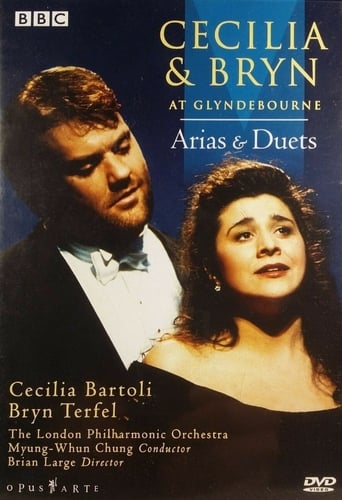
9.5The celebrated mezzo-soprano Cecilia Bartoli joins Bryn Terfel for a recital of arias and duets recorded at Glyndebourne Opera House in 1999. The programme features favourite pieces from Mozart, Rossini and Donizetti, with the London Philharmonic Orchestra conducted by Myung-Whun Chung.
Cecilia & Bryn at Glyndebourne
1999
 8.0
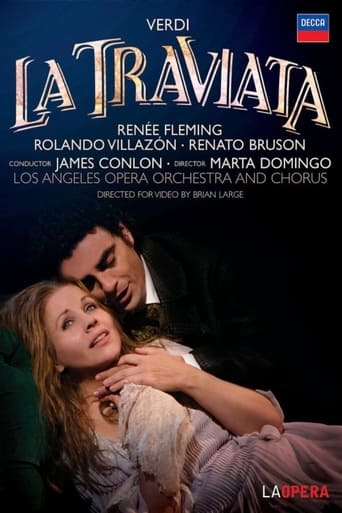
8.0This superb 2006 production of the Los Angeles Opera's La Traviata stars Renée Fleming, who joins the ranks of the elite handful of sopranos whose vocal and acting talents make their portrayals memorable. Her Violetta Valéry is a vulnerable figure torn between self-indulgence and love, sacrificing personal happiness to become a victim of the social mores of mid-19th-century bourgeois France. Fleming's acting captures the complexity of the character and her vocalism is flawless. She negotiates the wild coloratura of Act One with aplomb, and is stunning in the lyric passages that pervade the opera, and touching in her scenes with her lover, Alfredo, and his father. Her singing is free of the mannerisms that have sometimes crept into her work and at the same time she brings countless personal touches to the role, phrasing and verbal emphases that shed fresh light on the character.
La Traviata
2006
 9.0
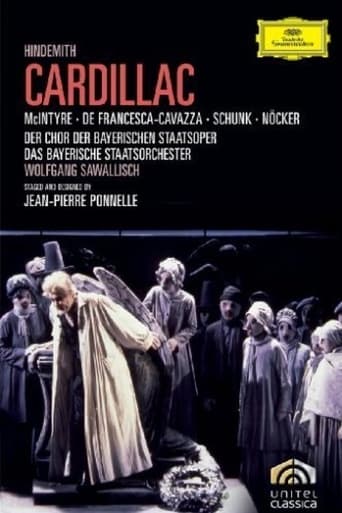
9.0Wolfgang Sawallisch conducts this acclaimed staging of Paul Hindemith's ambitious opera of the goldsmith Cardillac, whom fortune seems to favor and then abandon, featuring Donald McIntyre and Maria de Francesca-Cavazza in the starring roles. Filmed in 1985 at the Bavarian State Opera and directed by the legendary Jean-Pierre Ponnelle, the production captures every nuance of Hindemith's powerful tale of love, suspicion and betrayal. Opera Performance, recorded at 16-25 September 1985 at the National Theater in Munich.
Cardillac
1985
 7.5
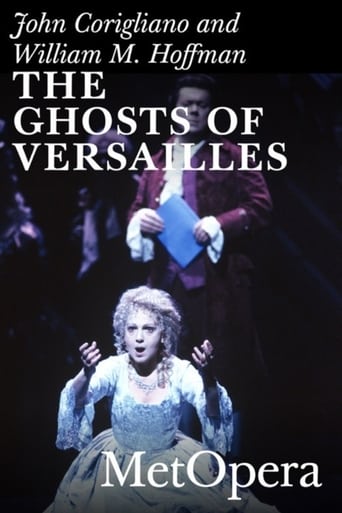
7.5What happened to Figaro and his friends after the events told in Rossini’s and Mozart’s operas? One possible sequel is told in John Corigliano’s “grand opera buffa” The Ghosts of Versailles—an uproariously funny and deeply moving work inspired by Beaumarchais’s third Figaro play, La Mère Coupable, and commissioned by the Met to celebrate its 100th anniversary. This telecast captures its world premiere run, conducted by James Levine. Håkan Hagegård is Beaumarchais, Figaro’s creator, who is deeply in love with Marie Antoinette (Teresa Stratas in a heart-searing performance) and determined to rewrite history and save her from the guillotine. A young Renée Fleming, at the beginning of her international career, sings the unfaithful Rosina. Gino Quilico is the wily Figaro who tries to take matters in his own hands, and Marilyn Horne stops the show as the exotic entertainer Samira.
The Ghosts of Versailles
1992
 6.9
6.9Set during the Crusades, the story of Lombardi opens with the rivalry of two brothers -- Arvino and Pagano -- who vie with one another for the love of Viclinda. Pagano attempts to kidnap Viclinda and commit a fratricide, extinguishing Arvino, but succeeds only in murdering his father in error; circumstances force him into exile in the Holy Land. Thus begins a complex and harrowing series of events that will ultimately lead to the reconciliation of both men, followed by the death of one.
I Lombardi alla Prima Crociata
1984
 9.0
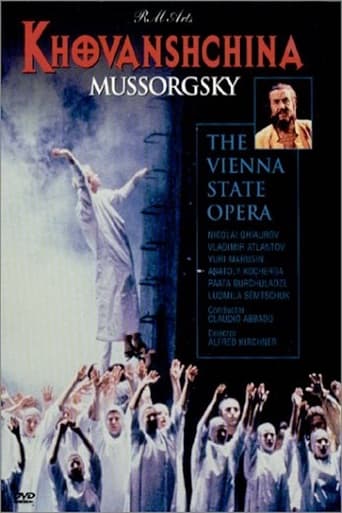
9.0The last and arguably finest opera of Modest Mussorgsky is captured in one of its most powerful interpretations in this 1989 recording from the Vienna State Opera, conducted by Claudio Abbado. A moody opera that is thematically broad at times and intimately personal in others, "Khovanshchina" tells the story of the 17th-century clash between Russian conservatives and Peter the Great's reformists. Among the singers is renowned basso Nicolai Ghiaurov and Paata Burchuladze, as well as Anatoly Kocherga, Ludmila Semtchuk, and Heinz Zednik.
Khovanshchina
1989
 6.8
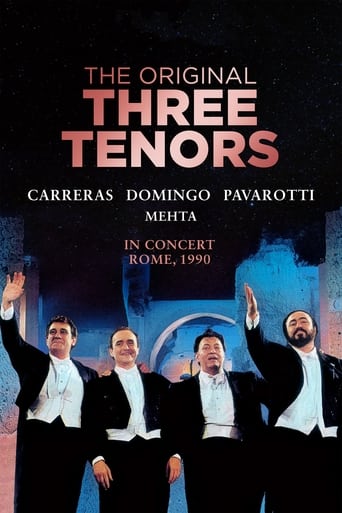
6.8The Three Tenors is a name given to the Spanish singers Plácido Domingo and José Carreras and the Italian singer Luciano Pavarotti who sang in concert under this banner during the 1990s and early 2000s. This is the first collaboration of the trio, with a performance at the ancient Baths of Caracalla, in Rome, Italy, on July 7, 1990 – the eve of the 1990 FIFA World Cup Final. Zubin Mehta conducted the orchestra of Maggio Musicale Fiorentino and the orchestra of Teatro dell'Opera di Roma.
The Original Three Tenors Concert
1990
Live performance from the Metropolitan Opera, 27 February, 1996.
Così fan tutte
1996
 NR
NRPerformance of Schoenberg's Gurrelieder by SBR, conducted by Mariss Jansons
Gurrelieder
2009
 NR
NRNo synopsis available yet.
MARISS JANSONS CONDUCTS - BEETHOVEN & STRAUSS
2013