
Directing
Tony Conrad
Born — Died
1940-07-03 — 2016-04-09
Place of birth
Concord, New Hampshire, USA
Known for
Directing
Credits
52 titles
Anthony Schmalz "Tony" Conrad was an American avant-garde video artist, experimental filmmaker, musician, composer, sound artist, teacher, and writer. Active in a variety of media since the early 1960s, he was a pioneer of both structural film and drone music. He performed and collaborated with a wide range of artists over the course of his career, most prominently La Monte Young's 1960s New York experimental music group Theatre of Eternal Music.
Known for
 6.8
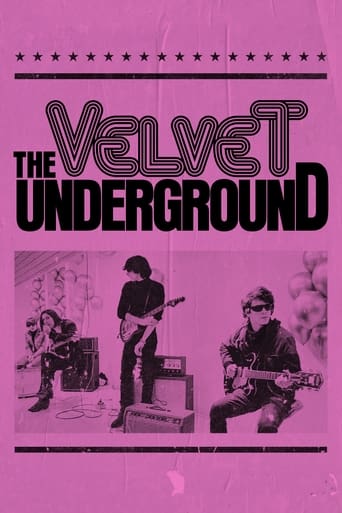
6.8Experience the iconic rock band's legacy in the first major documentary to tell their story. Directed with the era’s avant-garde spirit by Todd Haynes, this kaleidoscopic oral history combines exclusive interviews with dazzling archival footage.
The Velvet Underground
2021
 7.3
7.3Also known as Walden, Jonas Mekas’s first diary film is a six-reel chronicle of his life in 1960s New York, interweaving moments with family, friends, lovers, and artistic idols. Blending everyday encounters with portraits of the avant-garde art scene, it forms an epic, personal meditation on community, creativity, and the passage of time.
Diaries, Notes, and Sketches
1968
 NR
NRScenes from the life and work at Anthology Film Archives. Much of the footage in this video was shot by Auguste Varkalis.
Laboratorium Anthology
1999
 NR
NRHome movies shot on Super 8mm by W+B Hein over 10 years.
Home Movies 1971-81
1985
 7.0
7.0Jonas Mekas assembles 160 portraits, appearances, and fleeting sketches of underground and independent filmmakers captured between 1955 and 1996. Fast-paced and archival in spirit, the film celebrates the avant-garde as its own “nation of cinema,” a vital community existing outside the dominance of commercial film.
Birth of a Nation
1997
 10.0
10.0This exhibition focuses on Jonas Mekas’ 365 Day Project, a succession of films and videos in calendar form. Every day as of January 1st, 2007 and for an entire year, as indicated in the title, a large public (the artist's friends, as well as unknowns) were invited to view a diary of short films of various lengths (from one to twenty minutes) on the Internet. A movie was posted each day, adding to the previously posted pieces, resulting altogether in nearly thirty-eight hours of moving images.
365 Day Project
2007
Film credits
2010s · 4 titles
 6.8
6.8An intimate, affecting portrait of the life and work of ground-breaking performance artist and music pioneer Genesis Breyer P-Orridge (Throbbing Gristle, Psychic TV +) and their wife and collaborator, Lady Jaye, centered around the daring sexual transformations the pair underwent for their 'Pandrogyne' project.
The Ballad of Genesis and Lady Jaye
2012
 7.6
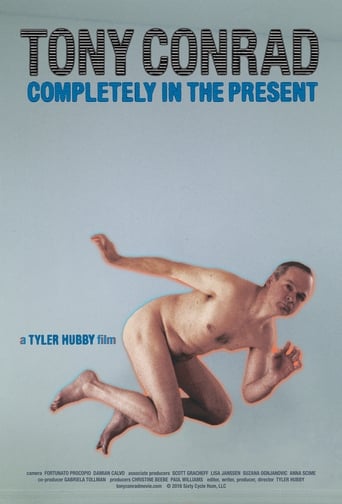
7.6Feature documentary on the pioneering life and work of iconoclastic filmmaker/musician/composer/artist Tony Conrad.
Tony Conrad: Completely in the Present
2016
 NR
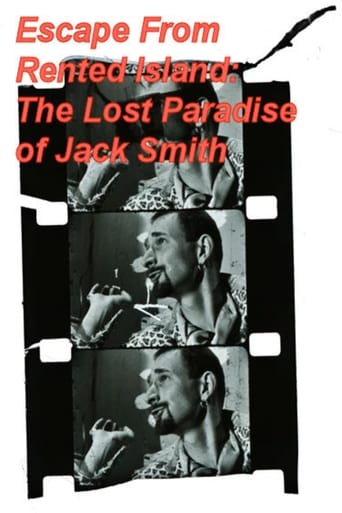
NRIn his essay film, Jerry Tartaglia, longtime archivist and restorer of the film estate of queer New York underground, experimental film, and performance legend Jack Smith, deals less with Smith’s life than with his work, analyzing Smith’s aesthetic idiosyncrasies in 21 thematic chapters. It's a film essay about the artist’s work, rather than a documentary about his life. An unmediated vision of Jack Smith, an invitation to join him in his lost paradise.
Escape From Rented Island: The Lost Paradise of Jack Smith
2017
Tony Conrad interviewed on the streets of NYC.
Lower East Side 12.12.12: Tony Conrad Interviewed by Michael Cohen
2012
2000s · 7 titles
10.0This exhibition focuses on Jonas Mekas’ 365 Day Project, a succession of films and videos in calendar form. Every day as of January 1st, 2007 and for an entire year, as indicated in the title, a large public (the artist's friends, as well as unknowns) were invited to view a diary of short films of various lengths (from one to twenty minutes) on the Internet. A movie was posted each day, adding to the previously posted pieces, resulting altogether in nearly thirty-eight hours of moving images.
365 Day Project
2007
 6.7
6.7In this entrancing documentary on performance artist, photographer and underground filmmaker Jack Smith, photographs and rare clips of Smith's performances and films punctuate interviews with artists, critics, friends and foes to create an engaging portrait of the artist. Widely known for his banned queer erotica film Flaming Creatures, Smith was an innovator and firebrand who influenced artists such as Andy Warhol and John Waters.
Jack Smith and the Destruction of Atlantis
2007
 NR
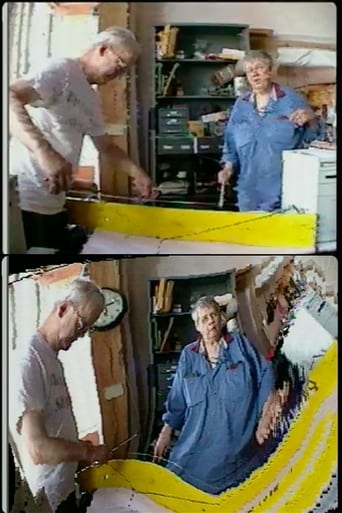
NRFellow violinist and artist Tony Conrad, in collaboration with software engineer Tom Demeyer, made for Steina the instrument seen in this title. Conrad and the Vasulkas all taught at the University at Buffalo in the Media Study Department from 1976 to 1979.
Music in the Afternoon
2002
 NR
NRTradition, mystical revelation, the passing on of family secrets--all that is lost in translation. In this magical fairytale Grandma Baba struggles with the impossibility of telling what needs to be told. How can she pass on the traditions and stories of the Old Country to Little Boris, especially when Old Bandy Legs, a mercurial old magician, is vying to tell his stories? A humorous and whimsical tale made with puzzle pieces that never exactly fit together. Includes a stunning performance by Buffalo, NY as Mother Russia.
Grandma Baba and Little Boris
2000
 NR
NRTony Conrad provides useful & alternative grading tips for teachers. Made in Buffalo, NY.
Grading Tips for Teachers
2003
 5.7
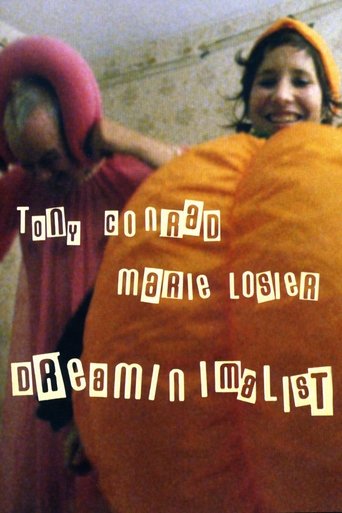
5.7The latest in Marie Losier's ongoing series of film portraits of avant-garde directors (George and Mike Kuchar, Guy Maddin, Richard Foreman), DreaMinimalist offers an insightful and hilarious encounter with Conrad as he sings, dances and remembers his youth and his association with Jack Smith. - Harvard Film Archive
Tony Conrad: DreaMinimalist
2008
 NR
NRMrs. Claus complains because Santa is away.
Scanty Claus
2002
1990s · 3 titles
NRScenes from the life and work at Anthology Film Archives. Much of the footage in this video was shot by Auguste Varkalis.
Laboratorium Anthology
1999
7.0Jonas Mekas assembles 160 portraits, appearances, and fleeting sketches of underground and independent filmmakers captured between 1955 and 1996. Fast-paced and archival in spirit, the film celebrates the avant-garde as its own “nation of cinema,” a vital community existing outside the dominance of commercial film.
Birth of a Nation
1997
 7.0
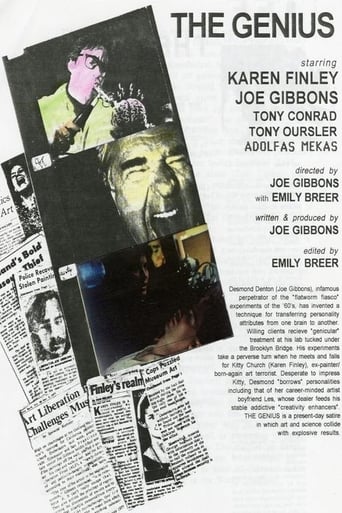
7.0A ramshackle underground SF satire set and shot in the self-absorbed art world of lower Manhattan, written, produced, and directed by Joe Gibbons, who also plays one of the lead parts. Gibbons plays a mad scientist who's developed a technique for transferring personalities from one person's body to another; he becomes obsessed with an outlaw artist (played by performance artist Karen Finley) who destroys paintings in various galleries as a form of anarchist, anticapitalist protest.
The Genius
1993
1980s · 5 titles
NRHome movies shot on Super 8mm by W+B Hein over 10 years.
Home Movies 1971-81
1985
“A theory discourse among three participants, enacted in silhouette.” –Tony Conrad
Palace of Error
1982
 NR
NRThis exquisite single shot is a complement to Combat Status Go. Here the viewer is positioned casually, even though every other element in the film experiences a painful precision: piano, gun, wardrobe; conversation directed at (and across the bow of) the viewer; timing, direction, gaze. —Tony Conrad
Teddy Tells Jokes
1980
 NR
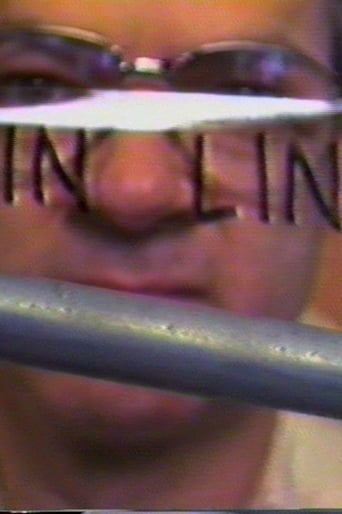
NRA trisection of the spectators’ power over their own image language: word, trance, and command are installed as valences of the artist’s license, revealed as figures of parental authority. How peculiar that people like being an audience because they enjoy their submission to the authority of the program. This ritual of being dominated is a conspiracy with themselves that we enjoy but refuse to acknowledge. “Oh, no. I don’t like TV because I’m submissive; it’s because it makes me feel good.” The programs are always carefully crafted to be sensitive to people’s selfprotectiveness, even if they offer a good scare, or a good cry. Well, if this is all true, what happens when, by chance, you submit to a program that refuses to be polite about your closet masochism? That tells all? —Tony Conrad
In Line
1985
 NR
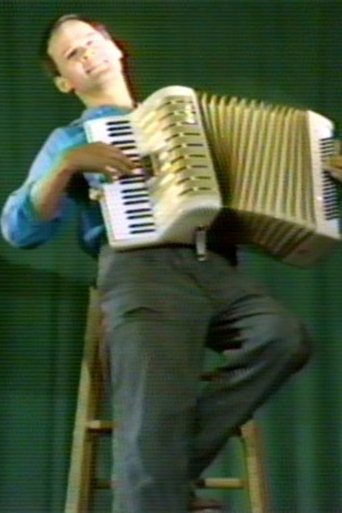
NR“A man, an accordion, a ladder, and a video camera. It’s as simple as that.” - Andrew Lampert
Accordion
1981
1960s · 4 titles
7.3Also known as Walden, Jonas Mekas’s first diary film is a six-reel chronicle of his life in 1960s New York, interweaving moments with family, friends, lovers, and artistic idols. Blending everyday encounters with portraits of the avant-garde art scene, it forms an epic, personal meditation on community, creativity, and the passage of time.
Diaries, Notes, and Sketches
1968
 7.2
7.2A follow-up to now legendary film Flaming Creatures. This vivid, full-color homage to B-movies is a dizzying display of camp that clearly affirms Smith’s role as the driving force behind underground cinema and performance art of the post-war era. The director was known to constantly re-edit the film, often during screenings as it was still unspooling from the projector.
Normal Love
1965
 NR
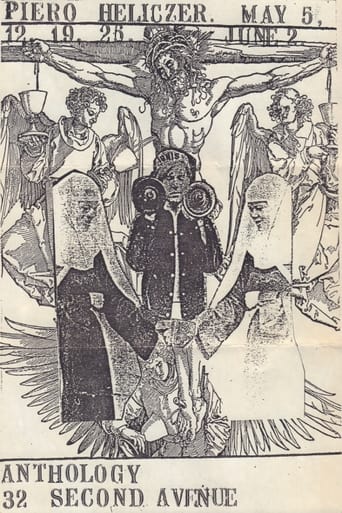
NRThe story of Joan of Arc as applied to the present revolution in arts and more. The Gothic is applied to the War in Vietnam. The film is experimental in the sense that in it the visual becomes tactile.
Joan of Arc
1967
 6.0
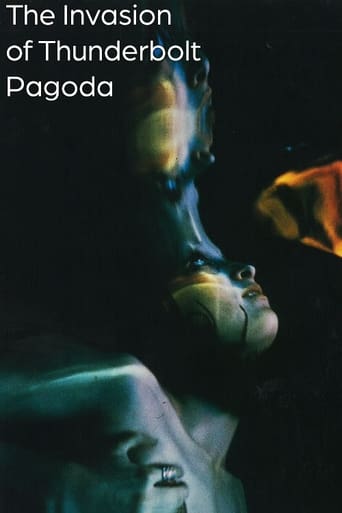
6.0At the court of the Yellow Emperor, the Majoon Traveler & Lady Firefly appear in the Hall of Unconscious Magnetism.
The Invasion of Thunderbolt Pagoda
1968
Behind the camera
Straight and Narrow is a study of subjective colour and visual rhythm, although it is printed on black and white film, the hypnotic pacing of the images will cause most viewers to experience a programmed gamut of hallucinatory colour effects. Through the intermediary of rhythm, the maximal impact is drawn from the simplest of universal human images: straight horizontal and vertical lines. Set to a strong percussive musical background, rapidly alternating images of black and white straight lines are juxtaposed in precise rhythmic patterns to create specific colours... if you can watch without becoming hypnotised...
Straight and Narrow
1970
 5.4
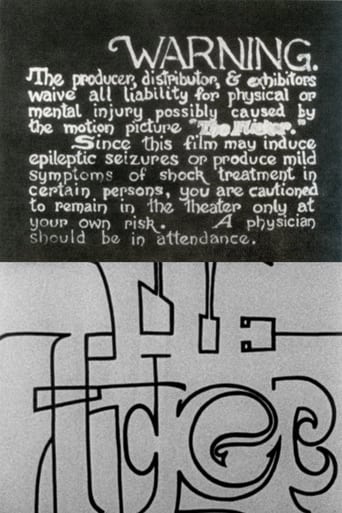
5.4A film consisting of alternating black and white frames.
The Flicker
1966
 NR
NROriginally debuted in 1977, where it took the form of a dual slide projection with live piano accompaniment by the artist. In the 2012 installation version at the Buffalo AKG, the slides were transferred to digital projection and Conrad’s live accompaniment was replaced by a contemporaneous recording of him playing piano. The piano accompaniment belongs to a larger durational performance project that Conrad called Music and the Mind of the World. Between 1976 and 1982, the artist—who was known as a violinist and had no formal piano training—recorded himself experimenting at length on the piano. The photographs that make up Tiding over till Tomorrow were taken by Conrad and are joined by a number of enigmatic texts slides by the artist Anne Turyn.
Tiding over till Tomorrow
1977
 NR
NRTo make Loose Connection, Conrad built a camera that moved in two directions simultaneously: it could be rolled backward and forward on a waist-high rig made with baby carriage wheels, and it automatically rotated 360 degrees. When he finally developed the film and transferred it to digital video in 2011, he was able to realize the project as planned: a jittery, flickering version of gritty, even intense everyday reality in New York City where the illusion of motion that film normally creates is shattered and sound and image remain only loosely connected.
Loose Connection
2011
 NR
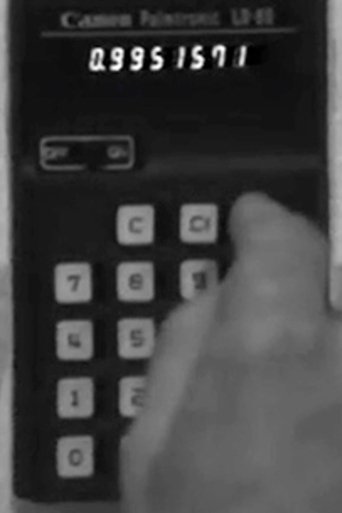
NR“Cycles of 3s and 7s is a doubled statement. First and foremost, it is a commentary on computer art and the role of computers in video. Secondly, its arithmetic project has some bearing on the construction of musical scales. In reclaiming the computer as a performance instrument, I intended that the human operator must compete directly with the computer, doing what the computer does best. The selection of a simple hand calculator was a deliberate denial of the computer aesth/ethic of bigger, faster: computer art must be doable within even the most modest architecture. Cycles of 3s and 7s shows that it is not the answer that ‘counts,’ but the pleasure in getting there. Simple rote calculation is turned into rhythm and song; accuracy of gesture and count become a game. These are ‘stories’ about numbers, the kind machines should like to hear and tell—if they ‘liked.’” - Tony Conrad
Cycles of 3s and 7s
1977
NRTony Conrad provides useful & alternative grading tips for teachers. Made in Buffalo, NY.
Grading Tips for Teachers
2003
 NR
NRA Dracula parody where the camera moves to the eye of Count Flickerstein and the image changes to static-like patterns.
The Eye of Count Flickerstein
1967
This version of the Dick and Jane and Baby Sally tale was influenced by Dorothy Bloch, who stresses the role of childhood fear that the parent will kill the child. An alternative title, “The Scissors Bird,” is intended as a reference to “The Story of Little Suck-aThumb” in Hoffman’s Struwwelpeter, in which little Conrad has his thumbs cut off. The clearest issue from the stormy advance of family history over the last two decades is that adult perceptions of children are unanchored and self-absorbed. By killing the imaginary child, Run Dick, Run Jane skews the adult viewer’s inner child narrative investment. —Tony Conrad
Run Dick, Run Jane
1985
 NR
NR"A curiosity, Movie Show looks backward to the era of structural films, particularly Ken Jacobs’s Tom, Tom, the Piper’s Son. The clip of film used in this performance is taken from my Articulation of Boolean Algebra for Film Opticals, the work with which I closed out my interest in combinatorial and logical structures." —Tony Conrad
Movie Show
1977
A machine-gun film roll of 4-X negative film was exposed using pressure (hammering) and was flashed in its exploded physical configuration.
4-X Attack
1973
Four Square is a film designed for four screens surrounding the audience. Through its spatial distribution of abstract image and sound it begins to build up a TIME/SPACE experience where the mental construction of the events do not clearly differentiate between separation/ distribution in time from separation/ distribution in space. A unified field TIME/SPACE experience.
Four Square
1971
If the intersection of desire and authority is phallus, the intersection of absence and vigilance is vagina. The tape’s laconic title (I saw, I conquered—but I didn’t come) encodes its vaginal pretense. In effect, Vidi Vici is a male artist exploring a vaginal posture. By interleafing different gender characterizations with various narrative impulses, it circumvents linearity while emptying our gaze into the interstices between action and incapacity. —Tony Conrad
Vidi Vici: Narrative and the death of desire
1988
 NR
NRNegative image is shot from a small rear-projection screen, the film comes out of the camera continuously (in the dark room) and is immediately processed, dried, and projected on the screen.
Film Feedback
1974
NRMrs. Claus complains because Santa is away.
Scanty Claus
2002
A short video by Tony Conrad.
Conversation II
2005
The visual track of Weak Bodies and Strong Wills comes from my 1973 film, Enlightenment through Experience: Interim Semester at Albright College. The found film images had been kept in a closet at Albright College, where I was invited to teach a workshop. I edited the original silent footage and added audio as a demonstration. In video, it has been turned into a little song about the rust belt. Incidentally, “The Boss” is played by Harry Truman, seen as he visited Reading, Pennsylvania, sometime around the middle of the century. —Tony Conrad
Weak Bodies and Strong Wills
1986
 NR
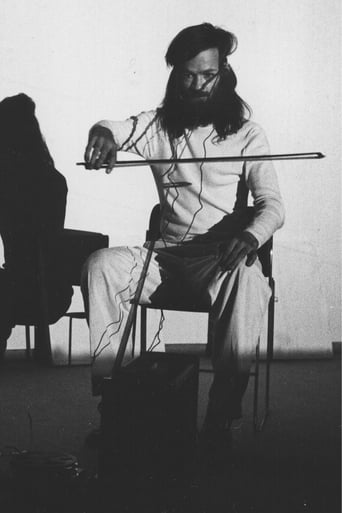
NRStroboscopic vertical lines on a loop accompanying minimalist drone music compositions.
Ten Years Alive on the Infinite Plain
2005
Film notable for being created by physically "cooking" the film stock, similar to his other 1973 work, "Curried 7302". The name likely references this process of using heat, as well as the "structural film" methods Conrad employed to alter the film's physical properties and the resulting image.
7360 Sukiyaki
1973
 9.0
9.0Made out of six patterns of alternating black and white imposed upon the full surface of the film strip.
Articulation of Boolean Algebra for Film Opticals
1975
“A theory discourse among three participants, enacted in silhouette.” –Tony Conrad
Palace of Error
1982
NRThis exquisite single shot is a complement to Combat Status Go. Here the viewer is positioned casually, even though every other element in the film experiences a painful precision: piano, gun, wardrobe; conversation directed at (and across the bow of) the viewer; timing, direction, gaze. —Tony Conrad
Teddy Tells Jokes
1980
 NR
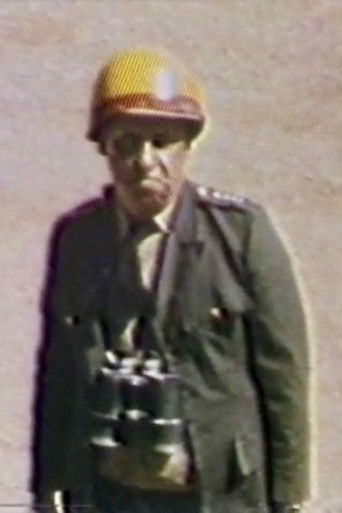
NRUsing the devices of the war film genre, Tony Conrad cast his film with friends and colleagues, such as Mike Kelley, David Antin, Sheldon Nodelman, and Tony Oursler. Rather than directing the actors, he presented them with unscripted scenarios that could only be enacted within the strictly defined roles of officer or soldier. Each title carried its own set of rules and restrictions.
Beholden to Victory
1983
NRA trisection of the spectators’ power over their own image language: word, trance, and command are installed as valences of the artist’s license, revealed as figures of parental authority. How peculiar that people like being an audience because they enjoy their submission to the authority of the program. This ritual of being dominated is a conspiracy with themselves that we enjoy but refuse to acknowledge. “Oh, no. I don’t like TV because I’m submissive; it’s because it makes me feel good.” The programs are always carefully crafted to be sensitive to people’s selfprotectiveness, even if they offer a good scare, or a good cry. Well, if this is all true, what happens when, by chance, you submit to a program that refuses to be polite about your closet masochism? That tells all? —Tony Conrad
In Line
1985
NR“A man, an accordion, a ladder, and a video camera. It’s as simple as that.” - Andrew Lampert
Accordion
1981
"Originally intended as one scene in a larger work concerned with the metaphorical destruction of the viewer (through demolition of the camera), Concord Ultimatum unexpectedly became the occasion of the larger project’s demise. In addressing the camera mechanism itself as a subject, and even offering to exchange positions with it, this performance dismembered at one stroke most of the aporias of the materialist/structuralist position in film theory. On the other hand, this work revealed no point of access to the visual image; its situationist grounding in a particular structure of events, which placed voice and performance at stage center, simultaneously won me over to the video medium and stripped me of visual tools (until Combat Status Go)."
Concord Ultimatum
1977
No synopsis available yet.
7302 Creole
1973