

Directing
Tonino De Bernardi
Born
1937-05-24 (89)
Place of birth
Chivasso, Italy
Known for
Directing
Credits
63 titles
Tonino De Bernardi (1937, Italy) made his first work at the end of the 1960s. His underground films were often projected in museums and art galleries. In his films, De Bernardi mixes life with his interest in literature, music and art. In 1987 he made his first official feature, Elettra, after Sophocles.
Known for
 10.0
10.0This exhibition focuses on Jonas Mekas’ 365 Day Project, a succession of films and videos in calendar form. Every day as of January 1st, 2007 and for an entire year, as indicated in the title, a large public (the artist's friends, as well as unknowns) were invited to view a diary of short films of various lengths (from one to twenty minutes) on the Internet. A movie was posted each day, adding to the previously posted pieces, resulting altogether in nearly thirty-eight hours of moving images.
365 Day Project
2007
 4.9
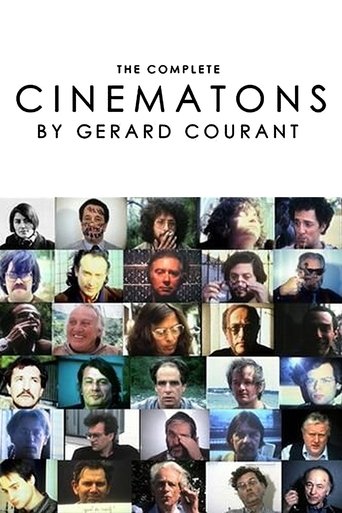
4.9Cinématon is a 156-hour long experimental film by French director Gérard Courant. It was the longest film ever released until 2011. Composed over 36 years from 1978 until 2006, it consists of a series of over 2,821 silent vignettes (cinématons), each 3 minutes and 25 seconds long, of various celebrities, artists, journalists and friends of the director, each doing whatever they want for the allotted time. Subjects of the film include directors Barbet Schroeder, Nagisa Oshima, Volker Schlöndorff, Ken Loach, Benjamin Cuq, Youssef Chahine, Wim Wenders, Joseph Losey, Jean-Luc Godard, Samuel Fuller and Terry Gilliam, chess grandmaster Joël Lautier, and actors Roberto Benigni, Stéphane Audran, Julie Delpy and Lesley Chatterley. Gilliam is featured eating a 100-franc note, while Fuller smokes a cigar. Courant's favourite subject was a 7-month-old baby. The film was screened in its then-entirety in Avignon in November 2009 and was screened in Redondo Beach, CA on April 9, 2010.
Cinématon
1978
 7.6
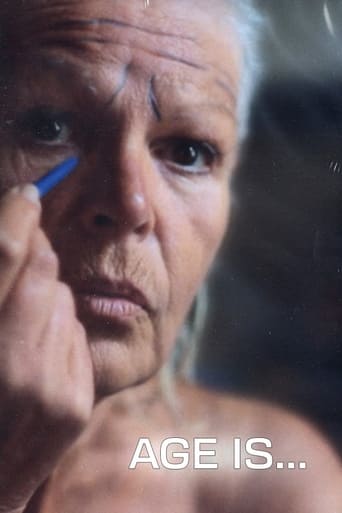
7.6Stephen Dwoskin’s final film is a meditation on the subjective experience and cultural concepts of ageing. The film is an ode to the texture, the beauty, the singularity of aging faces and silhouettes, a hypnotic poem in the Dwoskin meaning of the term which is long observations of very tiny details. A gesture, a pause, a look, a moment. Throughout his films intimacy has always played a leading role and this is also true for Age is..., all the faces being close friends, or close friends relatives and sometimes even Stephen himself.
Age Is...
2012
 10.0
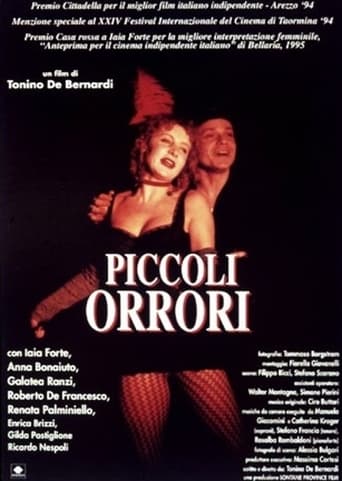
10.0A woman in her flooded kitchen thinks of Ophelia and death by drowning. A nun wonders about her vocation. A girl, dumb by choice, walks around in Naples. A ballerina in a wheelchair. Three youths around a bonfire in a little island. A man secluded in a tower waiting for the end of the world. And many other stories.
Little Horrors
1994
 NR
NR"The Man With The Golden Eye" tells the extraordinary figure of Marco Melani through a live projection of materials collected in over ten years of research. Found footage, unpublished interviews with cinema and television personalities, fragments of films, extracts from television programs, photographs, readings and interventions by the author, intertwine giving voice to a chorus of precious testimonies.
Marco Melani: The Man with the Golden Eye
2021
No synopsis available yet.
Accoltellati
2006
Film credits
2020s · 4 titles
NR"The Man With The Golden Eye" tells the extraordinary figure of Marco Melani through a live projection of materials collected in over ten years of research. Found footage, unpublished interviews with cinema and television personalities, fragments of films, extracts from television programs, photographs, readings and interventions by the author, intertwine giving voice to a chorus of precious testimonies.
Marco Melani: The Man with the Golden Eye
2021
 NR
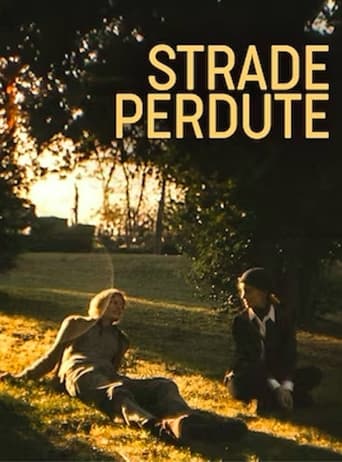
NRFor Filmmaker Film Festival (2023), Fulvio Baglivi and Cristina Piccino asked some filmmakers (R. Beckermann, J. Bressane, D’Anolfi/Parenti, T. De Bernardi, L. Di Costanzo, A. Fasulo, F. Ferraro, M. Frammartino, S. George, ghezzi/Gagliardo, C. Hintermann, G. Maderna, A. Momo, A. Rossetto, M. Santini, C. Simon, S. Savona) to give us their own "lost road," that is, a sequence, scene or piece of editing that did not later find its way into the final version of one of their works. Each fragment has its own accomplished presence, often has a different title from the film it was made for, which is not necessary to have seen in order to find meaning; on the contrary, those who set out thinking they know the world they are walking through will find themselves displaced.
Strade perdute - Filmmaker 23
2023
A film commissioned by the Centre Pompidou, where the director captures moments of his daily life and of his relatives.
Où en êtes-vous, Tonino De Bernardi?
2022
 NR
NR"Tonino De Bernardi - Un tempo, un incontro" is a film about the duel between two friends who are very different from one another. Two different approaches, two characters, two views that only seem antithetical meet and then open up in front of a camera. Or, more precisely, in front of the cameras. On the one hand, the eye of Daniele Segre. On the other hand, Tonino's, which almost taints the film's aesthetics. The film's development conveys a sense of immediacy, which is a fundamental principle for both directors. Daniele films Tonino and Tonino films Daniele, and this takes place in a play of associations, and in the space of an encounter. The two directors have seized this opportunity to swap views and experiences.
Tonino De Bernardi: One Time, One Encounter
2021
2010s · 4 titles
7.6Stephen Dwoskin’s final film is a meditation on the subjective experience and cultural concepts of ageing. The film is an ode to the texture, the beauty, the singularity of aging faces and silhouettes, a hypnotic poem in the Dwoskin meaning of the term which is long observations of very tiny details. A gesture, a pause, a look, a moment. Throughout his films intimacy has always played a leading role and this is also true for Age is..., all the faces being close friends, or close friends relatives and sometimes even Stephen himself.
Age Is...
2012
 10.0
10.0No synopsis available yet.
Filmstudio, mon amour
2015
 4.7
4.7A whole summer long, Portuguese filmmaker Teresa Villaverde stayed with Italian cult director Tonino De Bernardi, who was working on projects including a film version of Sophocles’ Electra starring only local villagers. She sits at the table with the family in their garden, on the back seat of the car on the way home in the evening or listens to the stories told by the woman De Bernardi buys cheese and eggs from.
Galileo’s Thermometer
2018
 5.0
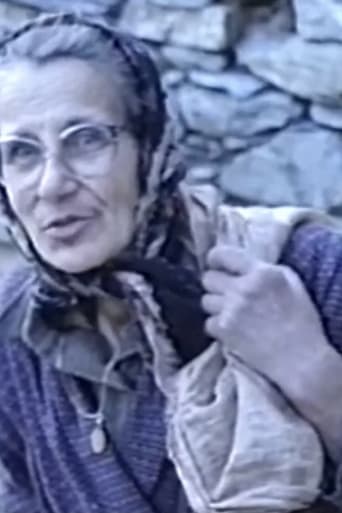
5.0Italian film-maker Tonino De Bernardi meets in rural Liguria an old countrywoman, Agnese, and her chickens.
Tonino e le galline
2010
2000s · 3 titles
10.0This exhibition focuses on Jonas Mekas’ 365 Day Project, a succession of films and videos in calendar form. Every day as of January 1st, 2007 and for an entire year, as indicated in the title, a large public (the artist's friends, as well as unknowns) were invited to view a diary of short films of various lengths (from one to twenty minutes) on the Internet. A movie was posted each day, adding to the previously posted pieces, resulting altogether in nearly thirty-eight hours of moving images.
365 Day Project
2007
No synopsis available yet.
Ultimo bagliore e nulla
2003
No synopsis available yet.
Ophelia Afar
2000
1970s · 6 titles
4.9Cinématon is a 156-hour long experimental film by French director Gérard Courant. It was the longest film ever released until 2011. Composed over 36 years from 1978 until 2006, it consists of a series of over 2,821 silent vignettes (cinématons), each 3 minutes and 25 seconds long, of various celebrities, artists, journalists and friends of the director, each doing whatever they want for the allotted time. Subjects of the film include directors Barbet Schroeder, Nagisa Oshima, Volker Schlöndorff, Ken Loach, Benjamin Cuq, Youssef Chahine, Wim Wenders, Joseph Losey, Jean-Luc Godard, Samuel Fuller and Terry Gilliam, chess grandmaster Joël Lautier, and actors Roberto Benigni, Stéphane Audran, Julie Delpy and Lesley Chatterley. Gilliam is featured eating a 100-franc note, while Fuller smokes a cigar. Courant's favourite subject was a 7-month-old baby. The film was screened in its then-entirety in Avignon in November 2009 and was screened in Redondo Beach, CA on April 9, 2010.
Cinématon
1978
 4.0
4.0A series of migrants who at times narrate and impersonate shards of myths, among them the Great Goddess, the Virgin of Bach’s Magnificat, the Sulamite of Stockhausen’s Song of Solomon (“I am black but comely”), tales by Herodotus, Kafka, Villon (as set to music by Ezra Pound). Third part of the Flower of Eryngium cycle.
Migration
1970
 6.0
6.0Shot between Italy and New York City, Warming Up is the journal of a season of creativity. The film-maker and his characters improvise scenes and sequences, and wonder how to make up a story as they go along. The recurring theme is how to make the world (or read it as) an imaginative place...
Warming Up
1973
 NR
NRUnfinished feature film by Piero Bargellini.
Erinnerung An Die Zukunft
1970
 NR
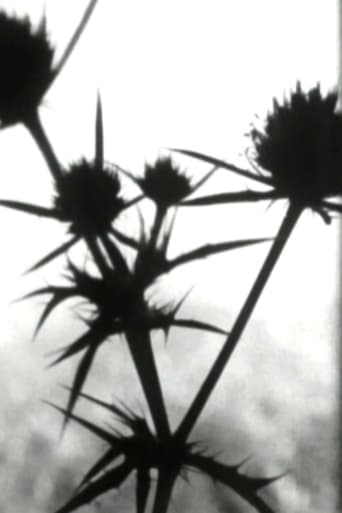
NRA conclusion and recapitulation of the Eryngium cycle, Coda deals directly with the theme of self-portraiture. The first shot alludes to the end of Erichvon Stroheim's Foolish Wives, where the corpse of the hero-director is dispatched in a man-hole. Other dramatic self-portraits follow: Caravaggio's Goliath, Dante's Sestina (read by the film-maker), and Dürer's Self-portrait with Eryngium. The abandoned villa of Migrazione is revisited. But the finale is hopeful.
Coda
1970
It exists only in a fragmented state.
Bacino Casa del lupo o di Tonino Massimo e Piero
1970
1960s · 3 titles
 10.0
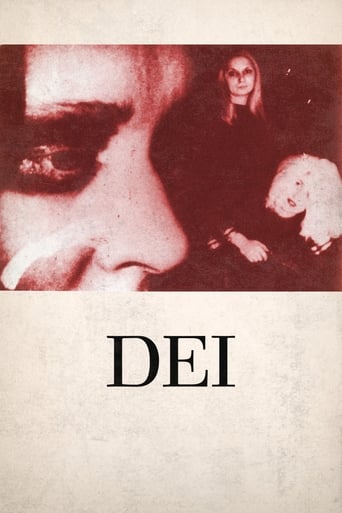
10.0The construction of the film is very simple. Most of the time we see faces in close-up. Three pairs of faces, usually, on three different levels of superimpositions. At first, the faces are very theatrical, made-up. It's not clear whether they are men or women. They move only slightly. They are, indeed, godlike. As the film progresses, very unnoticeably, these faces begin to gain more life and masculine and feminine qualities. At the end of the film, after three hours, the faces are very real, and very human, and sexes and ages are very clearly defined: men, women, children.
Dei
1968
 NR
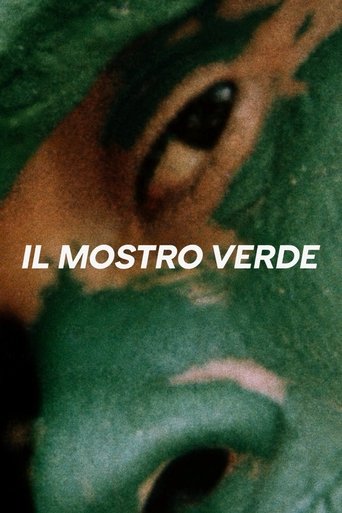
NRShort made for double parallel projections, for which Allen Ginsberg said that it's his favorite underground European film, debut from the director, cheeky hommage to B-movies.
Il mostro verde
1967
No synopsis available yet.
Il giardino erboso
1968
Behind the camera
10.0A woman in her flooded kitchen thinks of Ophelia and death by drowning. A nun wonders about her vocation. A girl, dumb by choice, walks around in Naples. A ballerina in a wheelchair. Three youths around a bonfire in a little island. A man secluded in a tower waiting for the end of the world. And many other stories.
Little Horrors
1994
10.0A woman in her flooded kitchen thinks of Ophelia and death by drowning. A nun wonders about her vocation. A girl, dumb by choice, walks around in Naples. A ballerina in a wheelchair. Three youths around a bonfire in a little island. A man secluded in a tower waiting for the end of the world. And many other stories.
Little Horrors
1994
No synopsis available yet.
Accoltellati
2006
No synopsis available yet.
Accoltellati
2006
 9.0
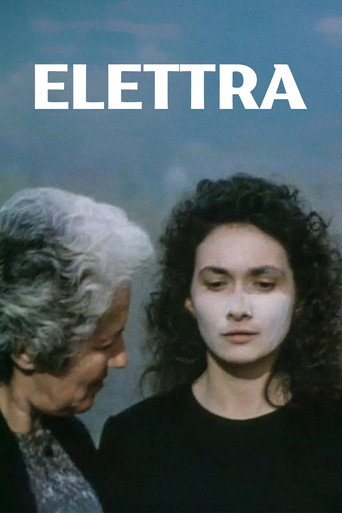
9.0Elettra is adapted from the tragedy of Sophocles and played by non-professional actors of Casalborgone.
Elettra
1987
9.0Elettra is adapted from the tragedy of Sophocles and played by non-professional actors of Casalborgone.
Elettra
1987
 NR
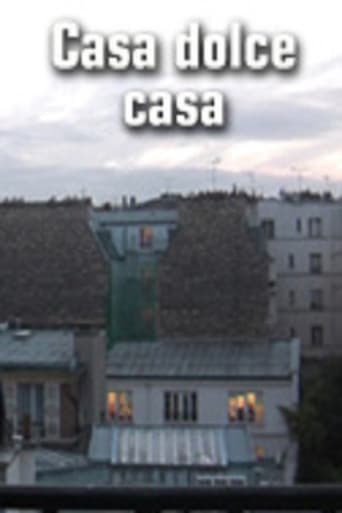
NRA young woman wanders down an endless corridor, while other people knock at a door at night. A man takes a picture of Montmartre, two women hand him some money, while a patron manages from rue de Mhyra a network of Italian call girls. Adiba sings an ancient Moroccan song in a room full of children, while Vidya is performing her daily puja in Pune (India). Giuli sings to herself as she drives at night through Turin and runs to the station at day. Parallel stories where every character is caught “in a situation,” closed.
Home Sweet Home
2012
NRA young woman wanders down an endless corridor, while other people knock at a door at night. A man takes a picture of Montmartre, two women hand him some money, while a patron manages from rue de Mhyra a network of Italian call girls. Adiba sings an ancient Moroccan song in a room full of children, while Vidya is performing her daily puja in Pune (India). Giuli sings to herself as she drives at night through Turin and runs to the station at day. Parallel stories where every character is caught “in a situation,” closed.
Home Sweet Home
2012
NRA young woman wanders down an endless corridor, while other people knock at a door at night. A man takes a picture of Montmartre, two women hand him some money, while a patron manages from rue de Mhyra a network of Italian call girls. Adiba sings an ancient Moroccan song in a room full of children, while Vidya is performing her daily puja in Pune (India). Giuli sings to herself as she drives at night through Turin and runs to the station at day. Parallel stories where every character is caught “in a situation,” closed.
Home Sweet Home
2012
A Neopolitan hustler named Antonello is living his life in Torino. He turns tricks as a transvestite, using the name Rosatigre, or more commonly, Rosa. His closest pal is Wanda, who exercises the same “profession” and, being his best friend, is also the incarnation of his feminine alter ego. While we watch the two of them hanging out on the street, sweet and carefree as the young Moll Flanders, we eavesdrop on their exchange of confidences and learn the secret details of their private lives. Wanda could have been a teacher but she preferred the street, where she can indulge her sentimental, dreamy nature in sighing over the "Americano" she once met in Naples, for whom she still carries a torch.
Working the Streets
2001
A Neopolitan hustler named Antonello is living his life in Torino. He turns tricks as a transvestite, using the name Rosatigre, or more commonly, Rosa. His closest pal is Wanda, who exercises the same “profession” and, being his best friend, is also the incarnation of his feminine alter ego. While we watch the two of them hanging out on the street, sweet and carefree as the young Moll Flanders, we eavesdrop on their exchange of confidences and learn the secret details of their private lives. Wanda could have been a teacher but she preferred the street, where she can indulge her sentimental, dreamy nature in sighing over the "Americano" she once met in Naples, for whom she still carries a torch.
Working the Streets
2001
A Neopolitan hustler named Antonello is living his life in Torino. He turns tricks as a transvestite, using the name Rosatigre, or more commonly, Rosa. His closest pal is Wanda, who exercises the same “profession” and, being his best friend, is also the incarnation of his feminine alter ego. While we watch the two of them hanging out on the street, sweet and carefree as the young Moll Flanders, we eavesdrop on their exchange of confidences and learn the secret details of their private lives. Wanda could have been a teacher but she preferred the street, where she can indulge her sentimental, dreamy nature in sighing over the "Americano" she once met in Naples, for whom she still carries a torch.
Working the Streets
2001
 NR
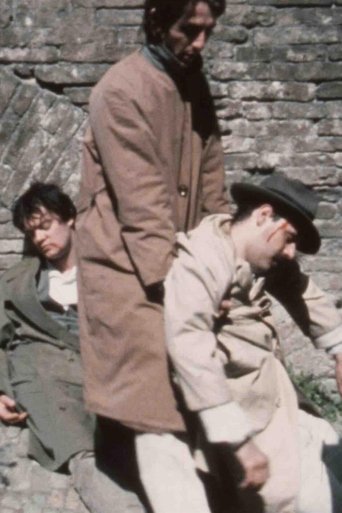
NRCollective manifesto by the members of C.C.I. It is a collective film, the result of an operation devoid of any aesthetic purpose: to verify the existence of any harmony between a fairly large group (twelve people) of members of the independent Cooperative. Someone, who had the idea, turned 60 meters of Ektachrome according to the moods –or discontent – of the moment and gave them to others to see. The others reacted, each with their own piece. It was then thought to call the film “circular letter”. It was not so simple and so quick: the operation, which started in June of ’68, ended in March of ’69.
Tutto, tutto nello stesso istante
1969
10.0The construction of the film is very simple. Most of the time we see faces in close-up. Three pairs of faces, usually, on three different levels of superimpositions. At first, the faces are very theatrical, made-up. It's not clear whether they are men or women. They move only slightly. They are, indeed, godlike. As the film progresses, very unnoticeably, these faces begin to gain more life and masculine and feminine qualities. At the end of the film, after three hours, the faces are very real, and very human, and sexes and ages are very clearly defined: men, women, children.
Dei
1968
10.0The construction of the film is very simple. Most of the time we see faces in close-up. Three pairs of faces, usually, on three different levels of superimpositions. At first, the faces are very theatrical, made-up. It's not clear whether they are men or women. They move only slightly. They are, indeed, godlike. As the film progresses, very unnoticeably, these faces begin to gain more life and masculine and feminine qualities. At the end of the film, after three hours, the faces are very real, and very human, and sexes and ages are very clearly defined: men, women, children.
Dei
1968
Independent documentary about the hidden side of the 1990 FIFA World Cup.
Italia '90: lavori in corso
1990
 NR
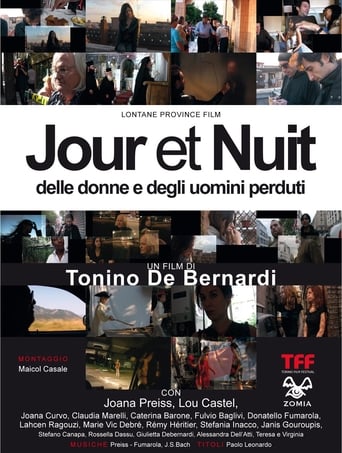
NRPortraits of women, stories from their past and their present as prostitutes working between Italy and France (and Brazil). Women who used to think they were lost, and men just as lost as them.
Jour et nuit, delle donne e degli uomini perduti
2014
NRPortraits of women, stories from their past and their present as prostitutes working between Italy and France (and Brazil). Women who used to think they were lost, and men just as lost as them.
Jour et nuit, delle donne e degli uomini perduti
2014
NRPortraits of women, stories from their past and their present as prostitutes working between Italy and France (and Brazil). Women who used to think they were lost, and men just as lost as them.
Jour et nuit, delle donne e degli uomini perduti
2014
No synopsis available yet.
Terra
2002
No synopsis available yet.
Terra
2002
 3.8
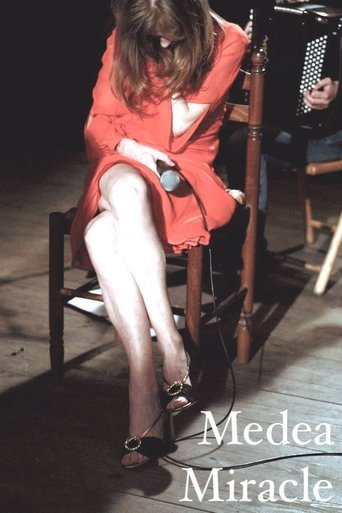
3.8Irene moves to Paris to begin a new life with her husband Jason and their two daughters, but an act of betrayal and her desire for revenge soon sends her to the brink of madness.
Medea Miracle
2011
3.8Irene moves to Paris to begin a new life with her husband Jason and their two daughters, but an act of betrayal and her desire for revenge soon sends her to the brink of madness.
Medea Miracle
2011
3.8Irene moves to Paris to begin a new life with her husband Jason and their two daughters, but an act of betrayal and her desire for revenge soon sends her to the brink of madness.
Medea Miracle
2011
This film tells three different love stories, or alleged love stories, or, nevertheless, stories of sentimental relationships set in the Lazio countryside, Rome, and Naples. This is the reiteration - in different days and in different places - of an encounter among three people that (perhaps) may turn out to be fatal.
The Way in the Woods
2001
This film tells three different love stories, or alleged love stories, or, nevertheless, stories of sentimental relationships set in the Lazio countryside, Rome, and Naples. This is the reiteration - in different days and in different places - of an encounter among three people that (perhaps) may turn out to be fatal.
The Way in the Woods
2001
This film tells three different love stories, or alleged love stories, or, nevertheless, stories of sentimental relationships set in the Lazio countryside, Rome, and Naples. This is the reiteration - in different days and in different places - of an encounter among three people that (perhaps) may turn out to be fatal.
The Way in the Woods
2001
 NR
NR“Why did you kill her?” Lou asks Philippe again. The life-odyssey of Joana, a modern-day Moll Flanders, continues as she moves through different times and places, like the stations of a personal via crucis, with occasional leaps into the present. From Paris to Rome and on to São Paulo. The body has lost every value, except the economic one.
Hotel de l'Univers
2013
NR“Why did you kill her?” Lou asks Philippe again. The life-odyssey of Joana, a modern-day Moll Flanders, continues as she moves through different times and places, like the stations of a personal via crucis, with occasional leaps into the present. From Paris to Rome and on to São Paulo. The body has lost every value, except the economic one.
Hotel de l'Univers
2013
NR“Why did you kill her?” Lou asks Philippe again. The life-odyssey of Joana, a modern-day Moll Flanders, continues as she moves through different times and places, like the stations of a personal via crucis, with occasional leaps into the present. From Paris to Rome and on to São Paulo. The body has lost every value, except the economic one.
Hotel de l'Univers
2013
No synopsis available yet.
Il battello ebbro
2021
No synopsis available yet.
Il battello ebbro
2021
No synopsis available yet.
Il battello ebbro
2021
 4.4
4.4This is a story about a Neapolitan guy, Antonello, immigrant in Turin, who, for a living, hooks on the street as Rosatigre. Sasà, a friend of his, tries to bring him back to Naples, but, after a tortured decision, Antonello chooses to come back North and to keep living “on the street”.
RosaTigre
2000
4.4This is a story about a Neapolitan guy, Antonello, immigrant in Turin, who, for a living, hooks on the street as Rosatigre. Sasà, a friend of his, tries to bring him back to Naples, but, after a tortured decision, Antonello chooses to come back North and to keep living “on the street”.
RosaTigre
2000
4.4This is a story about a Neapolitan guy, Antonello, immigrant in Turin, who, for a living, hooks on the street as Rosatigre. Sasà, a friend of his, tries to bring him back to Naples, but, after a tortured decision, Antonello chooses to come back North and to keep living “on the street”.
RosaTigre
2000
 NR
NRAdventure of children and adults, fancied trips and everyday tragedies. The city and the countryside. Real and dreamt life. An experimental film inspired to the life of Emilio Salgari and his novel Yolanda, daughter of the Black Corsair. The movie is part of a series produced by Quarto Film on the 150th anniversary of Salgari's birth.
Iolanda, Child and Corsair
2012
NRAdventure of children and adults, fancied trips and everyday tragedies. The city and the countryside. Real and dreamt life. An experimental film inspired to the life of Emilio Salgari and his novel Yolanda, daughter of the Black Corsair. The movie is part of a series produced by Quarto Film on the 150th anniversary of Salgari's birth.
Iolanda, Child and Corsair
2012
 NR
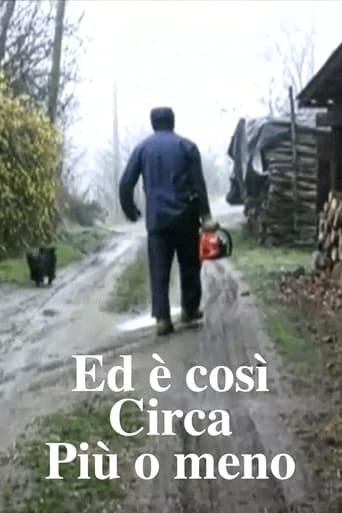
NRA film in seven chapters. A documentary overwhelmed by life. A story with no plot. A trip. From the countryside to cities, from Italy to India to Greece. Through the ages and generations, through the work of farmers and the exploitation of migrant bodies. In the end, the singing and music lead you elsewhere, to the pleasure of discovery.
Ed è così. Circa. Più o meno.
2011
NRA film in seven chapters. A documentary overwhelmed by life. A story with no plot. A trip. From the countryside to cities, from Italy to India to Greece. Through the ages and generations, through the work of farmers and the exploitation of migrant bodies. In the end, the singing and music lead you elsewhere, to the pleasure of discovery.
Ed è così. Circa. Più o meno.
2011