
Directing
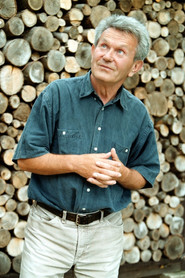
Jan Špáta
Born 1932-10-25 · Náchod, Czechoslovakia [now Czech Republic]
Jan Spáta was born on October 25, 1932 in Náchod, Czechoslovakia [now Czech Republic]. He was a cinematographer and director, known for Nejvetsí prání II (1990), Mezi svetlem a tmou (1990) and A kdo je vinen? (1971). He was married to Olga Sommerová. He died on August 18, 2006 in Prague, Czech Republic.
Acting credits
Behind the camera
Sociological study of the real values of young people in socialism.
The Biggest Wish
1964
Sociological study of the real values of young people in socialism.
The Biggest Wish
1964
"A refined film essay about the loneliness, wisdom and humility of old women. The film, most valued by Jan Špáta, was awarded the Grand Prize at the International Short Film Festival in Oberhausen, the Trilobit Award and Special Mention at the IFF in Karlovy Vary."
Respice finem
1968
"A refined film essay about the loneliness, wisdom and humility of old women. The film, most valued by Jan Špáta, was awarded the Grand Prize at the International Short Film Festival in Oberhausen, the Trilobit Award and Special Mention at the IFF in Karlovy Vary."
Respice finem
1968
Athletic Variations (Atletické variace, 28 min) is a sophisticated essay on winning and losing during the 1982 European Athletics Championships held in Athens.
Athletic Variation
1983
Athletic Variations (Atletické variace, 28 min) is a sophisticated essay on winning and losing during the 1982 European Athletics Championships held in Athens.
Athletic Variation
1983
A leading director of the Czech film renaissance provides a philosophical meditation on life and death, set amidst complex hospital apparatus and the sadness, hope, or resignation of the patients. Existentialist rather than optimist, the approach is one of humanistic atheism, accepting death as part of life. Interviews with doctors and nurses explore their outlook; all speak of death as a fact, without either sentimentality or religiosity. The studied objectivity of the film only imperfectly hides an intense emotionality.
Reflection
1966
An exploration of the declining birth rate in the Czechoslovakia.
Why?
1964
No synopsis available yet.
Svítí slunce?
1970
No synopsis available yet.
Svítí slunce?
1970
Documentary short about the title composer, born in what was called "Czechoslovakia" when the film was made.
Variations of a Theme by Gustav Mahler
1982
Documentary short about the title composer, born in what was called "Czechoslovakia" when the film was made.
Variations of a Theme by Gustav Mahler
1982
The transformation of a traditional Caucasian village in the mountains of Dagestan.
Mountain People
1968
The transformation of a traditional Caucasian village in the mountains of Dagestan.
Mountain People
1968
 NR
NRA dryly humourous quasi-philosophical account of the nature and psyche of Scotland and its natives, from the perspective of two visiting Czechs.
Looking Over The Fence: Impressions of Scotland by Raduz Cincera & Jan Spata
1965
 7.0
7.0In 1964, Jan Spáta created his documentary called Nejvetsí prání (1964), an enquette about the desires of the young generation. It was a time of political liberalization in Czechoslovakia and thus also a time of beautiful visons and desires. In 1969, the film was banned. Jan Spata came back to his "Greatest Wish" in 1990 and created a feature documentary comparing that period with the 1989 events. He even found some people interviewed in 1964 and asked them to speak again, now being 25 years older.
The Greatest Wish 2
1990
7.0In 1964, Jan Spáta created his documentary called Nejvetsí prání (1964), an enquette about the desires of the young generation. It was a time of political liberalization in Czechoslovakia and thus also a time of beautiful visons and desires. In 1969, the film was banned. Jan Spata came back to his "Greatest Wish" in 1990 and created a feature documentary comparing that period with the 1989 events. He even found some people interviewed in 1964 and asked them to speak again, now being 25 years older.
The Greatest Wish 2
1990
A continuous, extreme show is held, every year, in Tesla Arena in Prague. The visitors can be impressed by shows of dangerous riding on motorcycles, amazing acrobatics on 4 wheel vehicles, etc…
Crazy Day
1974
In 1990, filmmaker Jan Špáta headed to the North Moravian border region to join photographer Jindřich Štreit. His social humanist black-and-white images of the most ordinary life situations were close to his heart and offered themselves as a means of bearing witness to the social and spiritual state of Czech society on the threshold of freedom. "By allowing myself to be carried away by the world of Štreit's photographs, it is, in terms of content, one of my most raw films", Špáta rightly says. Štreit recalls, "I showed him different settings, what he would be interested in, what he would like, and it is true that he had a very easy job in two ways. Firstly, because these people were used to being photographed, and secondly, I chose the most attractive settings and the most attractive people. I knew that they were photogenic and that these were carrying situations".
Mezi světlem a tmou
1991
In 1990, filmmaker Jan Špáta headed to the North Moravian border region to join photographer Jindřich Štreit. His social humanist black-and-white images of the most ordinary life situations were close to his heart and offered themselves as a means of bearing witness to the social and spiritual state of Czech society on the threshold of freedom. "By allowing myself to be carried away by the world of Štreit's photographs, it is, in terms of content, one of my most raw films", Špáta rightly says. Štreit recalls, "I showed him different settings, what he would be interested in, what he would like, and it is true that he had a very easy job in two ways. Firstly, because these people were used to being photographed, and secondly, I chose the most attractive settings and the most attractive people. I knew that they were photogenic and that these were carrying situations".
Mezi světlem a tmou
1991
 6.3
6.3A Czech documentary filmmaker's cinematic travelogue of Ireland.
The Country of St. Patrick
1967
In 1965, during eminent trumpeter Louis Armstrong’s visit to Prague, Jan Spata then a young promising documentary filmmaker, created the report 'Hallo Satchmo'.
Hallo Satchmo
1965
In 1965, during eminent trumpeter Louis Armstrong’s visit to Prague, Jan Spata then a young promising documentary filmmaker, created the report 'Hallo Satchmo'.
Hallo Satchmo
1965
No synopsis available yet.
Neděle
—