

Directing
Chick Strand
Born — Died
1931-12-03 — 2009-07-11
Place of birth
Northern California, USA
Known for
Directing
Credits
24 titles
Mildred "Chick" Strand's accomplishments as an artist spanned more than three decades. In the early 1960s, with a new anthropology degree in hand, she turned her attention to ethnographic filmmaking. Her early work focused on Meso-American cultures explored through the language of the experimental documentary. In 1961, she founded Canyon Cinema with Bruce Baillie, an organization that, in 1965, spawned the San Francisco Cinematheque. They organized screenings of experimental, documentary and narrative films in East Bay backyards and community centers. Acting in response to a lack of public venues for independent movies, they were part of a wider explosion in American avant-garde film. The e…
Known for
 8.0
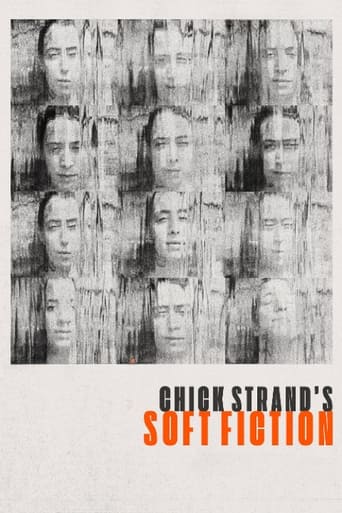
Chick Strand's SOFT FICTION is a personal documentary that brilliantly portrays the survival power of female sensuality. It combines the documentary approach with a sensuous lyrical expressionism. Strand focuses her camera on people talking about their own experience, capturing subtle nuances in facial expressions and gestures that are rarely seen in cinema. Preserved by the Academy Film Archive in partnership with The Film Foundation in 2015.
Soft Fiction
1979
 NR
A short piece of commercial work done by three legendary L.A. artists. This piece was shown on loop projectors in Sears stores to promote an exciting and new young ladies' clothing line. 16mm print preserved by the Academy Film Archive.
Sears Sox
1968
 NR
Loose Ends is a collage film about the process of internalizing the information that bombards us through a combination of personal experience and media in all forms. Speeding through our senses in ever-increasing numbers and complicated mixtures of fantasy, dream and reality from both outside and in, these fragmented images of life, sometimes shared by all, sometimes isolated and obscure, but with common threads, lead us to a state of psychological entropy tending toward a uniform inertness… an insensitive un-involvement in the human condition and our own humanity. —Chick Strand
Loose Ends
1979
 9.0
A bewitching, mysterious work of enveloping beauty, the film’s ominous title and a dedication to Anne Frank deeply inform our reading of its haunting subtext. Preserved by the Academy Film Archive, in partnership with the National Film Preservation Foundation, in 2009.
Kristallnacht
1979
 NR
Poetic surrealism. Approach is experimental in relationship of image and sound. A film about the loss of innocence and the search for the essence of the human spirit. Funded by a Guggenheim Fellowship.
Guacamole
1975
 NR
Filmed at Mission San Francisco de Guayo on the Orinoco River Delta in Venezuela, in 1965. A Franciscan nun and an Indian woman describe the Indian way of life before and after the arrival of the mission 20 years prior to the making of the film; their words are translated to English voice-over. They discuss marriage ceremonies, fishing, gender roles in work distribution and family responsibilities, shamanism and death rituals. Preserved by the Academy Film Archive in partnership with National Film Preservation Foundation in 2011.
Mosori Monika
1970
Behind the camera
8.0Chick Strand's SOFT FICTION is a personal documentary that brilliantly portrays the survival power of female sensuality. It combines the documentary approach with a sensuous lyrical expressionism. Strand focuses her camera on people talking about their own experience, capturing subtle nuances in facial expressions and gestures that are rarely seen in cinema. Preserved by the Academy Film Archive in partnership with The Film Foundation in 2015.
Soft Fiction
1979
NRA short piece of commercial work done by three legendary L.A. artists. This piece was shown on loop projectors in Sears stores to promote an exciting and new young ladies' clothing line. 16mm print preserved by the Academy Film Archive.
Sears Sox
1968
NRLoose Ends is a collage film about the process of internalizing the information that bombards us through a combination of personal experience and media in all forms. Speeding through our senses in ever-increasing numbers and complicated mixtures of fantasy, dream and reality from both outside and in, these fragmented images of life, sometimes shared by all, sometimes isolated and obscure, but with common threads, lead us to a state of psychological entropy tending toward a uniform inertness… an insensitive un-involvement in the human condition and our own humanity. —Chick Strand
Loose Ends
1979
9.0A bewitching, mysterious work of enveloping beauty, the film’s ominous title and a dedication to Anne Frank deeply inform our reading of its haunting subtext. Preserved by the Academy Film Archive, in partnership with the National Film Preservation Foundation, in 2009.
Kristallnacht
1979
NRPoetic surrealism. Approach is experimental in relationship of image and sound. A film about the loss of innocence and the search for the essence of the human spirit. Funded by a Guggenheim Fellowship.
Guacamole
1975
NRFilmed at Mission San Francisco de Guayo on the Orinoco River Delta in Venezuela, in 1965. A Franciscan nun and an Indian woman describe the Indian way of life before and after the arrival of the mission 20 years prior to the making of the film; their words are translated to English voice-over. They discuss marriage ceremonies, fishing, gender roles in work distribution and family responsibilities, shamanism and death rituals. Preserved by the Academy Film Archive in partnership with National Film Preservation Foundation in 2011.
Mosori Monika
1970
Strand spent over twenty years documenting her friend Anselmo Aguascalientes’ life, eventually creating a stunning trilogy of films—Anselmo, Cosas de mi vida, and Anselmo and the Women—tender portraits that are also glimpses into poverty, resourcefulness, perseverance and patriarchy. Preserved by the Academy Film Archive in 2016.
Anselmo
1967
 NR
A wet hot dream about sensuality. Preserved by the Academy Film Archive in partnership with the National Film Preservation Foundation and the Pacific Film Archive in 2009.
Fever Dream
1979
 NR
A film poem using found film and stock footage altered by printing, home development and solarization. It is a film using visual relationships to invoke a feeling of flow and movement. Preserved by the Academy Film Archive in partnership with National Film Preservation Foundation in 2011.
Waterfall
1968
 4.5
Impressionistic surrealism in three acts. The approach is literary experimental with optical effects. There are three mental states that are interesting: amnesia, euphoria and ecstasy. Amnesia is not knowing who you are and wanting desperately to know. I call this the White Night. Euphoria is not knowing who you are and not caring. This is the Dream of Meditation. Ecstasy is knowing exactly who you are and still not caring. I call this the Memory of the Future. This is an autobiographical film funded by the American Film Institute.
Elasticity
1975
 4.0
Aztec romance and the dream of love. The anthropologist’s most human desire, the ultimate contact with the informant. The denial of intellectualism and the acceptance of the romantic heart, and a soul without innocence. Preserved by the Academy Film Archive in 2011.
Artificial Paradise
1986
 5.5
Intimate documentary about young women who make papier mache fruit and vegetables in a small factory in Mexico. They have a gringo boss, but the factory is owned by his Mexican wife. The focus of the film is on the color, music and movement involved, and the gossip which goes on constantly, revealing what the young women think about men.
Fake Fruit Factory
1986
 6.0
An experimental film poem in celebration of life and visions. Techniques include live action, animation, montage and found images. Preserved by the Academy Film Archive in 2011.
Angel Blue Sweet Wings
1966
"In celebration of movement." - C.S.
Kulu Se Mama
1968
A "new narrative" film based on the visions of magic realism in an Anglo context. This is a gothic mystery that explores a reckless pursuit of interchangeable personalities and experience. Whether experience is first hand, read, remembered from a conversation during a chance encounter, heard of from all possible sources of information, whether fact or fiction, the "experiences" become ours; reinterpreted, reconstructed, and restructured, finally becoming our personal myths, and the source of our poetry and dreams. The sources for this film include night dreams, the idea of holocaust, the exoticness of the Mid-East, the sensuality of animals, the explorations of Scott in Antarctica, and a film I once saw, entitled The Son of Amir Is Dead.
Coming Up for Air
1986
 10.0
An expressionistic, surrealistic portrait of a Latin American woman.
Woman of a Thousand Fires
1976
 NR
Chick Strand's first film, made while living in the Bay Area, features her young son Eric as a little boy traipsing through a mysterious landscape, perhaps pursued by the titular monsters. Preserved by the Academy Film Archive in partnership with the National Film Preservation Foundation and Pacific Film Archive in 2009.
Eric and the Monsters
1965
 NR
Continuing the life of Anselmo, a Mexican street musician, and his life-long struggle to make a good life for his children. This film focuses on his relationship with his wife Adela and his mistress, Cruz, and theirs with him.
Anselmo and the Women
1986
 NR
A Mexican flower seller’s story of personal tragedy is delicately illuminated in an intimate and moving act of portraiture that is both unsettling and liberating. In her final film, Chick Strand mixes brutal heartbreak and palpable joy into a transformative vision of dignity and vitality.
Woman with Flowers
2011
 NR
An abstract compilation of found footage. Preserved by the Academy Film Archive in partnership with National Film Preservation Foundation and Pacific Film Archive in 2009.
Cartoon Le Mousse
1979
 NR
An educational film in which the positive benefits of Title 1 funded schooling are illustrated. Though a commissioned work, this film fully exhibits close-up camera work and remarkable, fluid editing.
Children Are Our First Priority: Title 1
1971
 6.0
Strand spent over twenty years documenting her friend Anselmo Aguascalientes’ life, eventually creating a stunning trilogy of films—Anselmo, Cosas de mi vida, and Anselmo and the Women—tender portraits that are also glimpses into poverty, resourcefulness, perseverance and patriarchy.
Cosas de mi vida
1976
 NR
"A sort of collage film, using images shot for other films that somehow never were finished. The sound comes from various sound gathering adventures. An Anglo woman's interpretation of magic realism." Preserved by the Academy Film Archive in 2013.
By the Lake
1986