
Directing
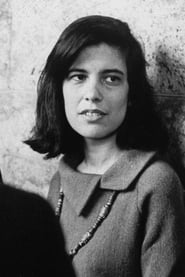
Susan Sontag
Born — Died
1933-01-16 — 2004-12-28
Place of birth
New York City, New York, USA
Known for
Directing
Credits
38 titles
Susan Sontag (January 16, 1933 – December 28, 2004) was an American essayist, literary and cultural theorist, icon, and political activist whose works include On Photography, Against Interpretation, The Way We Live Now, and Regarding the Pain of Others.
Known for
 8.5
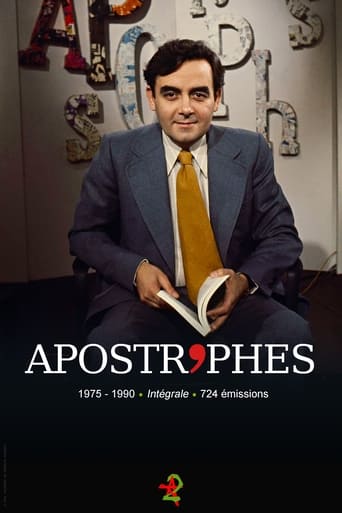
8.5Apostrophes was a live, weekly, literary, prime-time, talk show on French television created and hosted by Bernard Pivot. It ran for fifteen years (724 episodes) from January 10, 1975, to June 22, 1990, and was one of the most watched shows on French television (around 6 million regular viewers). It was broadcast on Friday nights on the channel France 2 (which was called "Antenne 2" from 1975 to 1992). The hourlong show was devoted to books, authors and literature. The format varied between one-on-one interviews with a single author and open discussions between four or five authors.
Apostrophes
1975
 7.0
7.0American Masters is a PBS television series which produces biographies on enduring writers, musicians, visual and performing artists, dramatists, filmmakers, and others who have left an indelible impression on the cultural landscape of the United States.
American Masters
1986
A 30-minute weekly cultural magazine program. The head of aspekte, Wolgang Herles, describes the program as follows: "For 40 years, "aspekte" has repeatedly set out to enrich television with cultural contrasts. "aspekte" understands culture not as the sum of facts and events, but as the taste, the sound, the rhythms of the times. It has proven itself as a journal of true luxury and fashions as well as an instrument of public education and information."
aspekte
1965
 7.4
7.4Fictional documentary about the life of human chameleon Leonard Zelig, a man who becomes a celebrity in the 1920s due to his ability to look and act like whoever is around him. Clever editing places Zelig in real newsreel footage of Woodrow Wilson, Babe Ruth, and others.
Zelig
1983
 NR
NR"Great Thinkers: In Their Own Words" is a 2011 BBC television documentary mini-series created in partnership with The Open University. It explores the impact of 20th-century cultural, political, and scientific icons by mining rare radio and television archives to let these prominent figures speak directly through their own recorded broadcasts.
Great Thinkers: In Their Own Words
2011
 6.6
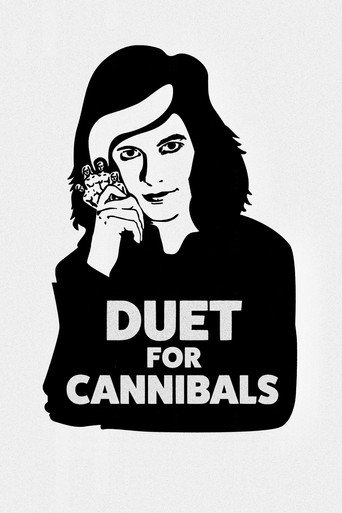
6.6Arthur, a university professor, and former political activist, lives in France with Francesca. They decide to hire a young man in order to help the teacher organize his notes. The employee leaves his girlfriend Ingrid and moves in with the couple.
Duet for Cannibals
1969
Film credits
2020s · 3 titles
 6.2
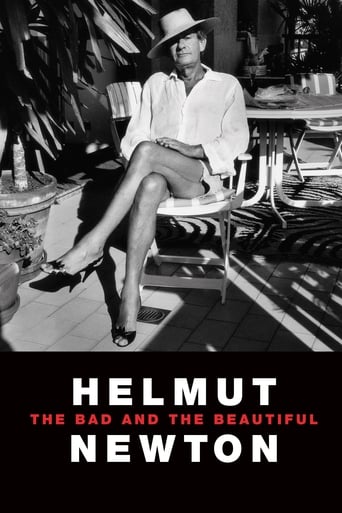
6.2Women were clearly at the core of legendary photographer Helmut Newton's work. The stars of his iconic portraits and fashion editorials – from Catherine Deneuve to Grace Jones, Charlotte Rampling to Isabella Rossellini – finally give their own interpretation of the life and work of this controversial genius. A portrait by the portrayed. Provocative, unconventional, subversive, his depiction of women still sparks the question: were they subjects or objects?
Helmut Newton: The Bad and the Beautiful
2020
 NR
NRA Woman Watches People.
150 Miles of Rotting, Rutted, Lumpy, Dilapidated Pavement
2021
 NR
NR"Symphony of the Invisible" is a reflection on creation and how through art, poetry and images you can break the limits that have been imposed on language and life itself.
Symphony Of The Invisible
2020
2010s · 2 titles
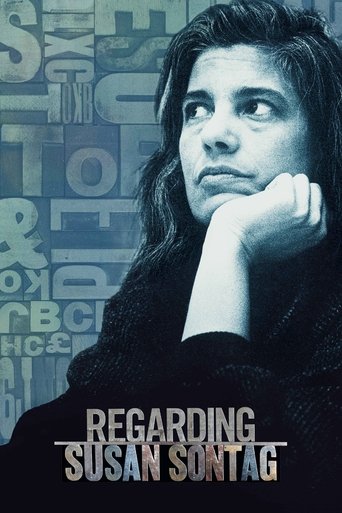 5.7
5.7An intimate study of one of the most influential and provocative thinkers of the 20th century tracking feminist icon Susan Sontag’s seminal, life-changing moments through archival materials, accounts from friends, family, colleagues, and lovers, as well as her own words, as read by Patricia Clarkson.
Regarding Susan Sontag
2014
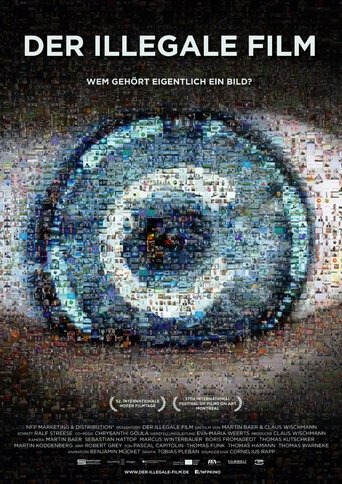 NR
NRSince time immemorial, we have used images to form a picture of the world. But never before has there been as much filming and photography as there is currently. But how do people deal with it when the world and its image merge? The filmmakers Claus Wischmann and Martin Baer show how quickly and profoundly the way we deal with images is changing. Will we eventually move into a world in which reality and image can no longer be distinguished from each other?
The Illegal Film
2019
2000s · 3 titles
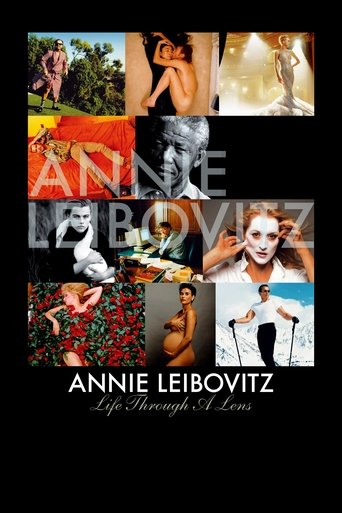 7.7
7.7An account of the professional and personal life of renowned American photographer Annie Leibovitz, from her early artistic endeavors to her international success as a photojournalist, war reporter, and pop culture chronicler.
Annie Leibovitz: Life Through a Lens
2007
 10.0
10.0This exhibition focuses on Jonas Mekas’ 365 Day Project, a succession of films and videos in calendar form. Every day as of January 1st, 2007 and for an entire year, as indicated in the title, a large public (the artist's friends, as well as unknowns) were invited to view a diary of short films of various lengths (from one to twenty minutes) on the Internet. A movie was posted each day, adding to the previously posted pieces, resulting altogether in nearly thirty-eight hours of moving images.
365 Day Project
2007
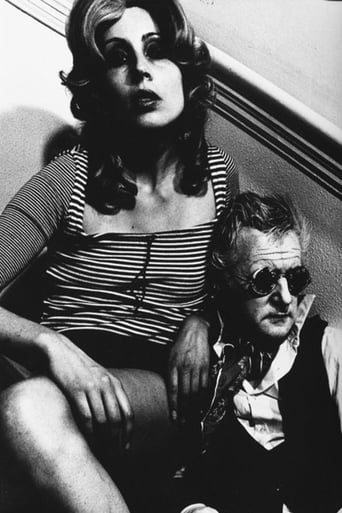 5.0
5.0"The Great Magician" - A portrait of Frans Zwartjes (1927-2017), sometimes called 'the most important experimental filmmaker of his time' by the American essayist Susan Sontag.
The Great Magician
2006
1990s · 2 titles
 NR
NRProduced in 1993, this documentary depicts the development of Annie Leibovitz's career as a celebrity photographer.
Annie Leibovitz 1993 Phaidon Documentary
1993
 NR
NRThis is a 1991 documentary film about the legendary artist and filmmaker, Joseph Cornell, who made those magnificent and strange collage boxes. He was also one of our great experimental filmmakers and once apparently made Salvador Dali extremely jealous at a screening of his masterpiece, Rose Hobart. In this film we get to hear people like Susan Sontag, Stan Brakhage, and Tony Curtis talk about their friendships with the artist. It turns out that Curtis was quite a collector and he seemed to have a very deep understanding of what Cornell was doing in his work.
Joseph Cornell: Worlds in a Box
1991
1980s · 3 titles
7.4Fictional documentary about the life of human chameleon Leonard Zelig, a man who becomes a celebrity in the 1920s due to his ability to look and act like whoever is around him. Clever editing places Zelig in real newsreel footage of Woodrow Wilson, Babe Ruth, and others.
Zelig
1983
 5.1
5.1The story of the persecution of homosexuals and intellectuals in Cuba under Fidel Castro's dictatorship, from the beginning of the Cuban Revolution (1953-59) until the early 1980s. Interviews with relevant personalities of Cuban culture who suffered persecution demonstrate that concentration camps for gays existed in Cuba.
Improper Conduct
1984
Television essay on the work of choreographer Pina Bausch, presented by Susan Sontag.
A Primer for Pina
1984
1970s · 2 titles
 5.6
5.6PROMISED LANDS is famed writer and critic Susan Sontag’s sole documentary project, shot in Israel on the fly in the final days and immediate aftermath of the 1973 Yom Kippur War.
Promised Lands
1974
 5.8
5.8On the evening of April 30, 1971, a standing room only audience of local literati and feminists packed New York City’s Town Hall to watch Norman Mailer, who had just written “The Prisoner of Sex,” grapple with a panel of passionate feminists. The subject was Women’s Liberation, an issue on which Mailer seemed like the devil’s own advocate.
Town Bloody Hall
1979
1960s · 7 titles
![Screen Test [ST323]: Susan Sontag poster](https://image.tmdb.org/t/p/w342/gOPXuWAXVpI6Rd6E3YcP0j1UDGv.jpg) NR
NRScreen test of Susan Sontag.
Screen Test [ST323]: Susan Sontag
1964
 8.0
8.0The films were made between 1964 and 1966 at Warhol's Factory studio in New York City. Subjects were captured in stark relief by a strong key light, and filmed by Warhol with his stationary 16mm Bolex camera on silent, black and white, 100-foot rolls of film at 24 frames per second. The resulting two-and-a-half-minute film reels were then screened in 'slow motion' at 16 frames per second.
Andy Warhol Screen Tests
1965
 8.0
8.0No synopsis available yet.
13 Most Beautiful Women
1964
 NR
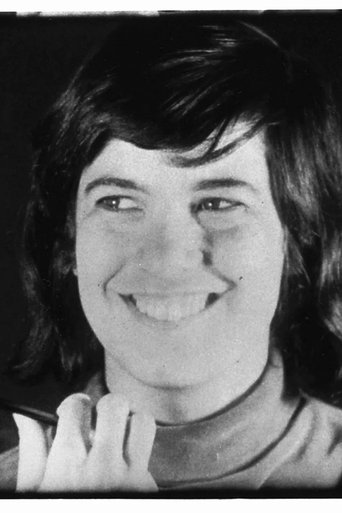
NRSusan Sontag was one of the many subjects of Warhol’s Screen Tests, a silent-film portrait series capturing well–known cultural figures of the 1960s. Warhol filmed seven Screen Tests of the journalist and author Sontag in his Factory—a space of collaborative and interdisciplinary artistic production. Of the Sontag films, ST318 is perhaps the most direct and severe. The intricacies of Sontag’s facial features are heightened by the film’s slow–motion progression, stretched out to four minutes and thirty seconds.
Screen Test: Susan Sontag
1964
 5.6
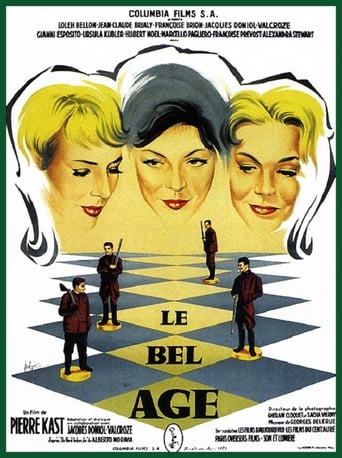
5.6Steph, Jean-Claude and Jacques work in a Parisian art shop, but they mainly work in the field of eroticism, which they conceive as a wide-ranging field of exercises and experiments.
Le Bel Âge
1960
 10.0
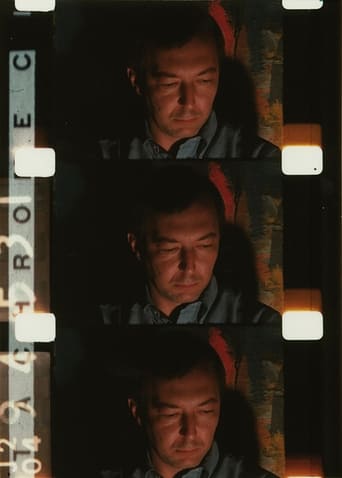
10.0In March and April of 1966, Markopoulos created this filmic portrait of writers and artists from his New York circle, including Parker Tyler, W. H. Auden, Jasper Johns, Susan Sontag, Storm De Hirsch, Jonas Mekas, Allen Ginsberg, and George and Mike Kuchar, most observed in their homes or studios. Filmed in vibrant color, Galaxie pulses with life. It is a masterpiece of in-camera composition and editing, and stands as a vibrant response to Andy Warhol's contemporary Screen Tests. Preserved by the Academy Film Archive in 2001.
Galaxie
1966
 NR
NROn the occasion of the Seventh New York Film Festival, the arts program Camera Three filmed Jack Kroll of Newsweek interviewing Susan Sontag and Agnès Varda, both of whom had films showing in the festival. The two discuss their work and show clips of the films, Duet for Cannibals and Lion's Love.
Camera Three: Interview with Susan Sontag and Agnès Varda
1969
Series credits
8.5Apostrophes was a live, weekly, literary, prime-time, talk show on French television created and hosted by Bernard Pivot. It ran for fifteen years (724 episodes) from January 10, 1975, to June 22, 1990, and was one of the most watched shows on French television (around 6 million regular viewers). It was broadcast on Friday nights on the channel France 2 (which was called "Antenne 2" from 1975 to 1992). The hourlong show was devoted to books, authors and literature. The format varied between one-on-one interviews with a single author and open discussions between four or five authors.
Apostrophes
1975
7.0American Masters is a PBS television series which produces biographies on enduring writers, musicians, visual and performing artists, dramatists, filmmakers, and others who have left an indelible impression on the cultural landscape of the United States.
American Masters
1986
A 30-minute weekly cultural magazine program. The head of aspekte, Wolgang Herles, describes the program as follows: "For 40 years, "aspekte" has repeatedly set out to enrich television with cultural contrasts. "aspekte" understands culture not as the sum of facts and events, but as the taste, the sound, the rhythms of the times. It has proven itself as a journal of true luxury and fashions as well as an instrument of public education and information."
aspekte
1965
NR"Great Thinkers: In Their Own Words" is a 2011 BBC television documentary mini-series created in partnership with The Open University. It explores the impact of 20th-century cultural, political, and scientific icons by mining rare radio and television archives to let these prominent figures speak directly through their own recorded broadcasts.
Great Thinkers: In Their Own Words
2011
No synopsis available yet.
Parola (su una data)
2003
Behind the camera
6.6Arthur, a university professor, and former political activist, lives in France with Francesca. They decide to hire a young man in order to help the teacher organize his notes. The employee leaves his girlfriend Ingrid and moves in with the couple.
Duet for Cannibals
1969
6.6Arthur, a university professor, and former political activist, lives in France with Francesca. They decide to hire a young man in order to help the teacher organize his notes. The employee leaves his girlfriend Ingrid and moves in with the couple.
Duet for Cannibals
1969
Eddy Maplethorpe wants to escape his suburban life without anyone noticing. He builds a clockwork dummy that can care for his family and go to work for him, leaving him free to pursue the life he always dreamt of. Unfortunately, his dummy also develops a desire for a better life.
The Dummy
2003
 10.0
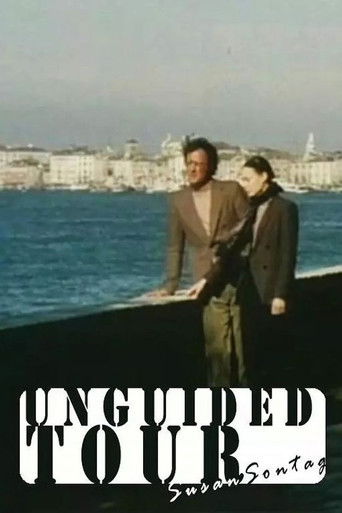
10.0Also known as “Letter from Venice,” Susan Sontag’s fourth and final film tells of a relationship that is fragmenting as the partners tour the decaying ruins of a hallucinatory Venice.
Unguided Tour
1983
10.0Also known as “Letter from Venice,” Susan Sontag’s fourth and final film tells of a relationship that is fragmenting as the partners tour the decaying ruins of a hallucinatory Venice.
Unguided Tour
1983
5.6PROMISED LANDS is famed writer and critic Susan Sontag’s sole documentary project, shot in Israel on the fly in the final days and immediate aftermath of the 1973 Yom Kippur War.
Promised Lands
1974
5.6PROMISED LANDS is famed writer and critic Susan Sontag’s sole documentary project, shot in Israel on the fly in the final days and immediate aftermath of the 1973 Yom Kippur War.
Promised Lands
1974
A documentary about Susan Sontag staging Waiting For Godot in Bosnia.
Waiting For Godot... In Sarajevo
1993
Television essay on the work of choreographer Pina Bausch, presented by Susan Sontag.
A Primer for Pina
1984
 6.2
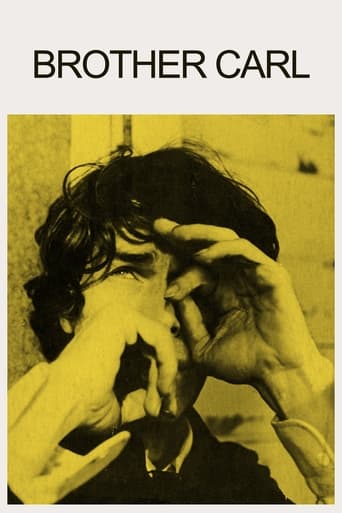
6.2Two women, Karen (theatre director) and Lena, visit an island, a Swedish resort, where Lena's ex-husband, Martin (choreographer), lives in comparative seclusion with a mentally disturbed ballet dancer named Carl. Carl is brother by guilt rather than blood, for Martin is somehow responsible for his breakdown.
Brother Carl
1971
6.2Two women, Karen (theatre director) and Lena, visit an island, a Swedish resort, where Lena's ex-husband, Martin (choreographer), lives in comparative seclusion with a mentally disturbed ballet dancer named Carl. Carl is brother by guilt rather than blood, for Martin is somehow responsible for his breakdown.
Brother Carl
1971