

Writing
Aeschylus
Place of birth
Eleusis, Greece
Known for
Writing
Credits
6 titles
Aeschylus (Ancient Greek: Αἰσχύλος c. 525/524 – c. 456/455 BC) was an ancient Greek tragedian often described as the father of tragedy. Academic knowledge of the genre begins with his work, and understanding of earlier Greek tragedy is largely based on inferences made from reading his surviving plays. According to Aristotle, he expanded the number of characters in the theatre and allowed conflict among them. Formerly, characters interacted only with the chorus. Only seven of Aeschylus's estimated 70 to 90 plays have survived in complete form. There is a long-standing debate regarding the authorship of one of them, Prometheus Bound, with some scholars arguing that it may be the work of his so…
Known for
 NR
A family is haunted by its part in an unjust war, the painful burden of inherited trauma and intergenerational conflict, and the descent into an increasingly merciless vortex of violence. Simon Stone's adaptation of The Oresteia trilogy of Aeschylus' Greek tragedies (consisting of Agamemnon, The Libation Bearers, and The Eumenides), shows us that as long as humankind wages wars and families tear themselves apart, this story will remain painfully, cathartically relevant. Stage play performed at The Bridge Theatre in London, UK.
The Oresteia
2026
 10.0
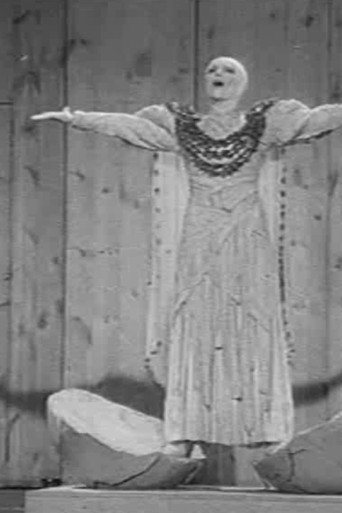
The story of the “Oresteia” begins with King Agamemnon's return to Argos after the fall of Troy. The chorus, composed of old Argives, recalls the sacrifice offered to the gods by Agamemnon, in Aulis, of his daughter Iphigenia to gain their favor.
Orestea
1972
 NR
The god of fire, Hephaestus, nails the rebel Prometheus to a rock in Scythia (between Poland, Kazakhstan, and southeastern Ukraine) under the watchful eye of Cratos (Power) and Bia (Force). Prometheus is punished for giving fire to mankind.
Prometeo incatenato (2023)
2023
 5.0
An adaptation of the Aeschylus play.
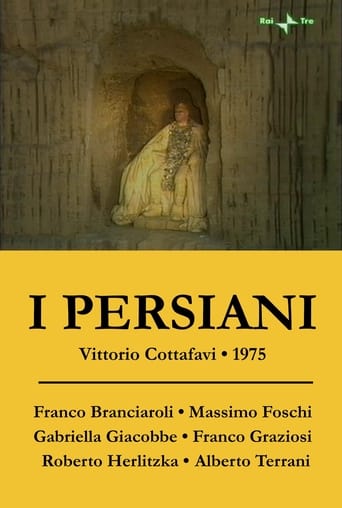
The Persians
1975
 NR
Prometheus Bound (Ancient Greek: Προμηθεὺς Δεσμώτης, romanized: Promētheús Desmṓtēs) is an ancient Greek tragedy traditionally attributed to Aeschylus and thought to have been composed sometime between 479 BC and the terminus ante quem of 424 BC. The tragedy is based on the myth of Prometheus, a Titan who defies Zeus, and protects and gives fire to mankind, for which he is subjected to the wrath of Zeus and punished.
Prometheus Bound
1992
 NR
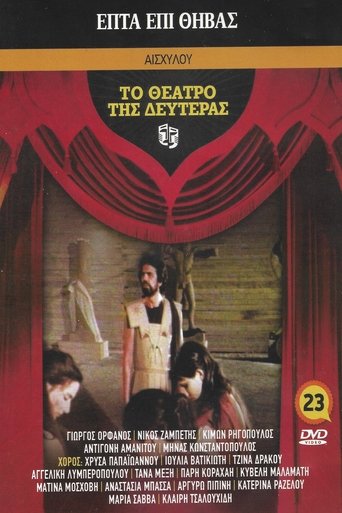
Seven Against Thebes (Ancient Greek: Ἑπτὰ ἐπὶ Θήβας, Hepta epi Thēbas; Latin: Septem contra Thebas) is the third play in an Oedipus-themed trilogy produced by Aeschylus in 467 BC. The trilogy is sometimes referred to as the Oedipodea.[2] It concerns the battle between an Argive army, led by seven champions including Polynices who were called the Seven against Thebes, and the army of Thebes led by Eteocles and his supporters. The trilogy won the first prize at the Athens City Dionysia.
Seven Against Thebes
1983
Behind the camera
NRA family is haunted by its part in an unjust war, the painful burden of inherited trauma and intergenerational conflict, and the descent into an increasingly merciless vortex of violence. Simon Stone's adaptation of The Oresteia trilogy of Aeschylus' Greek tragedies (consisting of Agamemnon, The Libation Bearers, and The Eumenides), shows us that as long as humankind wages wars and families tear themselves apart, this story will remain painfully, cathartically relevant. Stage play performed at The Bridge Theatre in London, UK.
The Oresteia
2026
10.0The story of the “Oresteia” begins with King Agamemnon's return to Argos after the fall of Troy. The chorus, composed of old Argives, recalls the sacrifice offered to the gods by Agamemnon, in Aulis, of his daughter Iphigenia to gain their favor.
Orestea
1972
NRThe god of fire, Hephaestus, nails the rebel Prometheus to a rock in Scythia (between Poland, Kazakhstan, and southeastern Ukraine) under the watchful eye of Cratos (Power) and Bia (Force). Prometheus is punished for giving fire to mankind.
Prometeo incatenato (2023)
2023
5.0An adaptation of the Aeschylus play.
The Persians
1975
NRPrometheus Bound (Ancient Greek: Προμηθεὺς Δεσμώτης, romanized: Promētheús Desmṓtēs) is an ancient Greek tragedy traditionally attributed to Aeschylus and thought to have been composed sometime between 479 BC and the terminus ante quem of 424 BC. The tragedy is based on the myth of Prometheus, a Titan who defies Zeus, and protects and gives fire to mankind, for which he is subjected to the wrath of Zeus and punished.
Prometheus Bound
1992
NRSeven Against Thebes (Ancient Greek: Ἑπτὰ ἐπὶ Θήβας, Hepta epi Thēbas; Latin: Septem contra Thebas) is the third play in an Oedipus-themed trilogy produced by Aeschylus in 467 BC. The trilogy is sometimes referred to as the Oedipodea.[2] It concerns the battle between an Argive army, led by seven champions including Polynices who were called the Seven against Thebes, and the army of Thebes led by Eteocles and his supporters. The trilogy won the first prize at the Athens City Dionysia.
Seven Against Thebes
1983