

Directing
Mike Hoolboom
Born
1959-01-01 (67)
Place of birth
Toronto, Ontario, Canada
Known for
Directing
Credits
52 titles
Michael "Mike" Hoolboom is a Canadian independent, experimental filmmaker. Having begun filmmaking at an early age, Hoolboom released his first major work, a "film that's not quite a film" entitled White Museum, in 1986. Although he continued to produce films, his rate of production improved drastically after he was diagnosed with HIV in 1988 or 1989; this gave a "new urgency" to his works. Since then he has made dozens of films, two of which have won Best Short Film at the Toronto International Film Festival. His films have also featured in more than 200 film festivals worldwide.
Known for
 5.0
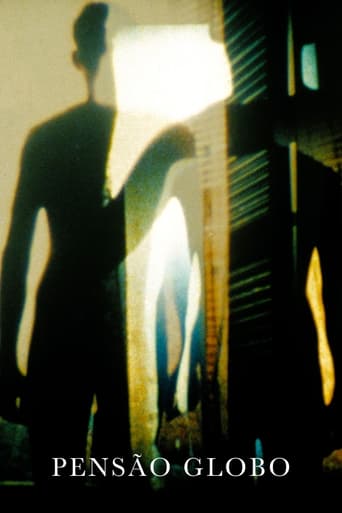
A man faces his approaching death. He takes a journey, his last perhaps, and ends up at the Pensão Globo in Lisbon, where he sets out on aimless excursions through the city. The film depicts a life in a state of transition. Sometimes it's like I'm already gone, become a ghost of myself.
Pensão Globo
1997
 NR
"Hoolboom" is a film that Arts Toronto commissioned local filmmaker Wrik Mead to make based on his impressions of fellow filmmaker Mike Hoolboom. With some collaboration from Mike, Wrik has produced a film about the body, self-awareness, and the art of film.
Hoolboom
1999
 NR
'Amy, is narrated by a model (Liisa Repo-Martell) who’s painfully uncomfortable with her own body and “old woman’s” face. Astonishing closing image is a tightly composed telephoto shot on the start of a marathon race among young schoolgirls, dashing toward and then across the screen in ultra-slo-mo, and accompanied by a girls’ chorus hauntingly singing Brian Wilson’s God Only Knows. Widely eclectic lensing and looks in various media and in color and black-and-white flow nicely from one section to the next, aided by gifted editor Mark Karbusicky.' ~ Robert Koehler, Variety - Part 7 of 7-part bio-feature Public Lighting (2004).
Amy
2004
 8.0
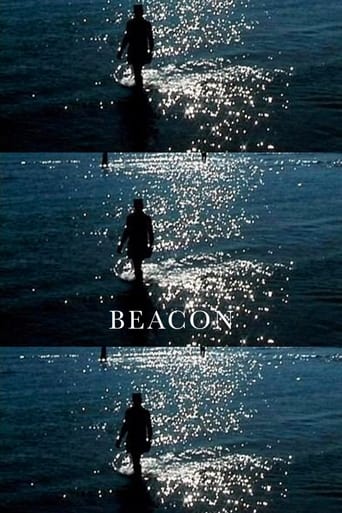
BEACON is a montage of location shots filmed at ten different places around the world. These sites are connected by the fact that each is located by the sea. Seamlessly combining travelogue footage and appropriated clips from feature films, BEACON produces a single, imaginary locale. Distant echoes of stories of the sea mingle with the banality of today's touristy beachlife. In its collage of places of expectation and with its seductive prospects of the sea, Beacon sets off on a journey with no distinct destination.
Beacon
2002
 NR
The explosive story of how a stubborn band of independent filmmakers started a film co-operative that became the most highly respected and mythologized film centre in Canada. Tales outlines the tremendous importance and impact of Winnipeg on the national filmmaking scene. Packed with rare archival footage, dynamic film excerpts, and hilarious interviews, this documentary traces the history of the legendary Winnipeg Film Group. We hear candid behind the scenes stories that illuminate the storied rise of acclaimed filmmakers like John Paizs (Crime Wave), Guy Maddin (Tales From The Gimli Hospital, My Winnipeg) Shawna Dempsey and Lorri Millan (We’re Talking Vulva, Good Citizen, Betty Baker) and Caroline Monnet (Ikwe). Often mired in controversy, the Film Group has been acclaimed at film festivals around the world – attested to by several Toronto film luminaries in the film – for subversive, original filmmaking. This documentary continues that tradition of bold, exuberant work.
Tales from the Winnipeg Film Group
2017
 5.2
A gay man reminisces about his deceased lover, a victim of AIDS.
Frank's Cock
1994
Film credits
2010s · 4 titles
NRThe explosive story of how a stubborn band of independent filmmakers started a film co-operative that became the most highly respected and mythologized film centre in Canada. Tales outlines the tremendous importance and impact of Winnipeg on the national filmmaking scene. Packed with rare archival footage, dynamic film excerpts, and hilarious interviews, this documentary traces the history of the legendary Winnipeg Film Group. We hear candid behind the scenes stories that illuminate the storied rise of acclaimed filmmakers like John Paizs (Crime Wave), Guy Maddin (Tales From The Gimli Hospital, My Winnipeg) Shawna Dempsey and Lorri Millan (We’re Talking Vulva, Good Citizen, Betty Baker) and Caroline Monnet (Ikwe). Often mired in controversy, the Film Group has been acclaimed at film festivals around the world – attested to by several Toronto film luminaries in the film – for subversive, original filmmaking. This documentary continues that tradition of bold, exuberant work.
Tales from the Winnipeg Film Group
2017
 NR
How can we express the emotional experience of depression and suicide and overcome the stigmas associated with mental health? Sanguedolce’s experimental documentary brings together four artists (including experimental filmmaker Mike Hoolboom), who speak with refreshing honesty about how thoughts of suicide have dominated their personal and creative lives. Shot on 16mm and hand-coloured, the flow of images creates a poetic visual response to the stories presented on the soundtrack and allows space for reflection.
Land of Not Knowing
2016
 NR
A movie essay using theory fragments from porn studies pioneer Linda Williams, radical gender theorist Paul Preciado, feminist theorists Hortense Spillers, Karen Barad and more. A variety of hazy, lo fi clips rub up against an isolated digerati immersed in temporary pornutopias. Why not name it a small collection, a modest archive of sexual imageries and pleasures? The relationship between monopoly capitalism and sexual imaging is laid bare, along with the production of a gendered subject, the question of post-pornography and its new identity formations.
How to Watch Pornography
2019
 6.0
For more than two decades Mike Hoolboom has been one of our foremost artistic witnesses of the plague of the twentieth century, HIV. A personal voice documenting and piercing the clichéd spectrum of Living With AIDS from carnal abjection to incandescent spirituality, no surviving moving image visionary surpasses him. Buffalo Death Mask is a three-part meditation — visual, oral and haptic, both campy and ecstatic — on survival, mourning, memory, love and community. A conversation between Hoolboom and visual artist Stephen Andrews, both long time survivors of the retrovirus, floats over what seems to be a dream of Toronto and some of its ghosts. No one savours the intimations of immortality inherent in recycled footage like Mike, no one else understands how processed Super 8 can answer the question “Why are we still here when so many are gone?"
Buffalo Death Mask
2013
1990s · 7 titles
5.0A man faces his approaching death. He takes a journey, his last perhaps, and ends up at the Pensão Globo in Lisbon, where he sets out on aimless excursions through the city. The film depicts a life in a state of transition. Sometimes it's like I'm already gone, become a ghost of myself.
Pensão Globo
1997
NR"Hoolboom" is a film that Arts Toronto commissioned local filmmaker Wrik Mead to make based on his impressions of fellow filmmaker Mike Hoolboom. With some collaboration from Mike, Wrik has produced a film about the body, self-awareness, and the art of film.
Hoolboom
1999
 NR
“In a tapestry of migratory luck, artifacts and shells, a mixed choir of images and sounds engages the paradox of a journey that loses all meaning once it reaches its end. The film’s westward inclination to the American shores of the Pacific, bound in a pitiless growth and decay, drives a dense montage, woven with guns and prayers.” - Gary Popovich
Faultlines
1998
 4.2
Matthias Müller's SLEEPY HAVEN is explicitly taking up the spirit of Kenneth Anger's FIREWORKS. SLEEPY HAVEN materializes fantasies of an erotic daydream; the film is a cocktail that merges Müller's own shots and found footage like a love act. Nude bodies of sailors are flaring up in flickering solarization effects; they are given an ardent aura of physical desire by this tattooing of the film emulsion. Müller only gradually changes his material metaphors to metaphors of love. But it is not only FIREWORKS the film is alluding to; there is yet another classic shimmering through Müller's imagery: Jean Genet's Un Chant d'Amour.
Sleepy Haven
1993
 7.0
A paean to light, a glittering bodice of a film that rapturously unfolds its subject with a shimmering luminosity.
Scattering Stars
1994
 NR
“Shot in an abandoned warehouse, documenting a contemporary adaptation of the Oedipus story by a group of Toronto experimental filmmakers, Antigone is both a documentary about searching for meaning and validity in the old story, and a fiction about the failure to find any value but parody.” - Gary Popovich
Antigone
1990
 6.7
Brasília, the "city of hope", "the ultimate utopia of the 20th century" , is being conserved as a cultural heritage today. It is a place as old as the filmmaker. Segments of amateur footage and of feature films shot on location in the early sixties are inserted in his 1998 travelogue. The utopian city as represented in "Vacancy" is a place abandoned from its inhabitants, a museum kept alive by its staff only.
Vacancy
1999
Behind the camera
NR"Hoolboom" is a film that Arts Toronto commissioned local filmmaker Wrik Mead to make based on his impressions of fellow filmmaker Mike Hoolboom. With some collaboration from Mike, Wrik has produced a film about the body, self-awareness, and the art of film.
Hoolboom
1999
NR'Amy, is narrated by a model (Liisa Repo-Martell) who’s painfully uncomfortable with her own body and “old woman’s” face. Astonishing closing image is a tightly composed telephoto shot on the start of a marathon race among young schoolgirls, dashing toward and then across the screen in ultra-slo-mo, and accompanied by a girls’ chorus hauntingly singing Brian Wilson’s God Only Knows. Widely eclectic lensing and looks in various media and in color and black-and-white flow nicely from one section to the next, aided by gifted editor Mark Karbusicky.' ~ Robert Koehler, Variety - Part 7 of 7-part bio-feature Public Lighting (2004).
Amy
2004
8.0BEACON is a montage of location shots filmed at ten different places around the world. These sites are connected by the fact that each is located by the sea. Seamlessly combining travelogue footage and appropriated clips from feature films, BEACON produces a single, imaginary locale. Distant echoes of stories of the sea mingle with the banality of today's touristy beachlife. In its collage of places of expectation and with its seductive prospects of the sea, Beacon sets off on a journey with no distinct destination.
Beacon
2002
5.2A gay man reminisces about his deceased lover, a victim of AIDS.
Frank's Cock
1994
5.2A gay man reminisces about his deceased lover, a victim of AIDS.
Frank's Cock
1994
 NR
“In order to take the next step (not forward or backwards, but only: to go on) it is often necessary to lean on a picture made by someone else, sometimes a word will do, a gesture, the look on a stranger’s face. Colin Campbell made the next step possible for me so I took up a video camera (his pictures were my company, and my camera accompanied his pictures). Between his images of the past and mine, Colin Campbell emerged as a Cold Warrior, as an artist who would fight the Cold War with stereo. Yes, a stereo artist! Fascination contains only the pictures I would find in my camera when I reviewed the material in the morning, after all the serious work had been done (while I and all the others who spoke his language, lay sleeping).” MH
Fascination
2006
A lesbian call fall in and out of love while Prime Minister Wayne Gretzky wages a war against secessional Quebec for media money.
Escape in Canada
1993
Portrait of gay filmmaker and Parkinson's sufferer Tom Chomont.
Tom
2002
In the near future, Canada is at war with Quebec, battles are determined by television ratings, and weapons are sponsored by McDonald's and IBM. In the midst of social chaos, a lesbian couple, Barb and Alex, dress themselves in protective masks, gowns and rubber boots to spend a quiet afternoon at the zoo. Barb is gang-raped by soldiers while taking a short cut through a restrictive zone. Fearful of infection, Alex begs her to take an AIDS test. With a world imploding around them, Barb decides to announce her result as the punchline of a comic routine. At first, Alex can't see the joke, but she eventually joins in and engineers an attempt to make love without touching.
Valentine's Day
1994
An overwhelming and luminescent reflection on death, AIDS and living, Letters from Home is a compelling montage of mini-portraits intercut with found footage, home movies, super-8 drama and pixilated imagery.
Letters From Home
1996
 NR
Tasked to produce a short intro to my feature-length essay Cut, I turned to the origins of the close-up, in a scene featuring camera person Billy Bitzer and director D.W. Griffiths. How to live in this new body, with its cuts, its fissures and fractures?
Close-Up
2022
 NR
Queering the haj. A man recollects a moment (was it any longer than that?) in the aptly named city of Mecca. A conversation ensues in the crowd. The touch of language. Framing shots by luminous shooter Taravat Khalili. Commissioned by LIFT for the Jacques Madvo project.
I Saw Him There
2018
 NR
A love story set in the global anti-austerity demonstrations. As citizens take back their streets, two women meet and fall in love. What geometry of desire will help overthrow the state? What micro-politics of sharing and communality will provide fuel for demonstrations that will remove and replace the neo-liberal consensus? Cast in a palimpsest of images and sounds, as if there were no way to separate inside and out, the street and the bedroom.
The Bed and the Street
2018
NRA love story set in the global anti-austerity demonstrations. As citizens take back their streets, two women meet and fall in love. What geometry of desire will help overthrow the state? What micro-politics of sharing and communality will provide fuel for demonstrations that will remove and replace the neo-liberal consensus? Cast in a palimpsest of images and sounds, as if there were no way to separate inside and out, the street and the bedroom.
The Bed and the Street
2018
 10.0
Jason returns with another letter to Madonna, thanking her for letting him be her "mistress".
Dear Madonna
1996
 NR
An illustrated lecture, with digressive overlays. Remixology meets biopower.
(S)he Said that
2019
 NR
Personal film essay about two pandemics: AIDS and Coronavirus. Body memorials, survivor stories, remembrances. Both plagues are reframed by neoliberalism and its central mythology of personal freedom, brilliantly laid out in Hito Steyerl’s essay gem “Freedom from Everything” which is adapted and shapeshifted here. Pronouncing on the new precarity of the freelancer, Hito wryly observes that they have “freedom from everything,” from a good job, health care, affordable housing… Featuring Maggie Thatcher, Guy Fawkes, George Michael, James Baldwin, Akira Kurosawa and David Wojnarowicz.
Freedom from Everything
2022
 NR
Originally cast as the second part of a six-part feature Panic Bodies (1998), the original 16mm negatives were rescued courtesy of the Cinematheque Quebecoise, then rescanned, recut, and reimagined. They were shot in 1996, the year the AIDS cocktail arrived. It’s not uncommon during illness to experience one’s body grow as large as the world, here the body is figure and ground, friend and enemy, projection surface fragments, memory machine. I asked the excellent performance artist Ed Johnson if he could come by and perform in this psychodrama of loss and longing.
A Boy’s Life
2018
No synopsis available yet.
Soft Landings for Capitalism
2021
 NR
After a ruinous engagement, the unnamed narrator alights for Palermo in order to take up with his dead Italian friend, Antonio Gramsci. He was the primal scene of Italy’s Communist party, and for his tireless reporting and befriending the working class he was jailed for over a decade. The state would ruin his body but not his analysis of power, which he poured into 20 notebooks. This philosophical travelogue, a nomadology of resistance and digression, searches citizen faces in order to find the origins of culture.
Gramsci’s Notebooks
2019
 NR
Begun in a three-week seminar at the Geneva University of Art and Design (HEAD) in October 2016, seventeen of us began an excavation together, immersing ourselves in a selection of Red Cross shorts made over nearly a century in countries round the world. This nearly wordless feature-length ensemble has five parts/chapters: The Man Who Stopped Time (Greece), Disappearances (Switzerland), Photo Shoot Location Yemen (Yemen), Beirut Grammar (Lebanon) and Mine Clearing (Mozambique). Each chapter adopts a different formal strategy in order to open up a new conversation with these picture remains, sometimes scribbling over the pictures, or re-presenting the material as a series of friezes, fading every shot, or slowly accumulating them. The hope is time travel, to venture to the other side of the image.
From the Archives of the Red Cross
2017
 NR
Eva Marie Rodbro’s embedded ethnographic maestro short, originally shot in Brownwood, Texas in 2009, is given a fan remake. Night vision animal life and teen hangouts conjure a temporary and fragile collective, while conversation fragments, alternately performed and raw, shouted and whispered, collide.
I Touched Her Legs remix
2019
 4.0
Film is made out of gelatin that comes from horses. They’re waiting to be slaughtered, so that pictures can be made. Many years ago we learned the language of our masters. Though we couldn’t help wondering why so few of you bothered to learn ours. Three scenes featuring horses, remembering Jacinto. The first is a daytime forest haunting that winds up at a carousel, the second a rainy street in Portugal, the finale a nighttime vigil of fire and water.
3 Dreams of Horses
2017
 NR
After a purported bike accident, the nameless amnesiac undertakes audio-visual therapy by producing a series of one-minute shots through the streets of Toronto. The result is an episodic love letter set against the city's intimacies and haunts, populated by old and new acquaintances, while the disembodied voiceover weighs in on gender, animal, and the end of literary culture. Beginning from the position of the body in fugue, Incident Reports traces the most intimate of daily life changes through chronicling a back beat of the city's endless transformation.
Incident Reports
2016
 6.7
Imitations of life consist of ten chapters, each one of which has an individual intonation and cinematographic style. The chapters: In the Future, Jack, Last Thoughts, Portrait, Secret, In My Car, The Game, Scaling, Imitation of Life, and Rain.
Imitations of Life
2003
6.7Imitations of life consist of ten chapters, each one of which has an individual intonation and cinematographic style. The chapters: In the Future, Jack, Last Thoughts, Portrait, Secret, In My Car, The Game, Scaling, Imitation of Life, and Rain.
Imitations of Life
2003
 NR
Mike Hoolboom reflects in 27 brief scenes on the life of his father, who died in June 2017. Using home movies, snapshots and found footage, he creates a portrait of a exceedingly clever, yet evanescent father figure haunted by the war that sent his own father to a concentration camp. Ultimately the family moved to Canada. This political history, intertwining dreams and personal experience, seems loose and associative, but first impressions can be deceiving.
27 Thoughts About My Father
2019
NRMike Hoolboom reflects in 27 brief scenes on the life of his father, who died in June 2017. Using home movies, snapshots and found footage, he creates a portrait of a exceedingly clever, yet evanescent father figure haunted by the war that sent his own father to a concentration camp. Ultimately the family moved to Canada. This political history, intertwining dreams and personal experience, seems loose and associative, but first impressions can be deceiving.
27 Thoughts About My Father
2019
 NR
Simon Weil wrote that attention is the rarest kind of generosity. How to extend this generosity to a single photograph, made in 1949 in the port city of Haifa, in the new state of Israel? There are three soldiers from the Haganah watching over a Palestinian father and his three sons. Each face has a story to tell as they take a long walk into exile, feel their homeland in moments that seem to last forever, but are never long enough. The world is the closed door. It is a barrier. And at the same time it is the way through. Two prisoners whose cells adjoin communicate with each other by knocking on the wall. The wall is the thing which separates them but it is also their means of communication. Every separation is a link. Simone Weil
Haifa
2021
 NR
The March of Time produced 200 newsreels from 1935-1951, shown in movie theatres once per month. In an 18-minute film from August 1939 film called Metropolis, cameramen travelled across New York City, gathering scenes of its 7.5 million people. This short stitches together scenes shot in Harlem, along with outtakes from that shoot, preserved at the National Archives and Records Administration in Washington. This footage has been “restored” using AI, image resolution is HD, frame rate 60 fps, colour and grain added. The voice-over offers reflections on the way these images were framed through an apartheid lens, a reflection of the white men who ran and staffed the company. W.E.B. Du Bois, James Baldwin and Christina Sharpe offered second thoughts. How many movies are made without any pictures in them? [Overview courtesy of Mike Hoolboom]
White Harlem
2024
 NR
An afternoon idyll. How to listen to the language of the lakeshore plants, as they ripple in the mid-afternoon light? The story they have to tell – of collaboration, cooperation, contamination – leaks into their merely human observers. Everyone is a boat. Floating on the larger dream of manufactured consent, all of my friends have become internet addicts, lacking time or sustained attention, ensuring the solitary necessary for neoliberal capital to roll over us. And yet, in the midst of the riptide, there is another calling from the onshore plants, the possibility of opening and resistance.
Sundays
2021
NRA movie essay using theory fragments from porn studies pioneer Linda Williams, radical gender theorist Paul Preciado, feminist theorists Hortense Spillers, Karen Barad and more. A variety of hazy, lo fi clips rub up against an isolated digerati immersed in temporary pornutopias. Why not name it a small collection, a modest archive of sexual imageries and pleasures? The relationship between monopoly capitalism and sexual imaging is laid bare, along with the production of a gendered subject, the question of post-pornography and its new identity formations.
How to Watch Pornography
2019
In his essay on fossil capitalism and the high price of cheap energy, Mike Hoolboom revives New York from the beginning of the last century. The restored footage of busy urban traffic is accompanied by his divergent reflection on cities built primarily for cars, not people. Especially the less privileged.
New York State of Mind
2022
Shot in the subway during the summer and fall of 2016, each subject appears for a minute, 69 in all, one for each of Toronto’s subway stops. Serial portraits in black and white.
Subway Stops
2017
Shot in the subway during the summer and fall of 2016, each subject appears for a minute, 69 in all, one for each of Toronto’s subway stops. Serial portraits in black and white.
Subway Stops
2017
 9.0
"Panic Bodies is a 70-minute, six-part exploration of the ways we experience the body's betrayals: disease, decline and death. The film is a panorama of emotionally charged recollections of strange relatives and estranged siblings, staged recreations of fast-fading pasts and personal mythologies, and reflections on the anxious states created by the body's fragile claims on time and space. It's about being a stranger in your own skin. Panic Bodies perfects the phantom quality of any good work about mourning, but it is not reducible to that. It is also enlivened by the intimacy that comes from having made a spectacle of personal secrets." (Kathleen Pirrie Adams, Xtra)
Panic Bodies
1998
9.0"Panic Bodies is a 70-minute, six-part exploration of the ways we experience the body's betrayals: disease, decline and death. The film is a panorama of emotionally charged recollections of strange relatives and estranged siblings, staged recreations of fast-fading pasts and personal mythologies, and reflections on the anxious states created by the body's fragile claims on time and space. It's about being a stranger in your own skin. Panic Bodies perfects the phantom quality of any good work about mourning, but it is not reducible to that. It is also enlivened by the intimacy that comes from having made a spectacle of personal secrets." (Kathleen Pirrie Adams, Xtra)
Panic Bodies
1998