

Directing
Slavko Vorkapich
Born — Died
1894-03-17 — 1976-10-20
Place of birth
Serbia
Known for
Directing
Credits
16 titles
Slavoljub "Slavko" Vorkapić, known in English as Slavko Vorkapich, was a Serbian-born Hollywood montagist, an independent cinematic artist, chair of USC School of Cinematic Arts, chair of the Belgrade Film and Theatre Academy, painter, and illustrator. He was a prominent figure of modern cinematography and motion picture film art during the early and mid-20th century and was a cinema theorist and lecturer.
Known for
 5.7
Conquer by the Clock was a short dramatic propaganda film produced by the RKO Pathé in 1942 to encourage wartime industrial production. It was nominated for an Academy Award for Best Documentary Feature in 1943.
Conquer by the Clock
1942
 NR
Short film by Slavko Vorkapich and John Hoffman.
Forest Murmurs
1947
 6.6
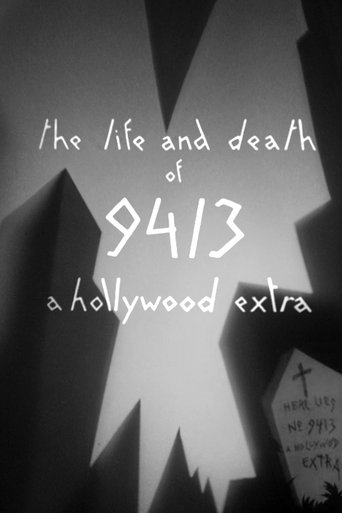
This short experimental film tells the story of a man who comes to Hollywood to become a star, only to fail and be dehumanized. He is identified by the number 9413 written on his forehead.
The Life and Death of 9413: A Hollywood Extra
1928
 6.0
Part of RKO's "This is America" series, this is an Oscar nominated short documentary from 1944 that follows the plight of European immigrants arriving in the USA looking for hope and safety.
New Americans
1944
 5.9
Village drama of love and hate among the Gypsies.
Hanka
1955
 10.0
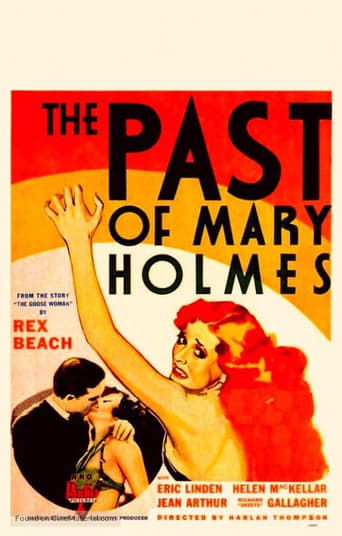
Mary Holmes (MacKellar), once a famous opera star known as Maria di Nardi, now lives in a run-down shanty and suffers from alcoholism. Known for her eccentric behavior, Mary breeds geese, and is thus known in her neighborhood as 'The Goose Woman'. She blames her grown son Geoffrey (Linden) for the deterioration of her voice, and does everything to destroy his life. When Geoffrey, who works as a commercial artist, announces to her that he will marry Joan Hoyt (Arthur), an actress, she becomes torn with jealousy and threatens to reveal to Joan that he is an illegitimate birth.
The Past of Mary Holmes
1933
Behind the camera
5.7Conquer by the Clock was a short dramatic propaganda film produced by the RKO Pathé in 1942 to encourage wartime industrial production. It was nominated for an Academy Award for Best Documentary Feature in 1943.
Conquer by the Clock
1942
NRShort film by Slavko Vorkapich and John Hoffman.
Forest Murmurs
1947
6.6This short experimental film tells the story of a man who comes to Hollywood to become a star, only to fail and be dehumanized. He is identified by the number 9413 written on his forehead.
The Life and Death of 9413: A Hollywood Extra
1928
6.6This short experimental film tells the story of a man who comes to Hollywood to become a star, only to fail and be dehumanized. He is identified by the number 9413 written on his forehead.
The Life and Death of 9413: A Hollywood Extra
1928
6.0Part of RKO's "This is America" series, this is an Oscar nominated short documentary from 1944 that follows the plight of European immigrants arriving in the USA looking for hope and safety.
New Americans
1944
5.9Village drama of love and hate among the Gypsies.
Hanka
1955
5.9Village drama of love and hate among the Gypsies.
Hanka
1955
10.0Mary Holmes (MacKellar), once a famous opera star known as Maria di Nardi, now lives in a run-down shanty and suffers from alcoholism. Known for her eccentric behavior, Mary breeds geese, and is thus known in her neighborhood as 'The Goose Woman'. She blames her grown son Geoffrey (Linden) for the deterioration of her voice, and does everything to destroy his life. When Geoffrey, who works as a commercial artist, announces to her that he will marry Joan Hoyt (Arthur), an actress, she becomes torn with jealousy and threatens to reveal to Joan that he is an illegitimate birth.
The Past of Mary Holmes
1933
 6.4
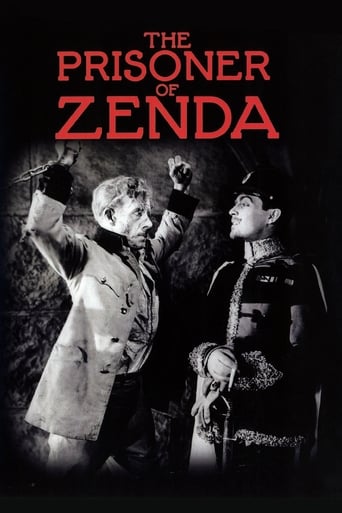
A kingdom's ascending heir, marked for assassination, switches identities with a lookalike, who takes his place at the coronation. When the real king is kidnapped, his followers try to find him, while the stand-in falls in love with the king's intended bride, the beautiful Princess Flavia.
The Prisoner of Zenda
1922
 6.3
While playing his trombone one Sunday, the enthusiastic Zero sees Beatrix and falls in love. He returns the next week to express his feelings, and it's mutual. Over the next few months, they spoon, kiss, and find happiness. Then, she receives a letter from Kabul, demanding that she return to the palace of the Grand Vizier. The lovers part, heartbroken. Zero tries expressing himself to a woman on the street. He meets derision. Then, news of Beatrix. Does this romance end in smiles or tears?
The Love of Zero
1928
A recently unearthed experimental documentary of the crashing sea set to Mendelssohn's "Fingal's Cave." An example of the filmmakers' "new cinema" theory which held that film should be more like music than literature. This film is based solely on its arrangement of images.
Moods of the Sea
1942
 9.0
[Vorkapich Montage Sequences] (1928-1934) are clips from Hollywood feature films designed by Slavko Vorkapich: sequences from Manhattan Cocktail (1928), The Wolf of Wall Street (1929), Sins of the Fathers (1928), and the Furies sequence from Crime Without Passion (1934).
Vorkapich Montage Sequences (1928-1934)
2023
 5.8
This dazzling stop-motion animation provided Vorkapich with a forum to demonstrate complex perceptual theories related to the persistence of vision and phi phenomenon. The dance of objects and their movements before the camera lens–somewhat similar to Oskar Fischinger’s abstractions–illustrate many visual sensations playfully executed by Vorkapich.
Abstract Experiment in Kodachrome
1950
 9.0
Private Smith of the U.S.A. is a 1942 American short documentary film directed by Slavko Vorkapić. Produced by RKO Radio Pictures, it was nominated for an Academy Award at the 15th Academy Awards for Best Short Subject, Two Reel. This is part of This Is America Series.
Private Smith of the U.S.A.
1942
 NR
Slavko Vorkapich’s opening montage for Crime Without Passion (1934).
The Furies
1934
 7.0
Millions of Us (1935) is an early example of American labor-left filmmaking that experiments with enacted forms, anticipating Frontier Films’s renowned People of the Cumberland (1938) and Native Land (1942). Produced surreptitiously in Hollywood in 1934-5, the film dramatizes the plight of millions of unemployed workers amidst the Depression. This message is filtered through the story of a single “forgotten man” who walks the streets in desperate search of a job. Driven by hunger, he contemplates becoming a scab. A union man intervenes, coaching him to recognize common interests with his brethren. He is ultimately converted to the cause of trade unionism.
Millions of Us
1935