
Directing
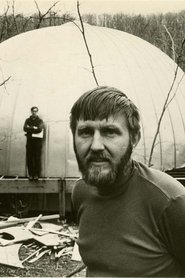
Stan VanDerBeek
Born — Died
1927-01-06 — 1984-09-19
Place of birth
New York, New York
Known for
Directing
Credits
47 titles
American experimental filmmaker Stan Vanderbeek began his career in the 1950’s after having studied art and architecture in New York and North Carolina. His earliest period (1955-1965) is marked by his animated painting and collage films which the artist and critic Daryl Chin regarded as having an “enormous vitality, bounding inventiveness and incendiary wit which was shared by such other collagists as Robert Breer, Bruce Conner, Dick Preston.” Films such as Science Friction (1959, 10’), Breathdeath (1963, 15’), A la Mode (1959, 7’) and Achoo Mr. Kerrooschev (1960, 2’) are from this period. In the 1960’s, in the context of his expanded cinema research, Vanderbeek started his audacious proj…
Known for
 NR
NRHome movies shot on Super 8mm by W+B Hein over 10 years.
Home Movies 1971-81
1985
 NR
NRDuring the 1970s I shot, helped to make, or commissioned about ten document films, mainly about film-makers. This film is one of them. It was made with Dan Ochiva, who acted as cameraman on about half of the footage. I shot the rest, and then edited the film. It is a record of a conference held at the State University of New York at Buffalo on March 22-25, 1973. Among the participants filmed were Gerald O'Grady (who organized the conference), Will Hindle, Stan Brakhage, Jonas Mekas, Robert Creeley, Bruce Baillie, Scott Bartlett, Hollis Frampton, Ken Jacobs, Ed Pincus, Stan Vanderbeek, Ed Emshwiller, Sally Dixon, James Cox. This footage will eventually become part of my film PEOPLE, PLACES, THE 1970S. –R. H.
Notes on the Buffalo Conference: “Autobiography in American Independent Cinema”
1973
 4.9
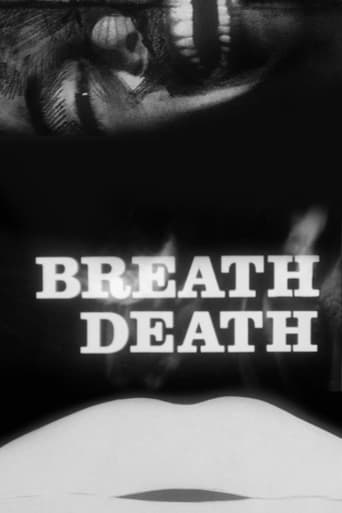
4.9A surrealistic fantasy based on the 15th century woodcuts of the dance of the dead. A film experiment that deals with the photoreality and the surrealism of life. A collage-animation that cuts up photos and newsreel film and reassembles them, producing an image that is a mixture of unexplainable fact (Why is Harpo Marx playing a harp in the middle of a battlefield?) with inexplicable act (Why is there a battlefield?). It is a black comedy, a fantasy that mocks death ... a parabolic parable.
Breathdeath
1963
 7.0
7.0Jonas Mekas assembles 160 portraits, appearances, and fleeting sketches of underground and independent filmmakers captured between 1955 and 1996. Fast-paced and archival in spirit, the film celebrates the avant-garde as its own “nation of cinema,” a vital community existing outside the dominance of commercial film.
Birth of a Nation
1997
 NR
NR16mm film transferred to video, black and white, sound
Expo Faces
1967
 NR
NRIimura creates a short self-portrait as well as brief portraits of five of his peers: Brakhage, Vanderbeek, Smith, Mekas and Warhol. In each portrait, Iimura attempts to copy the styles and traits of each artist (Vanderbeek's constantly moving camera; Mekas' experiments with film speed; Warhol's use of flashes of white against a black background), while briefly commenting on the images being shown. The film serves effectively as an introduction to the film styles of these artists.
Filmmakers
1969
Film credits
1970s · 2 titles
NRDuring the 1970s I shot, helped to make, or commissioned about ten document films, mainly about film-makers. This film is one of them. It was made with Dan Ochiva, who acted as cameraman on about half of the footage. I shot the rest, and then edited the film. It is a record of a conference held at the State University of New York at Buffalo on March 22-25, 1973. Among the participants filmed were Gerald O'Grady (who organized the conference), Will Hindle, Stan Brakhage, Jonas Mekas, Robert Creeley, Bruce Baillie, Scott Bartlett, Hollis Frampton, Ken Jacobs, Ed Pincus, Stan Vanderbeek, Ed Emshwiller, Sally Dixon, James Cox. This footage will eventually become part of my film PEOPLE, PLACES, THE 1970S. –R. H.
Notes on the Buffalo Conference: “Autobiography in American Independent Cinema”
1973
 5.9
5.9Fulton made the film during his brief time at Harvard, where he had been invited to teach by Robert Gardner, his friend and collaborator (Fulton would later serve as a cinematographer on Gardner’s 1981 documentary Deep Hearts, among others). Reality’s Invisible could be described as a portrait of the Carpenter Center, yet it is a portrait of an extremely idiosyncratic and distinctive sort. Fulton moves us through the concrete space of the Center’s Le Corbusier-designed building—the only structure by the architect in North America—but, more centrally, presents us footage of students making and discussing their work alongside figures like Gardner, theorist Rudolf Arnheim, artist Stan Vanderbeek, filmmaker Stan Brakhage, and graphic designer Toshi Katayama.
Reality's Invisible
1972
Behind the camera
4.9A surrealistic fantasy based on the 15th century woodcuts of the dance of the dead. A film experiment that deals with the photoreality and the surrealism of life. A collage-animation that cuts up photos and newsreel film and reassembles them, producing an image that is a mixture of unexplainable fact (Why is Harpo Marx playing a harp in the middle of a battlefield?) with inexplicable act (Why is there a battlefield?). It is a black comedy, a fantasy that mocks death ... a parabolic parable.
Breathdeath
1963
NR16mm film transferred to video, black and white, sound
Expo Faces
1967
 6.0
6.0Performance by Robert Morris and Carolee Schneemann.
Site
1964
 NR
NRFace Concert is an ode to human expression in which VanDerBeek transforms the face into a visual canvas.
Face Concert
1981
 NR
NR16mm color work by Stan Vanderbeek that takes his work away from the cutups and the commentary and lands him in the psychedelic and abstract. Opticals, repetitions, camera moves and zooms are what make up the bulk of this exploration into fluids. The results bridge that realm between hangout art piece and intersteller stoner trip.
Fluids
1964
 6.0
6.0First shown on January 30, 1967, FOR LIFE AGAINST THE WAR was an open-call, collective statement from American independent filmmakers disparate in style and sensibility but united by their opposition to the Vietnam War. Part of the protest festival Week of the Angry Arts, the epic compilation film incorporated minute-long segments which were sent from many corners of the country, spliced together and projected. The original presentation of the works was more of an open forum with no curation or selection, and in 2000 Anthology Film Archives preserved a print featuring around 40 films from over 60 submissions.
For Life, Against the War
1967
 NR
NRInfluenced by Buckminster Fuller’s spheres, VanDerBeek had the idea for a spherical theater where people would lie down and experience movies all around them. Floating multi-images would replace straight one-dimensional film projection. From 1957 on, VanDerBeek produced film sequences for the Movie-Drome, which he started building in 1963. His intention went far beyond the building itself and moved into the surrounding biosphere, the cosmos, the brain and even extraterrestrial intelligence.
Movie-Drome
1966
 NR
NRA fantasy film of illusive geometry, changing and rebuilding itself by computer animation, unique visual magic done while artist-in-residence at NASA in Houston in conjunction with Richard Weinberg.
Euclidean Illusions
1980
 NR
NRNo synopsis available yet.
Ad Infinitum
1968
World leaders at the crossroads.
Summit
1963
16mm film transferred to video, black and white, silent
Vision III
1966
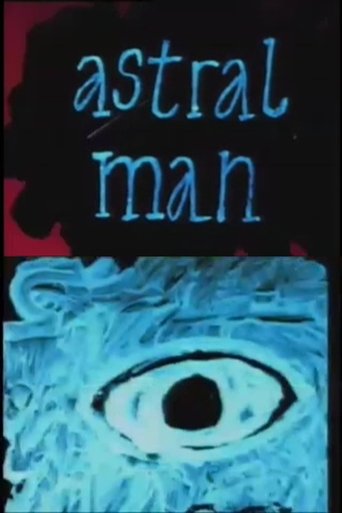 8.0
8.0"An animated vision... a subliminal glance at man in light and space" S.V.
Astral Man
1959
Experimental film that used handheld projectors to present film images and slide projections.
Movie-Movies
1965
"A film of video light and color. Dancers move through computer-generated patterns and fields of soft color to the music of Ravel. An experiment in video graphics combining the new technologies of video matting and analog computer patterns. One of the most successful of the Boston Symphoney Experiments, 1972, aired nationally." --S.V.
Videospace
1970
 NR
NRVanderbeek photographs NYC, 1959. The 'meat' of the street: Doorways, debris, dilapidation. We meet a few youngsters and get a glimpse into a bygone era.
Street Meat
1959
 NR
NRDream matrix, history written in lightning image, memory and the TV syntax, images flowing and fused together to other images and electronic tapestry of images half seen, sought for, seeking man's dreams, movies as dreams, history as media. "The artist will tell you it is as much a process he is interested in ... as a result. Art is a process – life is a process – are they the same process? So many of the artists became unhappy about this eternal, unyielding quality in their art, and they began to wish their work were more like shoes, more temporary, more human, more able to admit of the possibility of change. The fixed, finished work began to be supplemented by the idea of work as a process, constantly becoming something else, tentative, allowing more than one interpretation." – Dick Higgins
Newsreel of Dreams 1 & 2
1964
 NR
NRIn After Laughter, VanDerBeek constructs a rapid-fire montage depicting the evolution of the human race and the haunting specter of its destruction.
After Laughter
1981
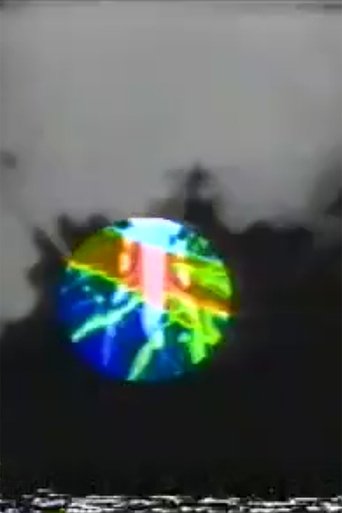 NR
NRStrobe Ode is an exercise in video feedback and analog imaging, in which a circular image-field is modified and abstracted by strobe flashes.
Strobe Ode
1977
This film uses stop motion animation of still photographs to convey images of politics and science in the nuclear era. The advancement of science allows man to do things he never would have been able to do without, for good or bad. Politicians are either behind the scenes manipulating those scientists or are using that science for their own goals, primarily in the space race. Everyday items and people are projected upwards - many in the form of rockets - followed by iconic structures, such as the Empire State Building, the US Capitol, the Washington Monument, the Eiffel Tower and the Kremlin, being rocketed skyward as visual representations of that race into space.
Science Friction
1959
 NR
NRA Kafka-inspired tale, Mirrored Reason tells the story of a woman who is haunted and eventually replaced by her double.
Mirrored Reason
1980
To create his “Poemfields” (1965-71) series, VanDerBeek worked closely with computer scientist Ken Knowlton and the staff at Bell Labs. Each “Poemfield” was adapted from poems by VanDerBeek, programmed on an IBM 7094 computer in black and white using a custom language known as BEFLIX, and colored after the fact by artists Robert Brown and Frank Olvey. Poemfield No. 2 features a soundtrack by jazz percussionist Paul Motian, known for his collaborations with Bill Evans.
Poem Field No. 2
1966
 NR
NRAn animated drawing done directly under the camera, combining painterly images and a drawn calligraphy, the works unfolds as you watch, permitting the viewer to see the process of the drawing.
Mankinda
1957
A Stan VanDerBeek short film from 1965.
Pastorale
1965
 NR
NR”Assassination, falling down, animated drawings from the landscape of memory, mankind falling down, faces with faces, a haunting view of man drawn in brilliant animation graphics.” – S.V., Filmmaker’s Cooperative Catalogue № 7.
Oh
1968
 NR
NR"A study in ocular illusions, pattern superimposition producing other patterns and illusions of three dimensionality. A thorough demonstration of the richness and varied qualities of moiré patters by the acknowledged scientist/artist Gary Oster." S.V.
Moirage
1970
 NR
NRSimiles of a slippery TV tube gesticulate break and supply – a long view of multiple images (Mr. Johnson's war, is it Howard Johnson's or President Johnson's war?) – a long curving view, breakfast with aspirin, good grief – or Goodbye. (SUPER-IMPOSITION is a videotape experiment with multiple images, made with film artist-in-residency at Colgate University.) Life and art ... interacting ... it is interesting to note that movies and psychoanalysis are approximately the same age ... there are now more TV sets in America than bathtubs. There are more radios in America than people. Although 75 percent of Japanese households have television sets, statistics show only 35 percent have running water and fewer than ten percent have flush sanitation. Some 40 percent of American children have one or more.
Superimposition
1968
 NR
NR"The shapes of sound filmed from a computer system that reproduces analog patterns from sounds. This pioneer work in animated computer mandalas is a lyrical, abstract song with analog rhythms."
Who Ho Rays No. 1
1972
 NR
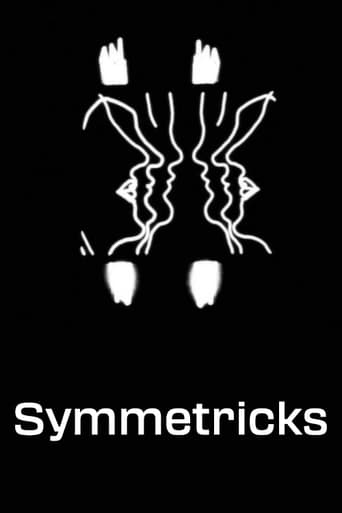
NRAgainst a black background and a pulsating beat matching white symmetrical geometric flashes around a central orb, white lines are drawn in mirror images vertical to each other. The images created are generally a myriad of faces in silhouette. Those silhouettes however often take on abstract forms in their entirety.
Symmetricks
1972
 NR
NR"Each film was constructed using Knowlton's BEFLIX computer language, which was based on FORTRAN. The films were programmed on a IBM 7094 computer. The films were created in black and white, with color added later by Brown and Olvey." --AT&T Archives and History Center
Poem Field Series
1967
 4.3
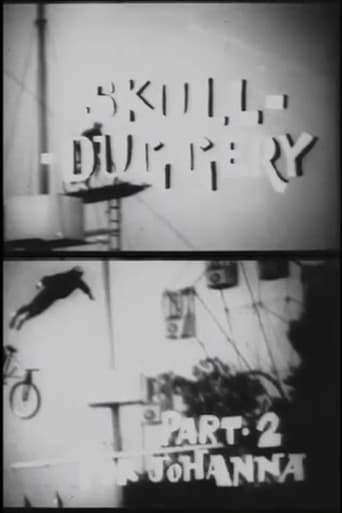
4.3A subversive experimental short against the ruling class.
Skullduggery
1962
An experimental film
Collide: Oscope
1966
 NR
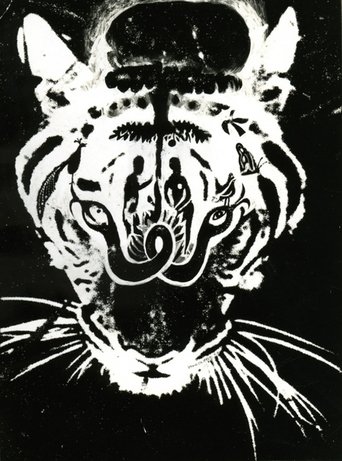
NR"A two screen Dream/Film/Farce/Sity about sleeps-two-sides-the Dream-Beast, animated trick photography combined into a knifed dream with a sexual dream's edge. A movie mural, based on the gender question... In question or sexus plexus... Dayglow dream life..." - Stan VanDerBeek
A Dam Rib Bed
1965
 NR
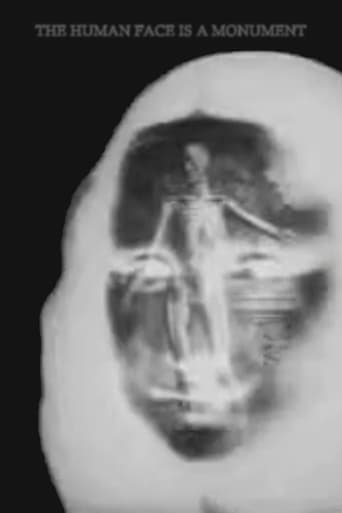
NRCamera animation over stills, “a portrait study of mankind, beginning with an infant and growing up to old age and death... using still pictures from the collection of ‘magnum photos on the range of expression and moods of people from all over the world, it reflects the human condition."
The Human Face Is a Monument
1965
 NR
NRAn animated and live action fantasy, the loop de loops of ten spoons, forks and tableware ... a parable in the shape of a soup spoon ... conceived as a children's film.
Dance of the Looney Spoons
1959
 NR
NRStan VanDerBeek, experimental filmmaker at work with friend and computer expert Wade Shaw, at the sophisticated new (1972) computer at MIT Center for Advanced Visual Studies, and discussing the inevitable interaction of computers with artistic creativity. Clips from several VanDerBeek films.
The Computer Generation
1972
 NR
NRIn Sonia and Stan Paint a Portrait of Ronnie, VanDerBeek and artist Sonia Sheridan assemble a pastiche of images of Ronald Reagan, metamorphosed through digital computer graphics.
Sonia and Stan Paint a Portrait of Ronnie
1983
 NR
NRIn Micro Cosmos, a series of four short computer-animated works, the image of an orb is transformed into a pulsating, energetic evocaton of life forces.
Micro Cosmos 1-4
1983
 NR
NRNo synopsis available yet.
Facescapes
1965
A cut-out of Soviet leader Nikita Khrushchev sails over newspaper articles as they take place. Combines live photography and collage animation in one film.
Achooo Mr. Kerrooschev
1960
Poem Field No. 6 is an computer-animated short made in the Beflix programming language.
Poem Field No. 6
—