
Directing
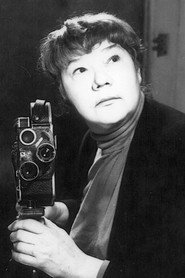
Marie Menken
Born — Died
1909-05-25 — 1970-12-29
Place of birth
New York, New York
Known for
Directing
Credits
33 titles
Marie Menken was born Marie Menkevicius in New York City on May 25, 1909, the daughter of Catholic Lithuanian immigrants. She grew up in Brooklyn with a brother and a sister, in a home used to frequent financial difficulties. Both she and her sister Adele later changed their surname to Menken. Marie Menken and Willard Maas had got married in 1937, moving into a Brooklyn penthouse at 62 Montague Street which they would inhabit until their deaths. She died on December 29, 1970. Four days after her death, on January 2, 1971, Willard Maas died.
Known for
 7.3
7.3Also known as Walden, Jonas Mekas’s first diary film is a six-reel chronicle of his life in 1960s New York, interweaving moments with family, friends, lovers, and artistic idols. Blending everyday encounters with portraits of the avant-garde art scene, it forms an epic, personal meditation on community, creativity, and the passage of time.
Diaries, Notes, and Sketches
1968
 4.7
4.7Andy Warhol is a lyrical exploration of Warhol's creative process by filmmaker, painter, and actress Marie Menken. Using a hand-held camera, Menken captures Warhol and his assistants, including Gerard Malanga, as they work at the Factory. The result is an intimate portrait of the artist in the process of creating some of his most famous works, including the Brillo boxes, the Jackie series, and the Flowers silkscreens.
Andy Warhol
1965
 5.5
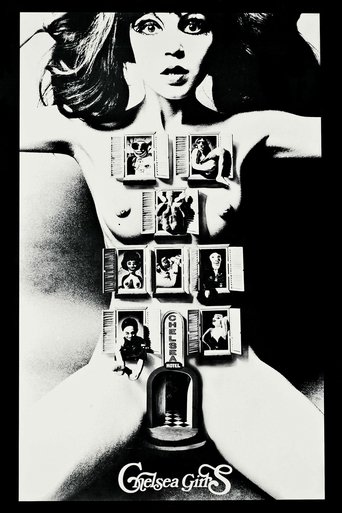
5.5Follows various residents of the Chelsea Hotel in 1966 New York City.
Chelsea Girls
1966
 6.2
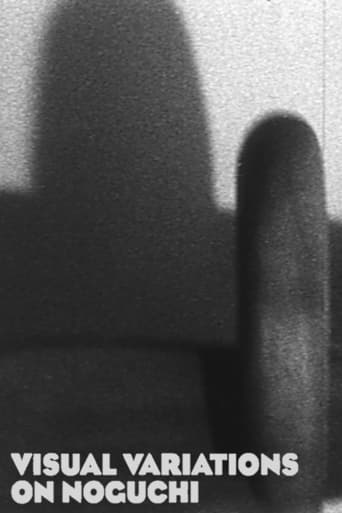
6.2A voice occasionally says a word or two: "on the sidewalk" or "lithium" or a woman's name. A hand-held camera frames parts of sculptures, or moves across their surfaces, sometimes slowly, sometimes quickly, almost always in close-up. The soundtrack, in addition to the voice, is discordant music. Light and shadows are paramount. Sometimes the camera repeats up and down movements; once, a set of jump cuts brings an object closer. The music can be shrill in contrast to the sculptures. Almost entirely of wood, they are the work of Isamu Noguchi (1904-1988): Abstract, usually smooth and rounded (but not always).
Visual Variations on Noguchi
1945
 8.0
8.0The films were made between 1964 and 1966 at Warhol's Factory studio in New York City. Subjects were captured in stark relief by a strong key light, and filmed by Warhol with his stationary 16mm Bolex camera on silent, black and white, 100-foot rolls of film at 24 frames per second. The resulting two-and-a-half-minute film reels were then screened in 'slow motion' at 16 frames per second.
Andy Warhol Screen Tests
1965
 6.9
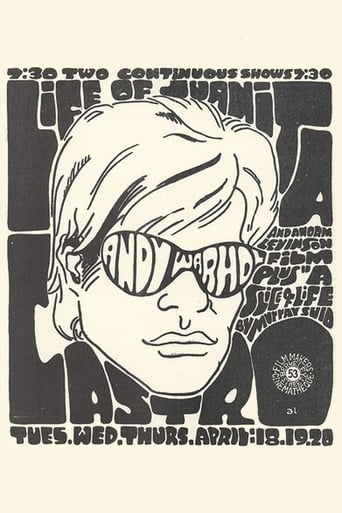
6.9A playwright taunts a number of actors into improvising a truly ridiculous but subtlely meaningful meditation on Fidel Castro and his family.
The Life of Juanita Castro
1965
Film credits
2000s · 1 titles
1960s · 6 titles
7.3Also known as Walden, Jonas Mekas’s first diary film is a six-reel chronicle of his life in 1960s New York, interweaving moments with family, friends, lovers, and artistic idols. Blending everyday encounters with portraits of the avant-garde art scene, it forms an epic, personal meditation on community, creativity, and the passage of time.
Diaries, Notes, and Sketches
1968
5.5Follows various residents of the Chelsea Hotel in 1966 New York City.
Chelsea Girls
1966
8.0The films were made between 1964 and 1966 at Warhol's Factory studio in New York City. Subjects were captured in stark relief by a strong key light, and filmed by Warhol with his stationary 16mm Bolex camera on silent, black and white, 100-foot rolls of film at 24 frames per second. The resulting two-and-a-half-minute film reels were then screened in 'slow motion' at 16 frames per second.
Andy Warhol Screen Tests
1965
6.9A playwright taunts a number of actors into improvising a truly ridiculous but subtlely meaningful meditation on Fidel Castro and his family.
The Life of Juanita Castro
1965
 8.0
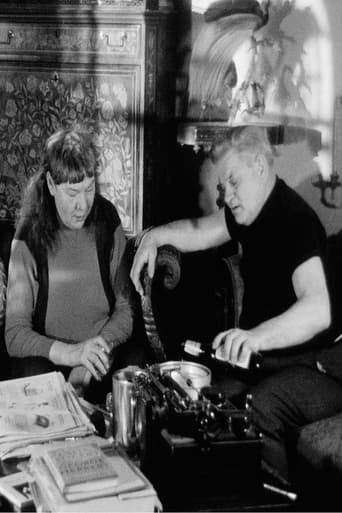
8.0“Andy Warhol called Marie Menken and Willard Maas ‘the last of the great bohemians,’ and, in 1965, made Bitch, his real-life parody of Edward Albee’s play Who’s Afraid of Virginia Woolf?, with Willard and Marie sitting on the couch in their living room, drunk and arguing on a Sunday afternoon. Unscripted, shot with a stationary camera in his signature home-movie documentary style, Warhol’s Bitch has never before been seen by the public—until now…” (Philip Gefter).
Bitch
1965
 NR
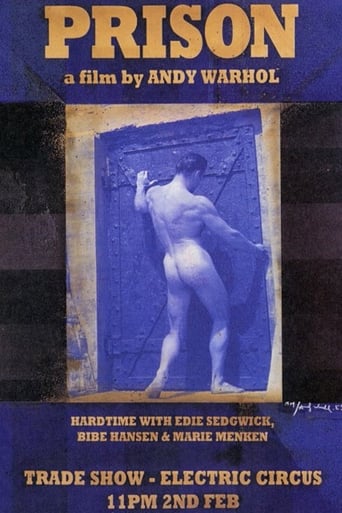
NRInspired by Bibbe Hansen's experiences in a juvenile detention center.
Prison
1965
1950s · 2 titles
 5.0
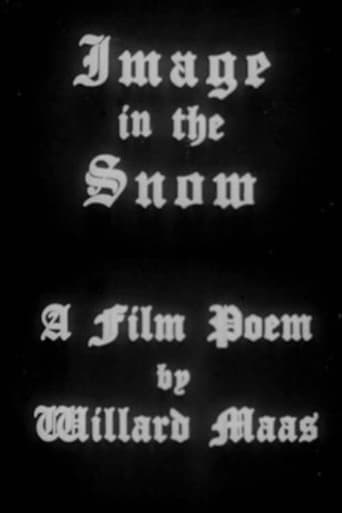
5.0A young male protagonist dreams of a muscleman hero, a black dancer, and a princess who gives him a magic urn. When he wakes he rejects his mother (Menken) and wanders the cold streets, where he finds his dream characters corrupted or dying.
Image in the Snow
1952
A film poem, a re-telling of the Greek myth in modern terms. In the traditional pool the water has become muddy and Narcissus finds that mirrors are more rewarding for the study of his changing reflections. There are three mirrors, each reflecting a dramatic study in self-love. The first, love that deserves the adoration of the opposite sex; the second, homosexual love that investigates itself and its own sex; the third, love that insures one a place in the present and history.
Narcissus
1957
Behind the camera
4.7Andy Warhol is a lyrical exploration of Warhol's creative process by filmmaker, painter, and actress Marie Menken. Using a hand-held camera, Menken captures Warhol and his assistants, including Gerard Malanga, as they work at the Factory. The result is an intimate portrait of the artist in the process of creating some of his most famous works, including the Brillo boxes, the Jackie series, and the Flowers silkscreens.
Andy Warhol
1965
6.2A voice occasionally says a word or two: "on the sidewalk" or "lithium" or a woman's name. A hand-held camera frames parts of sculptures, or moves across their surfaces, sometimes slowly, sometimes quickly, almost always in close-up. The soundtrack, in addition to the voice, is discordant music. Light and shadows are paramount. Sometimes the camera repeats up and down movements; once, a set of jump cuts brings an object closer. The music can be shrill in contrast to the sculptures. Almost entirely of wood, they are the work of Isamu Noguchi (1904-1988): Abstract, usually smooth and rounded (but not always).
Visual Variations on Noguchi
1945
 7.0
7.0An expansion upon an idea put forward in Marie Menken's film Notebook; single-frame footage of the moon shot on various nights, blinking and darting around within Menken's field of vision.
Moonplay
1962
 NR
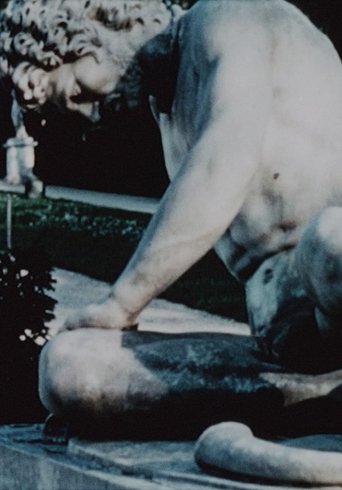
NR"This is a new version of the now famous film made for her husband, the poet and film-maker. Returning from the Brussels fair, she shot this at Versailles and the Louvre. There is wit, irony and prophecy here (though perhaps not apparent to those who do not know Marie Menken and Willard Maas personally). She says only 'A more serious film than ARABESQUE, BAGATELLE attempts to synchronize into a lyric statement some observations on Versailles.' Marie Menken's fountains are the fountains of life. Marie Menken's Versailles is the Versailles of death. The beauty of this film is the alternation of the fountains and Versaille death. Only Marie Menken would have the subtlety, sensibility, sesitivity, receptivity to fuse and fetilize the classical paradoxes in such an immediate visual apotheosis." -- Charles Boultenhouse
Bagatelle for Willard Maas
1961
 5.5
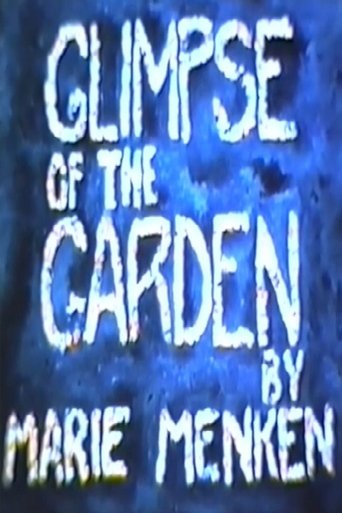
5.5Experimental film showing film clips of a garden, with birds chirping for the soundtrack.
Glimpse of the Garden
1957
 NR
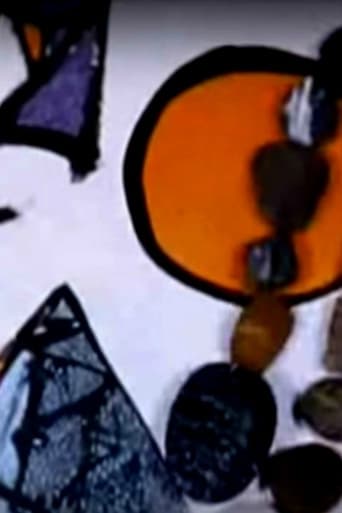
NRMenken's 16mm, stop-motion tribute to the art of Dwight Ripley was filmed in 1959 in his apartment at 416 East Fifty-eighth Street in New York. She used his drawings as flats.The remarkably contemporary soundtrack for steel drum, guitar, flute, and voice was written for the occasion by Maya Deren's young husband, Teiji Ito, and is available in his album Music for Maya (Tzadik). Stan Brakhage called Dwightiana a pioneer example of the film portrait, abstract rather than narrative (the colored pencils represent Ripley's palette). Ripley was also a botanist, and Menken's unusual title alludes to botanical nomenclature as if Dwightiana might be the name of a species as well as a work "about" Dwight.
Dwightiana
1959
 NR
NRMarie Menken film
For Leo Castelli
—
 5.7
5.7Filmed at the Alhambra in Spain in just one day, according to Marie Menken. Arabesque for Kenneth Anger concentrates on visual details found in Moorish architecture and in ancient Spanish tile. The date 1961 refers to the addition of Teiji Ito's soundtrack and its subsequent completion, but the film was likely shot in 1960 or earlier. - David Lewis
Arabesque for Kenneth Anger
1961
 5.5
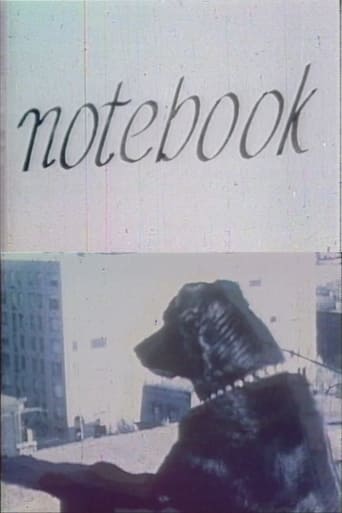
5.5A short, diaristic film; A series of impressions, animations and playful vignettes in color and B&W. Early/ Outtake footage of Menken's Lights can be seen here, as well as camera techniques she'd expand upon in later films.
Notebook
1963
 NR
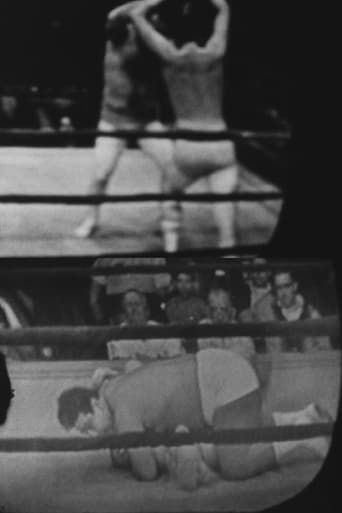
NRA wrestling match shown on television, shot on film-- A tv 'concrete'.
Wrestling
1964
NRA wrestling match shown on television, shot on film-- A tv 'concrete'.
Wrestling
1964
Zenscapes is an abstract film on light
Zenscapes
1957
 5.6
5.6Shot over a period of three years. Marie Menken photographed New York window displays during the Christmas holiday. In order to avoid foot and street traffic interrupting the shots, Menken filmed from midnight to 1:00 in the morning, but had to keep the camera under her coat to keep it from freezing.
Lights
1966
 6.3
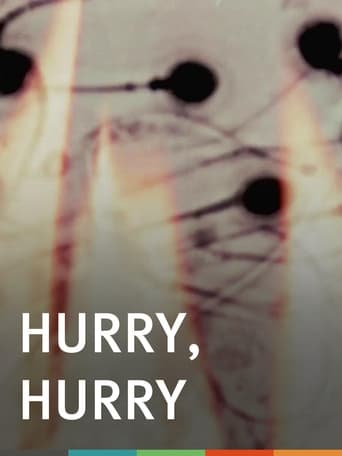
6.3In this strange little film, Marie Menken photographs billowy flames superimposed over microscopic medical footage of writhing spermatozoa.
Hurry, Hurry!
1957
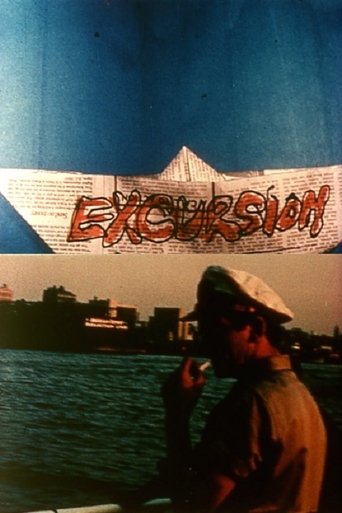 NR
NRA boat trip with friends round Manhattan, shot in single-frame mode
Excursion
1968
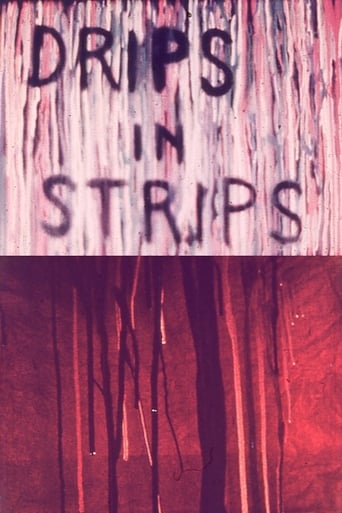 NR
NR"Spattered paint responding to gravity, forming its own patterns and combinations of color." -- M.M.
Drips in Strips
1961
 NR
NRFilm shot by filmmaker Marie Menken in the mid-1960s. Preserved by the Anthology Film Archive (AFA).
Lita's Party
1964
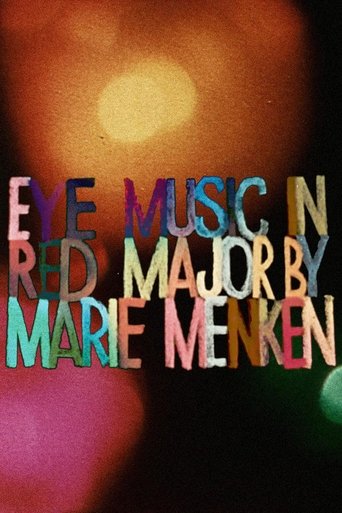 5.4
5.4"A study in light based on persistence of vision and enhancement from eye fatigue." -- M.M.
Eye Music in Red Major
1961
 NR
NRA film of a painting of a sound. Piet Mondrian's 'Broadway Boogie-Woogie' is translated into visual boogie rhythm.
Mood Mondrian
1961
 3.0
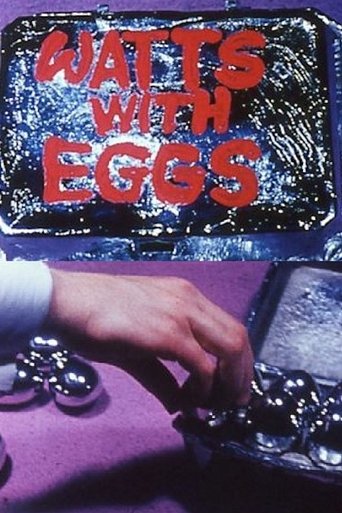
3.0"By 1967, Menken had become interested in the work of Fluxus artist Robert Watts and made a short animation piece, Watts with EGGS, in which she animates his chrome-casted Box of Eggs. The film opens with lights reflected in the eggs (of course), then, through single framing, pixilates a man's hand arranging eggs in different patterns. The hands (those of John Hawkins) fill the box back up with eggs. Next, the eggs do the same routine, but more magically, more serenely, without the assistance of the hands. Menken also introduces a string and a feather duster into animated action, so that the eggs, one by one, seem to be coming directly out of the duster (objects infect objects). By the end, the eggs are magically back in their box." Melissa Ragona
Watts with Eggs
1967
 6.2
6.2Various forms of everyday motion in and around a city are shown at rapid speed.
Go! Go! Go!
1964
 NR
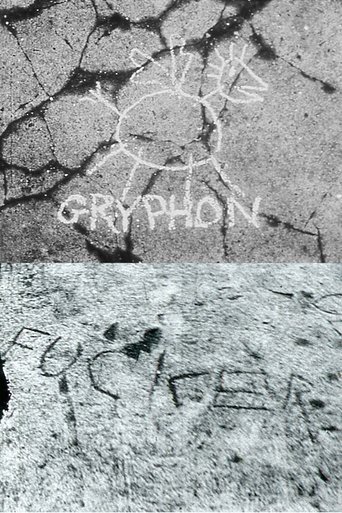
NRPhotography: Willard Maas and John Hawkins. "Looking down instead of around, while walking, finding the magic patterns in the pavements of a city."--John Hawkins
Sidewalks
1966
A film by Marie Menken.
The Gravediggers from Guadix
1958