
Directing
Ruth Jarman
Known for
Directing
Credits
18 titles
Semiconductor is the UK artist duo Ruth Jarman and Joe Gerhardt. Over twenty-five years, they have developed a critically engaged, research-led practice that explores the material nature of the physical world through the lenses of science and technology. Their multi-disciplinary works foreground the role of human perception within systems of observation, encouraging us to expand our sense of reality and question our place in the universe. Their practice is rooted in research from within scientific institutions, including CERN; NASA; the Smithsonian Institution; Charles Darwin Research Centre, Galapagos; the UK Government Office for Science; and the Extreme Light Laboratory, University of Gl…
Known for
 5.7
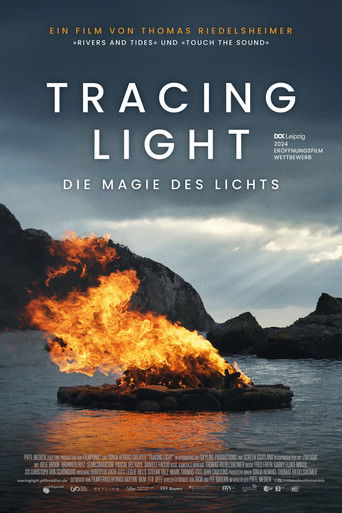
5.7Light is a fascinating phenomenon. Without light, there would be no cinema, no film – and no life. So light is at the origin of everything, and yet it remains invisible to the eye until it hits matter. This moment is – quite literally – the starting point of Thomas Riedelsheimer’s latest work, for the springtime spectacle of rainbow shreds in the cinematographer and documentary filmmaker’s flat became the starting point of a search for the origin of the images we form of this world. For this quest he dived deep into two spheres that seem to follow different laws but always strive to fathom the magical: physics and art.
Tracing Light
2025
 NR
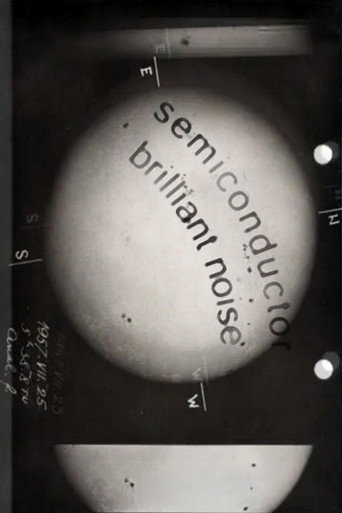
NRBrilliant Noise takes us into the data vaults of solar astronomy. After sifting through hundreds of thousands of computer files made accessible via open access archives, Semiconductor have brought together some of the sun's finest unseen moments. These images have been kept in their most raw form, revealing the energetic particles and solar wind as a rain of white noise. This black and white grainy quality is routinely cleaned up by NASA, usually hiding the processes and mechanics in action behind the capturing procedure. Most of the imagery has been collected by satellites orbiting the Earth as single frames, or files of information, that are then reorganised into spectral sequences. The soundtrack brings to light the hidden forces at play upon the solar surface, by directly translating the intensity of the brightness into audio manipulation.
Brilliant Noise
2006
Natural magnetic fields are described by NASA scientists.
Magnetic Movie
2009
 NR
NR20 Hz observes a geo-magnetic storm occurring in the Earth's upper atmosphere. Working with data collected from the CARISMA radio array and interpreted as audio, we hear tweeting and rumbles caused by incoming solar wind, captured at the frequency of 20 Hertz. Generated directly by the sound, tangible and sculptural forms emerge suggestive of scientific visualisations. As different frequencies interact both visually and aurally, complex patterns emerge to create interference phenomena that probe the limits of our perception.
20 Hz
2011
 NR
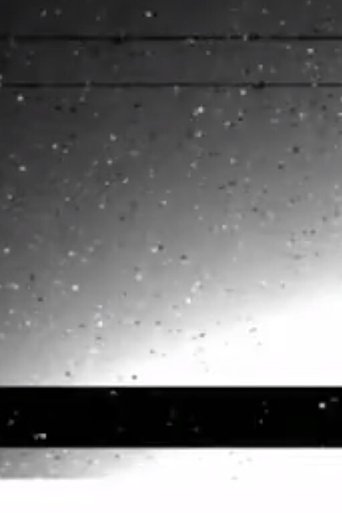
NRBlack Rain is sourced from images collected by the twin satellite, solar mission, STEREO. Here we see the HI (Heliospheric Imager) visual data as it tracks interplanetary space for solar wind and CME's (coronal mass ejections) heading towards Earth. Data courtesy of courtesy of the Heliospheric Imager on the NASA STEREO mission.
Black Rain
2009
 NR
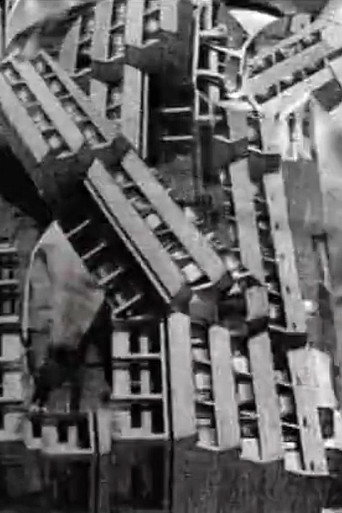
NRRetropolis is a city where the dust never settles and the last few light bulbs are fighting for survival. Transforming London into a modern Sci-Fi landscape, a fast moving journey takes us through destruction and chaos fuelled by an electrically charged soundtrack.
Retropolis
1999
Film credits
Behind the camera
NRBrilliant Noise takes us into the data vaults of solar astronomy. After sifting through hundreds of thousands of computer files made accessible via open access archives, Semiconductor have brought together some of the sun's finest unseen moments. These images have been kept in their most raw form, revealing the energetic particles and solar wind as a rain of white noise. This black and white grainy quality is routinely cleaned up by NASA, usually hiding the processes and mechanics in action behind the capturing procedure. Most of the imagery has been collected by satellites orbiting the Earth as single frames, or files of information, that are then reorganised into spectral sequences. The soundtrack brings to light the hidden forces at play upon the solar surface, by directly translating the intensity of the brightness into audio manipulation.
Brilliant Noise
2006
Natural magnetic fields are described by NASA scientists.
Magnetic Movie
2009
NR20 Hz observes a geo-magnetic storm occurring in the Earth's upper atmosphere. Working with data collected from the CARISMA radio array and interpreted as audio, we hear tweeting and rumbles caused by incoming solar wind, captured at the frequency of 20 Hertz. Generated directly by the sound, tangible and sculptural forms emerge suggestive of scientific visualisations. As different frequencies interact both visually and aurally, complex patterns emerge to create interference phenomena that probe the limits of our perception.
20 Hz
2011
NRBlack Rain is sourced from images collected by the twin satellite, solar mission, STEREO. Here we see the HI (Heliospheric Imager) visual data as it tracks interplanetary space for solar wind and CME's (coronal mass ejections) heading towards Earth. Data courtesy of courtesy of the Heliospheric Imager on the NASA STEREO mission.
Black Rain
2009
NRRetropolis is a city where the dust never settles and the last few light bulbs are fighting for survival. Transforming London into a modern Sci-Fi landscape, a fast moving journey takes us through destruction and chaos fuelled by an electrically charged soundtrack.
Retropolis
1999
The earth never sleeps. The duo Semiconductor distils research data on earth movements and animates them in a five-channel installation. In a dark hall, visitors to the Sónar Barcelona 2016 festival are captivated by a huge, luminous band of ceaselessly morphing layers of colours and strange sounds, experiencing a cut through both landscape and time.
Earthworks – Installation
2016
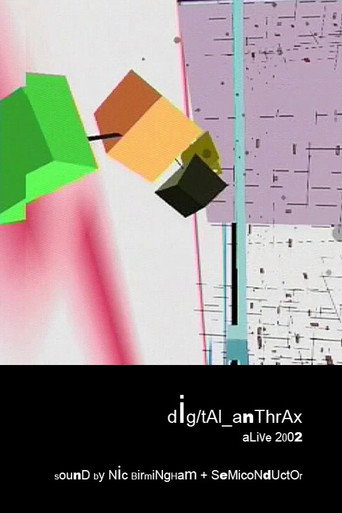 NR
NRShort experimental animated film by by Ruth Jarman and Joe Gerhardt
Digital Anthrax
2002
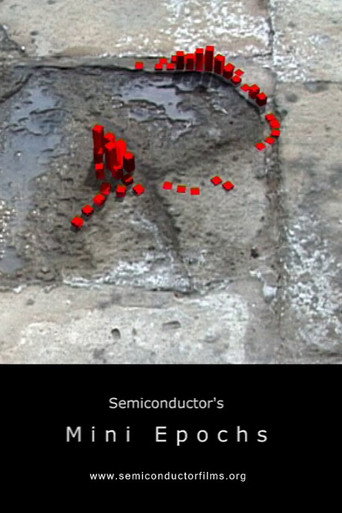 NR
NRExperimental animated film made for the Palazzo Zenobio at the Venice Biennale in 2003
Mini Epochs
2003
 NR
NRHeliocentric uses time-lapse photography and astronomical tracking to plot the sun’s trajectory across a series of landscapes. The entire environment feels to pan past the camera whilst the sun stays in the centre of each frame, enabling us to gauge the earth’s rotation and orbit around the sun. As the Suns light becomes disrupted by passing weather conditions and the environment through which we encounter it, it audibly plays them as if it were a stylus.
Heliocentric
2010
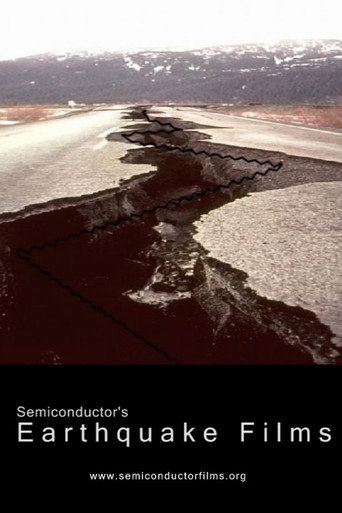 NR
NRSonglines sung by earthquakes.
Earthquake Films
2000
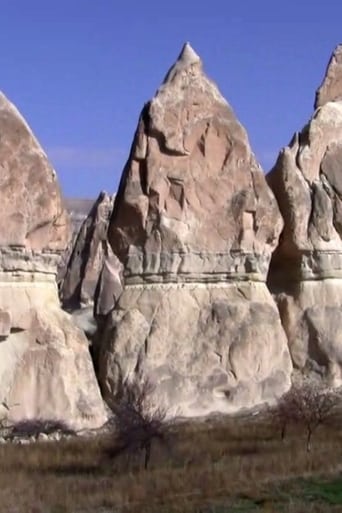 NR
NRShot in Cappadocia in Turkey when Ruth and I were on holiday in November '08. Most of it was shot around the town of Goreme.
Katpatuka
—
 NR
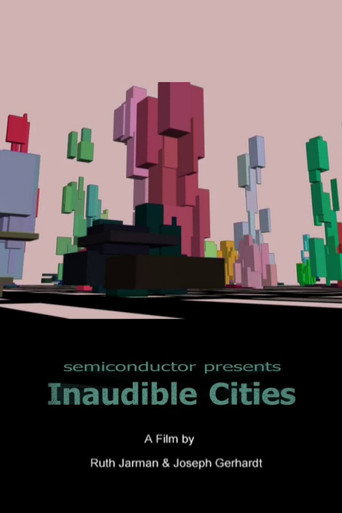
NRA short films where cities are made of and controlled by sound. Every detail of an urban landscape is built by the sonic pressures of an oncoming electrical storm. The very fabric of this isolated world is defined by the noises and frequencies that surround a space in another aural dimension. Semiconductor wrote a program which listens to the various parts of the soundtrack and constructs the animated environments.
Inaudible Cities
2002
 NR
NRBy asking a group of space physicists the unanswerable, Semiconductor reveal the hidden motivations driving scientists to the outer limits of human knowledge. In an attempt to find meaning within the question, they open a Pandora’s Box of limitations within science itself, revealing their own philosophical confines. Issues of faith, medicine and the laws of matter are raised to illustrate the infinitely complex universe we live in.
Do You Think Science
2006
 NR
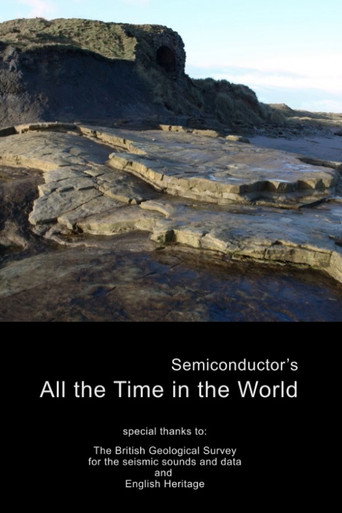
NRPresented as a fictional documentary, the sound film All the Time in The World sees the millions of years that have shaped and formed the land, played out at the speed of sound. Semiconductor have reanimated Northumbria’s epic landscape using data recordings from the archives at the British Geological Survey in Edinburgh. This data of local and distant seismic disturbances has been converted to sound and used to reveal and bring to life the constantly shifting geography around us. We follow the motion of the sound as it travels from the coast at Cocklawburn to the hills of The Cheviots, transforming the land. We travel to Abb’s Head and witness Earth Lights, made visible by the seismic sounds. These phenomena are said to be the result of tectonic movement in the strata below us. Flashes of light and electricity are produced as movement squeezes mineral crystals together, displaying luminous objects whose motion coincides with the direction of ruptures within the earth.
All The Time In The World
2005
 NR
NRAn extract of our floor projected HD video installation. It consists of five parts that can be seen as either a single screen or installed as separate projections around the space.
Out of the Light
2008
 NR
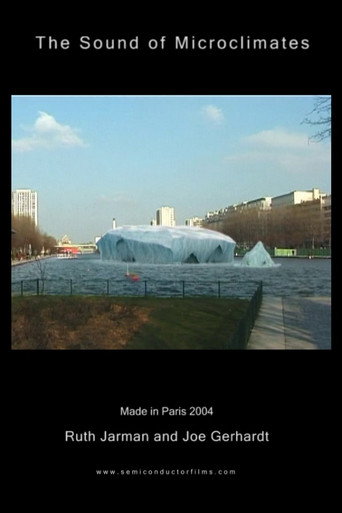
NRThe Sound of Microclimates reveals the sights and sounds of a series of unusual weather patterns in the Paris of today. Here, architecture has become interwoven with the natural processes of the geographical landscape. Set within the un-noticed moments in time, extreme microclimates are presented as the future in city accessories, revealing the unseen urban terrains of tomorrow. Like the temporary staged events at an World Expo these weather patterns hi-light public spaces and architecture within the city of Paris. They exist as a series of weather observations that animate the evolution of the inanimate urban condition. Each microclimatic intervention has its own audible frequencies, where the sound from each environment animates the movement and reveals each sites unique narrative.
The Sound of Microclimates
2004
Geologically, layers of earth form over thousands of years. The processes are almost imperceptible to humans. A research project in a Spanish quarry reconstructs earth movements, models them and records them acoustically. Creaking, rumbling and trickling, the layers leave traces of sounds animated in an audiovisual five-channel installation by the duo Semiconductor.
Earthworks – Making Of
2016