
Directing
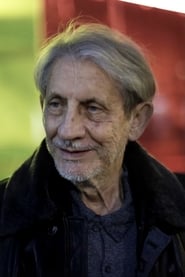
Basilio Martín Patino
Born — Died
1930-10-29 — 2017-08-13
Place of birth
Salamanca, Salamanca, Spain
Known for
Directing
Credits
41 titles
Basilio Martín Patino (Lumbrales, Salamanca, October 29, 1930-Madrid, August 13, 2017) was a Spanish film director, known for the film Nueve cartas a Berta (1965) and for three of his documentaries, Canciones para después de una guerra (1971), Queridísimos verdugos (1973) and Caudillo (1974).
Known for
 6.8
6.8A particular reading of the hard years of famine, repression and censorship after the massacre of the Spanish Civil War (1936-39), through popular culture: songs, newspapers and magazines, movies and newsreels.
Songs for After a War
1976
 6.4
6.4A German documentary filmmaker travels to Madrid to do a TV program about the city and the Spanish civil war commemorating its 50th anniversary.
Madrid
1987
 7.2
7.2Lorenzo is a young man returns to Spain after spending some time in England, where he fell in love with Berta, the daughter of Spanish immigrants. Lorenzo writes several letters to her trying to convey the beauty of the world her parents left behind.
Nine Letters to Berta
1966
 8.0
8.0No synopsis available yet.
La seducción del caos
1990
 7.8
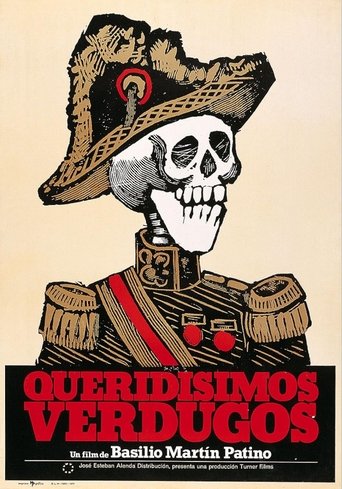
7.8This documentary, filmed clandestinely, is based on several interviews with the executioners who worked in Spain during the early 1970s, as well as families of people executed by them.
Dearest Executioners
1977
 7.5
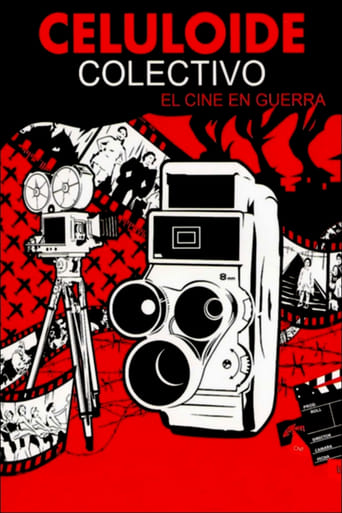
7.5July, 1936. The terrible Spanish Civil War begins. When the streets are taken by the working class, the social revolution begins as well. The public shows are socialized, a model of production and exhibition of films, never seen before in the history of cinema, is created, where the workers are the owners and managers of the industry, through the unions.
Celuloide colectivo: el cine en guerra
2009
Film credits
Behind the camera
6.8A particular reading of the hard years of famine, repression and censorship after the massacre of the Spanish Civil War (1936-39), through popular culture: songs, newspapers and magazines, movies and newsreels.
Songs for After a War
1976
6.8A particular reading of the hard years of famine, repression and censorship after the massacre of the Spanish Civil War (1936-39), through popular culture: songs, newspapers and magazines, movies and newsreels.
Songs for After a War
1976
6.4A German documentary filmmaker travels to Madrid to do a TV program about the city and the Spanish civil war commemorating its 50th anniversary.
Madrid
1987
6.4A German documentary filmmaker travels to Madrid to do a TV program about the city and the Spanish civil war commemorating its 50th anniversary.
Madrid
1987
7.2Lorenzo is a young man returns to Spain after spending some time in England, where he fell in love with Berta, the daughter of Spanish immigrants. Lorenzo writes several letters to her trying to convey the beauty of the world her parents left behind.
Nine Letters to Berta
1966
7.2Lorenzo is a young man returns to Spain after spending some time in England, where he fell in love with Berta, the daughter of Spanish immigrants. Lorenzo writes several letters to her trying to convey the beauty of the world her parents left behind.
Nine Letters to Berta
1966
8.0No synopsis available yet.
La seducción del caos
1990
8.0No synopsis available yet.
La seducción del caos
1990
7.8This documentary, filmed clandestinely, is based on several interviews with the executioners who worked in Spain during the early 1970s, as well as families of people executed by them.
Dearest Executioners
1977
7.8This documentary, filmed clandestinely, is based on several interviews with the executioners who worked in Spain during the early 1970s, as well as families of people executed by them.
Dearest Executioners
1977
 9.0
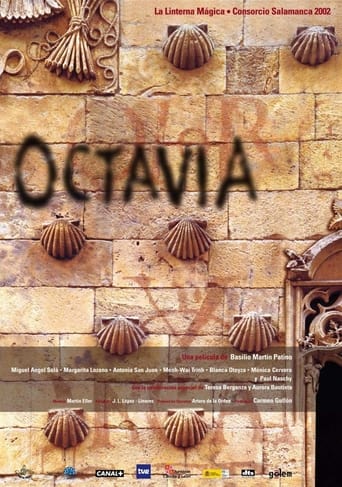
9.0Rodrigo returns to his childhood home of Salamanca after a four-decade absence and a career as a guerrilla in Latin America, a secret agent in the Eastern Bloc and an official for an international agency. While Rodrigo may have attempted to put his past life behind him, the memory of his now deceased mother and his old-world family returns to haunt him. In an old city dominated by the weight of tradition, Rodrigo discovers a daughter about whose existence he had never known, as well as a grand-daughter, the enigmatic and beautiful Octavia. A rebellious teenager, Octavia dismisses her grandfather's old politics, possessing her own sense of what freedom means. Patino's film is a poetic, assured contemplation on the pain of returning somewhere you never really left and the accompanying ironies of a man obsessed with history who cannot face his own.
Octavia
2002
9.0Rodrigo returns to his childhood home of Salamanca after a four-decade absence and a career as a guerrilla in Latin America, a secret agent in the Eastern Bloc and an official for an international agency. While Rodrigo may have attempted to put his past life behind him, the memory of his now deceased mother and his old-world family returns to haunt him. In an old city dominated by the weight of tradition, Rodrigo discovers a daughter about whose existence he had never known, as well as a grand-daughter, the enigmatic and beautiful Octavia. A rebellious teenager, Octavia dismisses her grandfather's old politics, possessing her own sense of what freedom means. Patino's film is a poetic, assured contemplation on the pain of returning somewhere you never really left and the accompanying ironies of a man obsessed with history who cannot face his own.
Octavia
2002
 6.8
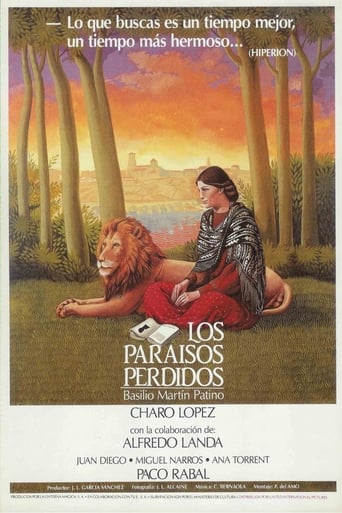
6.8This literary film is imbued with the disenchantment of Spanish exiles who left their homes to protest Franco's fascist regime and then returned after its demise to find that democracy had not instilled either ethics or deep motivation in government leaders. Director Basilio Martin Patino presents his story, and a large part of the film is based on his own life, through the experiences of an exiled heroine played by Charo Lopez. She has returned to Spain to look for meaning in her life, something that she never found living in Germany, not even after having a child. She is also in the process of translating the German lyric poet Friederich Holderlin (see the 1985 Halfte Des Lebens) into Spanish, focusing on his epic Hyperion. Excerpts from the translation are voiced over throughout the film. As she looks up old friends from many, many years ago, even those who have achieved worldly success are suffering from the same ennui that propelled her back home.
The Lost Paradise
1985
6.8This literary film is imbued with the disenchantment of Spanish exiles who left their homes to protest Franco's fascist regime and then returned after its demise to find that democracy had not instilled either ethics or deep motivation in government leaders. Director Basilio Martin Patino presents his story, and a large part of the film is based on his own life, through the experiences of an exiled heroine played by Charo Lopez. She has returned to Spain to look for meaning in her life, something that she never found living in Germany, not even after having a child. She is also in the process of translating the German lyric poet Friederich Holderlin (see the 1985 Halfte Des Lebens) into Spanish, focusing on his epic Hyperion. Excerpts from the translation are voiced over throughout the film. As she looks up old friends from many, many years ago, even those who have achieved worldly success are suffering from the same ennui that propelled her back home.
The Lost Paradise
1985
 NR
NRA travelogue through the diverse neighborhoods of Madrid, its picturesque streets and its history; and an approach, with a sense of humor, to the lighted signs and advertising slogans of the shops: an unusual portrait of the city and its people.
Paseo por los letreros de Madrid
1968
NRA travelogue through the diverse neighborhoods of Madrid, its picturesque streets and its history; and an approach, with a sense of humor, to the lighted signs and advertising slogans of the shops: an unusual portrait of the city and its people.
Paseo por los letreros de Madrid
1968
 9.0
9.0Images and verses to Christmas
Imágenes y versos a la Navidad
1962
9.0Images and verses to Christmas
Imágenes y versos a la Navidad
1962
 6.7
6.7María belongs to the upper bourgeoisie and has always had everything in life, even a brilliant, educated husband; in short, an intellectual to presume. Alejandro, on the other hand, has been going up day by day, he has grown up with his work, believing in himself -he is an economist- he has fought with all his strength to achieve a higher social level and he has succeeded. He is a professor in the University, executive of a great company, owner, in short, of a beautiful villa in the outskirts. But he is, nevertheless, in the critical age, in the age of taking stock of his past, of justifying himself. And the truth is that, despite his material triumph, he is not happy, there is no reason to be in his participation in society, he is not satisfied with anything. It is, in a word, a step away from his inner failure. In this situation he discovers, in turn, that María accuses him of having dedicated more time to succeed than to love her.
Love and Other Solitudes
1969
 5.0
5.0No synopsis available yet.
Inquisición y libertad
1982
 5.7
5.7The boredom of a young middle-class woman at home a Sunday afternoon. Not to be confused with Carlos Saura's short of the same name produced in 1957.
Tarde de domingo
1960
5.7The boredom of a young middle-class woman at home a Sunday afternoon. Not to be confused with Carlos Saura's short of the same name produced in 1957.
Tarde de domingo
1960
 7.0
7.0The film starts with the confluence of the 15M protesters in Puerta del Sol, follow the construction of the Camping Sol, a kind of parallel city assemblies, whose structure extends to neighborhoods and nearby cities and all over Spain. After what happened attest, without mediation or intention, the film lets the images speak and describe the end of the experience.
Libre te quiero
2012
7.0The film starts with the confluence of the 15M protesters in Puerta del Sol, follow the construction of the Camping Sol, a kind of parallel city assemblies, whose structure extends to neighborhoods and nearby cities and all over Spain. After what happened attest, without mediation or intention, the film lets the images speak and describe the end of the experience.
Libre te quiero
2012
7.0The film starts with the confluence of the 15M protesters in Puerta del Sol, follow the construction of the Camping Sol, a kind of parallel city assemblies, whose structure extends to neighborhoods and nearby cities and all over Spain. After what happened attest, without mediation or intention, the film lets the images speak and describe the end of the experience.
Libre te quiero
2012
No synopsis available yet.
Palimpsesto Salmantino
2007
No synopsis available yet.
Palimpsesto Salmantino
2007
 7.0
7.0No synopsis available yet.
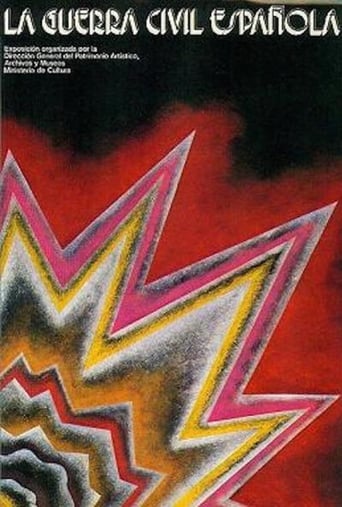
Retablo de la Guerra Civil Española
1980
7.0No synopsis available yet.
Retablo de la Guerra Civil Española
1980
A film directed by Basilio Martín Patino during his time at the EOC, focusing on the harsh life of a laborer living on the outskirts of Madrid. A day in the life of a laborer who lives in a slum, from the moment he leaves work until, at the end of the day, he arrives home in a shantytown where his family’s problems await him.
The rest
1958
 6.0
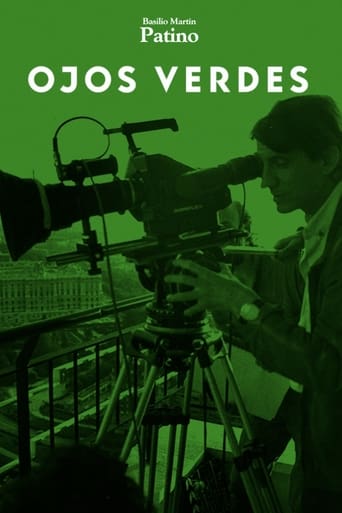
6.0The longing and critical review of the copla is lived through the history of the marqués de Almodóvar, a passionate ambassador who organized Franco's folkloric festivals; generous, womanizer, excessive, wasteful, himself the protagonist of his own copla. In love in his youth with a Concha Piquer chorus girl, he dedicated his life to collecting fetishes and memories of all the cante divas with which to organize a sentimental museum in his decaying castle, filling it with showcases where he could store his longings. When he died, destitute, in the pension of his last mistress, also a cupletist, she disputes her legacy with the housekeeper who took care of him and her picturesque collections all her life. family castle. A dear diplomatic friend recalls his fanciful existence emotionally. An aesthetic that is part of the feeling of the Andalusian people. And as a common thread "Ojos Verdes", the most beautiful song of songs of his rich songbook.
Ojos verdes
1997
6.0The longing and critical review of the copla is lived through the history of the marqués de Almodóvar, a passionate ambassador who organized Franco's folkloric festivals; generous, womanizer, excessive, wasteful, himself the protagonist of his own copla. In love in his youth with a Concha Piquer chorus girl, he dedicated his life to collecting fetishes and memories of all the cante divas with which to organize a sentimental museum in his decaying castle, filling it with showcases where he could store his longings. When he died, destitute, in the pension of his last mistress, also a cupletist, she disputes her legacy with the housekeeper who took care of him and her picturesque collections all her life. family castle. A dear diplomatic friend recalls his fanciful existence emotionally. An aesthetic that is part of the feeling of the Andalusian people. And as a common thread "Ojos Verdes", the most beautiful song of songs of his rich songbook.
Ojos verdes
1997
 NR
NRNo synopsis available yet.
Paraísos
1998
This short film "Torerillos 61" is one of the first works of the master Patino, which tries to portray the Spanish society of the time outside the state convention and dodging the hand of censorship. Social commitment is the brand director throughout his long career, starting with short films such as this one, made in the early sixties, in the wake of the statements in Talks Salamanca. The sadness off the characters portrayed is bleak, "Maletillas" (aspiring bullfighters) in search of luck to pull them out of poverty.
Torerillos, 61
1962
This short film "Torerillos 61" is one of the first works of the master Patino, which tries to portray the Spanish society of the time outside the state convention and dodging the hand of censorship. Social commitment is the brand director throughout his long career, starting with short films such as this one, made in the early sixties, in the wake of the statements in Talks Salamanca. The sadness off the characters portrayed is bleak, "Maletillas" (aspiring bullfighters) in search of luck to pull them out of poverty.
Torerillos, 61
1962
 NR
NRNo synopsis available yet.
Capea
2004
 NR
NRNo synopsis available yet.
El jardín de los poetas
1997
Documentary on the bull fights in Salamanca that commemorate the ending of the payment of tribute to the Duke of Alba in 1852.
El noveno
1960
 NR
NRNo synopsis available yet.
Desde lo más hondo II: El museo japonés
1998
 7.9
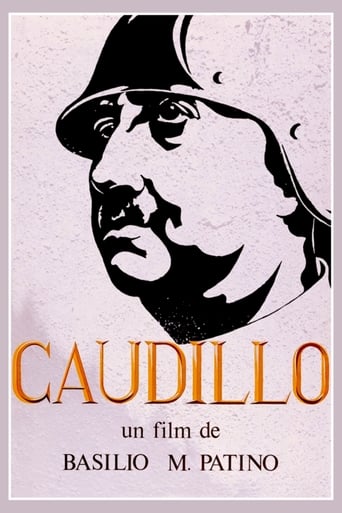
7.9Caudillo is a documentary film by Spanish film director Basilio Martín Patino. It follows the military and political career of Francisco Franco and the most important moments of the Spanish Civil War. It uses footage from both sides of the war, music from the period and voice-over testimonies of various people.
Caudillo
1977