
Directing
Kurt Kren
Born — Died
1929-09-20 — 1998-06-23
Place of birth
Wien, Austria
Known for
Directing
Credits
54 titles
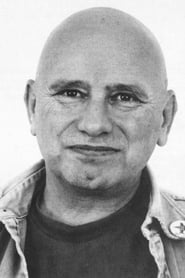
Kurt Kren was born in 1929 in Vienna, Austria from a Jewish father and a German mother. From 1939 till the end of World War II, Kren lived in Rotterdam, where he was sent to with one of the Children's Transports. In 1947 Kren returned to Vienna, and his father provided him a job at the National Bank. He began making films in 1957. 2/60 48 Köpfe Aus Dem Szondi -Test (1960) was his first serial film and 3/60 Bäume Im Herbst (1960) confirmed this structural orientation. He realized in the 1960s his most famous films with the Viennese actionists, where his skill of short film blossomed. In 1966, he took part in the « Destruction in Art Symposium » organized by Metzger in London. In 1968 he visi…
Known for
 NR
NRHome movies shot on Super 8mm by W+B Hein over 10 years.
Home Movies 1971-81
1985
 7.0
7.0Jonas Mekas assembles 160 portraits, appearances, and fleeting sketches of underground and independent filmmakers captured between 1955 and 1996. Fast-paced and archival in spirit, the film celebrates the avant-garde as its own “nation of cinema,” a vital community existing outside the dominance of commercial film.
Birth of a Nation
1997
 NR
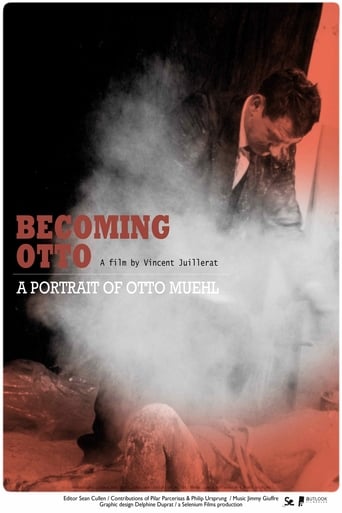
NRA portrait of the Austrian avant-garde artist Otto Mühl/Muehl (1925-2013), whose work combined sex, violence, gastronomy and bodily effluence with unbridled abandon.
Becoming Otto
2010
 4.4
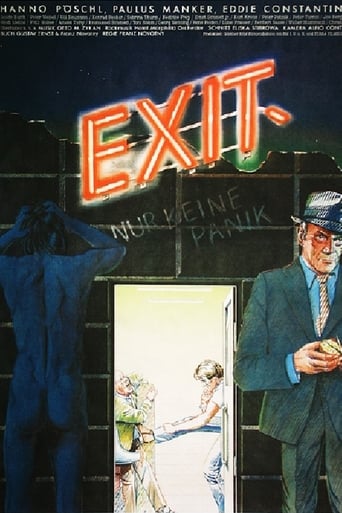
4.4A guy having sex with a woman on a rooftop – just to get her coffee-machine.
Exit... But No Panic
1980
 NR
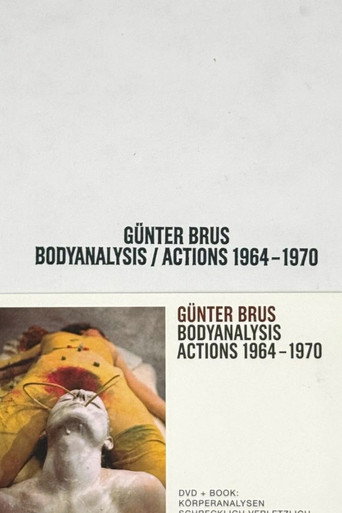
NRIntroduces the films ‚Körperanalysen’ (body analyses), an overview of Actionism movies from 1964-1970 (a. o. Kurt Kren, Otto Mühl, Ernst Schmid Jr.), compiled and presented in a documentary format by Peter Kasperak.
Bodyanalysis / Actions 1964–1970
2004
A kind of home movie made in Brus' apartment. Brus' Christmas wishes can be seen on a poster which he painted and which he holds for a short time in front of the camera.
10c/65: Brus Wishes You a Merry Christmas
1965
Film credits
1990s · 3 titles
7.0Jonas Mekas assembles 160 portraits, appearances, and fleeting sketches of underground and independent filmmakers captured between 1955 and 1996. Fast-paced and archival in spirit, the film celebrates the avant-garde as its own “nation of cinema,” a vital community existing outside the dominance of commercial film.
Birth of a Nation
1997
 NR
NROn the 28th of October 1884 Daniel Paul Schreber, candidate of the National Liberal Party in Chemnitz, suffered a heavy defeat at the elections of the German Reichstag. He was taken up in the mental clinic of the Leipzig University soon afterwards. To his rehabilition he wrote an extensive piece of work, "Denkwürdigkeiten eines Nervenkranken" (Memoirs of My Nervous Illness), which was published in 1903 and led to his temporary dismissal. Hereby Schreber became the most quoted psychiatric patient in scientific literature. The third part was realized by Peter Tscherkassy based on a concept by Ernst Schmidt Jr.
Memoirs of My Nervous Illness, Part 3
1993
 NR
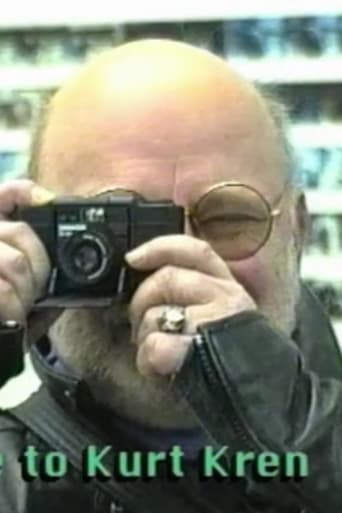
NRA homage to the Austrian experimental filmmaker Kurt Kren, his two films "1000 Years of Cinema" and "Snapspots" and his way of working; and that with a slight wink.
Homage to Kurt Kren
1997
1980s · 4 titles
NRHome movies shot on Super 8mm by W+B Hein over 10 years.
Home Movies 1971-81
1985
4.4A guy having sex with a woman on a rooftop – just to get her coffee-machine.
Exit... But No Panic
1980
 NR
NRDocumentary by Hans Scheugl on Kurt Kren.
No Danube - Kurt Kren and His Films
1988
A dada-ist mystery set in the Bay Area in the early 1980s, signposting long-gone, off-the-radar surrealist sites that used to be part of every-day life here! Industrial soundscape track drives the story, behind the de-volving quest of the two searchers.
Project Y
1983
1970s · 4 titles
 NR
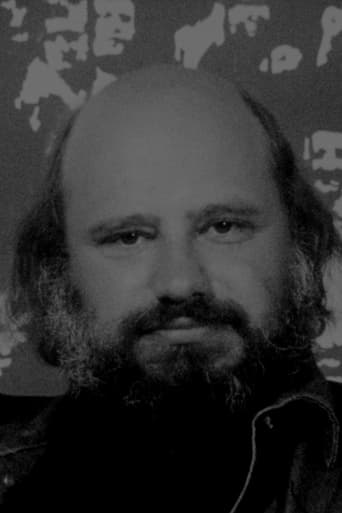
NRIn a TV film about the film Casablanca, Kren is meant to read aloud three letters that Groucho Marx wrote to Warner Bros., because they wanted to take legal action against him over A Night in Casablanca. The recorded material could not be used on television and was meant to be destroyed. Kren found it and showed it uncut with its repetitions.
29/73 Ready-Made
1973
 NR
NR"This film is an attempt in focusing. I visited Kurt Kren in Vienna. (Kurt Kren is considered to be the father of the European underground film.) Kurt Showed me lots of documents, papers and letters, all about the fights he had with many restaurant owners in Vienna. But the film I made is not about these fights; I tried to focus on the eye of the hurricane, the eye of Kurt Kren. Is this Kurt Kren or isn't it?" (HHK)
Portrait: Kurt Kren
1970
Hans-Peter Hochenrath and Birgit Hein made a documentary film about me for the Saarland Network and wanted me to make a self-portrait. Instead of pointing the camera lens away from myself, I pointed it toward myself. I rewound the film over and over again so that multiple exposures were produced, while I was repeatedly fading in and out.
36/78: Rischart
1978
 3.5
3.5The Austrian avant-gardist Otto Muehl may well be the most scandalous filmmaker to ever work in cinema, and Sodoma stands as his most famous work. This creation takes the experiments a bit further down the road.
Sodoma
1970
1960s · 2 titles
Behind the camera
NRIntroduces the films ‚Körperanalysen’ (body analyses), an overview of Actionism movies from 1964-1970 (a. o. Kurt Kren, Otto Mühl, Ernst Schmid Jr.), compiled and presented in a documentary format by Peter Kasperak.
Bodyanalysis / Actions 1964–1970
2004
A kind of home movie made in Brus' apartment. Brus' Christmas wishes can be seen on a poster which he painted and which he holds for a short time in front of the camera.
10c/65: Brus Wishes You a Merry Christmas
1965
A collection of shorts made between 1964 & 1970 by the extreme avant-garde performance art group The Vienna Actionists. Including short films Sodoma, Mama And Papa, Oh Sensibility Leda Und Der Schwann, O Tannenbaum, Stille Nacht, Cosinus Alpha, Scheiss-Kerl, Impudance In Grunwald, Psychotik-Party, and the infamous Otmer Bauer Presents
Vienna Actionists Vol 1 & 2
—
 4.5
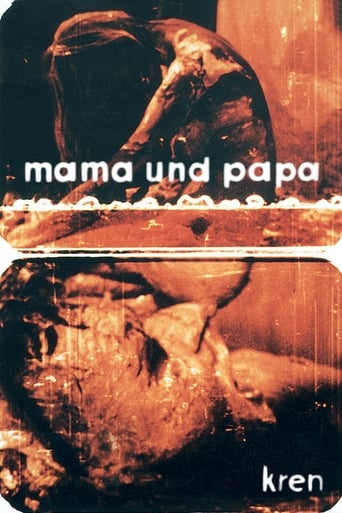
4.5In the first action he filmed, 6/64 Mama und Papa, Kren’s editing leads to many interlocking continuous shots; central takes recur like a leitmotif, circular motion and networking can be observed throughout the film. Kren painstakingly weaves the fury in front of his camera lens into dense geometrical figures. Shot/countershot sequences alternate, lumping back and forth between single (!) frames, they turn the Actionist turmoil into ornaments, rigid geometrical patterns, the equivalent in time to what Mondrian used to distill on canvas in space. (Peter Tscherkassky)
6/64: Mom and Dad (An Otto Mühl Happening)
1964
NRIn a TV film about the film Casablanca, Kren is meant to read aloud three letters that Groucho Marx wrote to Warner Bros., because they wanted to take legal action against him over A Night in Casablanca. The recorded material could not be used on television and was meant to be destroyed. Kren found it and showed it uncut with its repetitions.
29/73 Ready-Made
1973
 NR
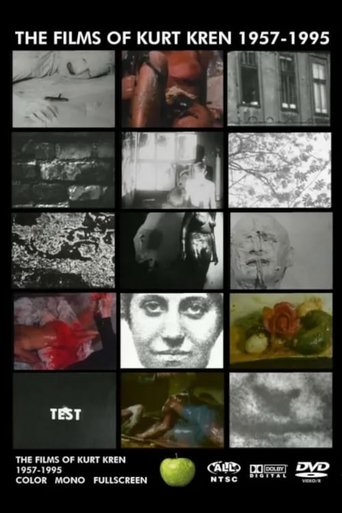
NRA collection of shorts by Kurt Kren. Some are based on performaces by Viennese Actionists such as Günter Brus and Otto Mühl.
The Films of Kurt Kren 1957-1995
2001
 NR
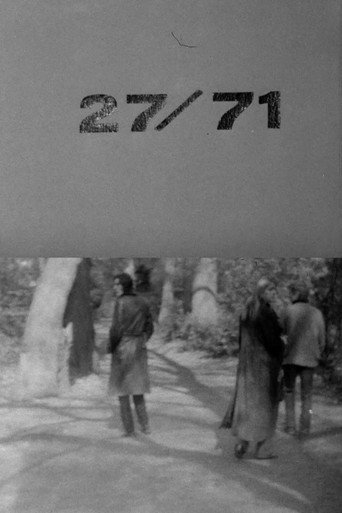
NRKren had composed a diary-like piece containing subtle irony with his 27/71 Auf der Pfaueninsel (On Peacock Isle). The lengthy titles which are one minute long, in which five people are ceremoniously introduced, are followed by only twenty seconds of pictures. These pictures, filmed by Kren have a wobbly quality to them, as the camera surreptitiously looks from far off at a group of people walking away. "Family movie" is the bracketed subtitle of this film.
27/71 On Peacock Isle
1971
 4.0
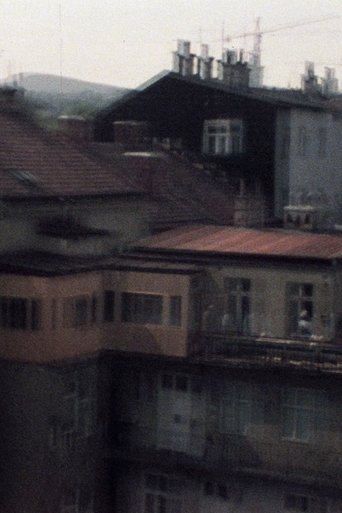
4.0Kurt Kren short
33/77 No Danube
1977
 10.0
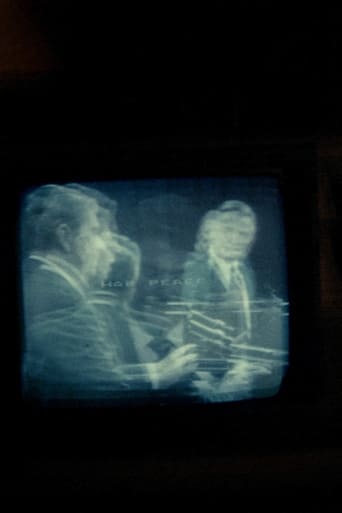
10.0Kurt Kren recorded the last television debate in the Reagan/Mondale election campaign. In the viewfinder, the television filled the entire picture, but the viewfinder did not match the lens entirely so that the television screen in the picture was very little. That was not the plan, but Kren decided to "adopt" the film in the end.
43/84: 1984
1984
 5.3
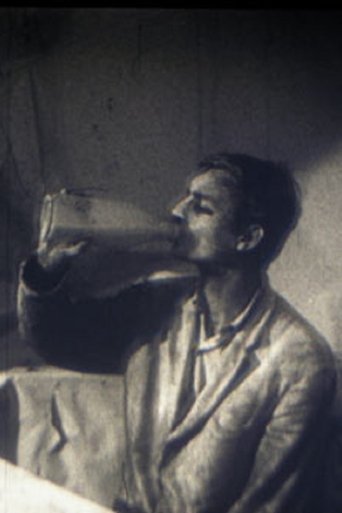
5.3"Action" by Günter Brus. At first Kren did not want to show the film, because the image is underexposed. A copy of the negative material turned out to be better than the original material and so Kren did show the film. The film's title relates to Brus' use of silver paper for his action.
10b/65: Silver – Action Brus
1965
This three-minute film was far more akin to the American-style "happening" in that the content was not particularly extreme. It was built up from items such as broken bicycle parts, a nude model, pieces of furniture, and these elements were then obscured or transformed by having a layer of paint thrown on them.
8/64: Ana - Action Brus
1964
 5.9
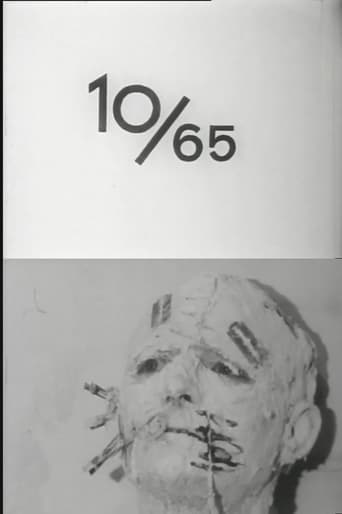
5.9Kren’s 10/65 Selfmutilation is developed from a Gunter Brus “action”. What the film emphasizes is the surrealistic drama of symbolic self-destruction that Kren drew out of Brus’ action, pacing out each gesture so that one gets a tense, iconoclastic revelation of a man covered in white plaster lying surrounded by razor blades and a range of instruments looking as if they have been taken from an operating theatre. The blades, scissors and scalpels are gradually inserted into him in a ritualistic self-operation. (Stephen Dwoskin)
10/65: Self-Mutilation
1965
 5.6
5.6Based on a Muehl Happening. The almost convulsive use of juxtaposition reappears here, but the captured gesture assumes a more erotic sensitivity, though the "action" itself was primarily a gradual destruction of the erotic.
7/64: Leda and the Swan
1964
A collage of many visuals. A man urinates; a man has a drink. A man defecates; someone eats a meal. 16/67 September 20: ‘The Eating Drinking Shitting Pissing Film'.
16/67: September 20th
1967
The film uses slides - photographic planes - which show different surfaces and finishes of a wall, which have been erroded by time. Kren stacks the positives and negatives of these pictures quickly one after the other, so that a moving relief-type structure develops through this combination of "two eyes." A mysterious ambiguous image manifests itself before us, surrounded by all kinds of possible mythological connotations. What is there to see?
4/61: Walls Pos.-Neg. and Way
1961
 9.3
9.3A report about an Underground Festival on tour through Germany and Switzerland.
23/69: Underground Explosion
1969
 6.3
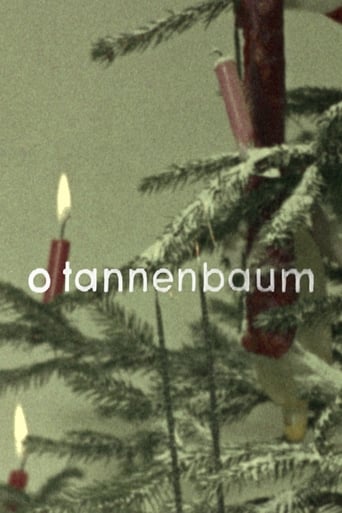
6.3In 9/64 O Christmas Tree Kren offers a more visually descriptive development of a Muehl "action". The images have been chosen to follow a more dramatic sequence, probably because the action itself contained a wide range of images and materials.
9/64: O Christmas Tree
1964
 2.0
2.011/65 Bild Helga Philipp is an optical abstraction of an optical abstraction: Kren has simply intercut filmed movements and sections from an Op painting by Helga Philipp - the result is motion opticals.
11/65: Helga Philipp Painting
1965
 8.5
8.5Kurt Kren records snapshots of visitors to Vienna who are photographed in front of the statue of Johann Strauss Jr.
50/96 Snapshots (For Bruce)
1996
Mostly dark, rejecting images which are repeated. A stone wall, the chamber of a revolver which is, at first not recognizable, a close-up of a cactus. The duration of the takes emphasises the photographic character of the pictures, simultaneously with a crackling, brutal sound. (Hans Scheugl)
1/57: Experiment with Synthetic Sound (Test)
1957
Sinus Beta is almost a sort of teaching film about bodily behavior in different situations. The film also produces, through the heterogenic photographic materiality of the primary elements, a cross-section of the methods, used in capturing the body in a still photograph. (Mubi)
13/67: Sinus Beta
1967
 7.5
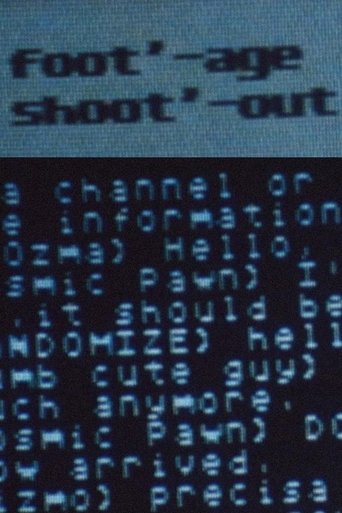
7.5"It became easier to understand Kren's method of approaching film when he illustrated his matter-of-factness with a story: he was asked to shoot and deliver a film, for a festival, given four day's notice, which he did ('foot'-age shoot'-out'). He normally takes a long time with a film; this one he terms a "rape." He removed his name and copy-right from the piece. "Probably my last film." I asked whether he'd ever seen a print. "Yes, it's great," he replied..." (April Rapier)
44/85: Foot'-age Shoot'-out
1985
 NR
NRA silent short film by Kurt Kren.
Piano Salon 1. Floor
1956
 9.0
9.0Kren in New Hampshire, New England. Together with friends he lived from the demolition of wooden houses and sale of the wood. Kren was the "nail puller". (Hans Scheugl)
40/81: Breakfast in Grey
1981
 8.5
8.5Kren on his way from Vermont to California. Kren says that his various cars are the thread which runs through the story. (Hans Scheugl)
39/81 Which Way to CA?
1981
 5.7
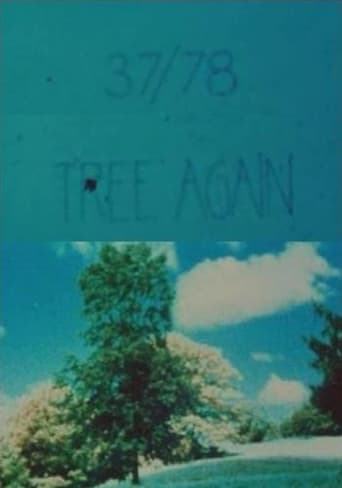
5.7At the center are takes which do not change - a tree in a field in Vermont, U.S.A. Since the film was shot over a period of fifty days, the single frame shots create a storm of pictures.
37/78: Tree Again
1978
 3.8
3.8'It was in San Francisco at a punk festival. I was already high and the air was so thick in the rooms that you could cut it with a knife. I had a photograph camera with me; I stood in a corner of the entrance hall and took 36 pictures on slide film. At home I put the slides into a slide projector. I took out the lens and filmed the slides by filming directly from the projector - using single frames according to a certain plan.'
38/79: Sentimental Punk
1979
 NR
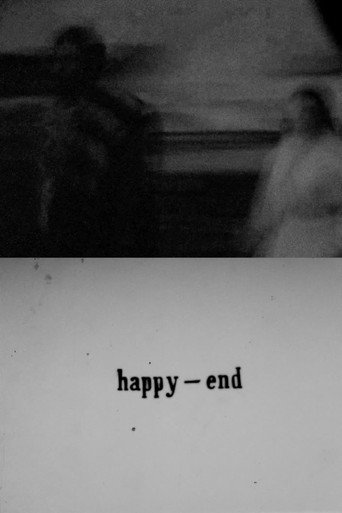
NRKurt Kren filmed pieces of feature films in the cinema without looking through the viewfinder. The missing sexual climax from the cinema was added by Kren in the form of insights and views from Otto Muehl's Libi Aktion.
22/69 Happy-End
1969
 4.7
4.7Kren’s last film to include any direct reference to Otto Muehl is 12/66: Cosinus Alpha, a 10-minute film that completes a cycle of elaborate sensual montages and materials.
12/66: Cosinus Alpha
1966
 NR
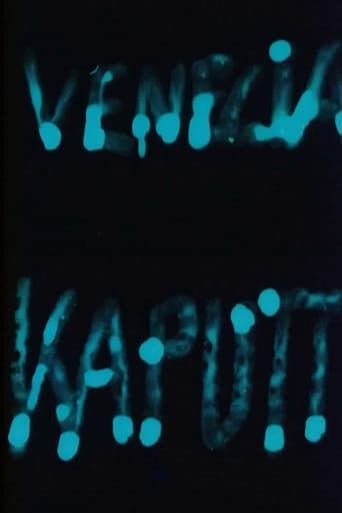
NRA short film by Kurt Kren.
18/68: Venecia kaputt
1968
 5.5
5.5Almost as if entering the picture frame by chance, mute characters lean out of Viennese apartment windows, simply to have a look.
5/62: People Looking out of the Window, Trash, etc.
1962
Kren filmed, in microscopic detail the reflection and refraction of the light in/on a glass bottle. However, the bottle itself (the whole body) is never seen. What is seen is much more the emanations of light from the glass and its clarity. (Michael Palm)
17/68: Green-red
1968
The first embodiment of (a) concept of structural activity in cinema comes in Kren's Bäume im Herbst, where the camera as a subjective observer is constrained within a systematic or structural procedure, incidentally the precursors of the most structuralist aspect of Michael Snow's later work. In this film, perception of material relationships in the world is seen to be no more than a product of the structural activity in the work. Art forms experience.
3/60: Trees in Autumn
1960
Kurt Kren short
46/90 Falter 2
1990
 5.7
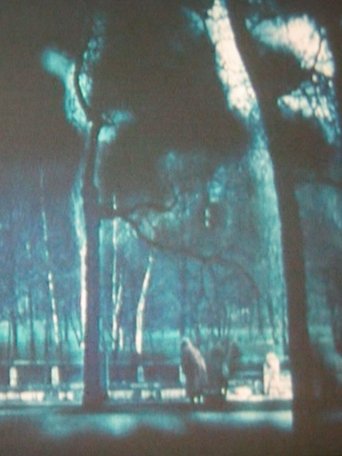
5.7I took a photograph of the view out of the window and had a very large negative made from it, which I fastened to the lens hood attacement in front of the camera. I tried to bring the negative into alignment with the real landscape which I could see through the camera. Then I filmed for months, changing the focus from near to far and then back again. (K.K.)
32/76: To W + B
1976
 NR
NRKren shows the cinema (mentioned in the title) during and after film presentations. He uses single-frame and time exposures 5 to 30 seconds long. Sometimes sunlight comes through the open door into the theater changing the colors in the film remarkably. Black spots appear when the lights inside the cinema are turned off. The film is uncut and was recorded with a shoulder tripod over a period of three weeks.
30/73 Coop Cinema Amsterdam
1973
 NR
NRA "stroll" at various locations: the St. Marx Cemetery, the Prater park, Carnuntum. We see people taking walks, construction workers, people flying model planes and other little observations. Kren also used a short segment of found footage in colour which shows a woman in a bikini.
Das Walk
1956
 5.5
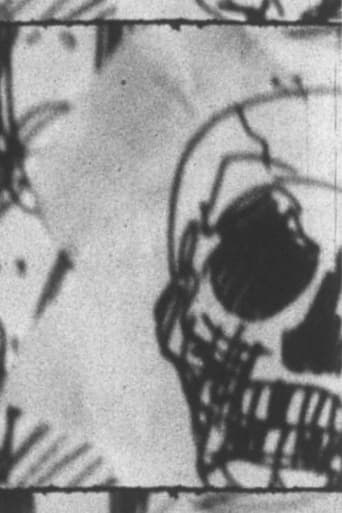
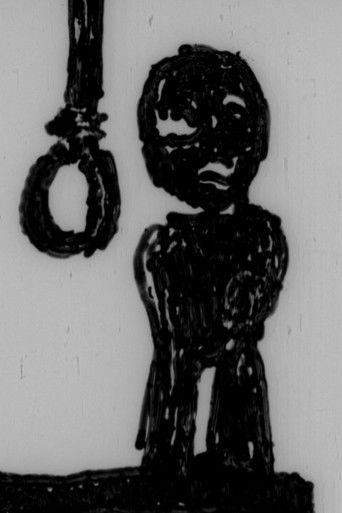
5.5Zeichenfilm - Balzac oder das Auge Gottes is a play on the idea of trick film. And trick film it is. The 30-second work is shown twice in case the viewer missed something the first time: in crude hand-drawn animation Zeichenfilm ... evokes the scatological sado-masochistic actions and performances of Otto Muehl and Günter Brus which Kren filmed during his second period. In Zeichenfilm Balzac a male figure hangs himself, achieves a monstrous erection and ejaculates into a woman's mouth. She in turn hangs herself; he enters her vaginally then anally. Finally, she defecates on the left side of the frame wherein appears an eye of God while on the right in a cartoon box the words "Aber Otto" ("But Otto") materialize, a comic reference to Otto Muehl.
26/71: Cartoon - Balzac and the Eye of God
1971
Kren's second film and the first he cut according to a strictly serial, sequence technique: in various frame sizes, the 48 portraits from the Szondi Test for "experimental diagnosis of human impulses" are shown in pre-specified lengths (between one and eight frames).
2/60: 48 Heads from the Szondi-Test
1960
This film shows, with the use of single-frames, Kren's diary-like notes from 1968 to 1976, especially his entries about the work on the three previous films. At the very end a fragment of a failed first attempt of Keine Donau (No Danube) is shown. The coffee company can also be seen, which has given the film its name.
34/76: Tschibo
1976