
Acting
Eldridge Cleaver
Born — Died
1935-08-31 — 1998-05-01
Place of birth
Wabbaseka, Arkansas, USA
Known for
Acting
Credits
17 titles
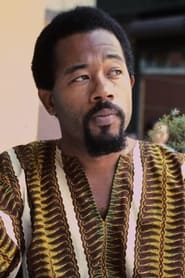
Leroy Eldridge Cleaver was an American writer and political activist who became an early leader of the Black Panther Party. In 1968, Cleaver wrote Soul on Ice, a collection of essays that, at the time of its publication, was praised by The New York Times Book Review as "brilliant and revealing".
Known for
 NR
NRMoonshadows (Contras), Master Backup How right wing Central American immigrants in the Bay Area have formed a coalition with Eldridge Cleaver, the Moonies, and the CIA backed Contras and are affecting the wars in El Salvador, Guatemala, and Nicaragua.
Moon Shadows
1984
 10.0
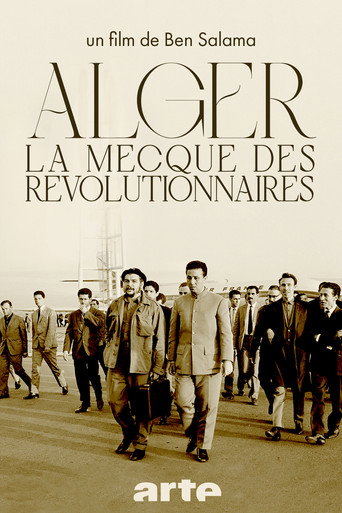
10.0From the early 1960s to the mid-1970s, independent Algeria provided significant support to anti-colonial movements and revolutionaries worldwide. Successive presidents, Ahmed Ben Bella and then Houari Boumédiène, made Algiers a haven for activists fighting against colonial and racial oppression. Algiers the White became Algiers the Red. The internationalist Che Guevara established his base of operations there for his guerrilla activities in Africa. The African-American leader Eldridge Cleaver made it the international headquarters of the Black Panther Party. During this period, Algiers was known as "The Mecca of Revolutionaries."
Algiers, the Mecca of Revolutionaries (1962-1974)
2016
 7.1
7.1A film shot during the summer of 1968 in Oakland, California around the meetings organised by the Black Panthers Party to free Huey Newton, one of their leaders, and to turn his trial into a political debate. They tried and succeeded in catching America’s attention.
Black Panthers
1968
 7.0
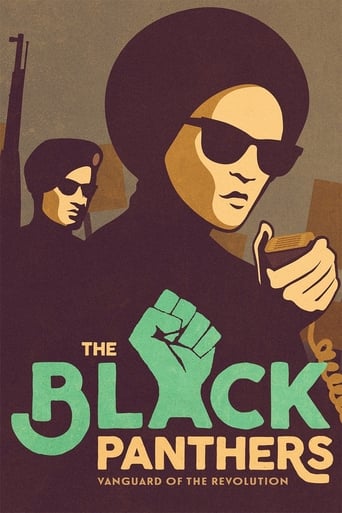
7.0The story of the Black Panthers is often told in a scatter of repackaged parts, often depicting tragic, mythic accounts of violence and criminal activity; but this is an essential story, vibrant, human; a living and breathing chronicle of a pivotal movement that birthed a new revolutionary culture in America.
The Black Panthers: Vanguard of the Revolution
2015
 NR
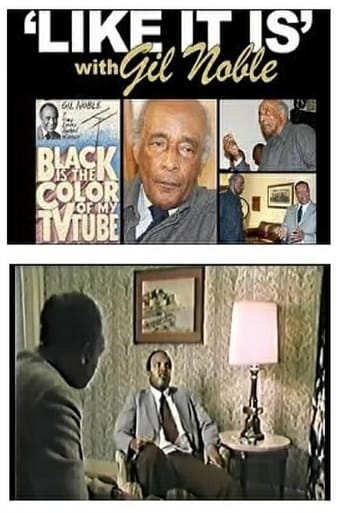
NRThis special three-part presentation of "Like It Is" examines the history of the black civil rights movement in the United States, emphasizing the role of black leaders and activists. Including the defected FBi-agent "Othello" Darthard Perry tells it all.
A Decade of Struggle
1980
 5.4
5.4The story of how the radical Huey P. Newton developed the Black Panther Party based on his 10-point program for social reform.
A Huey P. Newton Story
2001
Film credits
2010s · 2 titles
10.0From the early 1960s to the mid-1970s, independent Algeria provided significant support to anti-colonial movements and revolutionaries worldwide. Successive presidents, Ahmed Ben Bella and then Houari Boumédiène, made Algiers a haven for activists fighting against colonial and racial oppression. Algiers the White became Algiers the Red. The internationalist Che Guevara established his base of operations there for his guerrilla activities in Africa. The African-American leader Eldridge Cleaver made it the international headquarters of the Black Panther Party. During this period, Algiers was known as "The Mecca of Revolutionaries."
Algiers, the Mecca of Revolutionaries (1962-1974)
2016
7.0The story of the Black Panthers is often told in a scatter of repackaged parts, often depicting tragic, mythic accounts of violence and criminal activity; but this is an essential story, vibrant, human; a living and breathing chronicle of a pivotal movement that birthed a new revolutionary culture in America.
The Black Panthers: Vanguard of the Revolution
2015
1990s · 3 titles
 6.3
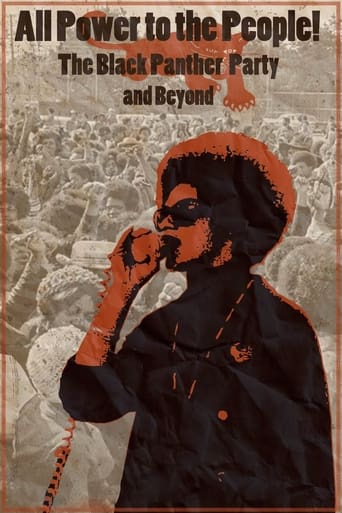
6.3Using government documents, archive footage and direct interviews with activists and former FBI/CIA officers, All Power to the People documents the history of race relations and the Civil Rights Movement in the United States during the 1960s and 70s. Covering the history of slavery, civil-rights activists, political assassinations and exploring the methods used to divide and destroy key figures of movements by government forces, the film then contrasts into Reagan-Era events, privacy threats from new technologies and the failure of the “War on Drugs”, forming a comprehensive view of the goals, aspirations and ultimate demise of the Civil Rights Movement…
All Power to the People!
1996
 8.0
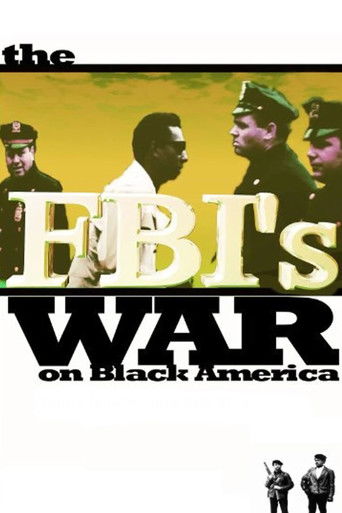
8.0Through a secret program called the Counter Intelligence Program (COINTELPRO), there was a concerted effort to subvert the will of the people to avoid the rise "of a Black Messiah" that would mobilize the African-American community into a meaningful political force. This documentary establishes historical perspective on the measures initiated by J. Edgar Hoover and the FBI which aimed to discredit black political figures and forces of the late 1960's and early 1970's. Combining declassified documents, interviews, rare footage and exhaustive research, it investigates the government's role in the assassinations of Malcolm X, Fred Hampton, and Martin Luther King Jr. Were the murders the result of this concerted effort to avoid "a Black Messiah"?
The FBI's War on Black America
1990
 NR
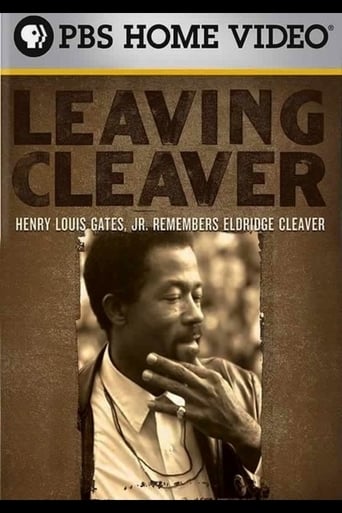
NRIn March 1997, social activist, former Black Panther, and author, Eldridge Cleaver sat down with Henry Louis Gates Jr. for a discussion of his life as a civil rights activist. It would be the last major interview Cleaver gave before his death in May 1998. This film draws on the 1997 interview, archival footage, and commentary from Cleaver's former wife Kathleen, as well as audio tapes of a 1975 interview that Gates did with Cleaver in Paris.
Leaving Cleaver
1999
1980s · 2 titles
NRMoonshadows (Contras), Master Backup How right wing Central American immigrants in the Bay Area have formed a coalition with Eldridge Cleaver, the Moonies, and the CIA backed Contras and are affecting the wars in El Salvador, Guatemala, and Nicaragua.
Moon Shadows
1984
NRThis special three-part presentation of "Like It Is" examines the history of the black civil rights movement in the United States, emphasizing the role of black leaders and activists. Including the defected FBi-agent "Othello" Darthard Perry tells it all.
A Decade of Struggle
1980
1970s · 6 titles
 6.7
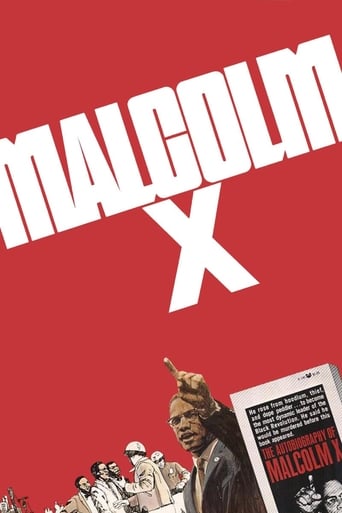
6.7James Earl Jones narrates this fascinating and moving documentary about the life of the assassinated black leader through various sources.
Malcolm X
1972
 6.2
6.2Lighter and livelier than the films Jean-Luc Godard had made in France, his U.S. collaboration with Direct Cinema documentarian D. A. Pennebaker was meant to be One A.M., as in “one American movie”; but Godard quit the project and the U.S., where to his dismay he discovered that revolution wasn’t imminent, and Pennebaker edited Godard’s material, to which he and Richard Leacock even added a bit more, releasing the result as One P.M., as in “one parallel movie.” It’s a stunning mixture of cinéma-vérité, political theater, and interviews of key sixties figures.
1 P.M.
1971
 8.3
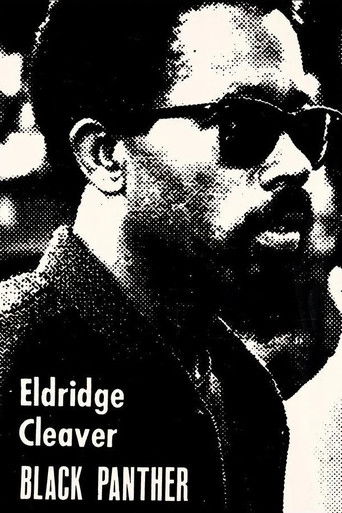
8.3The portrait of Eldridge Cleaver, the "Minister of Information" for the Black Panthers movement, in exile in Algiers.
Eldridge Cleaver, Black Panther
1970
 NR
NRAn absolute unknown work among Marker’s collaborations, made by filmmakers Bill Stephens, Paul and Carole Roussopoulas with Eldridge and Kathleen Cleaver, Congo Oyé was never completed and long-believed lost by all involved.
Congo Oyé (We Have Come Back)
1971
 NR
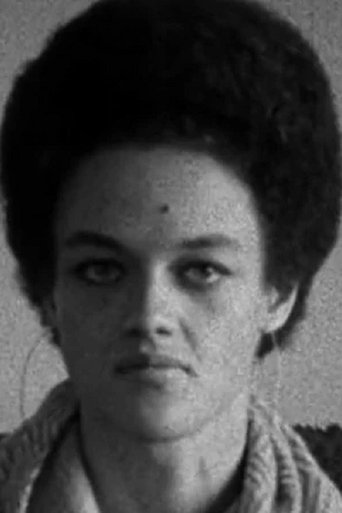
NRClaudia von Alemann filmed the co-founders of the Black Panther Party, Kathleen and Eldridge Cleaver, in exile in Algiers, on her own. Their filmed statements were intended for a solidarity campaign in West Germany for the release of Ericka Huggins and Bobby Seale, their Black Panther friends.
Kathleen und Eldridge Cleaver in Algier
1970
Documentary about the West Coast Black Panthers, the deadly crackdown by the FBI and police forces.
Around South Central
1970
1960s · 3 titles
7.1A film shot during the summer of 1968 in Oakland, California around the meetings organised by the Black Panthers Party to free Huey Newton, one of their leaders, and to turn his trial into a political debate. They tried and succeeded in catching America’s attention.
Black Panthers
1968
 NR
NRThe important L.A. Newsreel film about the Black Panthers that was rediscovered and written about by USC professor David James. Featured in the film is rare footage of many of the important West Coast Panthers such as Masai Hewitt, David Hilliard, Alprentice “Bunchy” Carter, Eldridge Cleaver, John Huggins, and as well as footage of the aftermath of the LAPD raid on the Los Angeles Panther Headquarters. Musically the film begins with the opening jazz music by Ornette Coleman and later features the call to arms anthem, “The End of Silence” written and sung by Panther Elaine Brown.
Repression
1969
 7.0
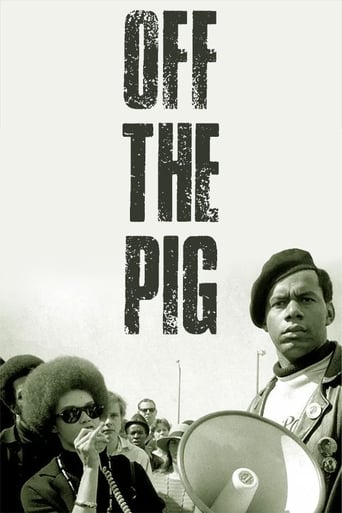
7.0A compelling document of the Black Panther Party leadership in 1967. This film contains a prison interview with Minister of Defense Huey P. Newton as well as an interview with Minister of Information Eldridge Cleaver, footage of the aftermath of the police assault against the Los Angeles Chapter headquarters, demonstrations to free Huey at Hutton Memorial Park and the Alameda County Court House and a recitation of the party's Ten-Point Platform by co-founder Bobby Seale. Newsreel's 19th, and one of their most widely distributed films, it was originally released as "Off the Pig," but has since seen release under the name Black Panther. This short film features drawings from activist artist Emory Douglas.
Off the Pig (Newsreel #19)
1968