
Acting
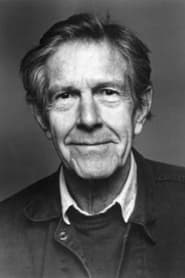
John Cage
Born — Died
1912-09-05 — 1992-08-12
Place of birth
Los Angeles, California, USA
Known for
Acting
Credits
42 titles
John Milton Cage Jr. was an American composer, music theorist, artist, and philosopher. A pioneer of indeterminacy in music, electroacoustic music, and non-standard use of musical instruments, Cage was one of the leading figures of the post-war avant-garde.
Known for
 6.9
6.9The history of cinematic sound, told by legendary sound designers and visionary filmmakers.
Making Waves: The Art of Cinematic Sound
2019
 NR
NREast Village, New York, 1978. William Burroughs, Patti Smith, Frank Zappa, Allen Ginsberg, and other brilliant minds come together in an explosion of ideas, art, and rebellion.
Nova '78
2026
 6.8
6.8The quixotic journey of Nam June Paik, one of the most famous Asian artists of the 20th century, who revolutionized the use of technology as an artistic canvas and prophesied both the fascist tendencies and intercultural understanding that would arise from the interconnected metaverse of today's world.
Nam June Paik: Moon Is the Oldest TV
2023
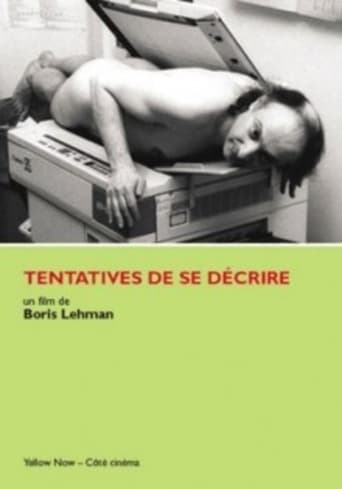 7.4
7.4Trying to describe oneself is a movie about representation. How it is possible, through film, to describe oneself and describe others. With the camera as mirror and third eye. At first, a collage-like combination of letter-writing, investigation and journey, something between documentary and feature film. Finally, a portrait of Boris Lehman from 1989 to 1995, part II of BABEL.
Trying to Describe Oneself
2005
 NR
NRNo synopsis available yet.
Take the Cage Train – Boletus Edulis
2023
 5.8
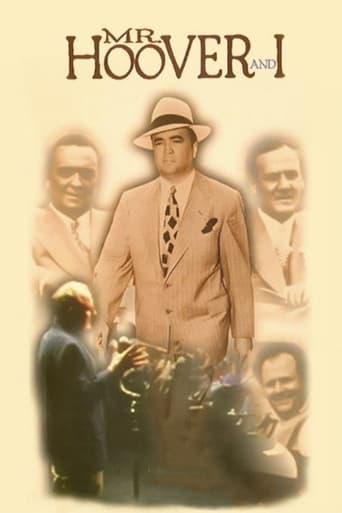
5.8Celebrated documentary filmmaker Emile DeAntonio discusses his comtempt for J Edgar Hoover, the Federal Bureau of Investigation (FBI), and American political intolerance in general.
Mr. Hoover and I
1989
Film credits
2020s · 5 titles
NREast Village, New York, 1978. William Burroughs, Patti Smith, Frank Zappa, Allen Ginsberg, and other brilliant minds come together in an explosion of ideas, art, and rebellion.
Nova '78
2026
6.8The quixotic journey of Nam June Paik, one of the most famous Asian artists of the 20th century, who revolutionized the use of technology as an artistic canvas and prophesied both the fascist tendencies and intercultural understanding that would arise from the interconnected metaverse of today's world.
Nam June Paik: Moon Is the Oldest TV
2023
NRNo synopsis available yet.
Take the Cage Train – Boletus Edulis
2023
 NR
NR"Symphony of the Invisible" is a reflection on creation and how through art, poetry and images you can break the limits that have been imposed on language and life itself.
Symphony Of The Invisible
2020
 NR
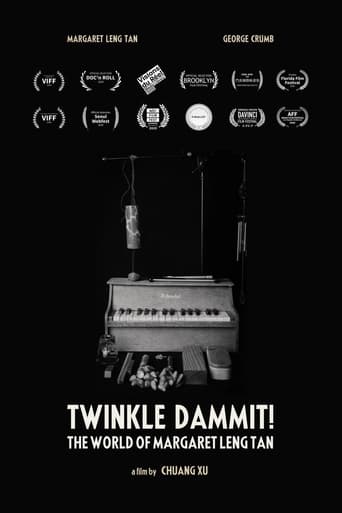
NRIn 1971, Margaret Leng Tan was the first woman to earn a Doctorate degree from the Juilliard School. Since then, her five-decade career has made the musician a figurehead of avant-garde music, owing predominantly to her incorporation of the toy piano in her performances. We meet Leng Tan at the age of 71 as she embarks on an iconic collaboration with George Crumb, one of the last remaining avant-garde composers of his era. "Twinkle Dammit!" gives access to the rarely-seen creative process between two musical geniuses, peeling back the public-facing surface of the world's greatest toy-piano-virtuoso to explore the private obsessions that have lead to a life committed to the avant-garde.
Twinkle Dammit!
2020
2010s · 4 titles
6.9The history of cinematic sound, told by legendary sound designers and visionary filmmakers.
Making Waves: The Art of Cinematic Sound
2019
 6.5
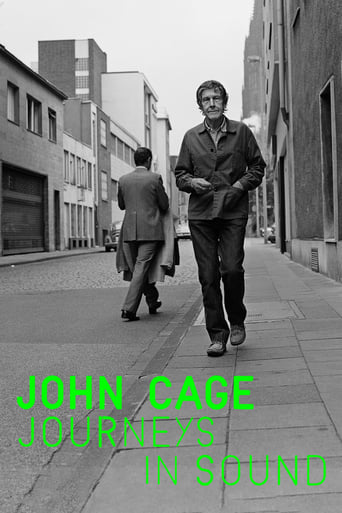
6.5A sonic innovator or an expert on chance? This documentary by Oscar-winning director Allan Miller and Emmy-winner Paul Smaczny pays tribute to the most fascinating American avant-garde composer. Shot in America, Germany and Japan, 'Journeys in Sound' premieres rare archival footage and features associates of John Cage and contemporary artists.
John Cage: Journeys in Sound
2012
 NR
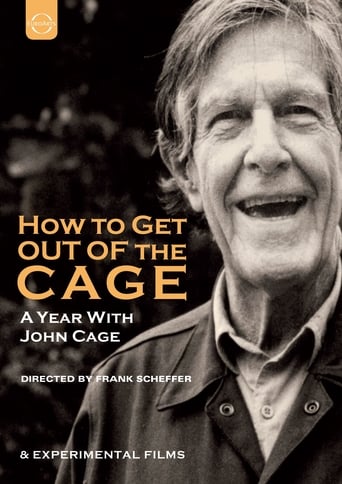
NR2012 documentary on John Cage celebrating his 100th birthday in the form of a re-edit of partially unused film material shot for the film 'Time is Music’ in 1987. Includes interviews and recordings of performances with the influential zen composer.
How to Get Out of the Cage (A year with John Cage)
2012
 NR
NRIn “Everybody’s Cage”, German film artist Sandra Trostel turns John Cage and his approach to art into a tangible fascination, without giving in to explain just a single bit of it.
Everybody's Cage
2015
2000s · 3 titles
7.4Trying to describe oneself is a movie about representation. How it is possible, through film, to describe oneself and describe others. With the camera as mirror and third eye. At first, a collage-like combination of letter-writing, investigation and journey, something between documentary and feature film. Finally, a portrait of Boris Lehman from 1989 to 1995, part II of BABEL.
Trying to Describe Oneself
2005
 NR
NRA brief overview and focus on composers Philip Glass, Julia Wolfe, John Cage, Steve Reich, Elliott Carter and their contemporaries.
In the Ocean
2001
 NR
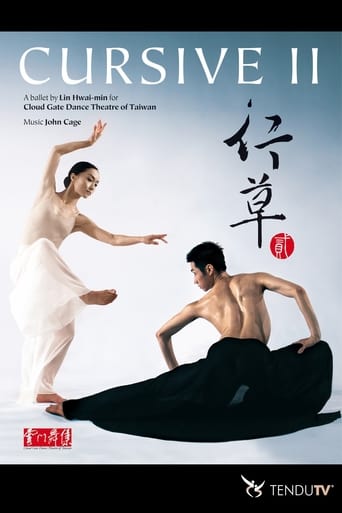
NRLin Hwai-min's Cursive II is inspired by the aesthetics of calligraphy. Set to music by John Cage, it is an exquisite meditation on the balancing of opposites presented in delicate simplicity, allowing no distraction from the details of the dance.
Cursive II
2006
1990s · 6 titles
 9.0
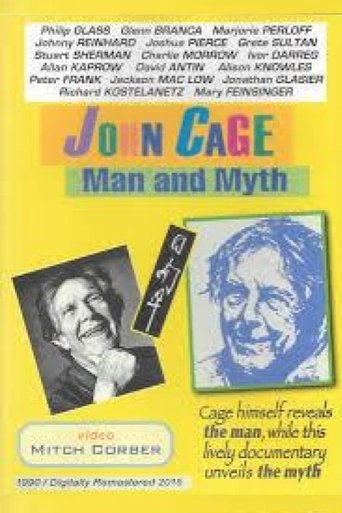
9.0An experimental documentary that looks at its subject John Cage through the eyes of contemporary Avante-Garde artists as well as those who play his music.
John Cage: Man and Myth
1990
 10.0
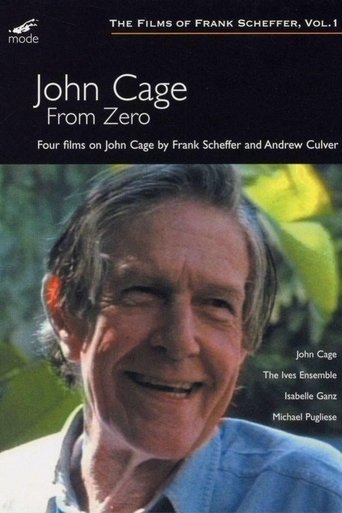
10.0A fascinating study of merging form with content, broken into four shorts, each complete with opening title and closing credits: "19 Questions," "Fourteen," "Paying Attention," and "Overpopulation and Art."
John Cage: From Zero
1995
 NR
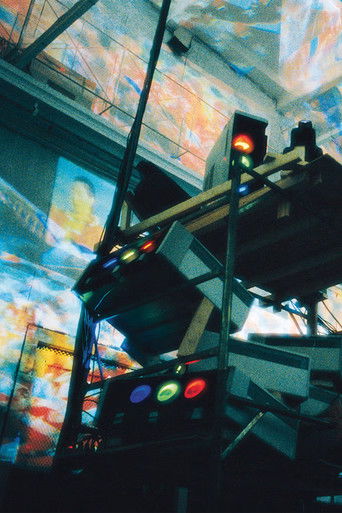
NRSistine Chapel is an audio-visual collage of new footage and samples from Paik’s past videos, which featured many of his friends, collaborators, and public figures. It was Paik’s own way of summarizing his artistic career with video. The film installation consists of fast-paced and overlapping images that completely cover the gallery walls and ceiling—one of the most under-appreciated parts of architecture, according to Paik. With its electronic visuals and booming audio, interspersed with periods of silence, the immersive installation stands in stark contrast to the experience of its namesake.
Sistine Chapel
1993
 NR
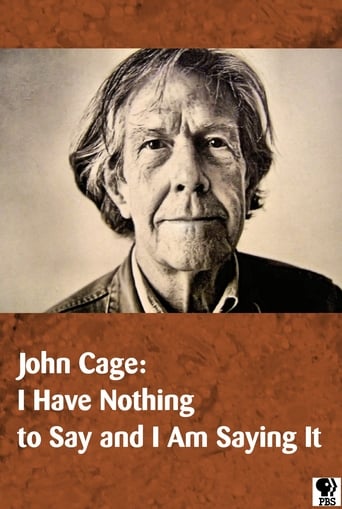
NRThis 56-minute documentary on America's most controversial and unique composer manages to cover a great many aspects of Cage's work and thought. His love for mushrooms, his Zen beliefs and use of the I Ching, and basic bio details are all explained intelligently and dynamically. Black Mountain, Buckminster Fuller, Rauschenberg, Duchamp are mentioned. Yoko Ono, John Rockwell, Laurie Anderson, Richard Kostelanetz make appearances. Fascinating performance sequences include Margaret Leng-Tan performing on prepared piano, Merce Cunningham and company, and performances of Credo In Us, Water Music, and Third Construction. Demystifies the man who made music from silence, from all sounds, from life.
John Cage: I Have Nothing to Say and I Am Saying It
1990
 10.0
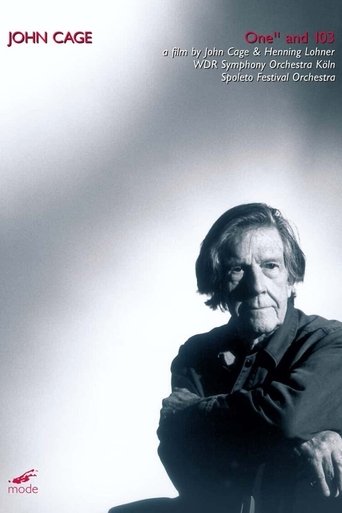
10.0Avant-garde composer John Cage is famous for his experimental pieces and "chance music" but temporarily branched into video in 1992 with this art film about meaningless activity. The work is composed of two segments that are supposed to be played simultaneously: "One 11" contains the artistic statement, and "103" is a 17-part orchestral piece. Also included is a revealing documentary about Cage and director Henning Lohner.
One 11 and 103
1992
 NR
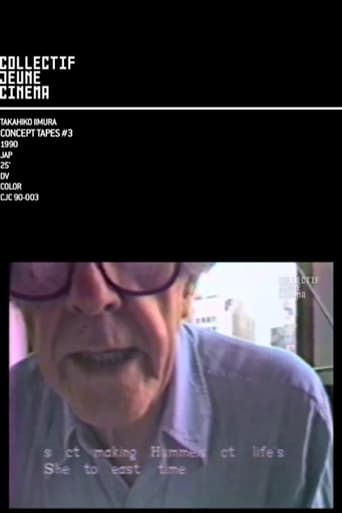
NRA compilation tape of performances including John Cage Performs James Joyce, Arakawa, and Iimura's first AIUEONN and As I See You You See Me shot mostly 1980s. All deals with the relationships of words and performance in image-making.
Concept tape 3 (Performance)
1991
1980s · 6 titles
5.8Celebrated documentary filmmaker Emile DeAntonio discusses his comtempt for J Edgar Hoover, the Federal Bureau of Investigation (FBI), and American political intolerance in general.
Mr. Hoover and I
1989
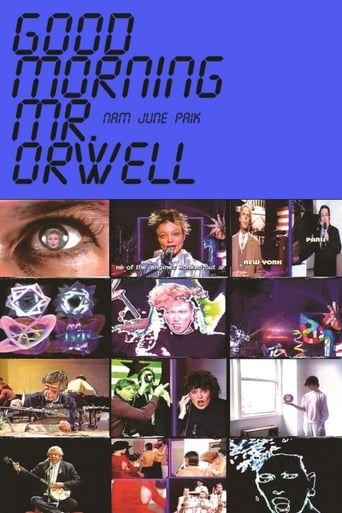 8.1
8.1In his book "1984", George Orwell saw the television of the future as a control instrument in the hands of Big Brother. Right at the start of the much-anticipated Orwellian year, Paik and Co. were keen to demonstrate satellite TV's ability to serve positive ends-- Namely, the intercontinental exchange of culture, combining both highbrow and entertainment elements. A live broadcast shared between WNET TV in New York and the Centre Pompidou in Paris, linked up with broadcasters in Germany and South Korea, reached a worldwide audience of over 10 or even 25 million (including the later repeat transmissions).
Good Morning, Mr. Orwell
1984
 NR
NRA television documentary about John Cage and his music.
Four American Composers: John Cage
1983
 6.5
6.5A compilation of avant-garde artwork and talent of the mid to late 20th century hosted by Ryuichi Sakamoto.
All Star Video
1985
 8.0
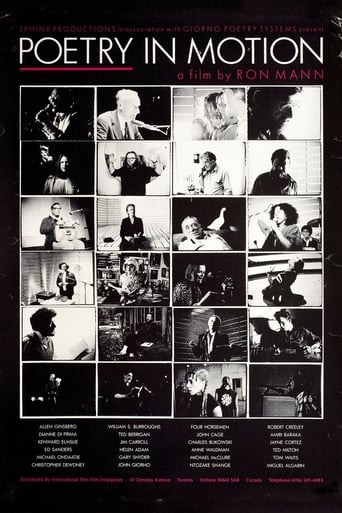
8.0More than 20 contemporary North American poets recite, sing, and perform their work. Early in the film, Charles Bukowski talks about the energy of poets and of a poem. These poets are the children of Walt Whitman and of Charles Olson, incantatory and oratorical, radical, sometimes incorporating contemporary political imagery. Black Mountain poets, the Beats, minimalists like John Cage, the wordless Four Horsemen, Tom Waits, and others capture aspects of poets as troubadours.
Poetry in Motion
1982
 NR
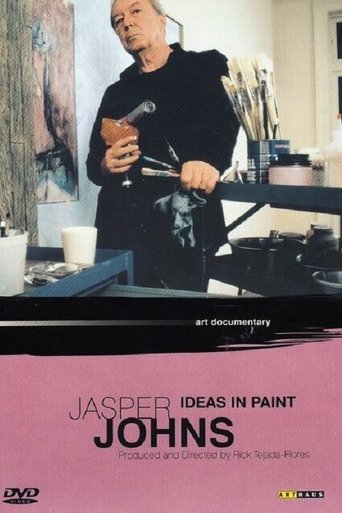
NRIn the late 1950's, Jasper Johns emerged as force in the American art scene. His richly worked paintings of maps, flags, and targets led the artistic community away from Abstract Expressionism toward a new emphasis on the concrete
Jasper Johns: Ideas in Paint
1989
1970s · 6 titles
 NR
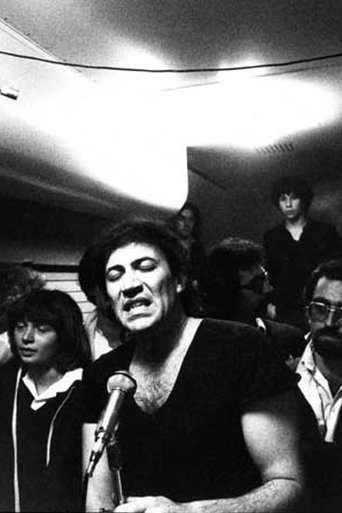
NRThe happening Alla ricerca del silenzio perduto - Cage's Train has lingered in the memory of all the people who took part in it, and the echoes left behind by the American composer's “prepared train” have spread through time. This rare document, edited by Oderso Rubini and Massimo Simonini.
Alla Ricerca Del Silenzio Perduto
1979
 6.0
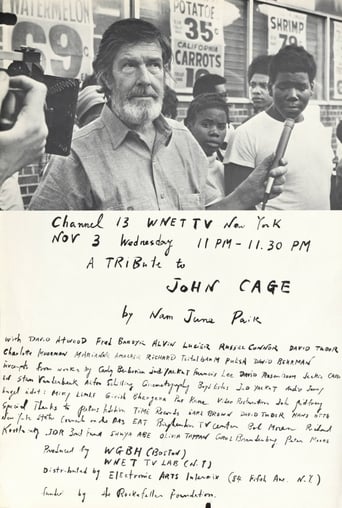
6.0A Tribute to John Cage is Paik's homage to avant-garde composer John Cage. A major figure in contemporary art and music, Cage was one of the primary influences on Paik's work, as well as his friend and frequent collaborator. In this multifaceted portrait, Paik creates a pastiche of Cage's performances and anecdotes, interviews with friends and colleagues, and examples of Paik's participatory music and television works that parallel Cage's strategies and concerns. The methodology and philosophies that inform Cage's radical musical aesthetic — chance, randomness, the democratization of sounds — are evident as he performs such seminal pieces as 4'33" (of complete silence) in Harvard Square, or throws the I Ching to determine performance sites. Among the collage of elements included in this work are segments from Paik's Zen for TV; Paik and Charlotte Moorman in early performances, including the TV Bra; and anecdotes from composer Alvin Lucier.
A Tribute to John Cage
1976
 NR
NRDuring this critical decade in American life, artists built on the styles of the 1950s. An explosion of artistic energy produced Pop Art, Minimalism, color-field painting, and hard-edged abstraction. Sculptors and painters on both coasts explored new methods and new subject matter. American Art in the Sixties examines the key figures of that decade including Rauschenberg and Johns, two crucial transitional figures between Abstract Expressionism and the sensibilities of the new decade. The art of that time mirrors the optimism and the affluence, and the technology and the vulgarity of those boom years.
American Art in the 1960s
1972
"Filmic impressions of composer John Cage, mushroom hunting on his home ground of Stony Point, New York; visiting his home for the last time; radiating love towards his friends; and buying fruits and vegetables at the farm market before returning to New York City." —Jud Yalkut
John Cage Mushroom Hunting in Stony Point
1973
 7.7
7.7Global Groove was a collaborative piece by Nam June Paik and John Godfrey. Paik, amongst other artists who shared the same vision in the 1960s, saw the potential in the television beyond it being a one-sided medium to present programs and commercials. Instead, he saw it more as a place to facilitate a free flow of information exchange. He wanted to strip away the limitations from copyright system and network restrictions and bring in a new TV culture where information could be accessed inexpensively and conveniently. The full length of the piece ran 28 minutes and was first broadcasted in January 30, 1974 on WNET.
Global Groove
1973
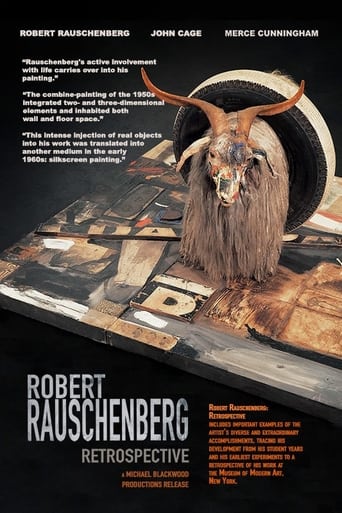 NR
NRThis film includes important examples of the Robert Rauschenberg's diverse and extraordinary accomplishments, tracing his development from his student years and his earliest experiments to a retrospective of his work at the Museum of Modern Art in New York. It features Rauschenberg, John Cage and Merce Cunningham, and was released in 1979.
Robert Rauschenberg: Retrospective
1979
1960s · 5 titles
 NR
NRThe choreographer Merce Cunningham working with the musician John Cage and the painter Robert Rauschenberg.
Merce Cunningham
1962
 8.0
8.0Observational documentary about the Merce Cunningham Dance Company rehearsing throughout the summer of 1967 in New York.
498 Third Avenue
1968
 7.0
7.0Experimental composer John Cage tours Europe with The Merce Cunningham Dance Company in 1966.
John Cage
1966
Although Rahsaan Roland Kirk and John Cage never actually meet in this film (Cage's enigmatic questions about sound are intercut with some of Kirk's more ambitious experiments with it) these two very different musical iconoclasts share a similar vision of the boundless possibilities of music.
Sound??
1966
 NR
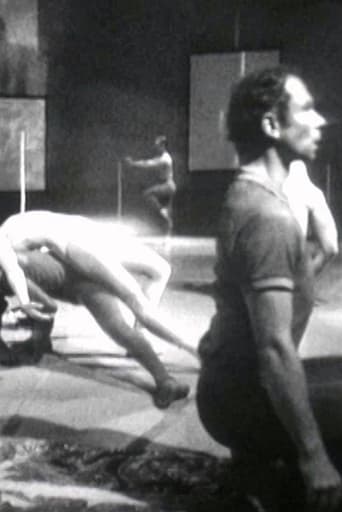
NRA multi-media event with choreographed dance, mobile decor, variable lighting, multiple film projection, and live-electronic music activated by the dancers' movements.
Variations V
1966
Undated · 2 titles
Inverting the form, style and time frame of commercial television advertising, Logue has produced a unique series of dynamic video portraits of avant-garde artists, writers, musicians and performers. In 30 Second Spots: New York, which Logue terms "commercials for artists," each of the succinct vignettes conveys the artistic essence of her subject with clarity, wit, and an elegant economy of means. John Cage, Steve Reich, Philip Glass, Meredith Monk, Spalding Gray and Steve Reich are among the artists who are captured here with concise drama. Each subject performs in close-up before a stationary camera.
Thirty Second Spots: TV Commercials for Artists (1982-83)
—
The never-before-seen in its entirety, visual documentation proving this avant-garde collaboration of mythic proportions did indeed occur. Recorded at Sideshows by the Seashore along the Coney Island boardwalk on June 8th, 1986 as documented on VHS by John Polizzi under the commission of event producers Rick Russo and Bronwyn Rucker. It was long believed that Cage and Ra never performed together but as you’ll see,these two shared the stage the entire time. The VHS footage has been combined with the audio master (containing several silent sections and some mic issues that occurred during the production), which breathes new life into the tiny reels of tape. The silent passages illuminate new auras when presented with the previously unseen visual component, and now over thirty years since it was recorded, you can truly experience the full spectacle.
John Cage Meets Sun Ra
—
Behind the camera
10.0Avant-garde composer John Cage is famous for his experimental pieces and "chance music" but temporarily branched into video in 1992 with this art film about meaningless activity. The work is composed of two segments that are supposed to be played simultaneously: "One 11" contains the artistic statement, and "103" is a 17-part orchestral piece. Also included is a revealing documentary about Cage and director Henning Lohner.
One 11 and 103
1992
10.0Avant-garde composer John Cage is famous for his experimental pieces and "chance music" but temporarily branched into video in 1992 with this art film about meaningless activity. The work is composed of two segments that are supposed to be played simultaneously: "One 11" contains the artistic statement, and "103" is a 17-part orchestral piece. Also included is a revealing documentary about Cage and director Henning Lohner.
One 11 and 103
1992
Chessfilmnoise is a experimental film, the first directed by John Cage, produced by Frank Scheffer. From 1982 to 1992 Frank Scheffer worked with John Cage on numerous occasions, which resulted in a unique archive of historical audio-visual material like this.
Chessfilmnoise
—
Catch 44, co-produced by Nam June Paik, fuses Cage's compositional precepts with the immediacy and real time of video. Cage is seen performing and preparing for the program "WGBX: A Telecast for Composers and Technicians," presented by the Boston public television station WGBX-TV (Channel 44). Subverting audience expectations and underlining Cage's belief that improvisation is a critical element of composition, here the act of scoring music becomes the performance. For Cage, whose work embraces paradox, the ambient noise of the broadcast studio and the alternation of sound and silence determine the nature and direction of the performance from moment to moment. Through his use of repetition, absurdity, found sound and silence, Cage compels the audience to rethink traditional assumptions of musical theory and composition.
Catch 44
1971