
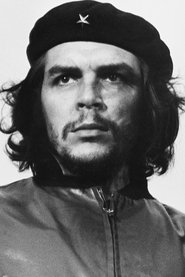
Acting
Che Guevara
Born — Died
1928-06-14 — 1967-10-09
Place of birth
Rosario, Argentina
Known for
Acting
Credits
51 titles
Ernesto Rafael "Che" Guevara de la Serna (14 June 1928 – 9 October 1967) was an Argentine Marxist revolutionary, physician, author, guerrilla leader, diplomat and military theorist. A major figure of the Cuban Revolution, his stylized visage has become a ubiquitous countercultural symbol of rebellion and global insignia in popular culture. As a young medical student, Guevara traveled throughout South America and was radicalized by the poverty, hunger and disease he witnessed. His burgeoning desire to help overturn what he saw as the capitalist exploitation of Latin America by the United States prompted his involvement in Guatemala's social reforms under President Jacobo Árbenz, whose eventu…
Known for
 7.0
7.0World in Action was Granada Television’s flagship ITV current affairs series, running from 7 Jan 1963 to 7 Dec 1998, and built a reputation for film-led investigative reporting and a forceful editorial stance. Its journalism produced major public and political repercussions—including investigations associated with miscarriages of justice such as the Birmingham Six—and it also served as a platform for landmark documentary projects, including the first broadcast of “Seven Up!” as part of the strand in 1964.
World in Action
1963
Looking at the private lives of famous historical figures.
Secret Lives
1995
 8.2
8.2La Case du Siècle is a French television program launched in 2010 and broadcast on France 5. Hosted by Fabrice d'Almeida, it airs documentaries every Sunday that aim to shed light on the history of the 20th century, both in France and around the world. Through these documentaries, viewers can deepen their knowledge of a specific subject or simply discover a particular era. *La Case du siècle* offers an in-depth look at the events that changed the course of history.
La Case du Siècle
2010
 6.0
6.0Copenhagen, Denmark, 1962. When a high-ranking Soviet official decides to change sides, a French intelligence agent is caught up in a cold, silent and bloody spy war in which his own family will play a decisive role.
Topaz
1969
 8.2
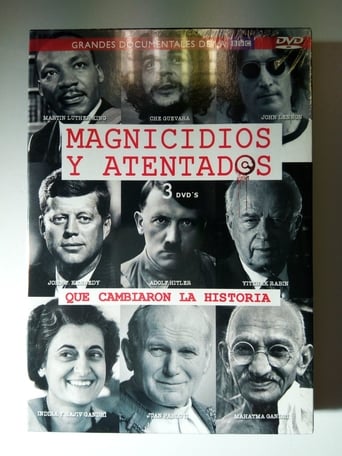
8.2This brand-new and exclusive series takes a closer look at some of the world's most talked-about assassinations and near misses. Always a fascinating and macabre subject, assassinations can damage a nation's confidence, create wars and shock the world. Throughout this series some of the 20th century's most outrageous attempts can, thanks to rare archive footage and reconstructions, be seen first hand and viewers are brought closer to the events than ever before. From the assassinations of John F Kennedy and Mahatma Ghandi, to attacks on royalty, politicians and media celebrities, this series uncovers the real reasons behind these events and how they unfolded.
Infamous Assassinations
2012
 7.0
7.0No synopsis available yet.
The Century of Icons
2022
Film credits
2010s · 14 titles
 10.0
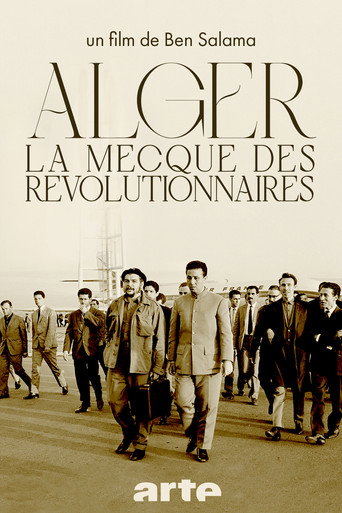
10.0From the early 1960s to the mid-1970s, independent Algeria provided significant support to anti-colonial movements and revolutionaries worldwide. Successive presidents, Ahmed Ben Bella and then Houari Boumédiène, made Algiers a haven for activists fighting against colonial and racial oppression. Algiers the White became Algiers the Red. The internationalist Che Guevara established his base of operations there for his guerrilla activities in Africa. The African-American leader Eldridge Cleaver made it the international headquarters of the Black Panther Party. During this period, Algiers was known as "The Mecca of Revolutionaries."
Algiers, the Mecca of Revolutionaries (1962-1974)
2016
 10.0
10.0A historical perspective to understand Neoliberalism and to understand why this ideology today so profoundly influences the choices of our governments and our lives.
Laissez-faire
2015
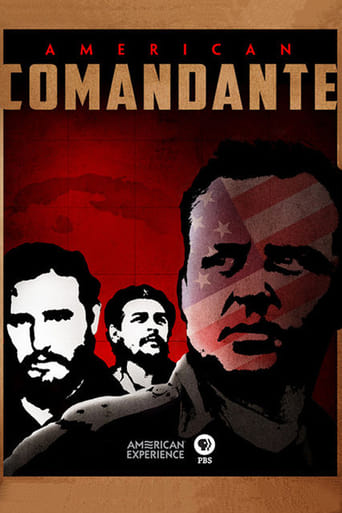 8.0
8.0When he was executed outside a Havana prison on March 11, 1961, the strange story of William Morgan seemed to vanish from the popular imagination as quickly as it had appeared. William Alexander Morgan was one of only a couple dozen US citizens who joined Cuban rebel forces, fighting for Fidel Castro in 1957. With government documents recently declassified, new information has come to light and Morgan’s story has come back into the public eye. American Comandante has the makings of a Cold War thriller— with adventure, spies and historical figures such as J. Edgar Hoover and Chè Guevera. Eyewitness accounts from Morgan’s widow and several Cubans who fought alongside him, as well as commentary from journalists and biographers, tell the story of a man who transformed from a failure to a hero and celebrity. American Comandante is a quintessential American story of a man who reinvented himself.
American Comandante
2015
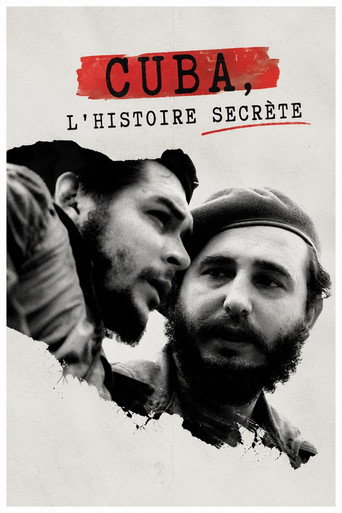 NR
NRNo synopsis available yet.
Cuba, l'histoire secrète
2016
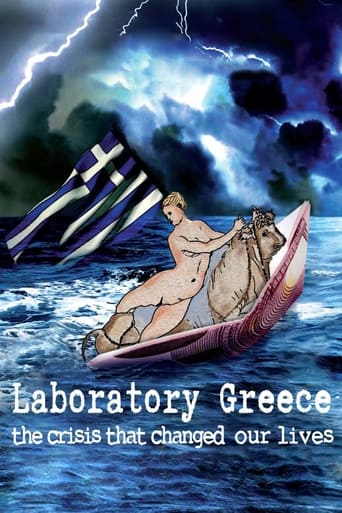 8.0
8.0A journey through Greece and Europe’s past and recent history: from the Second World War to the current crisis. It is a historical documentary, a look into many stories. «If Democracy can be destroyed in Greece, it can be destroyed throughout Europe» Paul Craig Roberts
Laboratory Greece
2019
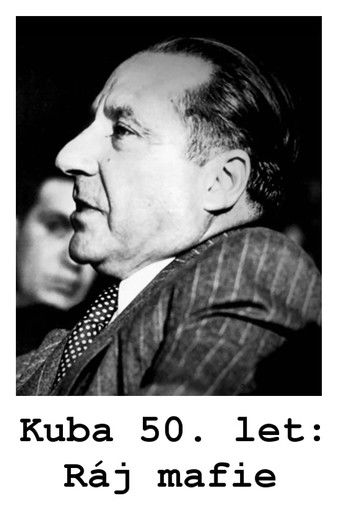 NR
NRNo synopsis available yet.
Cuba, Batista et la mafia
2012
 8.0
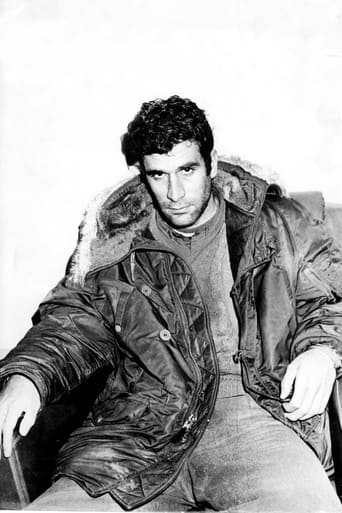
8.0February 28 is Deniz Gezmiş's birthday… He would have been 75 years old today; but it only lived for 25 years, and in those 25 years, it had an impact that spanned 75 years. When you have a 25-year-old son, one feels better, what was done to him...
My boy, look at the stars
2012
 NR
NRNo synopsis available yet.
Che Guevara, naissance d'un mythe
2017
 8.0
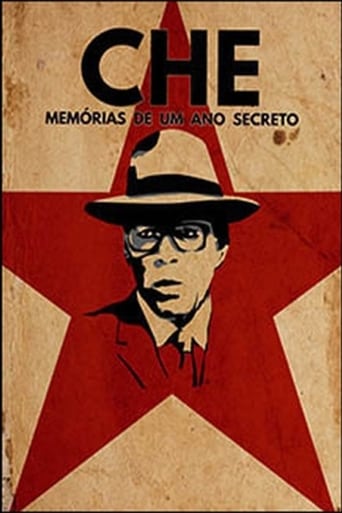
8.0In December 1965, at the height of the Cold War, Che Guevara mysteriously disappeared. Using a false identity, he is escorted by former agents of the Cuban Intelligence Service who are now revealing unprecedented details of the operation.
Che, Memórias de um Ano Secreto
2018
 NR
NRThrough the files of Cuban cinema news program Noticieros ICAIC Latinoamericanos, the documentary shows the most relevant events of the second half of the 20th century as seen by the documentary filmmakers of the island. During three decades and under the general direction of Santiago Álvarez, these moviemakers witnessed almost everything: from the shivers of the Cold War to Bola de Nieve's piano solos; from the discovery of the killing fields in Cambodia to the Carnation Revolution in Portugal. In 2009, the original negatives of Noticieros ICAIC Latinoamericanos were declared part of the "world memory" by UNESCO.
Memória Cubana
2010
 6.3
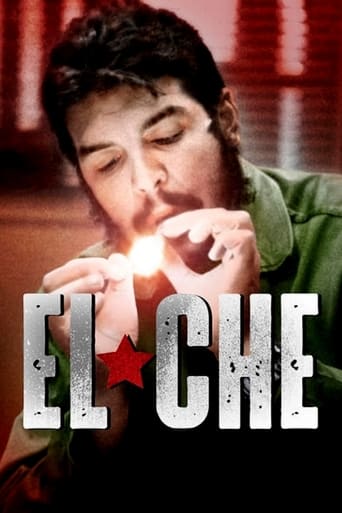
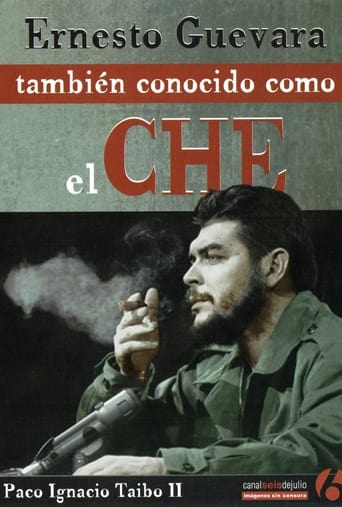
6.3Ernesto "Che" Guevara's controversial story told by the Mexican writer Paco Ignacio Taibo II. He revisits places where the guerrilla and revolutionary leader has passed and interviews people who knew Che, making revelations about this important figure in Cuba's political history.
El Che
2017
 NR
NRNo synopsis available yet.
Ernesto Guevara
2010
 6.5
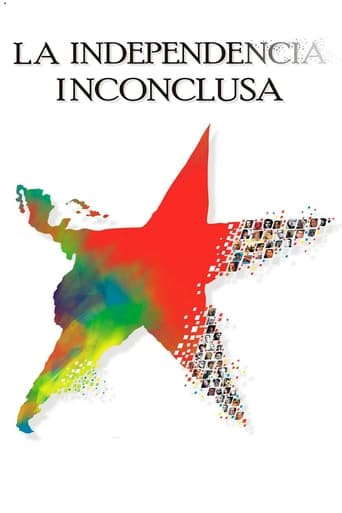
6.5Documentary about the independence and history of Latin America.
The Inconclusive Independence
2010
 NR
NRCuba: Defending Socialism, Resisting Imperialism brings you voices from Cuba, a country fighting for social and economic justice, representing the aspirations of the poor and oppressed worldwide, building socialism in a capitalist world. The film demonstrates how vital Cuba is to the struggle for socialism in Britain and beyond.
CUBA: Defending Socialism, Resisting Imperialism
2010
2000s · 8 titles
 5.8
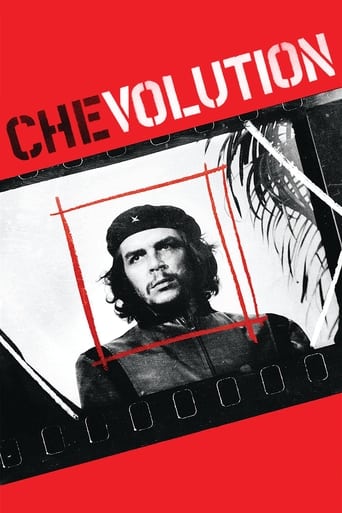
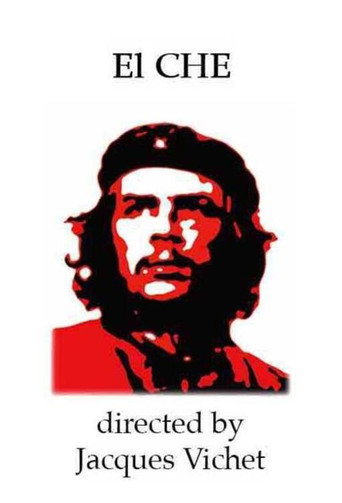
5.8Examines the history and legacy of the photo Guerrillero Heroico taken by famous Cuban photographer Alberto Díaz Gutiérrez. This image has thrived for the decades since Che Guevara's death and has evolved into an iconic image, which represents a multitude of ideals. The documentary film explores the story of how the photo came to be, its adoption of multiple interpretations and meanings, as well as the commercialization of the image of Ernesto "Che" Guevara.
Chevolution
2008
A documentary about the film, I am Curious-Yellow (1967), and how it made it into the USA and changed film in USA forever by breaking the USA Obscenity Codes.
The Battle for 'I Am Curious-Yellow'
2003
 10.0
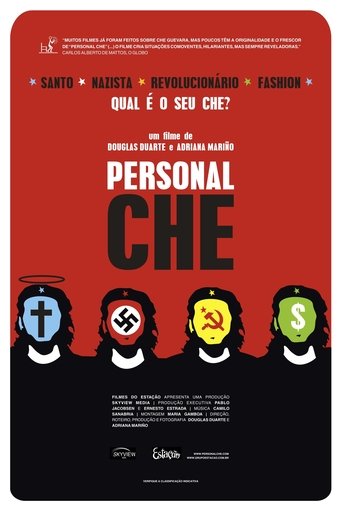
10.0A documentary that explores the myth behind the truth. Different people around the globe reinterpret the legend of Che Guevara at will: from the rebel living in Hong Kong fighting Chinese domination, to the German neonazi preaching revolution and the Castro-hating Cuban. Their testimonies prove that the Argentinian revolutionary's historical impact reverberates still. But like with all legends, each sees what he will, in often contradictory perspectives.
Personal Che
2007
 6.2
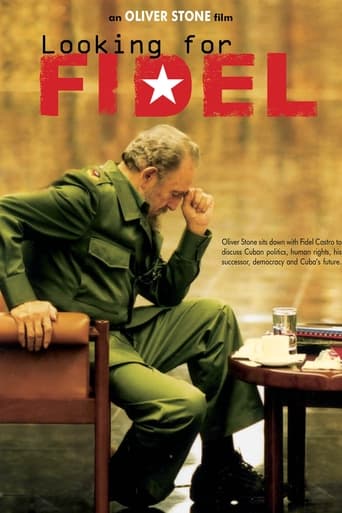
6.2Oliver Stone's second documentary on/interview with Fidel Castro specifically addresses his country's recent crackdown on Cuban dissidents; namely, the execution of three men who hijacked a ferry to the United States.
Looking for Fidel
2004
 6.6
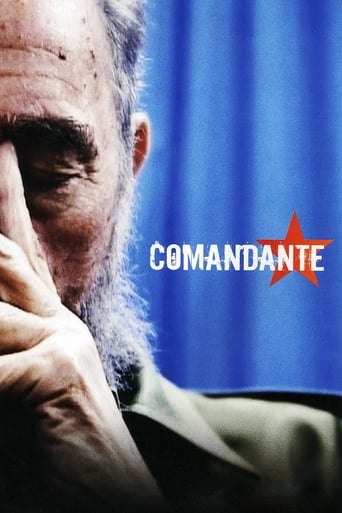
6.6Oliver Stone spends three days filming with Fidel Castro in Cuba, discussing an array of subjects with the president such as his rise to power, fellow revolutionary Che Guevara, the Cuban Missile crisis, and the present state of the country.
Comandante
2003
No synopsis available yet.
Che Guevara - Hasta La Victoria Siempre
2003
 8.0
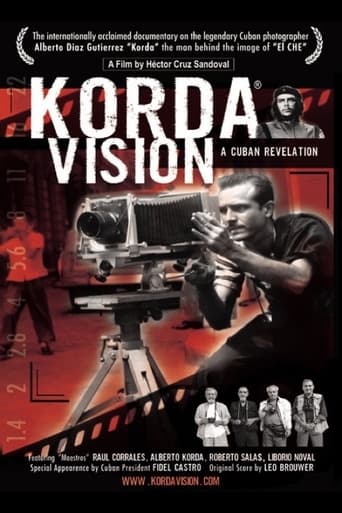
8.0Alberto Díaz Korda delivered intense photography experiences throughout his 40-year career. KordaVision traces this brilliant career from his beginning in Havana, Cuba, until he became Fidel Castro's personal photographer from 1959 through 1968.
Kordavision: The man who shot Che Guevara
2005
No synopsis available yet.
Kubánske otázniky
2000
1990s · 4 titles
 5.0
5.0DEATH SCENES II continues the exploration into the dark recesses of violence and rage that ended in such heinous crimes as the Manson Family's assault on society. You'll see the gruesome aftermath of mob reprisals, public executions and international terrorism. DEATH SCENES II uniquely ushers the brave and curious into a spellbinding trip through the reality that is our world today.
Death Scenes 2
1992
 NR
NRExperimental film by Liliane Blaser.
El último panfleto
1995
 7.6
7.6A documentary about Che Guevara in Bolivia, based upon his journal listing daily agendas
Ernesto Che Guevara, the Bolivian Diary
1994
 8.0
8.0Documentary about the life of revolutionary Cuban leader Ernesto "Che" Guevara.
Ernesto Che Guevara
1995
1980s · 4 titles
 10.0
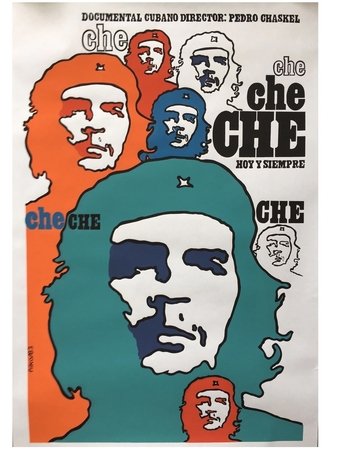
10.0A sound system plays Commander Ernesto Guevara's speech, delivered on October 20, 1962, during the Second Anniversary of the Young Communist League, along with a series of archival images of the revolutionary leader visiting factories and meeting with workers.
Che, Today and Always
1983
 NR
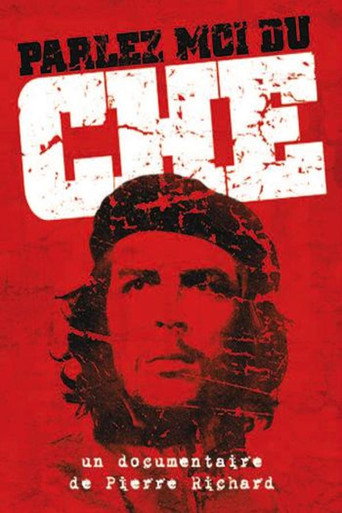
NRTwenty years after Che’s death, in 1987, Pierre Richard and his journalist friend Jean Cormier set out to follow in his footsteps in Cuba. Through a series of encounters, their journey brings the revolutionary guerrilla back to life through numerous firsthand accounts.
Parlez-moi du Che
1987
Documentary about the iconic portrait of Ernesto 'Che' Guevara by Cuban photographer Alberto Diaz Gutiérrez (known as 'Korda').
Una foto recorre el mundo
1981
 NR
NRCuban workers remember Che Guevara. They testify to his relationship with the workers, his good example, and his great capacity for work.
Constructor Cada Día, Compañero
1982
1970s · 5 titles
 6.0
6.0Made shortly after the death of Brazilian revolutionary Carlos Marighella, this documentary reconstructs his life and political struggle through interviews with friends and comrades. It examines his role in the resistance against Brazil’s military dictatorship and his death in a 1969 police ambush.
Report on Brazil: Carlos Marighella
1970
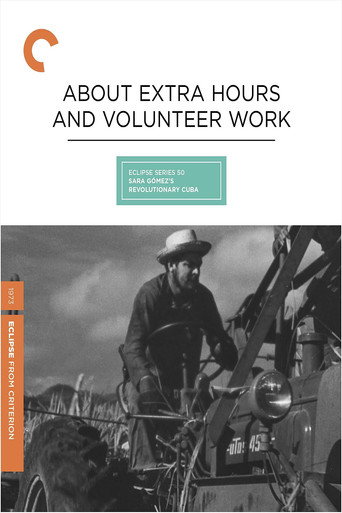 7.0
7.0Opinions of workers of the textile industry on the theses of the XIII Labor Congress of the CTC.
About Extra Hours and Volunteer Work
1973
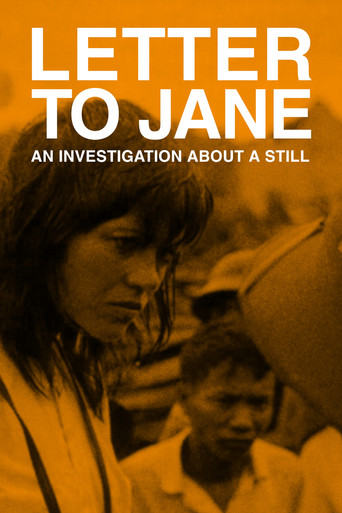 7.2
7.2The film's subject is a photograph of Jane Fonda visiting Hanoi during the Vietnam War. It asks what the position of the intellectual should be in the class struggle and points out the irony of Jane Fonda's participation in the photo shoot, which was staged.
Letter to Jane: An Investigation About a Still
1974
 7.2
7.2The film, created in exile from 1971 to 1973 between Cuba and Rome, is considered a "semi-finished" work by Glauber Rocha. It has a certain pedagogical character and seeks, through dialectical editing, to conduct a critical review of colonization, class struggle, messianism, and the establishment of populist governments in the Third World. There is a chronology in the events presented, which, supported by extensive iconography (films, engravings, photos, etc.), create "free" associations that allow the viewer a "polyphonic" view of the "History of Brazil."
History of Brazil
1974
Documentary reflecting upon the life and legacy of Ernesto "Che" Guevara.
Che
1972
1960s · 5 titles
6.0Copenhagen, Denmark, 1962. When a high-ranking Soviet official decides to change sides, a French intelligence agent is caught up in a cold, silent and bloody spy war in which his own family will play a decisive role.
Topaz
1969
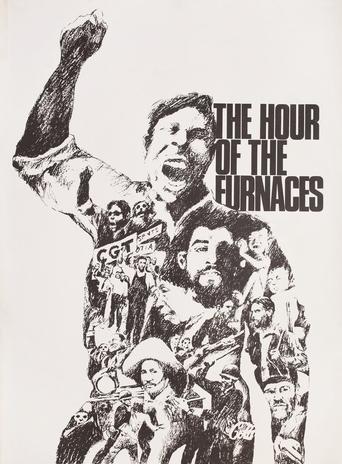 6.9
6.9An impassioned three-part documentary of the liberation struggle waged throughout Latin America, using Argentina as a historical example of the imperialist exploitation of the continent. Part I: Neo-Colonialism and Violence is a historical, geographic, and economic analysis of Argentina. Part II: An Act For Liberation examines the ten-year reign of Juan Perón (1945-55) and the activities of the Peronist movement after his fall from power. Part III: Violence and Liberation studies the role of violence in the national liberation process and constitutes a call for action.
The Hour of the Furnaces
1968
 7.3
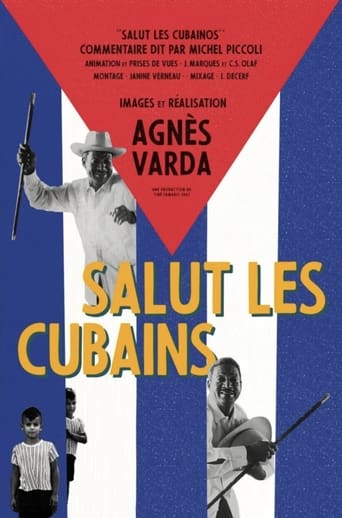
7.3A photo montage of Cubans filmed by Agnès Varda during her visit to Cuba in 1963, four years after Fidel Castro came to power. This black & white documentary explores their socialist culture and society while making use of 1500 pictures (out of 4000!) the filmmaker took while on the island.
Hello Cubans
1963
 NR
NRA World in Action documentary filmed in Bolivia immediately after Che Guevara’s death. Directed by Brian Moser, it documents the political aftermath and centers on the trial of Régis Debray, incorporating interviews conducted before the proceedings alongside testimony from Bolivian officials, the U.S. ambassador, and U.S. special forces personnel. (Note: Produced within World in Action, the film has a distinct title, subject, and on-location production and is documented in archives and film databases as a self-contained reportage work, justifying treatment as a separate film.)
World in Action: End of a Revolution
1967
 NR
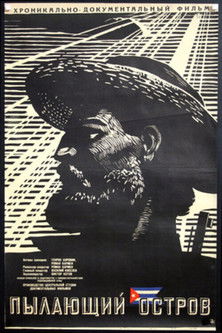
NRDocumentary recounting the story of the Cuban Revolution and its impact on the young people of Cuba.
Island Ablazed
1961
Series credits
7.0World in Action was Granada Television’s flagship ITV current affairs series, running from 7 Jan 1963 to 7 Dec 1998, and built a reputation for film-led investigative reporting and a forceful editorial stance. Its journalism produced major public and political repercussions—including investigations associated with miscarriages of justice such as the Birmingham Six—and it also served as a platform for landmark documentary projects, including the first broadcast of “Seven Up!” as part of the strand in 1964.
World in Action
1963
Looking at the private lives of famous historical figures.
Secret Lives
1995
8.2La Case du Siècle is a French television program launched in 2010 and broadcast on France 5. Hosted by Fabrice d'Almeida, it airs documentaries every Sunday that aim to shed light on the history of the 20th century, both in France and around the world. Through these documentaries, viewers can deepen their knowledge of a specific subject or simply discover a particular era. *La Case du siècle* offers an in-depth look at the events that changed the course of history.
La Case du Siècle
2010
8.2This brand-new and exclusive series takes a closer look at some of the world's most talked-about assassinations and near misses. Always a fascinating and macabre subject, assassinations can damage a nation's confidence, create wars and shock the world. Throughout this series some of the 20th century's most outrageous attempts can, thanks to rare archive footage and reconstructions, be seen first hand and viewers are brought closer to the events than ever before. From the assassinations of John F Kennedy and Mahatma Ghandi, to attacks on royalty, politicians and media celebrities, this series uncovers the real reasons behind these events and how they unfolded.
Infamous Assassinations
2012
7.0No synopsis available yet.
The Century of Icons
2022
 8.5
8.5Communism spread to all of the continents of the word, lasting through four generations and over seven decades. Hundreds of millions of men and women were affected by this political system, one of the most unjust and bloodiest in history. Using newly discovered propaganda films and archival photos, these four episodes explore the mysteries of this totalitarian political machine that lured its share of important followers into the fold. Known as the red church, communism seduced its ardent followers like some earthly religion.
Faith of the Century: A History of Communism
1999
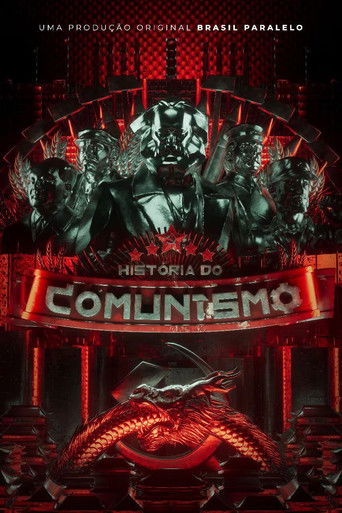 5.5
5.5No synopsis available yet.
História do Comunismo
2024