
Acting
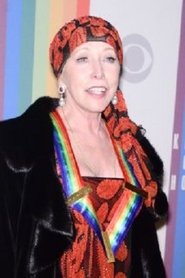
Natalia Makarova
Born
1940-11-21 (85)
Place of birth
Leningrad, USSR [now St. Petersburg, Russia]
Known for
Acting
Credits
16 titles
Natalia Romanovna Makarova (Russian: Ната́лия Рома́новна Мака́рова, born 21 November 1940) is a Russian prima ballerina and choreographer. The History of Dance, published in 1981, notes that "her performances set standards of artistry and aristocracy of dance which mark her as the finest ballerina of her generation in the West." Makarova was born in Leningrad in the Russian SFSR of the Soviet Union. At the age of 12, she auditioned for the Leningrad Choreographic School (formerly the Imperial Ballet School), and was accepted although most students join the school at the age of 9. Makarova was a permanent member of the Kirov Ballet in Leningrad from 1956 to 1970, achieving prima ballerina s…
Known for
 6.8
6.8The Dick Cavett Show has been the title of several talk shows hosted by Dick Cavett on various television networks.
The Dick Cavett Show
1968
 8.0
8.0Le Grand Échiquier is a French variety television program created and presented by Jacques Chancel. It aired at 8:30 pm on the first channel of the ORTF from January 12, 1972 to July 12, 1972, then on the second color channel of the ORTF from September 1972 to December 1974, and finally on Antenne 2 from January 1975 to December 21, 1989. The program returned to France 2 on December 20, 2018 and is hosted by Anne-Sophie Lapix.
Le Grand Échiquier
1972
 7.0
7.0Great Railway Journeys, originally titled Great Railway Journeys of the World, is a recurring series of travel documentaries produced by BBC Television. The premise of each programme is that the presenter, typically a well-known figure from the arts or media, would make a journey by train, usually through a country or to a destination to which they had a personal connection. There were four series broadcast on BBC Two between 1980 and 1999, with the shorter series title being used for all but the first. In 2010 a similar series also aired on BBC Two, Great British Railway Journeys.
Great Railway Journeys
1980
A landmark two-hour television variety special recorded live at Ford's Theatre in Washington, D.C., and broadcast on NBC on March 6, 1981, to honor President Ronald Reagan and First Lady Nancy Reagan.
Command Performance: The Stars Salute the President
1981
 8.0
8.01969. Man lands on the moon. Half a million strong at Woodstock....and Led Zeppelin perform in the gym of the Wheaton Youth Center in front of 50 confused teenagers. Or did they? Filmmaker Jeff Krulik chronicles an enduring Maryland legend, of the very night this concert was alleged to have taken place, January 20, 1969, during the first Presidential Inauguration of Richard Nixon. Led Zeppelin Played Here presents a mid-Atlantic version of what was happening nationwide as the rock concert industry took shape. Featuring interviews with rock writers, musicians, and fans, and several who claim they were witnessing history that night.
Led Zeppelin Played Here
2014
 NR
NRMarius Petipa’s exotic ballet set in legendary India is a story of love, death and vengeful judgement. Natalia Makarova’s sumptuous recreation of Petipa’s choreography, with atmospheric sets by Pier Luigi Samaritini and beautiful costumes by Yolanda Sonnabend, stars Tamara Rojo as the Bayadère (temple dancer) Nikiya, Carlos Acosta as Solor, and Marianela Nuñez as Gamzatti, whose alluring presence challenges Solor’s love for Nikiya. Live performance recorded in 2009.
La Bayadère
2011
Film credits
1990s · 2 titles
 10.0
10.0The career of a classical ballet dancer is short and often riddled with injuries, and it takes a special kind of artist to submit to the discipline and strenuous regimen needed to dance with a world-class company. Follows the young and gifted Katja Björner through years of intensive training at the Royal Swedish Ballet School as she develops into an international ballet star.
The Dancer
1994
 8.0
8.0Roman Viktyuk is either hated or adored. But the eccentricity, the dissimilarity to everything of his work is recognized by everyone. The film by Alexei Uchitel - illustration for the life of the scandalous maestro. Unique shots from rehearsals, a trip to Lviv and New York, young actors, now stars - once opened by Viktyuk, scenes from the director's most striking and challenging performances. And Roman Viktyuk himself, ironic, funny, sincere .
Butterfly
1993
1980s · 4 titles
A landmark two-hour television variety special recorded live at Ford's Theatre in Washington, D.C., and broadcast on NBC on March 6, 1981, to honor President Ronald Reagan and First Lady Nancy Reagan.
Command Performance: The Stars Salute the President
1981
 NR
NROnstage at the War Memorial Opera House in San Francisco, the American Ballet Theatre presents a variety of numbers from several recognized ballets, both traditional and modern, including Prokofiev's "Romeo and Juliet," Gottschalk's "Great Galloping Gottschalk," Tchaikovsky's "The Black Swan," Handel's "Airs" and Chausson's "Jardin aux Lilas." The San Francisco Opera Orchestra provides accompaniment for the dazzling performances.
American Ballet Theatre in San Francisco
1985
 NR
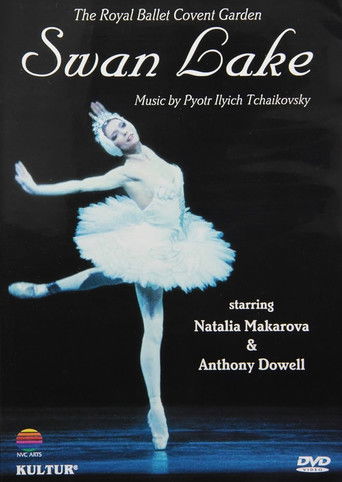
NRThe Royal Ballet's 1980 production of Tchaikovsky's classic ballet.
Swan Lake
1982
 NR
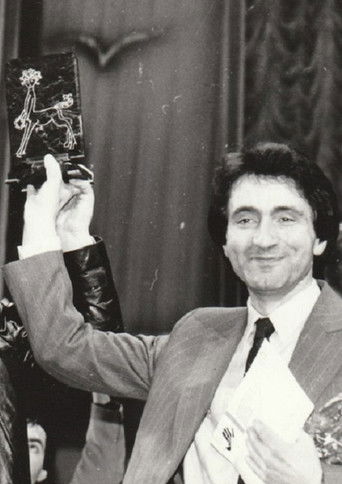
NRIn January 1989 the first Message to Man International Film Festival took place in Leningrad. This film, made during the festival, is a record of its events, guests and participants, such as the American director Leo Hurwitz, the Latvian director Ivars Seleckis, and the ballerina Natalya Makarova, among others. It also shows the “engine room” of the festival: the work of the main office and the PROKKa professional cinematographers’ club, guests being greeted and seen off. A charity evening with Natalya Makarova, a memorial service to commemorate the victims of the war and excerpts of documentary films presented at the festival are also featured.
Message to Man
1989
1970s · 2 titles
 8.0
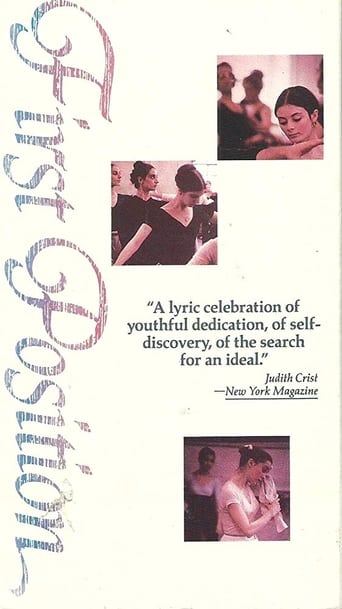
8.0The personal and professional lives of aspiring dancers at New York's American Ballet Theatre School are chronicled in this documentary.
A Dancer's Life
1972
 NR
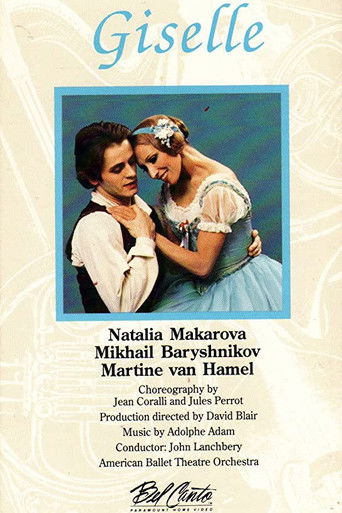
NRThe ballet tells the story of a peasant girl named Giselle whose ghost, after her premature death, protects her lover from the vengeance of a group of evil female spirits called Wilis
Giselle
1977
1960s · 2 titles
 6.5
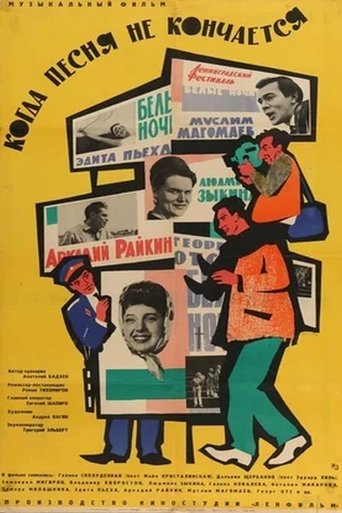
6.5A combination of performances by masters of their arts, this film takes place during the Leningradskoye Leto – the Leningrad "White Nights" annual summer musical festival, featuring music stars, young opera singers, ballet, pop, circus, and amateur artists. Reporters Kostya and Bob are rushing everywhere trying to document the entire festival. Beautiful young singer Svetlana is pursued throughout the festive events by a hopelessly shy police lieutenant, whose unexpected infatuation leaves him unable to speak, but gives him a beautiful baritone voice.
When the Song Does Not End...
1965
 5.0
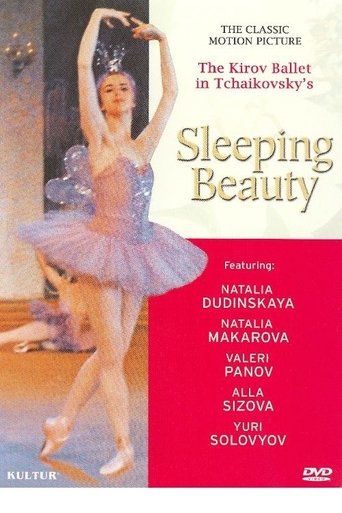
5.0The radiant Alla Sizova stars as Princess Aurora in this artful film version of Tchaikovsky's timeless classic from the world-renowned Kirov Ballet, a production based on the highly acclaimed, original choreography by Marius Petipa. The legendary troupe's majesty and skill are on full display as they perform one of the world's most beloved ballets with supporting performances from Natalia Dudinskaya, Yuri Solovyov and Valeri Panov.
Sleeping Beauty
1964
Undated · 1 titles
Series credits
6.8The Dick Cavett Show has been the title of several talk shows hosted by Dick Cavett on various television networks.
The Dick Cavett Show
1968
8.0Le Grand Échiquier is a French variety television program created and presented by Jacques Chancel. It aired at 8:30 pm on the first channel of the ORTF from January 12, 1972 to July 12, 1972, then on the second color channel of the ORTF from September 1972 to December 1974, and finally on Antenne 2 from January 1975 to December 21, 1989. The program returned to France 2 on December 20, 2018 and is hosted by Anne-Sophie Lapix.
Le Grand Échiquier
1972
7.0Great Railway Journeys, originally titled Great Railway Journeys of the World, is a recurring series of travel documentaries produced by BBC Television. The premise of each programme is that the presenter, typically a well-known figure from the arts or media, would make a journey by train, usually through a country or to a destination to which they had a personal connection. There were four series broadcast on BBC Two between 1980 and 1999, with the shorter series title being used for all but the first. In 2010 a similar series also aired on BBC Two, Great British Railway Journeys.
Great Railway Journeys
1980