
Known for
 6.0
The simple staple bread has become a branded product with an increasing number of varieties and providers. The film provides authentic impressions in today’s world of bread. We encounter small craft bakers as well as corporate CEOs whose professional work is our daily bread and ask the question: how do you see the future of our bread? And: what are we actually eating?
Bread: An Everyday Miracle
2020
After "Ringel" (1972) and "M.J.J. Ringel" (1981), this portrait of the artist is Wilhelm Gaube's third visit to the studio of Franz Ringel, the painter. We see him at work and as a great master of Viennese sentimentality.
Colette
1996
 6.6
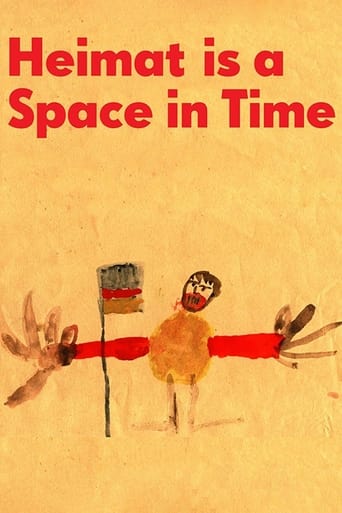
Director Thomas Heise picks up the biographical pieces left by his family, and composes an epic picture of four generations of his family, of a country, of a century.
Heimat Is a Space in Time
2019
 NR
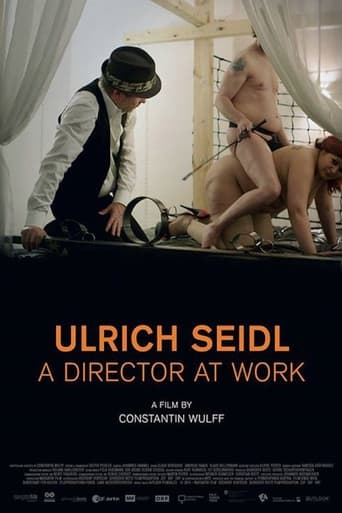
This cinematic portrait shows the Austrian filmmaker Ulrich Seidl at work. The much-discussed ‘Seidl method’ is conveyed here vividly and directly: The camera watches over Seidl’s shoulder during the filming of his new production IM KELLER, and observes him at the rehearsals for his latest theatre production ‘Böse Buben / Fiese Männer’. The film paints the picture of a fascinating and exceptional artist using a combination of extensive interviews and excerpts from earlier works.
Ulrich Seidl - A Director at Work
2014
 6.0
This feature documentary portrays one of the most important museums in the world, the Kunsthistorisches Museum Wien. It presents a unique look behind the scenes of this fascinating institution and encounters a number of charismatic protagonists and their working fields unfolding the museum’s special world – as an art institution as well a vehicle for state representation.
The Great Museum
2014
 7.5
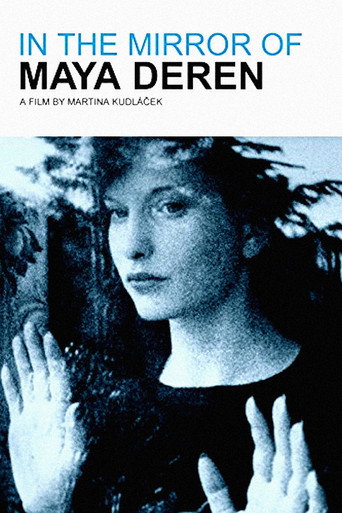
Documentary about the life of avant-garde filmmaker Maya Deren, who led the independent film movement of the 1940s.
In the Mirror of Maya Deren
2002
Film credits
Behind the camera
6.0The simple staple bread has become a branded product with an increasing number of varieties and providers. The film provides authentic impressions in today’s world of bread. We encounter small craft bakers as well as corporate CEOs whose professional work is our daily bread and ask the question: how do you see the future of our bread? And: what are we actually eating?
Bread: An Everyday Miracle
2020
After "Ringel" (1972) and "M.J.J. Ringel" (1981), this portrait of the artist is Wilhelm Gaube's third visit to the studio of Franz Ringel, the painter. We see him at work and as a great master of Viennese sentimentality.
Colette
1996
6.6Director Thomas Heise picks up the biographical pieces left by his family, and composes an epic picture of four generations of his family, of a country, of a century.
Heimat Is a Space in Time
2019
NRThis cinematic portrait shows the Austrian filmmaker Ulrich Seidl at work. The much-discussed ‘Seidl method’ is conveyed here vividly and directly: The camera watches over Seidl’s shoulder during the filming of his new production IM KELLER, and observes him at the rehearsals for his latest theatre production ‘Böse Buben / Fiese Männer’. The film paints the picture of a fascinating and exceptional artist using a combination of extensive interviews and excerpts from earlier works.
Ulrich Seidl - A Director at Work
2014
6.0This feature documentary portrays one of the most important museums in the world, the Kunsthistorisches Museum Wien. It presents a unique look behind the scenes of this fascinating institution and encounters a number of charismatic protagonists and their working fields unfolding the museum’s special world – as an art institution as well a vehicle for state representation.
The Great Museum
2014
7.5Documentary about the life of avant-garde filmmaker Maya Deren, who led the independent film movement of the 1940s.
In the Mirror of Maya Deren
2002
 NR
No synopsis available yet.
Schlendern ist mein Metier
2025
 NR
No synopsis available yet.
Zu ebener Erde
2018
 NR
During the preparations for its 100th anniversary, the Chamber of Labor is accompanied and proves to be a unique contact point for the many people fighting for their rights.
For the Many – The Vienna Chamber of Labour
2022
NRDuring the preparations for its 100th anniversary, the Chamber of Labor is accompanied and proves to be a unique contact point for the many people fighting for their rights.
For the Many – The Vienna Chamber of Labour
2022
A portrait of sculptor Mathias Hietz of Lower Austria, originator and head of the international sculptor's symposium in Lindabrunn. A look back at his beginnings in the fifties, then on to his current work.
Der Bildhauer Mathias Hietz
1995
 6.0
At the Natural History Museum in Vienna, everything that is found on earth and in outer space and that humans can get their hands on, is collected, archived, and studied in the name of evolutionary research. Archiv der Zukunft captures the aesthetic appeal of the natural-history collection and its working process, illuminating the mammoth project of knowledge preservation and production hidden behind the building’s imperial façade.
Archive of the Future
2024
 NR
This moving portrait of a maternity clinic in Vienna provides a fascinating insight into the drama, pain, and beauty of coming into the world. The everyday miracle of birth, in all its intensity and diversity, is shown using direct cinema techniques and linked to the cycle of accompanying processes in the hospital. A chronicle of the beginning of life—and its organization.
Into the World
2009
A seven month journey on foot through Italy from the Swiss-Italian border down to Sicily, with a rucksack containing a camera, a tape recorder, and the traveller's tale "A Walk to Syracuse in 1802" by the German author Johann Gottfried Seume. A cinematic essay on travelling, the south and Arcadian longings; on everyday life in Italy in the year of the soccer world cup and the death of Alberto Moravia; on Italian rain and nights in Rome; on the landscapes of childhood and on the fact that strangers are the only exotic in Italy.
Spaziergang nach Syrakus
1993
 9.0
No synopsis available yet.
Like the Others
2015
9.0No synopsis available yet.
Like the Others
2015
 3.7
Based on Samuel R. Delany’s short novel ‘Aye, and Gomorrah...’, where the sci-fi premise of radiation-resistant state-neutered space travellers allows the author to explore androgyny, sexual identity, etc. Hammel uses Delany’s story to create a spookily beautiful world where asexual bodies live in the contradiction between their unarousable loneliness and desire for intimacy and contact.
The Black Sun
1992
 7.0
"Ceija Stojka" is a portrait of 64-year-old Austrian Rom Ceija Stojka, who, after a nomadic childhood, settled in Vienna many years ago. In the recent past, Ceija Stojka’s fame as an author, painter and singer has spread outside Austria. She represents the opening of Rom and Sinti society to the world of the "gadje." This process and all the difficulties it involves is unique in the history of the Rom in Central Europe. The central theme of this documentary is the fusion of two extremely different worlds in this fascinating woman. Beginning with Ceija Stojka’s present life, her biography is reconstructed in this film portrait. At the same time, a critical chronology of images portrays the common associations with the "gypsy," examples of which pervade Ceija Stojka’s life. A comprehensive consideration of the gypsy’s image, from romanticized projections to images of exclusion, discrimination and destruction, and finally the present ambivalent relationship between Rom and non-Rom.
Ceija Stojka
1999
7.0"Ceija Stojka" is a portrait of 64-year-old Austrian Rom Ceija Stojka, who, after a nomadic childhood, settled in Vienna many years ago. In the recent past, Ceija Stojka’s fame as an author, painter and singer has spread outside Austria. She represents the opening of Rom and Sinti society to the world of the "gadje." This process and all the difficulties it involves is unique in the history of the Rom in Central Europe. The central theme of this documentary is the fusion of two extremely different worlds in this fascinating woman. Beginning with Ceija Stojka’s present life, her biography is reconstructed in this film portrait. At the same time, a critical chronology of images portrays the common associations with the "gypsy," examples of which pervade Ceija Stojka’s life. A comprehensive consideration of the gypsy’s image, from romanticized projections to images of exclusion, discrimination and destruction, and finally the present ambivalent relationship between Rom and non-Rom.
Ceija Stojka
1999