
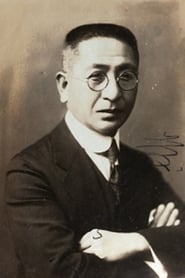
Acting
Hideo Fujino
Born — Died
1878-05-16 — 1956-02-11
Place of birth
Tokyo, Japan
Known for
Acting
Credits
60 titles
Known for
 7.4
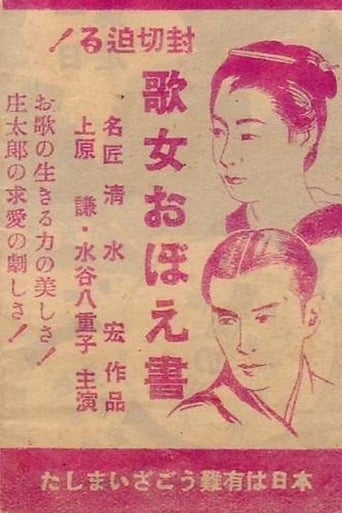
7.4Uta’s mother died when she was six years old; her father she never met. She was forced to adopt a traveller’s life when her grandmother died, and now she is a dancer and part of a family of actors who travel from town to town, setting up street performances. A way of escape from this marginal existence arises when she gets the chance to move to tea merchant Hiramatsu’s place, where she is asked to teach his daughter to dance.
Notes of an Itinerant Performer
1941
 6.9
6.9After the death of her husband, an elderly woman and her youngest, unmarried daughter are forced to sell their house to cover his debts and decide to move in with one of the former's children, each of whom is scarcely happy to accommodate.
Brothers and Sisters of the Toda Family
1941
 7.0
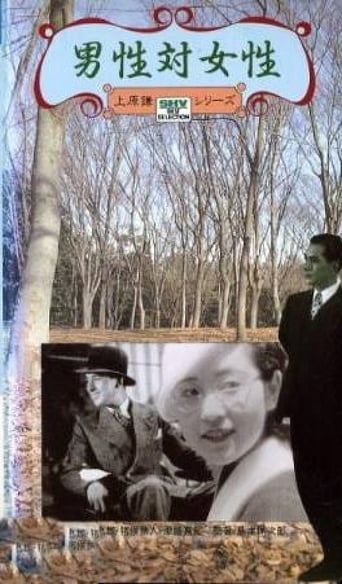
7.0Three couples connected to rival business and theatrical families navigate complicated romances, workplace disputes, and family opposition.
Men vs. Women
1936
 NR
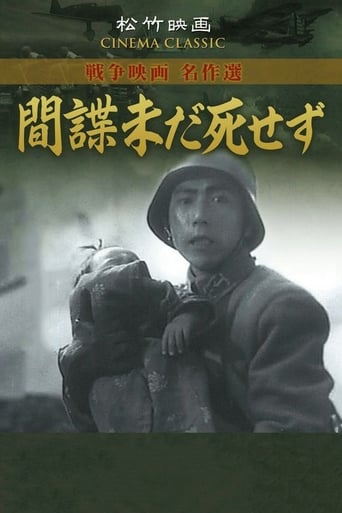
NRNo synopsis available yet.
The Spy Has Not Died Yet
1942
 8.0
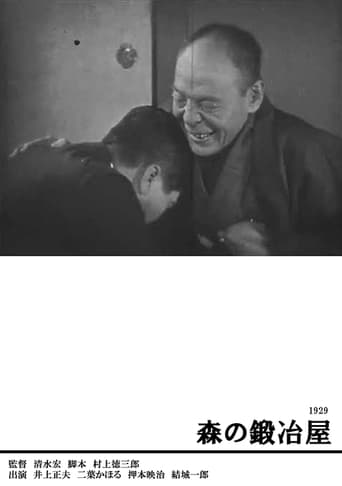
8.0A blacksmith is chased out of the village by the sinister village chief and forced to move to the forest with his wife and two sons. The blacksmith's younger son is disabled, and the other children in the village tease him. The older son aspires to become a doctor in order to fix his brother's leg. The film depicts the bond between a father and his sons. Only 18 minutes survive.
The Blacksmith of the Forest
1929
 6.8
6.8A period piece about the love of a wealthy blind woman, a teacher of koto and shamisen, and her devoted manservant. Based on a novella by Tanizaki Junichiro.
Okoto and Sasuke
1935
Film credits
1940s · 8 titles
7.4Uta’s mother died when she was six years old; her father she never met. She was forced to adopt a traveller’s life when her grandmother died, and now she is a dancer and part of a family of actors who travel from town to town, setting up street performances. A way of escape from this marginal existence arises when she gets the chance to move to tea merchant Hiramatsu’s place, where she is asked to teach his daughter to dance.
Notes of an Itinerant Performer
1941
6.9After the death of her husband, an elderly woman and her youngest, unmarried daughter are forced to sell their house to cover his debts and decide to move in with one of the former's children, each of whom is scarcely happy to accommodate.
Brothers and Sisters of the Toda Family
1941
NRNo synopsis available yet.
The Spy Has Not Died Yet
1942
The story of a boy who befriends a lonely middle-aged man.
Middle-Aged Man
1943
 NR
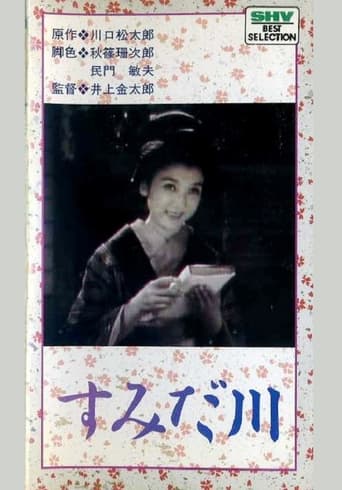
NRInoue was something of a rarity in the sense, that he was a Shochiku house director who seems to have worked mostly in period films, often with big stars like Hasegawa or Bando. "Sumidagawa", named after the river that runs through Tokyo, is also a period film, but thematically a modern one. All the themes that you associate with the normal Shochiku women's films set in the present day are in this film, just in a different context: love, the planning of a marriage, career, family relations and societal melancholy. There is no action or swordplay.
Sumida River
1942
 NR
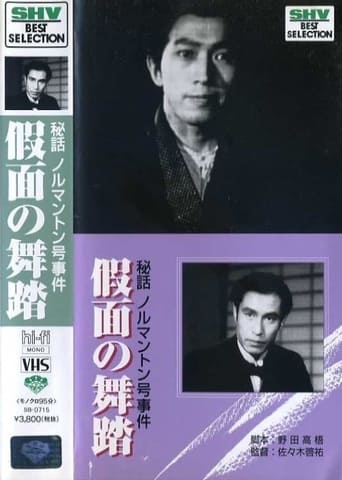
NRJapanese propaganda film about the Normanton Incident.
Dancing with a Mask
1943
 NR
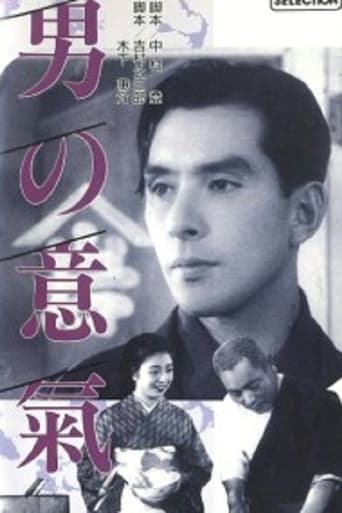
NRThis was 1942, so it was a national policy film, no matter what you call it. But when the war was still on the winning side, there wasn't even a little bit of sadness in the film (as the war was getting worse and worse, the burdens on our backs were increasing day by day, and we had to keep forming a line for tomorrow with nowhere to go (Akira Kurosawa's "The Most Beautiful", Admiral Nomura's "Enemy Air Raid", etc.) (Song of Annihilation, directed by Sasaki Yasushi). The film closes with the hope of the blue cloud that is bubbling up in the air. Or it may be the last time that a Japanese film talks about war and looks at the end of the war with an unconcerned eye.
Otoko no iki
1942
 10.0
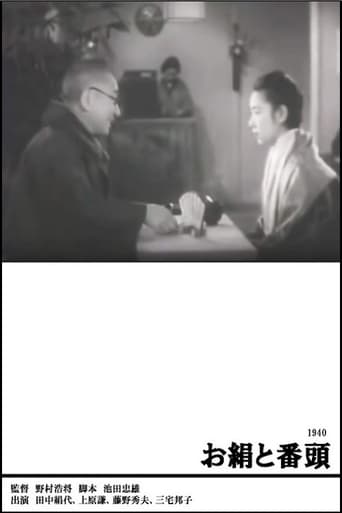
10.0A story of a store that makes Tabi socks.
Okinu and Banto
1940
1930s · 32 titles
7.0Three couples connected to rival business and theatrical families navigate complicated romances, workplace disputes, and family opposition.
Men vs. Women
1936
6.8A period piece about the love of a wealthy blind woman, a teacher of koto and shamisen, and her devoted manservant. Based on a novella by Tanizaki Junichiro.
Okoto and Sasuke
1935
 5.7
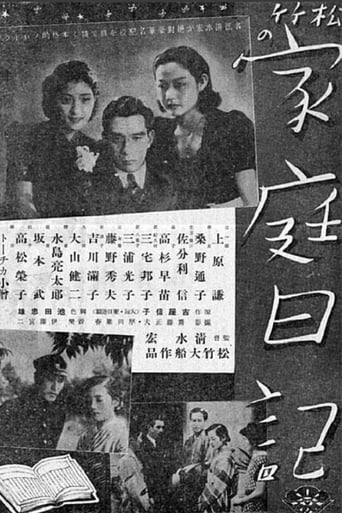
5.7Two childhood friends go their own ways but meet again some years later after they have both married. They get re-acquainted, meet each others’ families, and all is well. Then the disagreements start...
Family Diary
1938
 8.0
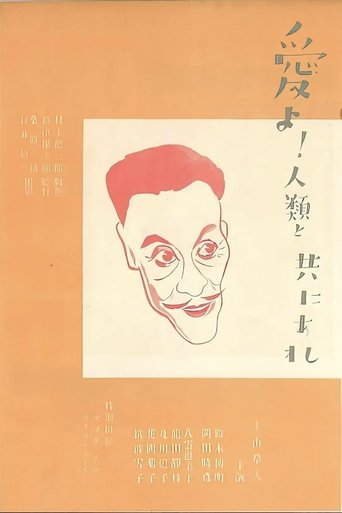
8.0The three-hour Ai yo jinrui to tomo ni are / Love, Be with Humanity (1931) starts as a satire of alienation in the world of money, develops into a lumberland epic with a forest fire on Sakhalin Island, turns into a tragedy of King Lear dimensions, and manages to amaze the blasé audience with a happy end in the Wild West.
Love, Be with Humanity: Part 2
1931
 6.7
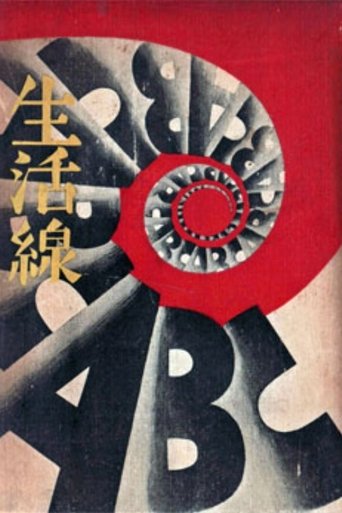
6.7Japanese silent film directed by Yasujirô Shimazu, originally released as a two-part movie on December 11, 1931.
ABC Lifeline
1931
 10.0
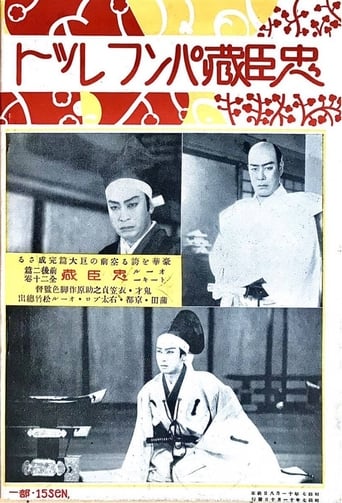
10.0No synopsis available yet.
Chûshingura - Zempen: Akahokyô no maki
1932
 7.0
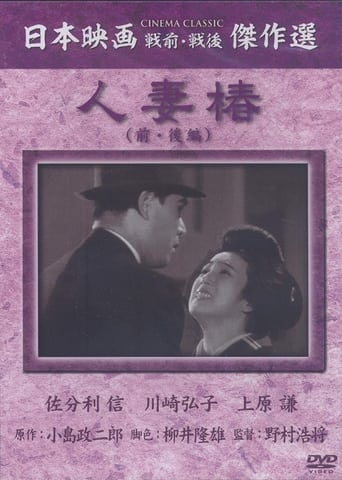
7.0The narrative is about a woman who faces hard times, when her husband is arrested for a crime committed by his boss. The woman also has a child to look after, and they end up meeting several colorful personalities.
Housewife Camellia
1936
 5.6
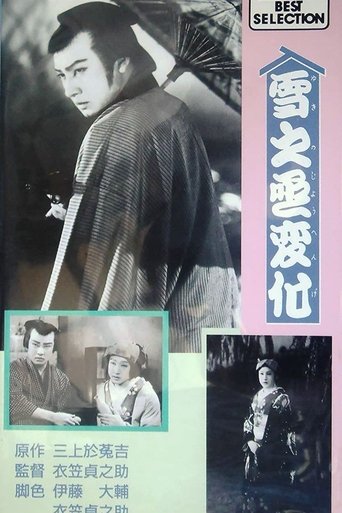
5.6An onnagata (female impersonator) of a Kabuki troupe avenges his parents' deaths. Remade in 1963 as Yukinojô Henge.
An Actor's Revenge
1935
 NR
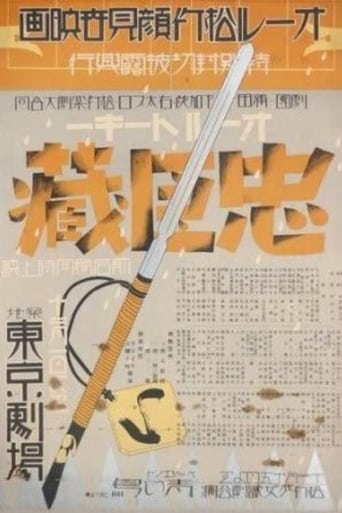
NRThis 1932 adaptation is the earliest sound version of the ever-popular and much-filmed Chushingura story of the loyal 47 retainers who avenged their feudal lord after he was obliged to commit hara-kiri due to the machinations of a villainous courtier. As the first sound version of the classic narrative, the film was something of an event, and employed a stellar cast, who give a roster of memorable performances. Director Teinosuke Kinugasa was primarily a specialist in jidai-geki (period films), such as the internationally celebrated Gate of Hell (Jigokumon, 1953), and although he is now most famous as the maker of the avant-garde silent films A Page of Madness (Kurutta ichipeji, 1926) and Crossroads (Jujiro, 1928), Chushingura is in fact more typical of his output than those experimental works. The film ranked third in that year’s Kinema Junpo critics’ poll, and Joseph Anderson and Donald Richie noted that 'not only the sound but the quick cutting was admired by many critics.
The Loyal 47 Ronin
1932
 7.0
7.0Michiko gets pregnant after a rape. She marries a boring business partner of her father to avoid the shame. Later she meets the rapist again who is now a union leader in opposition of her husband.
Silver Stream
1931
 7.0
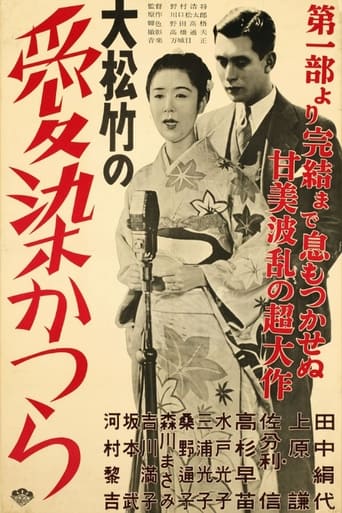
7.0A young doctor, Kozo Tsumura, falls for young nurse Katsue Takaishi. But she's got a secret: she's a widow with a son. Kozo and Katsue decide to run away to Kyoto, but her child suddenly became sick and she just missed the train and Kozo. She makes it to Kyoto finally, but is unable to meet him. Plus she isn't accepted into Kyoto society. She goes back to her hometown and tries to forget him. She quits the hospital to concentrate on her singing. She makes her professional debut with the hit "Aizen Katsura". Kozo is in the audience.
The Tree of Love
1938
 NR
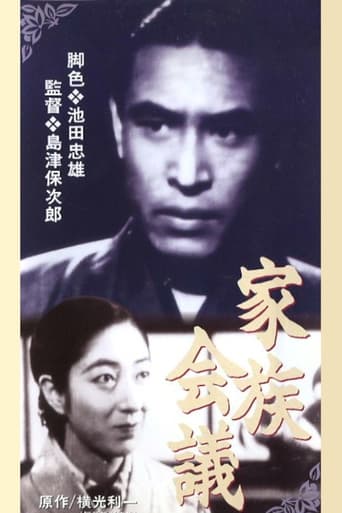
NRA melodrama about a businessman's relations with the three women in his life.
Family Meeting
1936
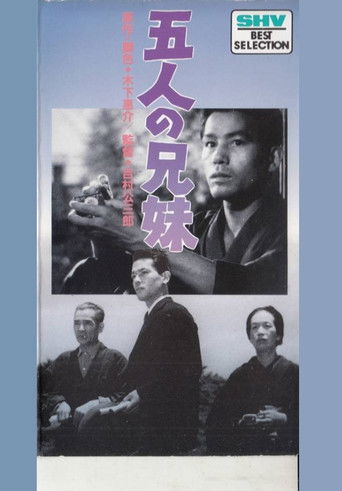 8.0
8.0A businessman runs afoul of the law and commits suicide, leaving behind a wife and five children. The eldest son takes the family to Tokyo and labors to restore its name and fortune
Five Siblings
1939
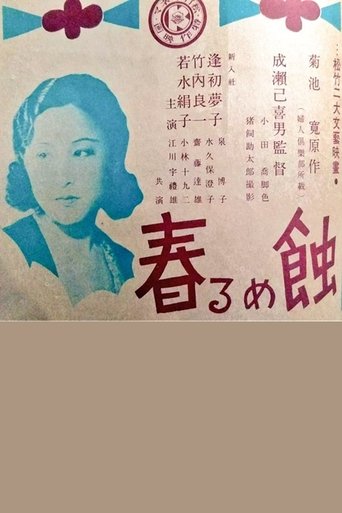 10.0
10.0It is considered to be a lost film.
Moth-eaten Spring
1932
No synopsis available yet.
Reijin
1930
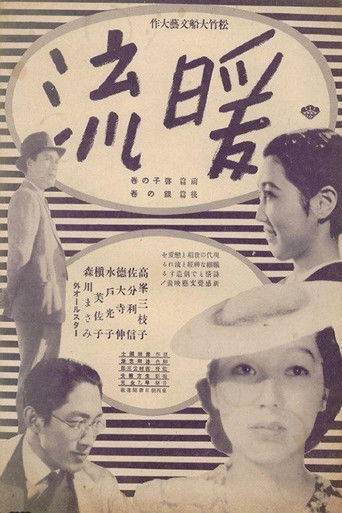 5.2
5.2Adaptation of Kishida Kunio's novel. Set against the backdrop of a power struggle within a hospital, depicts the love lives of the director's daughter, the administrative director, a doctor, and a nurse.
Warm Current
1939
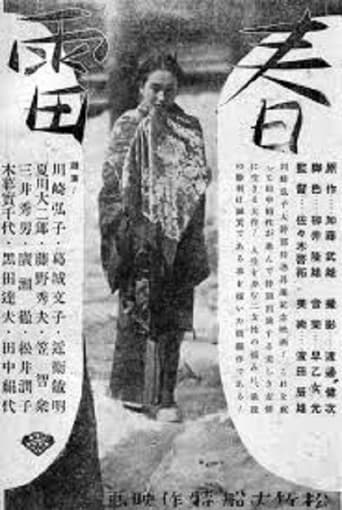 NR
NREiko is an innocent young lady born into a wealthy family with nothing to offer. She was good at singing, and lived her life playing around with her cronies, organizing music concerts and so on. However, things change when her father's business fails and she was suddenly thrown out into the world without any foundation. Eiko has no one to support her after she loses her social status, and her only tutor, Shinnosuke (Natsukawa Daijiro) was the only one who was sincere. Eiko is a stickler for using everything she can get her hands on, and she quickly moves into Shinnosuke's house.
Spring Thunder
1939
Kan’ichi Hazama and Omiya Shigisawa are engaged to be married, but Omiya breaks the engagement to marry a wealthy banker’s son. Heartbroken, Kan’ichi becomes a moneylender, and years later their paths cross again under changed circumstances. Adapted from a popular serialized novel of the same name.
The Golden Demon
1932
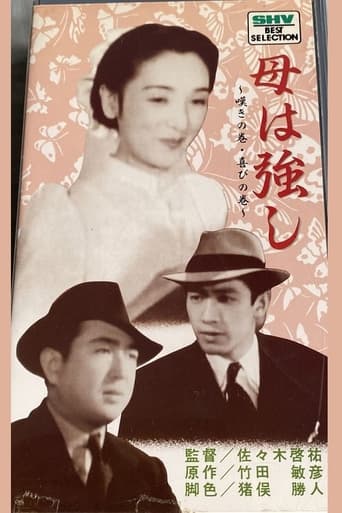 NR
NRNo synopsis available yet.
Mother is Strong
1939
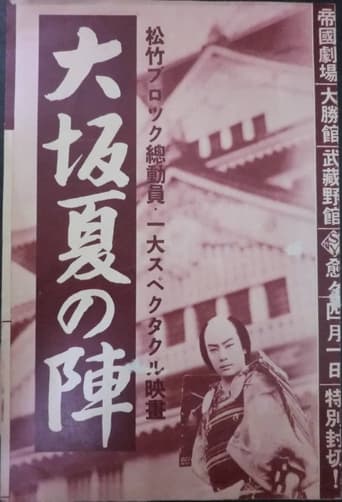 7.0
7.0The Siege of Osaka
The Siege of Osaka
1937
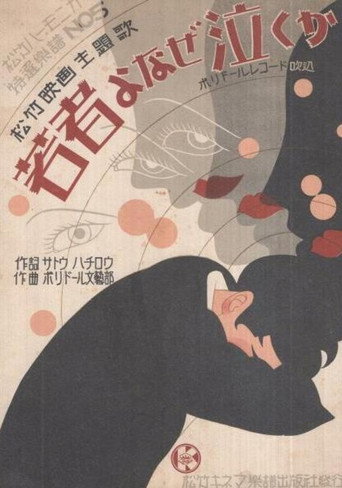 NR
NRA modern girl suddenly intrudes into a widower's family home.
Youth, Why Do You Cry?
1930
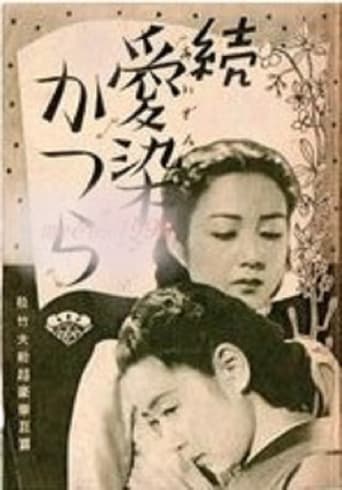 8.0
8.01939 Japanese movie
Zoku aizen katsura
1939
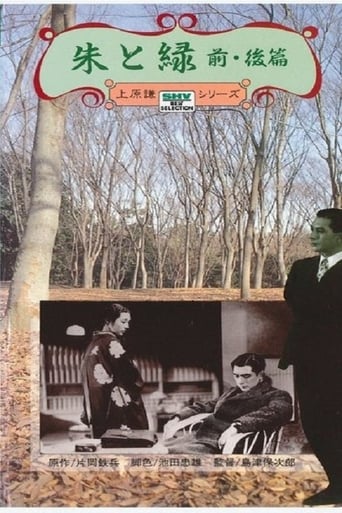 5.3
5.3A businessman’s daughter falls in love with one of her father’s employees.
Vermilion and Green
1937
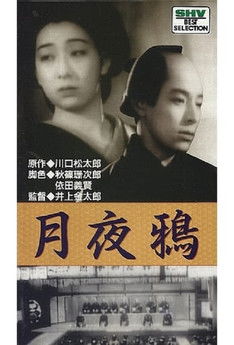 NR
NRThe ambiguous relationship between a woman musician and her young student.
Tsukiyo Karasu
1939
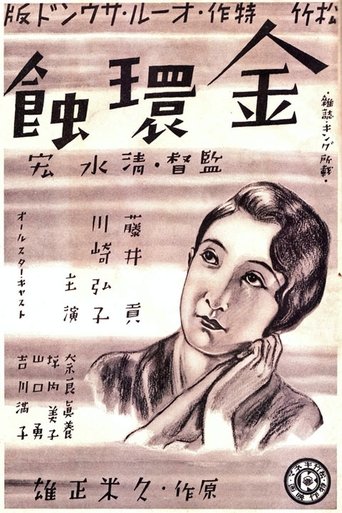 NR
NRThe story is centered around the devastating experiences of two villagers, Osaki Shuichi, and his cousin, Nishimiura Kinue, when they leave their hometown for the metropolis of Tokyo. They are in love with each other, but Kinue is expected to marry the lawyer Kanda Seiji. In consequence, Shukichi leaves for Tokyo, where he becomes tutor to the son of the rich Iwaki family. The heartbroken Kinue also makes her way to the capital, where she becomes a bar hostess.
Eclipse
1934
Based on the Sakatayama double suicide
Tengoku ni musubu koi
1932
7.0The three-hour Ai yo jinrui to tomo ni are / Love, Be with Humanity (1931) starts as a satire of alienation in the world of money, develops into a lumberland epic with a forest fire on Sakhalin Island, turns into a tragedy of King Lear dimensions, and manages to amaze the blasé audience with a happy end in the Wild West.
Love, Be with Humanity: Part 1
1931
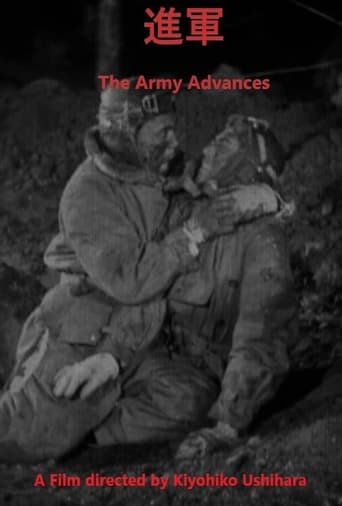 10.0
10.0A farmer’s boy, obsessed with his balsa-and-paper flying models and with dreams of real aircraft, develops a friendship with the daughter of the local squire, who introduces the lad to her pilot brother and his flying officer friends; through hard work, and despite the handicap of a lowly class status, he eventually succeeds in qualifying as a pilot and joining the air force.
Marching On
1930
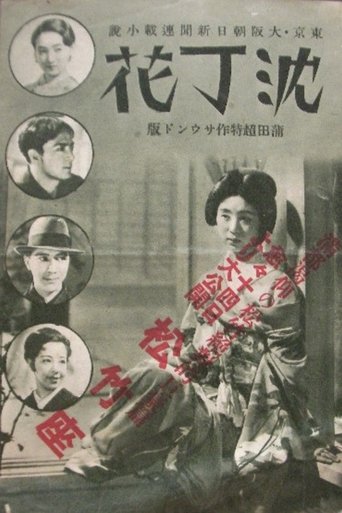 NR
NRJapanese film from 1933, adapted from Masao Kume's serialized newspaper novel.
Daphne
1933
Japanese film from 1933, adapted from a story serialized in the entertainment magazine "Fuji."
Clear and Cloudy
1933
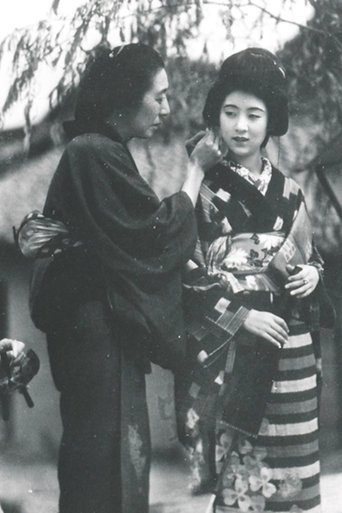 9.0
9.0Japanese silent film from 1930. Directed by Heinosuke Gosho, the film marked a new stage in the artistry of Kinuyo Tanaka, earning acclaim strong enough to greatly expand her following as a leading actress.
The Tale of Kinuyo
1930
Japanese drama from 1934. A major production of Shochiku Studio, directed by Hiroshi Shimizu.
Mother of the East
1934
1920s · 17 titles
8.0A blacksmith is chased out of the village by the sinister village chief and forced to move to the forest with his wife and two sons. The blacksmith's younger son is disabled, and the other children in the village tease him. The older son aspires to become a doctor in order to fix his brother's leg. The film depicts the bond between a father and his sons. Only 18 minutes survive.
The Blacksmith of the Forest
1929
A hard-working new employee at a trading company is promoted through the company president's business. However, he quarrels with his wife over something trivial, and her wife runs away from home, causing a fuss, but she returns to normal. Selected by Kinema Junpo as the 5th-best Japanese movie of 1926.
Useless Button
1926
Japanese silent film from 1929.
Triumphant Song of the Mountain
1929
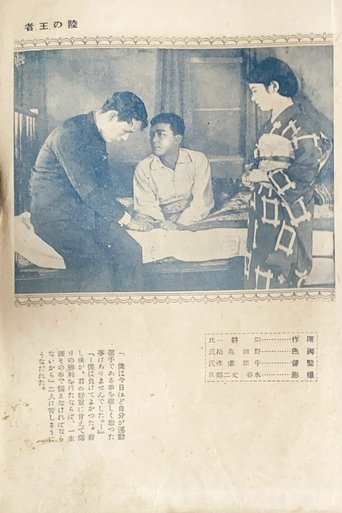 NR
NRJapanese silent film from 1928, ranked as Kinema Junpo's second-best Japanese movie of the year.
King of the Land
1928
Japanese silent film from 1927, based on a popular serialized novel by Kan Kikuchi.
Madame Pearl
1927
Directed by Eizo Tanaka. Only 8 minutes of film is known to have survived.
The Lapel Shop
1922
Japanese silent film from 1929.
The Father and His Son
1929
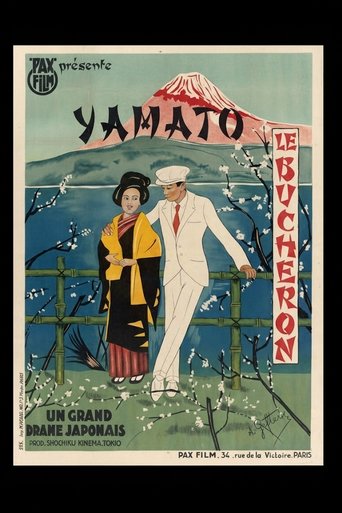 NR
NRThe logger Yamato has been raising his daughter alone since his wife died in childbirth. The baron who owns the forests where he works convinces him to let him adopt the child, despite his reluctance. Fifteen years of age pass without Yamato seeing his daughter again.
The Eternal Heart
1928
No synopsis available yet.
The Big City: Labor
1929
An early Japanese film
Father
1923
Japanese silent film from 1929.
Him and Life
1929
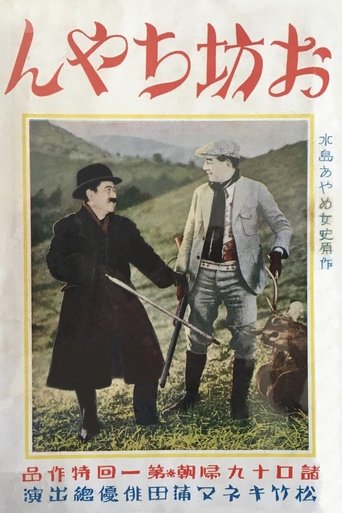 NR
NRJapanese silent film from 1926. (Obo-chan meaning "Young Master.") Written by Ayame Mizushima, the first female screenwriter in Japan.
Young Master
1926
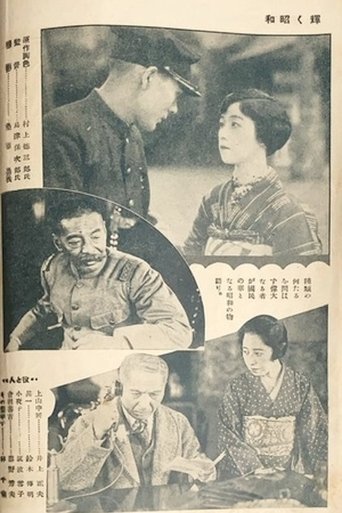 NR
NRJapanese silent film from 1928.
The Glory of the Shōwa Era
1928
Japanese silent film from 1928.
Symphony of Youth
1928
Japanese silent jidaigeki from 1927.
The Oath of a Thousand Kills
1927
Japanese silent film from 1928.
The Face of Humanity
1928
Japanese silent film from 1926.
Buried Youth
1926