
Directing
Heinosuke Gosho
Born — Died
1902-01-24 — 1981-05-01
Place of birth
Tokyo, Tokyo Prefecture, Japan
Known for
Directing
Credits
41 titles
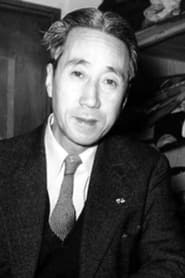
Heinosuke Gosho (五所 平之助 Gosho Heinosuke, 24 January 1902 – 1 May 1981) was a Japanese film director who directed Japan's first talkie, The Neighbor's Wife and Mine, in 1931. He once served as president of the Directors Guild of Japan Description above from the Wikipedia article Heinosuke Gosho, licensed under CC-BY-SA, full list of contributors on Wikipedia.
Known for
 8.0
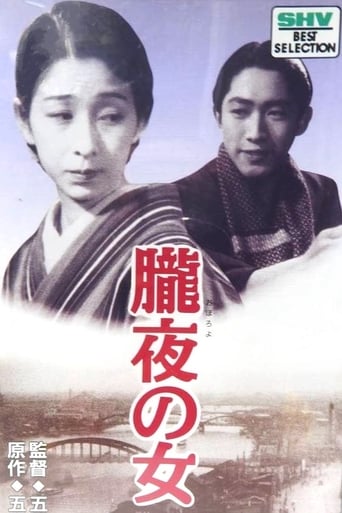
8.0Otoku asks her brother Bunkichi to speak with her son Seiichi, a young man for whom sacrificed everything but who now seems to be headed for a wastrel life. Bunkichi admonishes the boy to study harder, but it seems his uncle's advice may already be too late.
Woman in the Mist
1936
 6.1
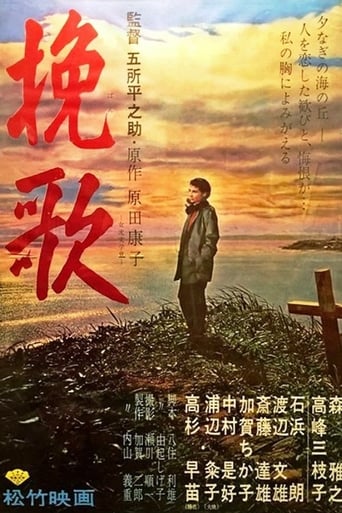
6.1Reiko, a young woman with a physical disability, begins a clandestine affair with the married architect Katsuragi, but also becomes dangerously obsessed with his unfaithful wife, Akiko.
Elegy of the North
1957
 8.0
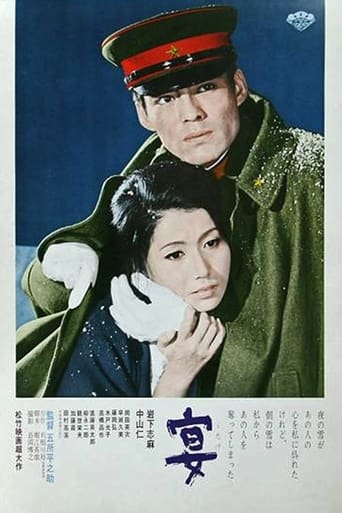
8.0Suzuko, a woman in her twenties who has a brother with political problems (due to communist reprisals), lives for over five years in a love affair with Tate who's a young lieutenant in the Army, ultimately becoming a right-wing fundamentalist revolutionary. She marries another man, one totally dedicated to the rigorous practices of Noh theatre, in an arranged marriage, but the bond that connects her with Tate is too strong.
Rebellion of Japan
1967
 8.0
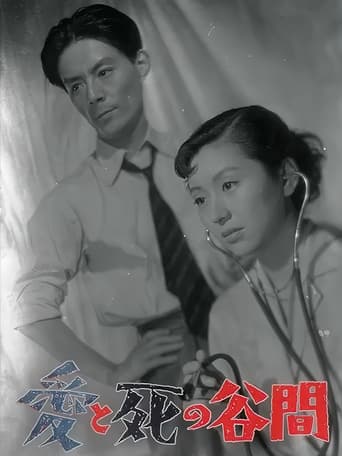
8.0A great ambition to portray with sharp satire and humor the course of modern anxiety and love that is about to be driven to despair.
The Valley Between Love and Death
1954
 7.0
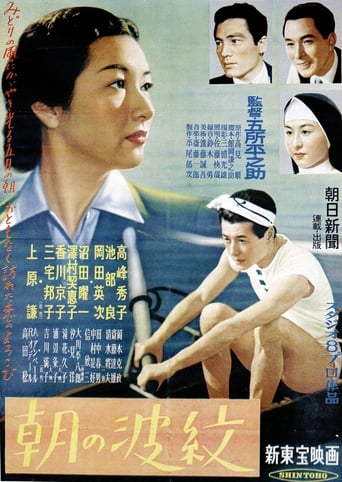
7.0Atsuko is an office secretary who is also her family's primary source of income and caretaker in postwar Japan.
A Ripple in a Morning
1952
 8.0
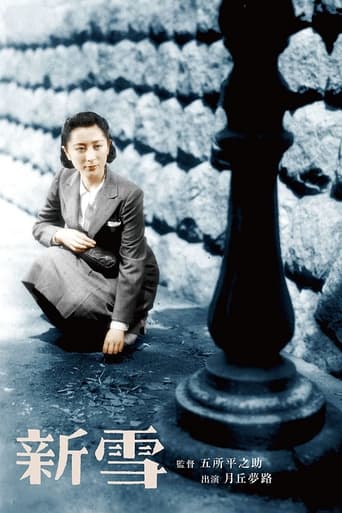
8.0Minowada, a young teacher at a National People's School, has his own theory of education and the daughter of his linguistics teacher becomes drawn to him. Kayo, a strong-willed doctor, is also attracted to him. A mediator tries to arrange a marriage but just at that point Minowada receives military call-up papers.
New Snow
1942
Film credits
Behind the camera
8.0Otoku asks her brother Bunkichi to speak with her son Seiichi, a young man for whom sacrificed everything but who now seems to be headed for a wastrel life. Bunkichi admonishes the boy to study harder, but it seems his uncle's advice may already be too late.
Woman in the Mist
1936
6.1Reiko, a young woman with a physical disability, begins a clandestine affair with the married architect Katsuragi, but also becomes dangerously obsessed with his unfaithful wife, Akiko.
Elegy of the North
1957
8.0Suzuko, a woman in her twenties who has a brother with political problems (due to communist reprisals), lives for over five years in a love affair with Tate who's a young lieutenant in the Army, ultimately becoming a right-wing fundamentalist revolutionary. She marries another man, one totally dedicated to the rigorous practices of Noh theatre, in an arranged marriage, but the bond that connects her with Tate is too strong.
Rebellion of Japan
1967
8.0A great ambition to portray with sharp satire and humor the course of modern anxiety and love that is about to be driven to despair.
The Valley Between Love and Death
1954
7.0Atsuko is an office secretary who is also her family's primary source of income and caretaker in postwar Japan.
A Ripple in a Morning
1952
8.0Minowada, a young teacher at a National People's School, has his own theory of education and the daughter of his linguistics teacher becomes drawn to him. Kayo, a strong-willed doctor, is also attracted to him. A mediator tries to arrange a marriage but just at that point Minowada receives military call-up papers.
New Snow
1942
 6.6
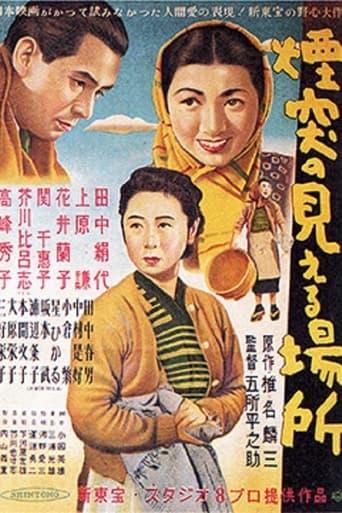
6.6Where Chimneys Are Seen focuses primarily on the interconnected lives of two couples in a lower-middle-class neighborhood in Senju, a poor industrial section of Tokyo.
Where Chimneys Are Seen
1953
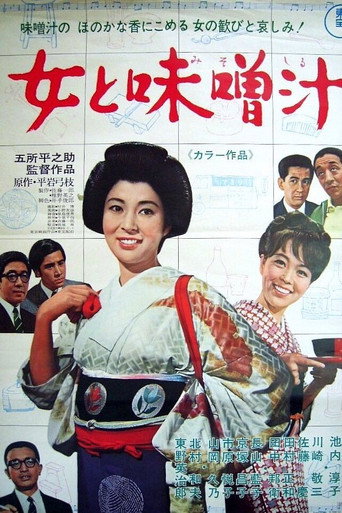 9.0
9.0Temari, a geisha, dreams of opening a small restaurant with her little brother.
Women and Miso Soup
1968
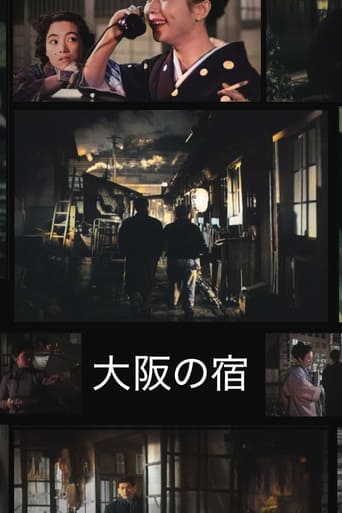 7.5
7.5Follows the story of an insurance company executive from Tokyo, Mr. Mito, who is demoted to the Osaka office. He takes a room at a small inn and tries to rebuild his life.
An Inn at Osaka
1954
7.5Follows the story of an insurance company executive from Tokyo, Mr. Mito, who is demoted to the Osaka office. He takes a room at a small inn and tries to rebuild his life.
An Inn at Osaka
1954
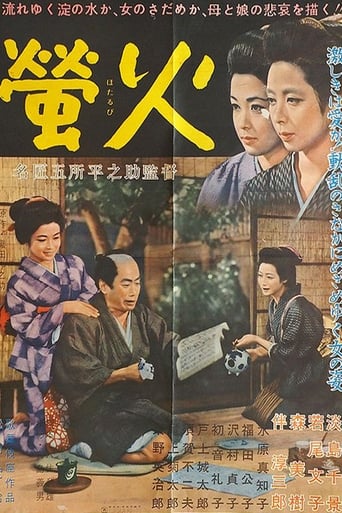 9.0
9.0Set in the 1860s, the final years of the Tokugawa Shogunate, The Fireflies focuses on Tose (Awashima Chikage), the mistress of the Teradaya, a small inn in the Kyoto suburb of Fushimi. She does not have an easy life. Her husband, Isuke (Ban Junzaburo), is a wastrel who fancies himself a kabuki singer and who is obsessed with cleanliness. Her mother-in-law, Sada (Miyoshi Eiko) dislikes her because of her humble origins (her family are farmers) and because she fears that she will inherit the inn instead of Sugi, her daughter. Sada's hopes for Sugi, however, are dashed when she runs off with a con artist and leaves her child behind for Tose to take care of. When Sada becomes seriously ill, it is Tose who nurses her. On her deathbed, Sada asks her daughter-in-law's forgiveness. Meanwhile Isuke spends most of his time with a mistress he has taken, forcing Tose to manage the inn by herself
Firefly Light
1958
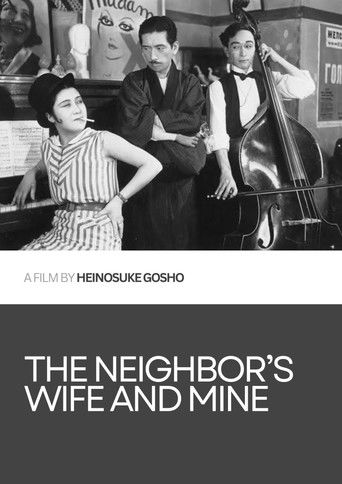 6.6
6.6A playwright moves to a rural neighborhood to avoid the distractions of the city, but he discovers there are plenty of ways to get sidetracked in his new home, too.
The Neighbour's Wife and Mine
1931
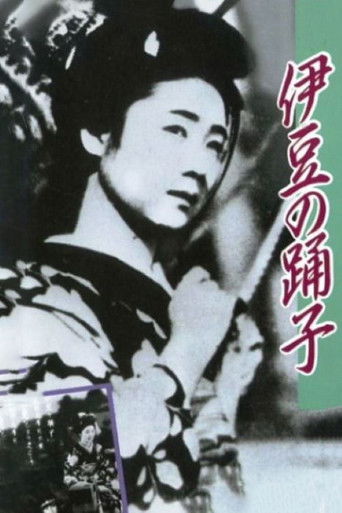 6.7
6.7"The Dancing Girl of Izu" tells of the story between a young male student who is touring the Izu Peninsula and a family of traveling dancers he meets there, including their youngest girl. The student finds the naïve girl attractive even though he eventually has to part with the family after spending memorable time together.
The Dancing Girl of Izu
1933
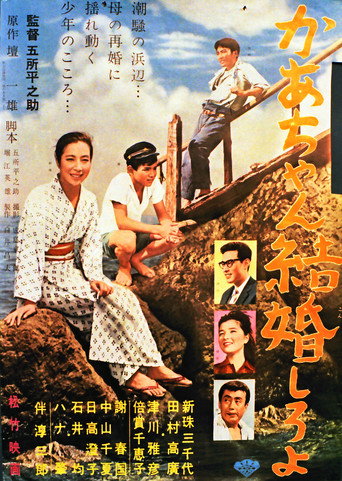 9.0
9.0No synopsis available yet.
Get Married, Mother
1962
9.0No synopsis available yet.
Get Married, Mother
1962
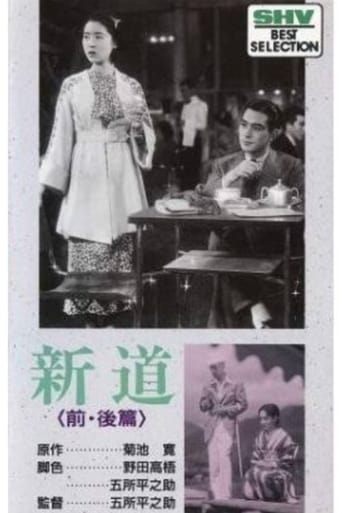 8.5
8.5The eldest daughter of a noble family is in love with an aviator while being courted by a fellow aristocrat she thinks is a dullard. This part is told from the perspective of Akemi.
The New Road: Akemi
1936
8.5The eldest daughter of a noble family is in love with an aviator while being courted by a fellow aristocrat she thinks is a dullard. This part is told from the perspective of Akemi.
The New Road: Akemi
1936
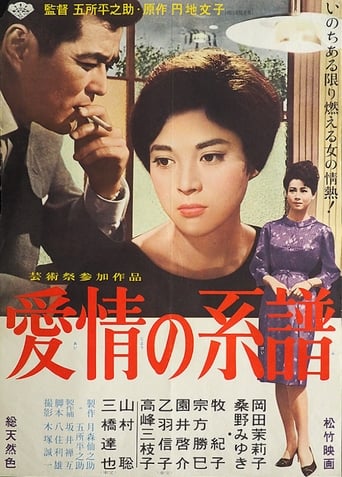 NR
NRNo synopsis available yet.
Love's Family Tree
1961
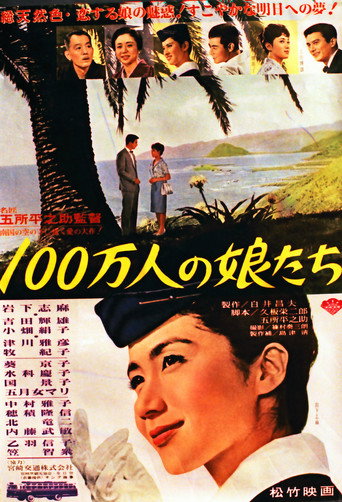 5.0
5.0No synopsis available yet.
A Million Girls
1963
5.0No synopsis available yet.
A Million Girls
1963
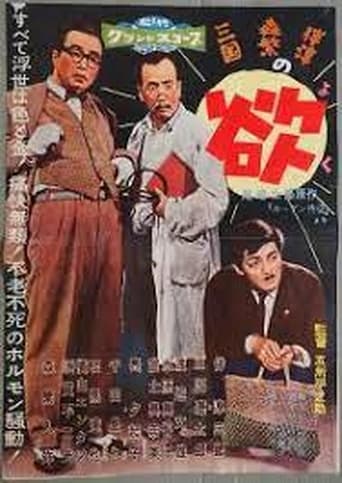 8.0
8.0Half a Loaf... Avarice / Yoku
Yoku
1958
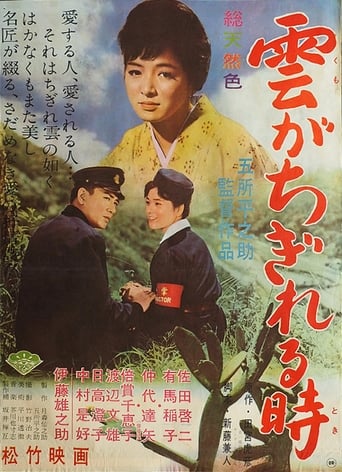 6.0
6.0A provincial bus driver plans to marry his conductress, but one night he glimpses the woman he once loved, which throws him into turmoil.
As the Clouds Scatter
1961
6.0A provincial bus driver plans to marry his conductress, but one night he glimpses the woman he once loved, which throws him into turmoil.
As the Clouds Scatter
1961
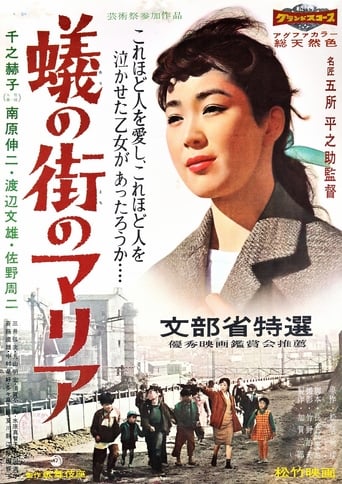 8.0
8.0Alongside Tokyo's Sumida River is a ragpickers' settlement known as Ant Village. One night, a young Catholic girl, Satoko Kitahara, who has been baptized under the name of Maria, comes to offer her services. However, Ant Village is not just an ordinary vagrants' community but a fine autonomous organization, and as the municipal authorities have long been demanding that the people of Ant Village leave the site, Satoko is utilized to publicize the Village and win public sympathy. While being utilized in this manner, Satoko is nevertheless glad to be able to help the people of Ant Village, especially the children, and when the summer vacation comes she decides to take the children on an excursion to Hakone. To raise funds for this purpose she becomes a rag-picker herself.
Maria of the Ant Village
1958
 6.7
6.7Movie about a devoted and single woman and her daughter. The mother's nickname is "Bokuseki" (wooden head) because of his supposed stubbornness. No.10 in the list of "The 10 best films of 1940" by Kinema Junpo.
Wood and Stone
1940
 7.2
7.2Ayako, a young woman from a rural fishing village, is sold by her family into a brothel when her father takes ill. There, she is quickly stripped of her innocence and illusions.
An Innocent Witch
1965
 8.0
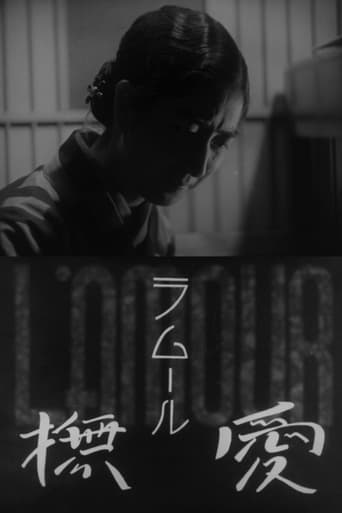
8.0Heinosuke Gosho evokes in this film the family conflicts engendered by the eternal problem of a father who projects his professional desires on the life of his son. The sister Machiko is the essential link that will allow everyone to apologize to each other and achieve reconciliation.
Love
1933
 9.0
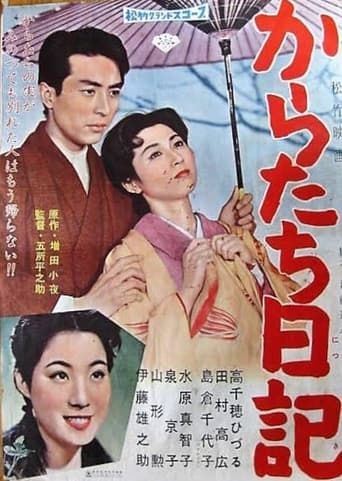
9.0Follows the life of Tsuru, the poor daughter of farmers in Shinshu, Japan.
Diary of Forsaken Love
1959
 10.0
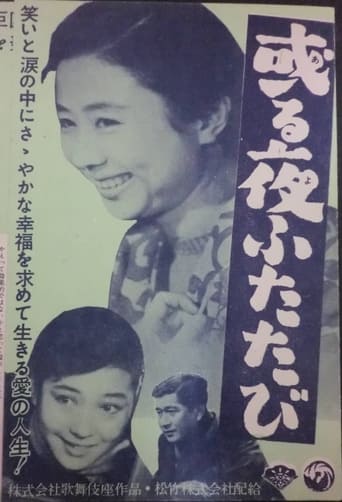
10.0Poor social conditions badly affect the relationship between a married couple, when the husband, who is desperately searching for work, fails to notice the terrible sacrifices made by his wife when she accepts a job at a local inn.
Twice on a Certain Night
1956
10.0Poor social conditions badly affect the relationship between a married couple, when the husband, who is desperately searching for work, fails to notice the terrible sacrifices made by his wife when she accepts a job at a local inn.
Twice on a Certain Night
1956
 6.6
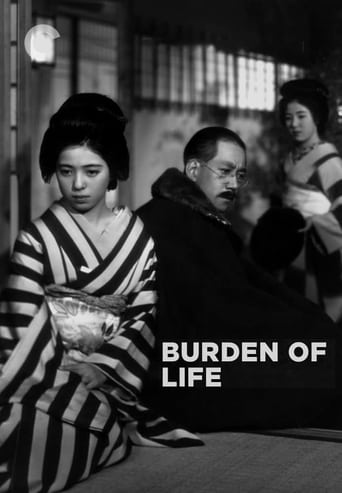
6.6A middle-aged father has just married off his third daughter, but still has his nine year old son to raise whom he resents as he was unwanted.
Burden of Life
1935
 7.0
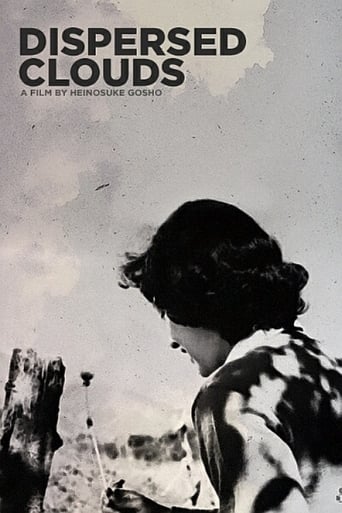
7.0Five women classmates from a college in Tokyo are on the first stretch of a walking tour when one of them, Masako, falls ill at a railway station. Osen, a middle-aged maid from a nearby inn, takes her in and nurses her, assisted by Dr. Minami, a young physician who diagnoses her illness as a mild case of pneumonia. With Masako in good hands and needing a few days to recuperate, her classmates continue their tour. Masako’s recovery, however, is hampered by her spoiled and immature nature and her determination to punish the world for the loss of her mother.
Dispersed Clouds
1951
7.0Five women classmates from a college in Tokyo are on the first stretch of a walking tour when one of them, Masako, falls ill at a railway station. Osen, a middle-aged maid from a nearby inn, takes her in and nurses her, assisted by Dr. Minami, a young physician who diagnoses her illness as a mild case of pneumonia. With Masako in good hands and needing a few days to recuperate, her classmates continue their tour. Masako’s recovery, however, is hampered by her spoiled and immature nature and her determination to punish the world for the loss of her mother.
Dispersed Clouds
1951
 6.5
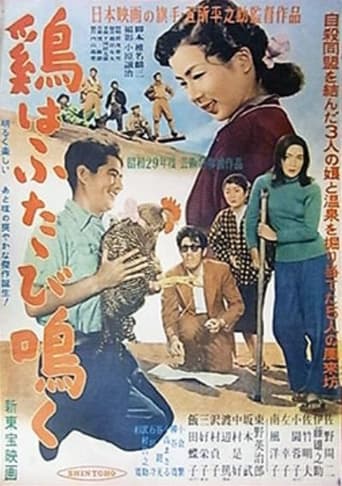
6.5Three young women make a suicide pact, but they grow to have a better understanding of themselves.
The Cock Crows Twice
1954
 6.5
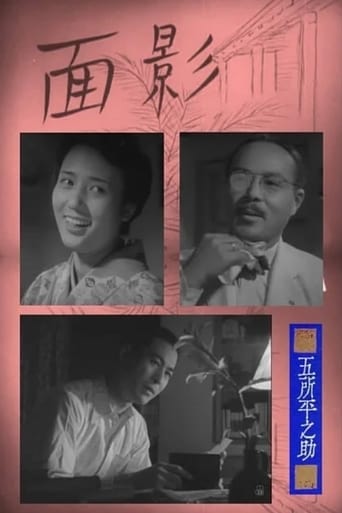
6.5During his summer holiday, Kawasaki Ryuichi (Ryuzaki Ichiro), a handsome engineer in his late twenties, visits his teacher and mentor, Professor Inagaki (Sugai Ichiro), at his seaside home. There he meets the professor's lovely young wife, Sachiko (Hamada Yuriko), and is unsettled by the striking resemblance she bears to his wife, who died three years earlier. Attracted to Sachiko, he does his best to hide his feelings. The couple, however, senses a deep-seated melancholy in him. Attributing it to the loss of his wife, they urge him to marry their niece, Kaoru, but he is not interested. Shortly after, Fumiko , Sachiko's older sister, realizes that Sachiko and Kawasaki have feelings for each other, but she keeps her counsel. One day Kawasaki, Sachiko, and Kaoru go boating when a storm forces them to stay overnight at a hotel. Unable to sleep, Kawasaki takes a walk along the beach where he finds Sachiko, also unable to sleep. He declares his love for her.
A Visage to Remember
1948
Japanese silent film from 1928. Kinema Junpo ranked it among the ten best Japanese movies of the year.
The Village Bride
1928
 8.0
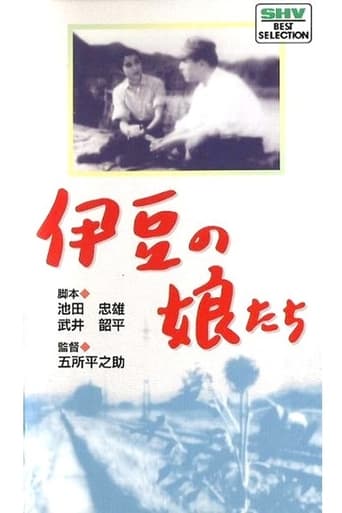
8.0No synopsis available yet.
The Young Women of Izu
1945
A newlywed couple faces tension when the wife, after her husband leaves for work, becomes completely unmotivated to handle household chores and goes back to sleep. Her neglect of daily duties starts to strain their marriage, and the couple is on the brink of divorce. However, a close friend of the husband, determined to save their relationship, introduces a hypnotist to uncover something.
The Groom Talks in His Sleep
1935
 8.0
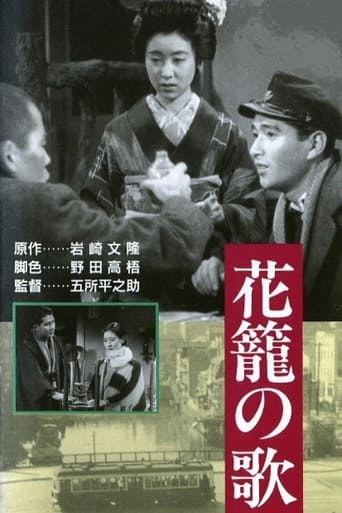
8.0Three men fall in love with the same young girl who works in a tonkatsu restaurant in the Shitamachi district of Tokyo.
Song of the Flower Basket
1937
8.0Three men fall in love with the same young girl who works in a tonkatsu restaurant in the Shitamachi district of Tokyo.
Song of the Flower Basket
1937