
Known for
 6.8
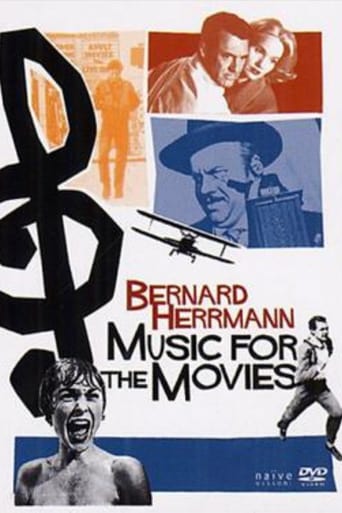
Music For The Movies: Bernard Herrmann explores the work of a composer who created music for over 50 films, collaborating with such diverse directors as Orson Welles, Nicholas Ray, and Martin Scorsese. Best remembered for his twelve-year collaboration with Alfred Hitchcock in such classics as Vertigo, North By Northwest, and the unforgettable Psycho, Herrmann pioneered many fundamental techniques of film scoring in the course of his 35-year career.
Music for the Movies: Bernard Herrmann
1992
 NR
With a revived interest in the scores created for Hollywood films in the 1930's and 40's. "Music for the Movies: The Hollywood Sound" explores a segment of that legacy through composers like Max Steiner ("Gone with the Wind"), Franz Waxman ("Bride of Frankenstein") and Erich Korngold ("The Adventures of Robin Hood"), all of whom came from Europe. Steiner was a pupil of Ravel. The American roster includes David Raksin ("Laura") and Alfred Newman ("The Hunchback of Notre Dame"). Host and narrator John Mauceri conducts the BBC National Orchestra of Wales against a backdrop of clips from the various movies.
Music for the Movies: The Hollywood Sound
1995
Set against the backdrop of the magical White Nights Festival in St. Petersburg, SACRED STAGE explores what the Mariinsky Theater has meant to Russian and Soviet culture and how it has somehow maintained its artistic excellence through tumultuous times.
Sacred Stage: The Mariinsky Theater
2005
 8.8
This extraordinary film tells the story of the men and women who formed the Jewish partisan movement in Vilna, Lithuania, during World War II. Using rare archival film footage dating from 1939 to 1944 and contemporary interviews with 40 partisan survivors (including Abba Kovner, a founder of the partisan movement and one of Israel's leading poets) the film explores the difficulties of organizing under the anarchic conditions of the ghetto.
Partisans of Vilna
1986
 10.0
Using historical footage, still photographs, and live interviews, the filmmaker tells the story of Jewish life in Poland between the two World Wars. Includes scenes of urban and rural life, and covers the rise and flourishing of the many religious and secular economic, political, and social movements which characterized Jewish society at this time. Film is a broad survey rather than focusing on any particular sub-topic. Notable in that it deals with the vibrancy of the life of this population of 3.5 million, and not with the tragedy of its subsequent destruction.
Image Before My Eyes
1981
Behind the camera
6.8Music For The Movies: Bernard Herrmann explores the work of a composer who created music for over 50 films, collaborating with such diverse directors as Orson Welles, Nicholas Ray, and Martin Scorsese. Best remembered for his twelve-year collaboration with Alfred Hitchcock in such classics as Vertigo, North By Northwest, and the unforgettable Psycho, Herrmann pioneered many fundamental techniques of film scoring in the course of his 35-year career.
Music for the Movies: Bernard Herrmann
1992
NRWith a revived interest in the scores created for Hollywood films in the 1930's and 40's. "Music for the Movies: The Hollywood Sound" explores a segment of that legacy through composers like Max Steiner ("Gone with the Wind"), Franz Waxman ("Bride of Frankenstein") and Erich Korngold ("The Adventures of Robin Hood"), all of whom came from Europe. Steiner was a pupil of Ravel. The American roster includes David Raksin ("Laura") and Alfred Newman ("The Hunchback of Notre Dame"). Host and narrator John Mauceri conducts the BBC National Orchestra of Wales against a backdrop of clips from the various movies.
Music for the Movies: The Hollywood Sound
1995
Set against the backdrop of the magical White Nights Festival in St. Petersburg, SACRED STAGE explores what the Mariinsky Theater has meant to Russian and Soviet culture and how it has somehow maintained its artistic excellence through tumultuous times.
Sacred Stage: The Mariinsky Theater
2005
8.8This extraordinary film tells the story of the men and women who formed the Jewish partisan movement in Vilna, Lithuania, during World War II. Using rare archival film footage dating from 1939 to 1944 and contemporary interviews with 40 partisan survivors (including Abba Kovner, a founder of the partisan movement and one of Israel's leading poets) the film explores the difficulties of organizing under the anarchic conditions of the ghetto.
Partisans of Vilna
1986
10.0Using historical footage, still photographs, and live interviews, the filmmaker tells the story of Jewish life in Poland between the two World Wars. Includes scenes of urban and rural life, and covers the rise and flourishing of the many religious and secular economic, political, and social movements which characterized Jewish society at this time. Film is a broad survey rather than focusing on any particular sub-topic. Notable in that it deals with the vibrancy of the life of this population of 3.5 million, and not with the tragedy of its subsequent destruction.
Image Before My Eyes
1981