
Directing
Stuart Legg
Born — Died
1910-08-31 — 1988-07-23
Place of birth
London, England
Known for
Directing
Credits
45 titles
Stuart Legg (August 31, 1910 – July 23, 1988) was a pioneering English documentary filmmaker best known for his groundbreaking work with the National Film Board of Canada. His most notable achievement came at the 14th Academy Awards in 1941, when his film Churchill's Island won the Oscar for Best Documentary, making it the first documentary to ever win the prestigious award. Legg's Warclouds in the Pacific was also nominated for Best Documentary that year, further cementing his reputation as a key figure in the documentary film world. Throughout his career, Legg played a significant role in shaping documentary filmmaking, particularly in the areas of war and political themes.
Known for
 NR
NRA wartime documentary following Canadian convoy operations and naval escort duties in the North Atlantic during the early years of World War II.
Atlantic Patrol
1940
 NR
NRA behind-the-scenes GPO Film Unit documentary (directed by Stuart Legg) that races from studio rehearsals and newsrooms to control rooms and transmitters, weaving speeches, music, and outside broadcasts—featuring voices like H. G. Wells and Ramsay MacDonald—into a kinetic portrait of how the BBC’s national “voice” is made.
BBC: The Voice of Britain
1935
 10.0
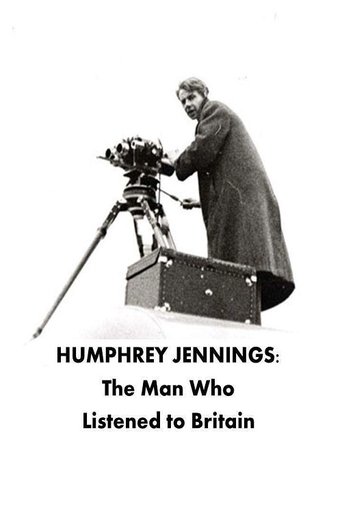
10.0Documentary about Humphrey Jennings, an English documentary filmmaker from the 1930s to 1950.
Humphrey Jennings: The Man Who Listened to Britain
2025
 NR
NRA documentary looking at how truly international air travel (and transportation) has become and at the benefits in trade, medicine and communications that have ensued.
Song of the Clouds
1957
A short documentary looking at the science of life itself and at the international collaboration involved in it's study.
A Light in Nature
1960
 NR
NRA brief history of paper followed by a look at the manufacturing process in a paper mill in Markinch, Scotland.
The Papermakers
1952
Film credits
1930s · 3 titles
 5.8
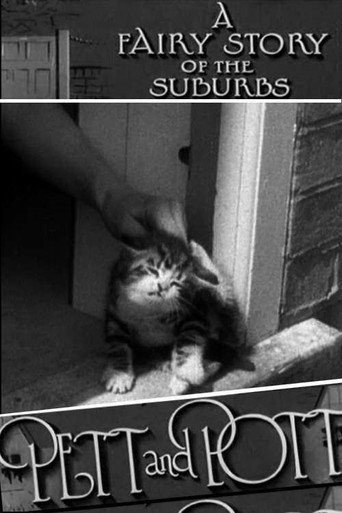
5.8The film, made to advertise domestic telephone sets, is based around two very different families. The Petts are conventional, happy and have children; the Potts are unconventional and unhappy, without children.
Pett and Pott: A Fairy Story of the Suburbs
1934
 6.2
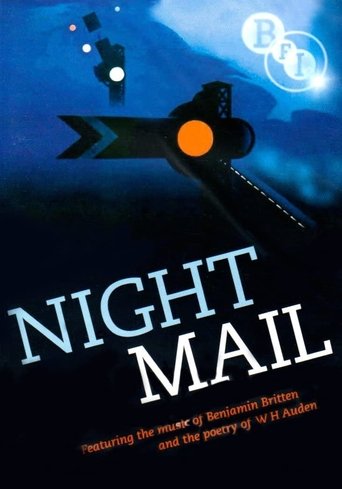
6.2This documentary short examines the special train on which mail is sorted, dropped and collected on the run, and delivered in Scotland on the overnight run from Euston, London to Glasgow.
Night Mail
1938
Sharjah airport in the 1930's showing the airport, town, Emirate and Imperial Airways staff. An early British documentary produced by many pioneers of the medium.
Air Outpost
1937
Behind the camera
NRA wartime documentary following Canadian convoy operations and naval escort duties in the North Atlantic during the early years of World War II.
Atlantic Patrol
1940
NRA behind-the-scenes GPO Film Unit documentary (directed by Stuart Legg) that races from studio rehearsals and newsrooms to control rooms and transmitters, weaving speeches, music, and outside broadcasts—featuring voices like H. G. Wells and Ramsay MacDonald—into a kinetic portrait of how the BBC’s national “voice” is made.
BBC: The Voice of Britain
1935
NRA behind-the-scenes GPO Film Unit documentary (directed by Stuart Legg) that races from studio rehearsals and newsrooms to control rooms and transmitters, weaving speeches, music, and outside broadcasts—featuring voices like H. G. Wells and Ramsay MacDonald—into a kinetic portrait of how the BBC’s national “voice” is made.
BBC: The Voice of Britain
1935
NRA behind-the-scenes GPO Film Unit documentary (directed by Stuart Legg) that races from studio rehearsals and newsrooms to control rooms and transmitters, weaving speeches, music, and outside broadcasts—featuring voices like H. G. Wells and Ramsay MacDonald—into a kinetic portrait of how the BBC’s national “voice” is made.
BBC: The Voice of Britain
1935
NRA documentary looking at how truly international air travel (and transportation) has become and at the benefits in trade, medicine and communications that have ensued.
Song of the Clouds
1957
A short documentary looking at the science of life itself and at the international collaboration involved in it's study.
A Light in Nature
1960
NRA brief history of paper followed by a look at the manufacturing process in a paper mill in Markinch, Scotland.
The Papermakers
1952
 8.5
8.5A historical documentary tracing the development of powered flight from early aviation pioneers to the postwar jet age, focusing on Britain’s role in the evolution of air travel.
Powered Flight: The Story of the Century
1953
 NR
NRDocumentary short about how Britain is improving after WWII and what the populace can do to help.
From the Ground Up
1950
5.8The film, made to advertise domestic telephone sets, is based around two very different families. The Petts are conventional, happy and have children; the Potts are unconventional and unhappy, without children.
Pett and Pott: A Fairy Story of the Suburbs
1934
 NR
NRShows new methods in treating those afflicted with mental health issues. Contrasts past treatment regimes where people were locked away out of sight with the new, 1960s, psychiatric ideas of "group therapy" and talking therapy. Also shows practical behaviours aimed at returning patients to productive lives in society and outpatient services.
Under Stress
1964
This short film examines the Japan that emerged at the beginning of the 1900s and was firmly established as an industrialized nation by the outbreak of World War II. Facing the greatest threat in their history, the democracies of the Pacific took careful stock of this new Japan and its strength, and erected a vast system of defence across the world's greatest ocean.
Warclouds in the Pacific
1941
This short film examines the Japan that emerged at the beginning of the 1900s and was firmly established as an industrialized nation by the outbreak of World War II. Facing the greatest threat in their history, the democracies of the Pacific took careful stock of this new Japan and its strength, and erected a vast system of defence across the world's greatest ocean.
Warclouds in the Pacific
1941
 NR
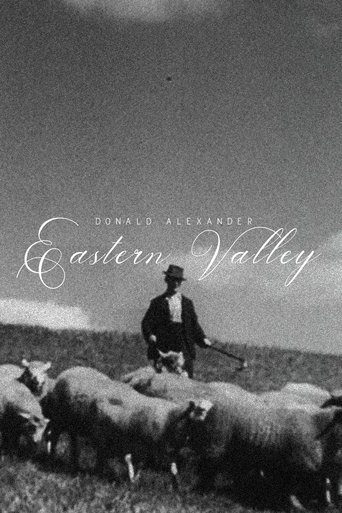
NRUnemployed miners in South Wales are helped to form a Subsistence Production Society to farm and produce goods co-operatively.
Eastern Valley
1937
The countries of Europe are faced with a difficult choice: should they maintain their borders, or should they, with their 300 million people, their enormous productive capacity, their intellect and diligence, help themselves to a better future? To do this, borders must be cut, tariffs disappear and common sales markets created. The first milestones on the way to achieving this great goal are set: Marshall Plan, Schuman Plan, European Payments Union, North Atlantic Defense Organization and Council of Europe.
The Hour of Choice
1951
 6.6
6.6The people of Britain resist the German air force and navy with help from North America. Preserved by the Academy Film Archive in partnership with Library and Archives Canada in 2005.
Churchill's Island
1941
6.6The people of Britain resist the German air force and navy with help from North America. Preserved by the Academy Film Archive in partnership with Library and Archives Canada in 2005.
Churchill's Island
1941
Operation Torch was an Allied invasion of French North Africa during the Second World War.
The Invasion of North Africa
1942
 NR
NRA popular study of relative anatomy and physiology with particular reference to size and weight.
Mites and Monsters
1938
Made at the end of WWII, this documentary looks at Britain's post-war period. During a time of economic hardship, Prime Minister Winston Churchill is concerned about the future of his nation.
John Bull's Own Island
1945
 8.0
8.0A dramatized documentary portraying youth unemployment and state-supported training initiatives in 1930s Canada.
The Case of Charlie Gordon
1939
 5.6
5.6This wartime newsreel from 1942 documents the efforts of China to deal with Japanese aggression.
Inside Fighting China
1942
Short film produced and directed in 1945 for the National Film Board of Canada series The World in Action. Over its nearly 21-minute running time, circumstances during the immediate postwar period following the Second World War, leading to the formation of the United Nations are discussed.
Now—The Peace
1945
Part of BFI collection "They Stand Ready."
Eagles of the Fleet
1950
This short WWII propaganda documentary drives home the point that steel and committed steel workers can make the difference between winning and losing in modern warfare. A short sequence demonstrating the depravity of the Nazis is followed by a detailed explanation of the manufacture of Bren guns, ambulances, transport trucks and submarine chasers in Canada during World War II.
Front of Steel
1940
An explanation of what is involved in the devaluation of sterling.
Dollars and Sense
1949
Canadian documentary on war time Italy.
The Gates of Italy
1943
 NR
NRA record of an educational experiment in the small town of Chesterfield in Derbyshire.
The New Generation
2025
 NR
NRA playful and affectionate look at London Zoo and the people and animals who make up its daily life.
Behind the Scenes
1938
 NR
NRAccount of the development of air transport during wartime and a review of issues to be solved in regulating international civil aviation.
Global Air Routes
1944
Examines contemporary educational methods and policies in the light of an age that has released new natural energies, to be used for or against mankind. It reiterates the question sociologists ask: is the development of social responsibility in today's children keeping pace with their technical knowledge?
Tomorrow's Citizens
1947
Spotlight on the Colonies places particular emphasis on the economic benefits that continued investment and development within the colonies will provide for Britain
Spotlight on the Colonies
1950
 6.0
6.0A documentary looking at the British Government's atomic weapons design, construction and testing on the Australian Monte Bello Islands in 1951.
Operation Hurricane
1952
A film made by the British General Post Office (GPO) in 1933, promoting the automation of telephone exchanges.
The Coming of the Dial
1933
Not by any means a truly comprehensive scientific study, this film nevertheless conveys in a popular fashion facts as to the development and habits of various types of apes. Skillful direction and interesting commentary almost succeed in transforming the film into an “entertainment” piece.
Monkey Into Man
1938
A Cambridge student takes the blame for his gambling brother.
Varsity
1930
Commissioned by the Festival of Britain to show the similarities and contrasts between 1851 and 1951, by means of the Great Exhibition and the Festival.
Forward a Century
1951
Short documentary about a trawler fishing for hake.
On the Fishing Banks of Skye
1935
The end of WWII has brought much hardship to Western Europe, especially in the area of food security and availability. The war has wiped out much of Europe's ability to grow its own food - it, as a continent, was close to being self sufficient during peace times - or to distribute what can be grown internally. In cities, there are long line ups at the few places where food is available, and a growing black market for food for those who can afford it. Much of the food growing regions of the southern hemisphere are also having problems growing enough to feed their own due to natural disasters. That leaves the United States and Canada as the only major food growing nations to assist its war time allies of Europe through this crisis while Europe rebuilds.
Food: Secret of the Peace
1945
A short GPO documentary showing how undersea telephone cables are repaired.
Cable Ship
1933