
Directing
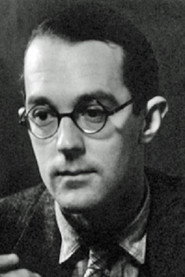
Basil Wright
Born — Died
1907-06-12 — 1987-10-14
Place of birth
Frieth, Buckinghamshire, England
Known for
Directing
Credits
29 titles
Basil Wright was a documentary filmmaker, film historian, film critic and teacher. During World War II, Wright worked only as a producer, first at John Grierson's Film Centre before joining The Crown Film Unit between 1945 and 1946 as producer-in-charge. Among the best known films he produced for Crown are Humphrey Jennings' A Diary for Timothy (1946) and A Defeated People (1946) and Instruments of the Orchestra (1946) featuring Benjamin Britten's The Young Person's Guide to the Orchestra.[1] Returning to direction in the early 1950s, his films included Waters of Time (1951) made for the Festival of Britain, World Without End (1953) directed with Paul Rotha for UNESCO and Greece: The Immort…
Known for
 6.8
6.8A narrator recounts the state of Great Britain near the end of WWII via a visual diary for the titular baby boy born in September 1944.
A Diary for Timothy
1945
 NR
NRA housewife galvanises her docker husband to take an interest in more important matters than the football pools.
Advance Democracy!
1938
 6.3
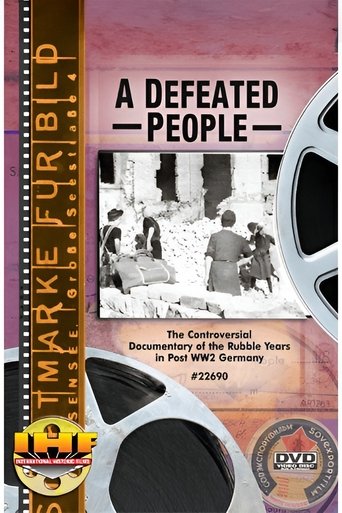
6.3A Defeated People is a 1946 British documentary short film made by the Crown Film Unit, directed by Humphrey Jennings and narrated by William Hartnell. The film depicts the shattered state of Germany, both physically and as a society, in the immediate aftermath of World War II. The narration explains what is being done – and what needs to be done – both by the occupying Allied forces and the German people themselves to build a better Germany from the ruins.
A Defeated People
1946
 6.2
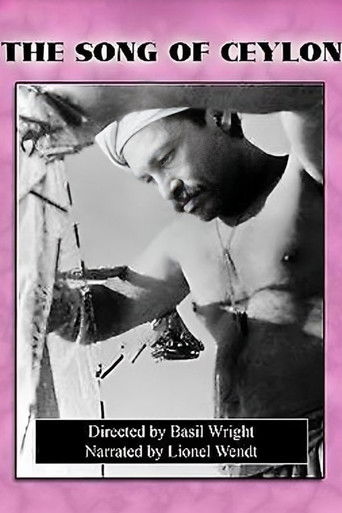
6.2Ambitious documentary chronicling the cultural life and religious customs of the Sinhalese and the effects of advanced industrialism on such customs.
The Song of Ceylon
1934
 7.3
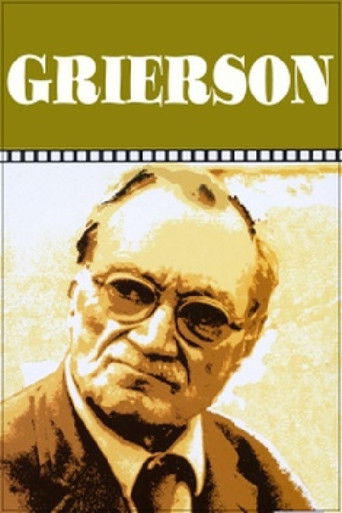
7.3A portrait of John Grierson, the first Canadian Government Film Commissioner and founder of the National Film Board in 1939. Interweaving archival footage, interviews with people who knew him and footage of Grierson himself, this film is a sensitive and informative portrait of a dynamic man of vision. Grierson believed that the filmmaker had a social responsibility, and that film could help a society realize democratic ideals. His absolute faith in the value of capturing the drama of everyday life was to influence generations of filmmakers all over the world. In fact, he coined the term 'documentary film'.
Grierson
1973
 9.0
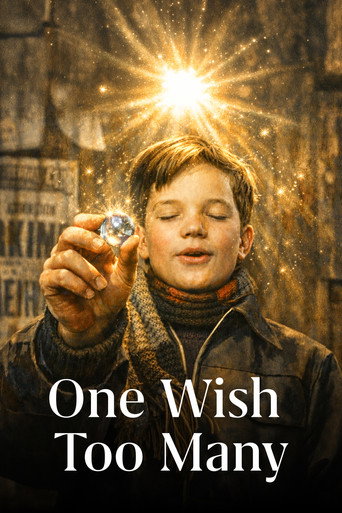
9.0Peter and his friends find unexpected and exciting adventures when all their wishes are granted by a magic marble.
One Wish Too Many
1956
Film credits
1970s · 2 titles
7.3A portrait of John Grierson, the first Canadian Government Film Commissioner and founder of the National Film Board in 1939. Interweaving archival footage, interviews with people who knew him and footage of Grierson himself, this film is a sensitive and informative portrait of a dynamic man of vision. Grierson believed that the filmmaker had a social responsibility, and that film could help a society realize democratic ideals. His absolute faith in the value of capturing the drama of everyday life was to influence generations of filmmakers all over the world. In fact, he coined the term 'documentary film'.
Grierson
1973
Narrated by Eric Morecambe and Ernie Wise, this documentary is about "Laurel and Hardy", one of the most popular and critically acclaimed comedy double acts of the early Classical Hollywood era of American cinema. It features interviews with Jerry Lewis, Dick Van Dyke, Babe London, Marcel Marceau, Lucille Hardy (Ollie's wife), Bob Monkhouse, Hal Roach, Marvin T Hatley, Jack McCabe and many more.
Omnibus - Cuckoo: A Celebration of Mr. Laurel and Mr. Hardy
1974
Behind the camera
6.8A narrator recounts the state of Great Britain near the end of WWII via a visual diary for the titular baby boy born in September 1944.
A Diary for Timothy
1945
NRA housewife galvanises her docker husband to take an interest in more important matters than the football pools.
Advance Democracy!
1938
6.3A Defeated People is a 1946 British documentary short film made by the Crown Film Unit, directed by Humphrey Jennings and narrated by William Hartnell. The film depicts the shattered state of Germany, both physically and as a society, in the immediate aftermath of World War II. The narration explains what is being done – and what needs to be done – both by the occupying Allied forces and the German people themselves to build a better Germany from the ruins.
A Defeated People
1946
6.2Ambitious documentary chronicling the cultural life and religious customs of the Sinhalese and the effects of advanced industrialism on such customs.
The Song of Ceylon
1934
9.0Peter and his friends find unexpected and exciting adventures when all their wishes are granted by a magic marble.
One Wish Too Many
1956
 NR
NRA 1940 black and white film, production sponsored by the Colonial Empire Marketing Board. 'The East African colonies are introduced as representative examples of the Colonial Empire. A tribal dance hints at the "life of fear and uncertainty" replaced by British rule, a village's "squalor" the need for continued war on "ignorance, poverty and disease." "Much can be achieved by money and the initiative of the White Man:" film hints at hydro-electric schemes, modern harbours (Mombasa), roads, bridges etc and illustrates in more detail hospital expansion; tsetse fly research and control; relieving malnutrition; agricultural improvement; education (primary school; Makerere College)." - Abridged version of synopsis on colonialfilm.org
Men of Africa
1940
Ancient Greece, contrasted with modern Greece.
The Immortal Land
1958
Ancient Greece, contrasted with modern Greece.
The Immortal Land
1958
 7.0
7.0The history of Scotland and the factors that have shaped the character of its people.
The Face of Scotland
1938
 NR
NRA doctor talks about the number of injuries and deaths resulting from automobile accidents.
It Might Be You
1946
Focuses upon the journey of child refugees from the Basque Country to temporary accommodation near Southampton, Hampshire [England].
Modern Orphans of the Storm: The Story of the Refugee Basque Children
1937
In a bid to encourage city-dwellers to leave behind the restrictions of war, 'The Green Girdle' escapes from the austere urban landscape of inner-city London and savours the natural delights of the capital’s rural surroundings.
The Green Girdle
1941
 7.0
7.0Weiss’s classic B&W agitprop short made after his escape to London just ahead of the Nazis. He carried with him three reels of material for his unrealized film ‘Dvacet Let Svobody’ (‘Twenty Years of Freedom’) i.e. 20 years of the existence of independent Czechoslovakia from its 1918 founding to 1938 when the Munich Agreement dissolved it. In English with poetic narration written by C. Day-Lewis (father of Daniel Day-Lewis).
The Rape of Czechoslovakia
1939
 7.0
7.0A short documentary to demonstrate what can be done with Technicolor film and to show various other colourful products.
This Is Colour
1942
 NR
NRA celebration of the importance of the British countryside.
The Country Comes to Town
1933
A BAFTA award nominated documentary looking at an exhibition of Da Vinci's drawings at Burlington House in London, marking the quincentenary of his birth.
The Drawings of Leonardo da Vinci
1953
Propaganda short showing how London is coping with World War II.
London Scrapbook
1942
 4.0
4.0The occupation of the Channel Islands.
The Channel Islands 1940-1945
1945
 6.2
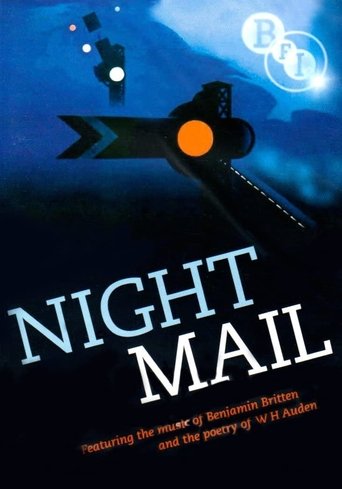
6.2This documentary short examines the special train on which mail is sorted, dropped and collected on the run, and delivered in Scotland on the overnight run from Euston, London to Glasgow.
Night Mail
1938
6.2This documentary short examines the special train on which mail is sorted, dropped and collected on the run, and delivered in Scotland on the overnight run from Euston, London to Glasgow.
Night Mail
1938
An overview of the shepherd's life during the lambing season.
O'er Hill and Dale
1932
UNESCO-funded "one world" documentary by Paul Rotha and Basil Wright.
World Without End
1953
Deals with Britain's treatment of mental health in wartime. Shows a specialized hospital for military and civilian patients and gives a picture of its organization and operation, including diagnostic and therapeutic methods, occupational therapy, recreation, and rehabilitation.
Neuro Psychiatry 1943
1943
The story of a ship's arrival, unloading and departure from the Port of London in 1951, and all the life of the docklands and the river. Made for the Festival of Britain.
Waters of Time
1951
 NR
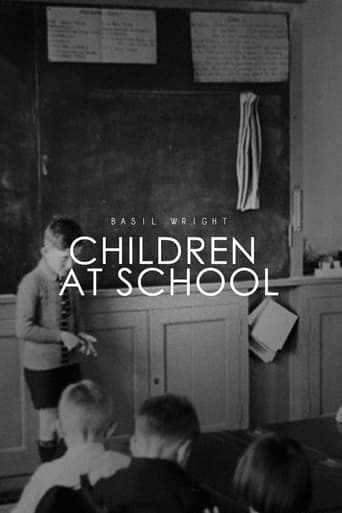
NRShort documentary about British education in the late 1930s.
Children at School
1937