
Directing
Storm De Hirsch
Known for
Directing
Credits
37 titles
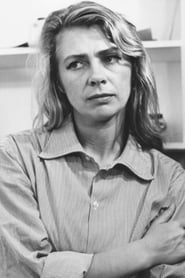
Storm de Hirsch (1912–2000) was an American poet and filmmaker. She was a key figure in the New York avant-garde film scene of the 1960s, and one of the founding members of the Film-Makers' Cooperative. Although often overlooked by historians, in recent years she has been recognized as a pioneer of underground cinema. Description above from the Wikipedia article Storm de Hirsch, licensed under CC-BY-SA, full list of contributors on Wikipedia.
Known for
 6.6
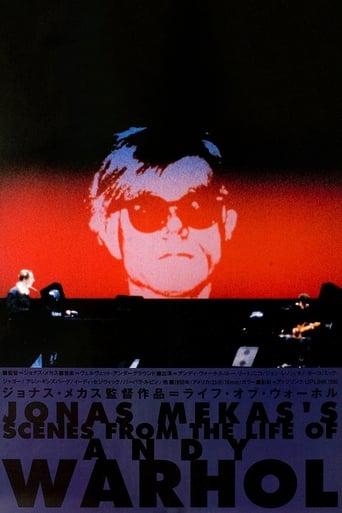
6.6Jonas Mekas’s intimate diary film spans 1963 to 1990, capturing Andy Warhol alongside friends and collaborators from the New York avant-garde. Featuring figures such as Allen Ginsberg, John Lennon, Yoko Ono, and George Maciunas—as well as rare footage of the Velvet Underground’s first performance—it offers a personal portrait of Warhol’s world and his intersections with art, music, and counterculture.
Scenes from the Life of Andy Warhol: Friendships and Intersections
1990
 7.3
7.3Also known as Walden, Jonas Mekas’s first diary film is a six-reel chronicle of his life in 1960s New York, interweaving moments with family, friends, lovers, and artistic idols. Blending everyday encounters with portraits of the avant-garde art scene, it forms an epic, personal meditation on community, creativity, and the passage of time.
Diaries, Notes, and Sketches
1968
 7.0
7.0Jonas Mekas assembles 160 portraits, appearances, and fleeting sketches of underground and independent filmmakers captured between 1955 and 1996. Fast-paced and archival in spirit, the film celebrates the avant-garde as its own “nation of cinema,” a vital community existing outside the dominance of commercial film.
Birth of a Nation
1997
 NR
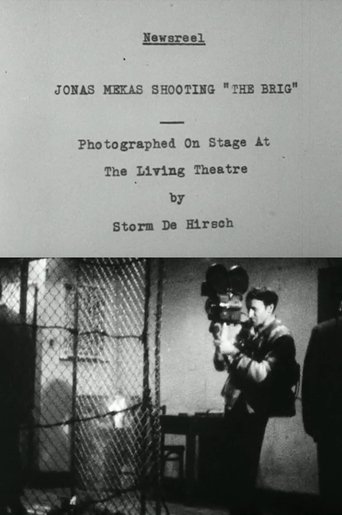
NRA newsreel of Jonas Mekas shooting his filmed version of The Brig on the set of the Living Theatre production.
Jonas in the Brig
1965
 6.0
6.0First shown on January 30, 1967, FOR LIFE AGAINST THE WAR was an open-call, collective statement from American independent filmmakers disparate in style and sensibility but united by their opposition to the Vietnam War. Part of the protest festival Week of the Angry Arts, the epic compilation film incorporated minute-long segments which were sent from many corners of the country, spliced together and projected. The original presentation of the works was more of an open forum with no curation or selection, and in 2000 Anthology Film Archives preserved a print featuring around 40 films from over 60 submissions.
For Life, Against the War
1967
 NR
NRA study of the architecture of the Jefferson Market building in Manhattan which employs quick, probing camera work and intentionally arrhythmic editing in stark contrast to the Venetian Gothic styling of the facade’s architectural details. In three brief sections, the film details the exterior windows and turrets, then, in stark contrast from within the darkened interior, demonstrates the play of light through the stained glass windows. In the final segment, the camera returns to the building’s exterior, but now its sightline is impaired by a chain link fence, possibly in an allusion to the structure’s origin as a courthouse and prison for women. The final shots focus on the plaque affixed to the exterior, which states, “…constructed in 1876 and served as a women’s court until 1932. Of particular interest are its turrets, tracery windows, ironwork and sculpture.”
Jefferson Market
1970
Film credits
1990s · 2 titles
6.6Jonas Mekas’s intimate diary film spans 1963 to 1990, capturing Andy Warhol alongside friends and collaborators from the New York avant-garde. Featuring figures such as Allen Ginsberg, John Lennon, Yoko Ono, and George Maciunas—as well as rare footage of the Velvet Underground’s first performance—it offers a personal portrait of Warhol’s world and his intersections with art, music, and counterculture.
Scenes from the Life of Andy Warhol: Friendships and Intersections
1990
7.0Jonas Mekas assembles 160 portraits, appearances, and fleeting sketches of underground and independent filmmakers captured between 1955 and 1996. Fast-paced and archival in spirit, the film celebrates the avant-garde as its own “nation of cinema,” a vital community existing outside the dominance of commercial film.
Birth of a Nation
1997
1960s · 3 titles
7.3Also known as Walden, Jonas Mekas’s first diary film is a six-reel chronicle of his life in 1960s New York, interweaving moments with family, friends, lovers, and artistic idols. Blending everyday encounters with portraits of the avant-garde art scene, it forms an epic, personal meditation on community, creativity, and the passage of time.
Diaries, Notes, and Sketches
1968
Two nuns take a bath, then meet a sailor on the Staten Island Ferry.
Dirt
1965
 10.0
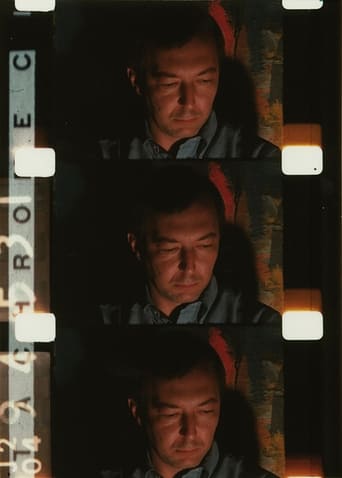
10.0In March and April of 1966, Markopoulos created this filmic portrait of writers and artists from his New York circle, including Parker Tyler, W. H. Auden, Jasper Johns, Susan Sontag, Storm De Hirsch, Jonas Mekas, Allen Ginsberg, and George and Mike Kuchar, most observed in their homes or studios. Filmed in vibrant color, Galaxie pulses with life. It is a masterpiece of in-camera composition and editing, and stands as a vibrant response to Andy Warhol's contemporary Screen Tests. Preserved by the Academy Film Archive in 2001.
Galaxie
1966
Behind the camera
NRA newsreel of Jonas Mekas shooting his filmed version of The Brig on the set of the Living Theatre production.
Jonas in the Brig
1965
6.0First shown on January 30, 1967, FOR LIFE AGAINST THE WAR was an open-call, collective statement from American independent filmmakers disparate in style and sensibility but united by their opposition to the Vietnam War. Part of the protest festival Week of the Angry Arts, the epic compilation film incorporated minute-long segments which were sent from many corners of the country, spliced together and projected. The original presentation of the works was more of an open forum with no curation or selection, and in 2000 Anthology Film Archives preserved a print featuring around 40 films from over 60 submissions.
For Life, Against the War
1967
NRA study of the architecture of the Jefferson Market building in Manhattan which employs quick, probing camera work and intentionally arrhythmic editing in stark contrast to the Venetian Gothic styling of the facade’s architectural details. In three brief sections, the film details the exterior windows and turrets, then, in stark contrast from within the darkened interior, demonstrates the play of light through the stained glass windows. In the final segment, the camera returns to the building’s exterior, but now its sightline is impaired by a chain link fence, possibly in an allusion to the structure’s origin as a courthouse and prison for women. The final shots focus on the plaque affixed to the exterior, which states, “…constructed in 1876 and served as a women’s court until 1932. Of particular interest are its turrets, tracery windows, ironwork and sculpture.”
Jefferson Market
1970
 6.5
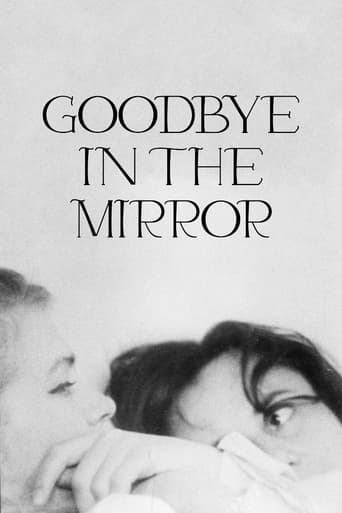
6.5A dramatic feature shot on location in Rome. Centered around the adventures and illusions of three girls living abroad, the film explores their restlessness and personal involvements in assuming the role of woman as hunter.
Goodbye in the Mirror
1964
6.5A dramatic feature shot on location in Rome. Centered around the adventures and illusions of three girls living abroad, the film explores their restlessness and personal involvements in assuming the role of woman as hunter.
Goodbye in the Mirror
1964
6.5A dramatic feature shot on location in Rome. Centered around the adventures and illusions of three girls living abroad, the film explores their restlessness and personal involvements in assuming the role of woman as hunter.
Goodbye in the Mirror
1964
 NR
NRA meditation upon the interior space of London’s Heathrow Airport, contrasting the ceaseless movements of the silhouetted passengers against the angles of the metal structural framing which are then replicated upon the reflective surfaces of the building’s floors and windows, rendering them as ephemeral as the human figures that pass through this nexus.
Heathrow
—
 7.0
7.0"Cine-Sonnet. Rome to Venice. A study of time in motion. An accelerated montage of reflections and landscapes framed in the window of an express train running from Rome to Venice. Dedicated to the writings of J.W. Dunne, the collage of Kurt Schwitters and the cubistic paintings of Braque." –S.D.H.
September Express
1973
 5.4
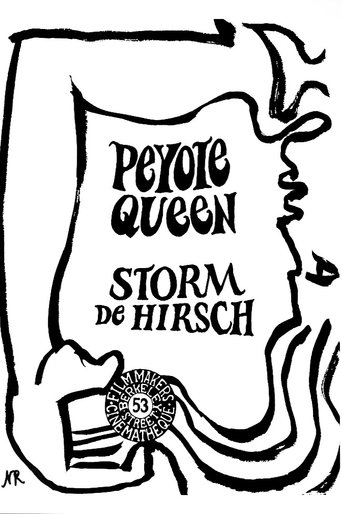
5.4Peyote Queen opens with black-and-white perforations that pulsate to the beat of drumming and escalate to light-bathed split screens and kaleidoscopic effects. Switching to lively organ accompaniment, the film pours out a stream of simple scratchings that rollick across the screen. Fish, breasts, flowers, boats, water, lips, hearts, stars—the hieroglyphs explode with color and celebrate the female creative force. The surge slows with the return of ritual drumming, this time with chanting, and a self-reflective coda. -- National Film Preservation Foundation
Peyote Queen
1965
 NR
NRsuper-8 / color / silent
Deep in the Mirror Embedded
1965
 NR
NR"Cine-Sonnet. The film-maker's impressions of Charlotte Moorman's 9th Avant-Garde Festival of the Arts aboard the old steamboat, 'Alexander Hamilton,' docked at the South Street Seaport
Charlotte Moorman's Avant-Garde Festival #9
1972
 8.0
8.0Geometrics of the Kabbalah (1975) Short film Dir. Storm De Hirsch "5 is water, 5 is the letter X. 5 is distance. 5 says no. 5 laughs when divided into 2. 5 swims backwards, and space is five. The cherry tree is one. The hurt is 1 plus 1, the wish is two. The wonder three. The absence four, and the five is the Universe. The Universe in the head, the universe in the eye, the sky and the waterdrop."–from Brook 16, "Source Books of Storm De Hirsch," 9/24/66.
Geometrics of the Kabbalah
1975
"I wanted badly to make an animated short and had no camera available. I did have some old, unused film stock and several roles of 16mm sound tape. So I used that- plus a variety of of discarded surgical instruments and the sharp edge of a screwdriver- by cutting, etching, and painting directly on both film and tape."
Divinations
1964
 NR
NR"Reflections on a haunted cove along the banks of the Hudson River." –S.D.H.
River Ghost. Hudson River Diary Book: IV
1973
 NR
NRFilm 5 of 6 in the Cine-Songs Program.
Silently, Bearing Totem of a Bird
1962
 NR
NRFilm 1 of 6 in the Cine-Songs Program.
A Reticule of Love
1963
 10.0
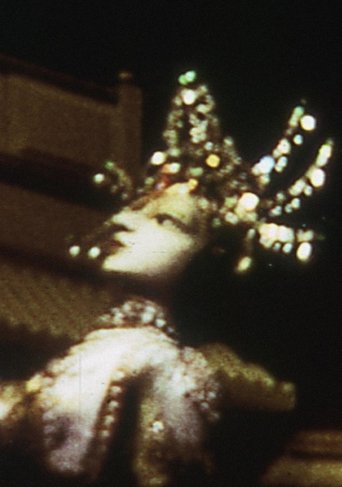
10.0Eighteenth century Indian miniatures enact a traditional wedding ceremony of a Hindu Prince and Princess. An exotic landscape of the mind; fable-fantasy of childhood-manhood.
Sing Lotus
1966
 9.0
9.0An Angry Arts "protestfilm" with black and white visuals. –S. D. H.
Trap Dance
1968
 NR
NR"The shape of change, the shape of memory has walked many miles in the mind to recreate a landscape, a manner of subterranean speech which may never reach its destination to the surface but roolls in the bloodstream swollen with speech invisible to the ear but palpable to the feelings that travel inside the network of the body/brain. The vision and the visitation occur simultaneously."–S.D.H.
An Experiment in Meditation
1971
 NR
NRZero are the violated, zero the redeemed, zero always in the round, molested by computation of an ache, a threat of hangman's thread or ballad dangling from the eye.
Journey Around a Zero
1963
This Blakean cinematic catalog of closely framed images, often representing oppositional properties such as growth and decay, or nature versus artifice, is an exploration of color and light. As the film progresses, its evocation of an exterior garden is transformed as through alchemy or magic to a darkened interior with a female form. The soundtrack’s sole feature is an unidentified woman singing the Liza Lehman song “Fairies” (based on the poem by Rose Fyleman).
Leaves, Bushes, Snake, Pearls, Woman in Half-Mask
—
 NR
NR"Tonight is a snowbird with heart hung hostage in a water drop, its iceflaked starfeet remembering the gargoyle's empty threat to drown in rivulets of melting feather frost." –S.D.H.
Wintergarden. Hudson River Diary Book: III
1973
 NR
NRHudson River Diary: Book 1 "Chronicles the journey of a train named Cayuga as it travels from New York to Poughkeepsie. There is something profoundly sentimental as you make the trip. You may never have been to this part of the world but you are concerned and you care about it after you see the film." – Bob Lermann, Today's Filmmaker
Cayuga Run
1967
 NR
NRDedicated to all the magic makers of the world who weave a talisman for man's rebirth in his house of breath.
Shaman, A Tapestry for Sorcerers
1967
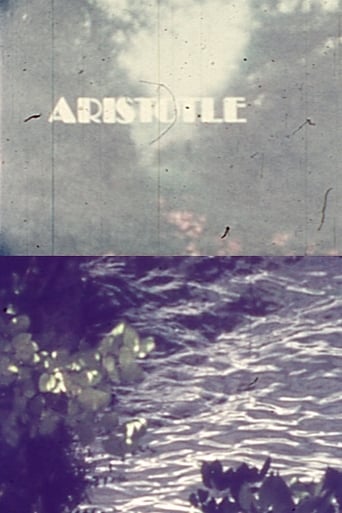 NR
NR"De Hirsch's Aristotle is a succinctly percussive appreciation of the visual rhythms of a country stream." Film 3 of 6 in the Cine-Songs Program.
Aristotle
1965
 NR
NR"Homage to the life and works of Kasimir Malevich" — S.D.H. Film 4 of 6 in the Cine-Songs Program.
Malevich at the Guggenheim
1965
 NR
NR"Metaphysical sketches of my stay at the Neil Ives house in Woodstock where the artist lived and painted" — S.D.H. Film 6 of 6 in the Cine-Songs Program.
Ives House-Woodstock
1965
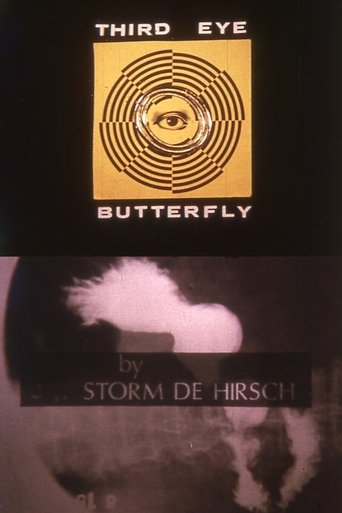 7.0
7.0“Third Eye Butterfly” is a double 16mm projection piece in which the two screens – at times divided within into additional “mini-screens” causing textured kaleidoscopic effects – blur to create a third wider frame, encouraging the viewers to extend their vision beyond ordinary sight - Microscope Gallery
Third Eye Butterfly
1968
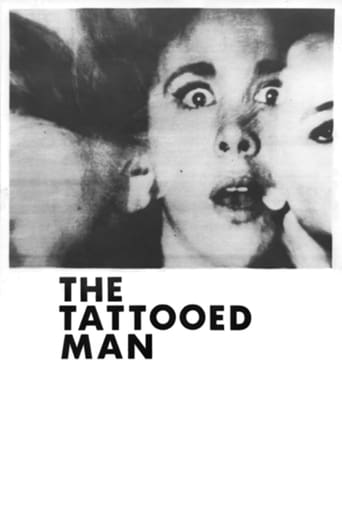 NR
NRChildren of the water world drift the ocean in an empty crystal ball, swim in beaded beds of mist, and spawn in pools of murder to see a lantern sunk in the pit of an empty space.
The Tattooed Man
1971
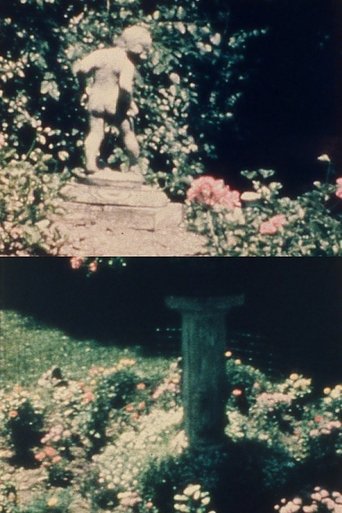 NR
NRSix films in one reel: The Reticule of Love; The Recurring Dream; Aristotle; Malevitch at the Guggenheim; Silently, Bearing Totem of a Bird; Ives House: Woodstock.
Cine-Songs Program
1969
 NR
NR"A day stands still and can be seen sprouting from its socket, a long toothed day eats its quiet bread and stands as still as ears of corn drying in the sun. It is a day to spread out like a festive cloth and heap with fruits. It is a day to carry in one's arms and lie with under the umbrella of a blossom tree." –S.D.H.
Lace of Summer
1973
 NR
NRFilm 2 of 6 in the Cine-Songs Program.
The Recurring Dream
1965