
Directing
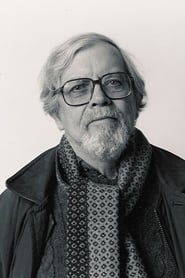
Robert Breer
Born — Died
1926-09-30 — 2011-08-11
Place of birth
Detroit, Michigan, USA
Known for
Directing
Credits
49 titles
Born in 1926 in Detroit, Robert Breer has spent fifty years building up a totally atypical body of work which plays with different genres and abolishes the notions of space and time. Starting off as a painter, he then deconstructed his neoplastic works and ended up with kinetic objects. He dealt next with the thresholds of awareness and perception, both as a sculptor and a film-maker. His films are composed of a jumble images that pass at great speed, while his Floats move almost imperceptibly, in accordance with an unpredictable logic. Robert Breer developed his light yet rigorous style while associating with the New York underground in the Pop years. Continuing his subtle exploration mov…
Known for
 7.8
A compilation of over 30 years of private home movie footage shot by Lithuanian-American avant-garde director Jonas Mekas, assembled by Mekas "purely by chance", without concern for chronological order.
As I Was Moving Ahead Occasionally I Saw Brief Glimpses of Beauty
2000
 7.0
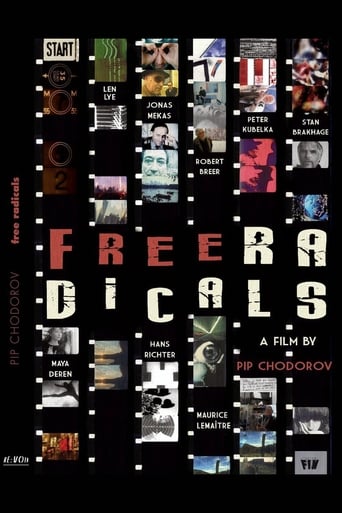
Jonas Mekas assembles 160 portraits, appearances, and fleeting sketches of underground and independent filmmakers captured between 1955 and 1996. Fast-paced and archival in spirit, the film celebrates the avant-garde as its own “nation of cinema,” a vital community existing outside the dominance of commercial film.
Birth of a Nation
1997
Shot in 1974, Colliding was made as a portrait of sculptor/animator Robert Breer.
Colliding
1989
 NR
Documentation of an exhibition entitled Le Mouvement held in Paris in 1955, co-curated by Breer and Pontus Hulten. Features works and appearances by Breer, Tinguely, Agam, Soto, and others. — Anthology Film Archives
The Movement
1957
 4.9
Breer's extraordinary autobiographical film combines personal and family photos with intense colors, textures and geometric abstractions. Originally presented as part of Karlheinz Sotckhausen's 1964 premiere of Originale. - Harvard Film Archive
Fist Fight
1964
 8.4
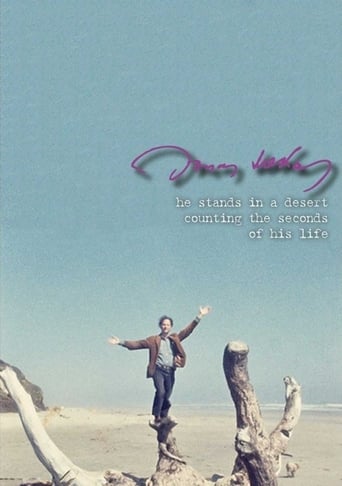
A film collage tracing the story of the lives, loves, and deaths within the artistic community surrounding Jonas Mekas.
He Stands in a Desert Counting the Seconds of His Life
1986
Film credits
1990s · 2 titles
7.0Jonas Mekas assembles 160 portraits, appearances, and fleeting sketches of underground and independent filmmakers captured between 1955 and 1996. Fast-paced and archival in spirit, the film celebrates the avant-garde as its own “nation of cinema,” a vital community existing outside the dominance of commercial film.
Birth of a Nation
1997
 NR
Burford met Breer in February 1992 and filmed his actions. Breer manipulates some of his mutoscopes: he leafs through some cards of his film in the making, Sparkill Ave! A dome-shaped sculpture slowly moves across the space.
Robert Breer At Home
1992
1980s · 2 titles
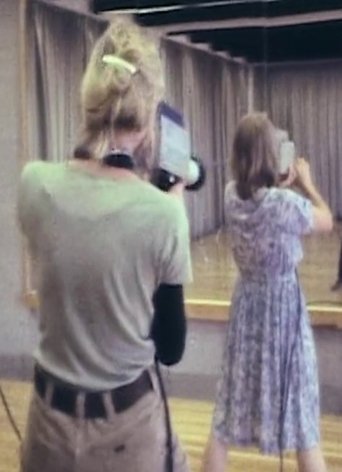
Behind the camera
NRDocumentation of an exhibition entitled Le Mouvement held in Paris in 1955, co-curated by Breer and Pontus Hulten. Features works and appearances by Breer, Tinguely, Agam, Soto, and others. — Anthology Film Archives
The Movement
1957
4.9Breer's extraordinary autobiographical film combines personal and family photos with intense colors, textures and geometric abstractions. Originally presented as part of Karlheinz Sotckhausen's 1964 premiere of Originale. - Harvard Film Archive
Fist Fight
1964
 5.4
Breer’s animation explores the theme and variation of the drawn line: a line in constant movement and transformation. With a very sketchy style, he demonstrates how a simple, abstract image can fill and satisfy the imagination of the film viewer. - MoMA
Breathing
1963
 NR
No synopsis available yet.
FASES DE LA LUNA I
1952
 NR
Animated short
Blue Monday
1988
 6.0
First shown on January 30, 1967, FOR LIFE AGAINST THE WAR was an open-call, collective statement from American independent filmmakers disparate in style and sensibility but united by their opposition to the Vietnam War. Part of the protest festival Week of the Angry Arts, the epic compilation film incorporated minute-long segments which were sent from many corners of the country, spliced together and projected. The original presentation of the works was more of an open forum with no curation or selection, and in 2000 Anthology Film Archives preserved a print featuring around 40 films from over 60 submissions.
For Life, Against the War
1967
 4.0
A collage film in which Pope Pious XII does a juggling act.
A Miracle
1954
 9.0
"A concise, one-minute cartoon history of the black American, commissioned by the Public Broadcast Laboratory and shown on NET network." - Canyon Cinema
PBL #2
1968
A short film by Robert Breer
Par avion
1958
 8.0
Sparkill Ave! combines still photos of Breer's home and environs with hand-drawn images of ordinary objects and scenes.
Sparkill Ave!
1993
 6.6
An elegant home movie, its subject is Breer's apartment which faces the Tappan Zee (T.Z.) Bridge. It is permeated, as are all his films, with subtle humor, eroticism and a sense of imminent chaos and catastrophe.
T.Z.
1979
 5.6
An experiment in associative spontaneity.
Trial Balloons
1982
 6.5
An anarchic collage of invention, Rubber Cement uses rotoscoped family footage together with found objects to create an almost free-form animation bursting with color and movement.
Rubber Cement
1976
Voted for in Sight & Sound's 2022 Greatest Films of All Time poll
Recreation II
1956
 5.8
Conceivably the best of all of Breer’s films to date – has more to do with figuration, according to Breer’s formulation regarding titles with letters or numbers. This becomes clear right away as the title letters are intercut with a flurry of fish swimming past the frame lines, which are made all the more literal through the associative chain established by a snippet of Schubert’s Trout Quintet heard on the soundtrack, along with footsteps – which continue over a profusion of other shapes, colors, and objects, including the title letters again. -- Jonathan Rosenbaum
LMNO
1978
A short film by Robert Breer
Cassis Colank
1959
 4.9
Cut-outs of war machines and the figure of Napoleon – contributors to an anti-war theme – encounter abstract shapes, line drawings, old-master landscapes, short bursts of ‘real-time’ landscapes and shakily photographed gestural watercolors. … ‘a synthesis of all previous techniques.’
Jamestown Baloos
1957
 5.1
A free flow from photography to geometric abstraction hand-painted by Breer. - Harvard Film Archive
Eyewash
1959
 5.2
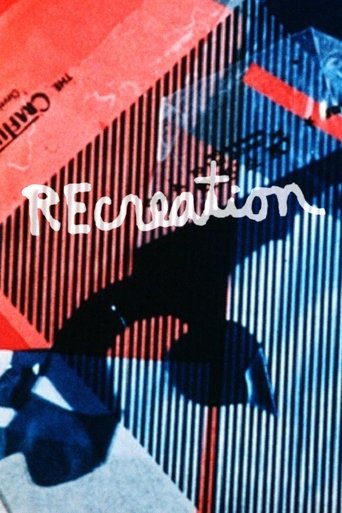
Featuring a commentary by Noël Burch (in nonsense French), Recreation's rapid-fire montage of single-frame images of incredible density and intensity has been compared to contemporary Beat poetry.
Recreation
1956
 4.9
100 basic images switching positions for 4000 frames.
Blazes
1961
 5.7
A live action footage of a smiling, bespectacled (presumably) Western tourist set against the familiar cadence of an accelerating train revving up as it leaves the station sets the mesmerizing tone for the film's abstract panoramic survey of an Ozu-esque Japanese landscape of electrical power lines, passing trains, railroad tracks, and the gentle slope of obliquely peaked, uniform rooflines as Breer distills the essential geometry of Mount Fuji into a collage of acute angles and converging (and bifurcating) lines .
Fuji
1974
 5.7
An experimental film in which a photograph of an airplane turns into a wire diagram, then into an animated plane in flight, and then it explodes into words.
Bang!
1986
 7.0
Short hand drawn representation of a cat
Cats
1956
 7.0
Personal photos are interspersed with fragmentary drawings and flashes of colour, observed and/or remembered everyday events - all of which add to a general sense of reminiscence. Sometimes a hand appears (Breer’s own) on top of a photo, reminding us that the photo is but an object in the film, not the film itself.
Time Flies
1997
 4.8
Robert Breer’s What Goes Up... continues his “kitchen sink” approach of including as many different kinds of things as possible. Central to his art are a series of tensions. Rather than using animation to produce seamless illusions, his films reveal cinema’s dual nature as both an illusion of movement and a succession of stills. The ultimate effect of his work is ecstatic: by combining various rhythmic patterns, abstract and photographed shapes, and flatness mixed with depth illusions, Breer energizes ordinary eyesight. The whole world can seem more alive, alive with rhythms and colors and shapes and textures as well, after seeing one of his films. But Breer’s films also often have a theme of failure, of failed movements and failed aspirations, and the title What Goes Up..., in referencing the idiom “What goes up must come down”, refers to his childhood dreams of flying (illustrated here as in many of his films with airplanes) as well as to the limpness that follows orgasm for males.
What Goes Up....
2003
 7.0
An animated film dedicated to Breer's granddaughter Zoë.
Atoz
2000
 4.7
A record, of sorts, of the birth and death of Tinguely’s famous auto-destructive sculpture. Filmed on the spot at MoMA, this film also exploits a wide range of camera and editing techniques to give it a life of its own, independent of and parallel to the subject. — Anthology Film Archives
Homage to Jean Tinguely's 'Homage to New York'
1960
Utilising an apparently new-found obsession with the colour red and reinvigorating some of the circular imagery of A Man and His Dog Out for Air and 69, Breer delves into the very basis of animation to explore how a variety of easily recognisable objects can be portrayed and manipulated differently using pixillation and classically drawn animation. -Malcolm Turner
Swiss Army Knife with Rats and Pigeons
1980
While birds can be heard singing a shrill song, lines crisscross wildly as if they aimed to form shapes. Their efforts seem hopeless until the very end.
A Man and His Dog Out for Air
1957
 6.5
A woman with an umbrella, a frog and other easily recognizable creatures and objects are moved and transformed within an intricate orchestration of expectations and surprises involving changes of scale, direction virtual depth, and above all, movement off the screen at all four edges.
Horse Over Tea Kettle
1962
 9.0
No synopsis available yet.
Image by Images
1954
 3.0
No synopsis available yet.
Inner and Outer Space
1960
 6.5
Breer's earliest experiments in animation are wonderfully dense yet lyrical abstractions based on Breer's own geometric paintings. - Harvard Film Archive
Form Phases I
1952
 5.5
An animated fable centered around a backyard pond shown intermittently in live-action scenes.
A Frog on the Swing
1989
 6.5
An endless loop of film composed entirely of disparate images. Through repetition, certain images isolate themselves from the flow reforming the original pattern.
Image by Images IV
1955
 5.2
Robert Breer animation from 1969. 16mm, color, silent, using spray paint & stencils.
69
1969
No synopsis available yet.
Image by Images III
1955
 5.3
"Made with spray paint and hand-cut stencils, this film was an attempt at maximum plastic intensity… Places Breer for the first time among the major colorists of the avant-garde." – P. Adams Sitney
70
1970
No synopsis available yet.
Image by Images II
1955
 5.3
Breer was influenced by the new performance art and "happenings" making waves in the avant-garde of Europe and New York. He worked briefly with Claes Oldenburg and his performance pieces resulting in a 13 minute film, Pat's Birthday (1962). - AWN
Pat's Birthday
1962