
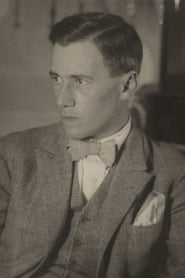
Directing
Hans Richter
Born — Died
1888-04-06 — 1976-02-01
Place of birth
Berlin, Germany
Known for
Directing
Credits
51 titles
Richter's first contacts with modern art were in 1912 through the "Blaue Reiter" and in 1913 through the "Erster Deutscher Herbstsalon" gallery "Der Strum", in Berlin. In 1914 he was influenced by cubism. He contributed to the periodical Die Aktion in Berlin. His first exhibition was in Munich in 1916, and Die Aktion published as a special edition about him. In the same year he was wounded and discharged from the army and went to Zürich and joined the Dada movement. Richter believed that the artist's duty was to be actively political, opposing war and supporting the revolution. His first abstract works were made in 1917. In 1918, he befriended Viking Eggeling, and the two experimented toget…
Known for
No synopsis available yet.
German Film Award
1951
 7.3
7.3Also known as Walden, Jonas Mekas’s first diary film is a six-reel chronicle of his life in 1960s New York, interweaving moments with family, friends, lovers, and artistic idols. Blending everyday encounters with portraits of the avant-garde art scene, it forms an epic, personal meditation on community, creativity, and the passage of time.
Diaries, Notes, and Sketches
1968
 7.7
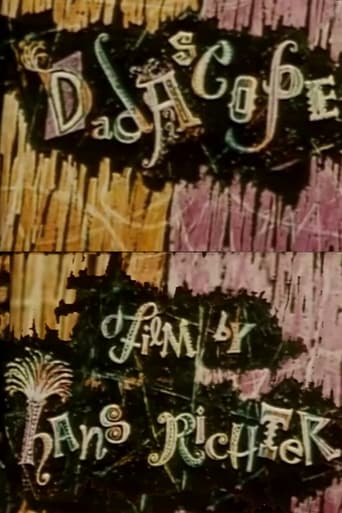
7.7Free-associative images are juxtaposed with disorienting poetry in Richter's late work. The film is visual dynamite: Upside-down and reversed footage, play with shadows and light, billiards and dice and balloons-- suggestive and surreal images. Tenets of Dada writing, such as games of chance, punnery, wordplay and loud nonsense noise are foist upon the viewer as Dada poems are read / performed by their orignal authors.
Dadascope
1962
 8.4
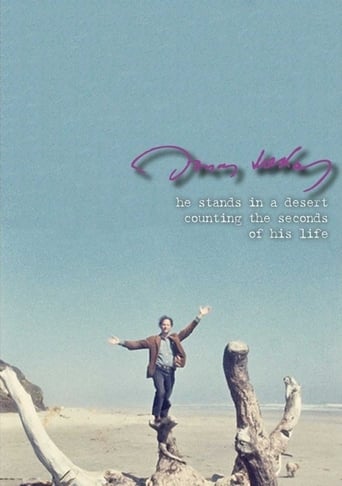
8.4A film collage tracing the story of the lives, loves, and deaths within the artistic community surrounding Jonas Mekas.
He Stands in a Desert Counting the Seconds of His Life
1986
 6.2
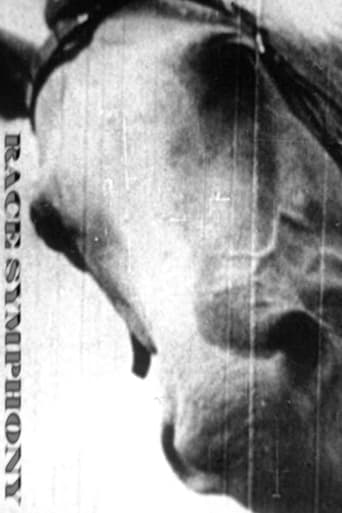
6.2In Race Symphony (1928), Richter documents and celebrates a typical day at the German races, where a sophisticated people turn up in droves to gape, gasp, place a bet, and celebrate a well-deserved win.
Race Symphony
1928
 6.2
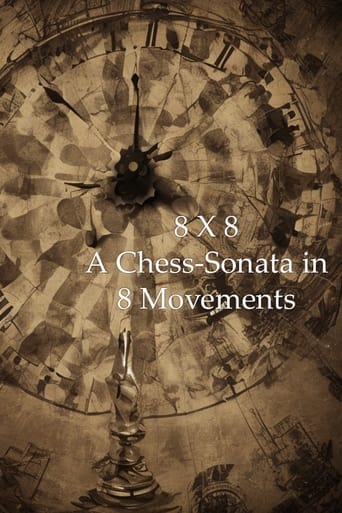
6.28 x 8: A Chess-Sonata in 8 Movements is an American experimental film directed by Hans Richter, Marcel Duchamp, and Jean Cocteau. Described by Richter as "part Freud, part Lewis Carroll" and filmed partially on the lawn of Duchamp's summer house in Southbury, Connecticut.
8 x 8: A Chess-Sonata in 8 Movements
1957
Film credits
1970s · 3 titles
 6.4
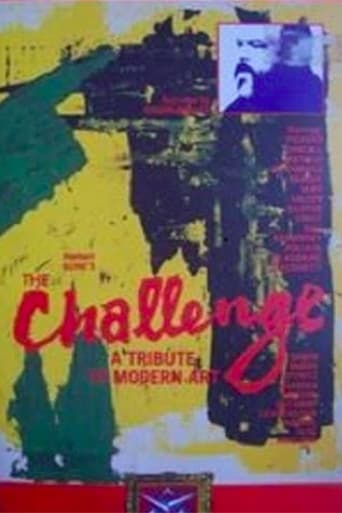
6.4The Challenge... A Tribute to Modern Art is a 1974 American documentary film directed by Herbert Kline. The film shows footage of great modern artists in their studios creating and commenting on their work, with narration and commentary by Orson Welles. It was nominated for an Academy Award for Best Documentary Feature.
The Challenge... A Tribute to Modern Art
1974
No synopsis available yet.
Ich lebe in der Gegenwart - Versuch über Hans Richter
1973
Dedicated to Nigel Gosling. Voice-over with Hans Richter reading a Dada text. Filmed in Locarno. Oesterreichisches Filmmuseum, Vienna
Index – Hans Richter
1973
1960s · 3 titles
7.3Also known as Walden, Jonas Mekas’s first diary film is a six-reel chronicle of his life in 1960s New York, interweaving moments with family, friends, lovers, and artistic idols. Blending everyday encounters with portraits of the avant-garde art scene, it forms an epic, personal meditation on community, creativity, and the passage of time.
Diaries, Notes, and Sketches
1968
 8.0
8.01967 film directed by Greta Deseson about the Dada art movement. Featuring Marcel Duchamp, Man Ray, Max Ernst, Hans Richter and Gabrièle Buffet-Picabia
Dada
1969
 6.3
6.3This documentary concerns the contributions of German artists to the Dadaist movement. Created in 1916, the organizers rejected previous convention and delighted in nihilistic satire in painting, sculpture and literature. Comparisons are made between the movement and the political and social upheaval at the time of the release of this feature (1969).
Germany Dada
1969
Series credits
Behind the camera
7.7Free-associative images are juxtaposed with disorienting poetry in Richter's late work. The film is visual dynamite: Upside-down and reversed footage, play with shadows and light, billiards and dice and balloons-- suggestive and surreal images. Tenets of Dada writing, such as games of chance, punnery, wordplay and loud nonsense noise are foist upon the viewer as Dada poems are read / performed by their orignal authors.
Dadascope
1962
6.2In Race Symphony (1928), Richter documents and celebrates a typical day at the German races, where a sophisticated people turn up in droves to gape, gasp, place a bet, and celebrate a well-deserved win.
Race Symphony
1928
6.2In Race Symphony (1928), Richter documents and celebrates a typical day at the German races, where a sophisticated people turn up in droves to gape, gasp, place a bet, and celebrate a well-deserved win.
Race Symphony
1928
6.2In Race Symphony (1928), Richter documents and celebrates a typical day at the German races, where a sophisticated people turn up in droves to gape, gasp, place a bet, and celebrate a well-deserved win.
Race Symphony
1928
6.28 x 8: A Chess-Sonata in 8 Movements is an American experimental film directed by Hans Richter, Marcel Duchamp, and Jean Cocteau. Described by Richter as "part Freud, part Lewis Carroll" and filmed partially on the lawn of Duchamp's summer house in Southbury, Connecticut.
8 x 8: A Chess-Sonata in 8 Movements
1957
6.28 x 8: A Chess-Sonata in 8 Movements is an American experimental film directed by Hans Richter, Marcel Duchamp, and Jean Cocteau. Described by Richter as "part Freud, part Lewis Carroll" and filmed partially on the lawn of Duchamp's summer house in Southbury, Connecticut.
8 x 8: A Chess-Sonata in 8 Movements
1957
 NR
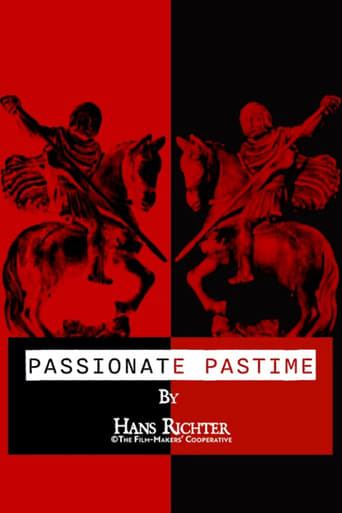
NRHans Richter's documentary on the game of chess. Narrated by Vincent Price. Outlines the history of chess from ancient times to the present and traces its origins in India, China, and Persia. Prints, painting, illuminated manuscripts, live photography and rare chess pieces are shown as well as chess figures designed after Picasso and Braque.
Passionate Pastime
1958
NRHans Richter's documentary on the game of chess. Narrated by Vincent Price. Outlines the history of chess from ancient times to the present and traces its origins in India, China, and Persia. Prints, painting, illuminated manuscripts, live photography and rare chess pieces are shown as well as chess figures designed after Picasso and Braque.
Passionate Pastime
1958
NRHans Richter's documentary on the game of chess. Narrated by Vincent Price. Outlines the history of chess from ancient times to the present and traces its origins in India, China, and Persia. Prints, painting, illuminated manuscripts, live photography and rare chess pieces are shown as well as chess figures designed after Picasso and Braque.
Passionate Pastime
1958
 6.8
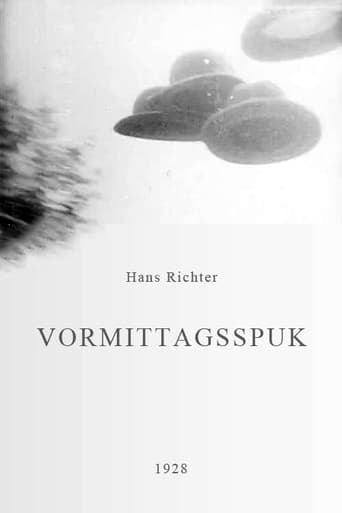
6.8Hans Richter, noted for his abstract shorts, has everyday objects rebelling against their daily routine.
Ghosts Before Breakfast
1928
6.8Hans Richter, noted for his abstract shorts, has everyday objects rebelling against their daily routine.
Ghosts Before Breakfast
1928
6.8Hans Richter, noted for his abstract shorts, has everyday objects rebelling against their daily routine.
Ghosts Before Breakfast
1928
 6.0
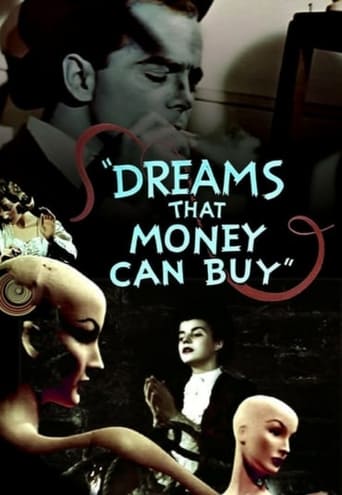
6.0An attempt to bring the work of surrealist artists to a wider public. The plot is that of an average Joe who can conjure up dreams that will improve his customer's lives. This frame story serves as a link between several avant-garde sequences created by leading visual artists of their day, most of whom were emigres to the US during WWII.
Dreams That Money Can Buy
1947
6.0An attempt to bring the work of surrealist artists to a wider public. The plot is that of an average Joe who can conjure up dreams that will improve his customer's lives. This frame story serves as a link between several avant-garde sequences created by leading visual artists of their day, most of whom were emigres to the US during WWII.
Dreams That Money Can Buy
1947
 5.7
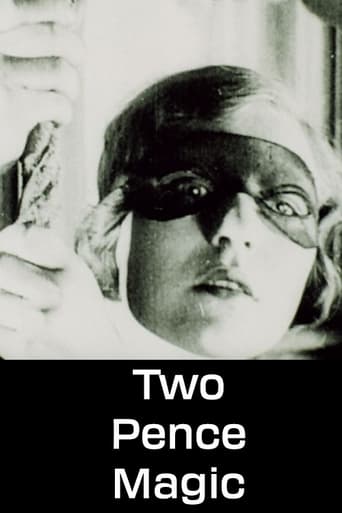
5.7Two Penny Magic (Zweigroschenzauber) starting off with a little magic trick. It then presents an array of images from swimmers, bicyclers, murderers, airplanes in flight, boxers, lovers, runners, becoming in the end a collection of images in a magazine.
Two Pence Magic
1929
5.7Two Penny Magic (Zweigroschenzauber) starting off with a little magic trick. It then presents an array of images from swimmers, bicyclers, murderers, airplanes in flight, boxers, lovers, runners, becoming in the end a collection of images in a magazine.
Two Pence Magic
1929
Inflation (1928) is an experimental silent film at eight minutes which is sometimes categorized as a documentary. By now Richter is well beyond playing with light & shadow. Inflation explores the subject of money through photographs & with with stop motion animation techniques, adding faces of people impoverished & enriched by the unpredictability of finance. It functions almost as a political cartoon in motion, building to a chaotic & catastrophic climax.
Inflation
1928
Inflation (1928) is an experimental silent film at eight minutes which is sometimes categorized as a documentary. By now Richter is well beyond playing with light & shadow. Inflation explores the subject of money through photographs & with with stop motion animation techniques, adding faces of people impoverished & enriched by the unpredictability of finance. It functions almost as a political cartoon in motion, building to a chaotic & catastrophic climax.
Inflation
1928
Inflation (1928) is an experimental silent film at eight minutes which is sometimes categorized as a documentary. By now Richter is well beyond playing with light & shadow. Inflation explores the subject of money through photographs & with with stop motion animation techniques, adding faces of people impoverished & enriched by the unpredictability of finance. It functions almost as a political cartoon in motion, building to a chaotic & catastrophic climax.
Inflation
1928
Pontresina, Switzerland, at the beginning of the 20th century. A ski jumping competition is about to take place.
The Champion of Pontresina
1934
 6.8
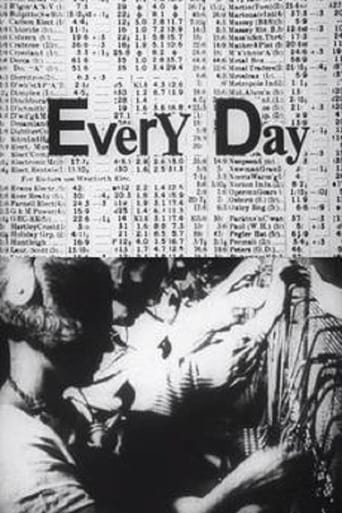
6.8Experimental documentary focusing on a day in the life of city workers, featuring montage sequences and repetition to emphasise the monotony of routine office work.
Every Day
1929
6.8Experimental documentary focusing on a day in the life of city workers, featuring montage sequences and repetition to emphasise the monotony of routine office work.
Every Day
1929
 5.9
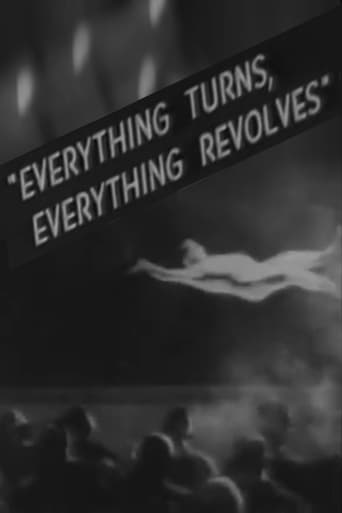
5.9A day at the carnival — sensational tent shows where miracles can be seen for the price of admission, boisterous noise of crowds and barkers, shrill and gaudy circus music, the violence of the street ten-fold. This is the substance of Everything Turns, Richter’s first sound film. At its premier at Baden-Baden Richter got into a fight with two Nazi officials who disliked the film's ‘modernism.’ Yet in 1936 it was awarded first prize for artistic merit by the Nazis, with Richter’s name suppressed from the credits. He had long since left Germany.
Everything Turns, Everything Revolves
1929
5.9A day at the carnival — sensational tent shows where miracles can be seen for the price of admission, boisterous noise of crowds and barkers, shrill and gaudy circus music, the violence of the street ten-fold. This is the substance of Everything Turns, Richter’s first sound film. At its premier at Baden-Baden Richter got into a fight with two Nazi officials who disliked the film's ‘modernism.’ Yet in 1936 it was awarded first prize for artistic merit by the Nazis, with Richter’s name suppressed from the credits. He had long since left Germany.
Everything Turns, Everything Revolves
1929
 NR
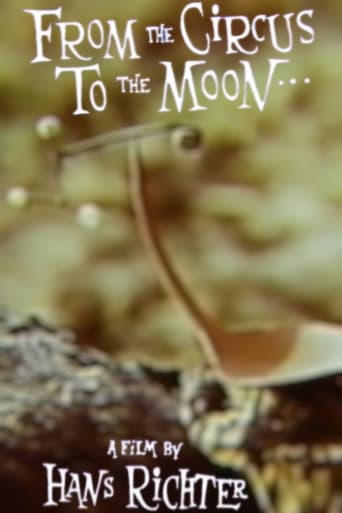
NRAmerican sculptor, Alexander Calder, creates around the workshop. The film features several of his kinetic sculptures-- Wild moving figurines that spin, undulate and perform circus acts. The film ends on a hanging moon mobile, completing our wacky trip.
From the Circus to the Moon
1963
 5.7
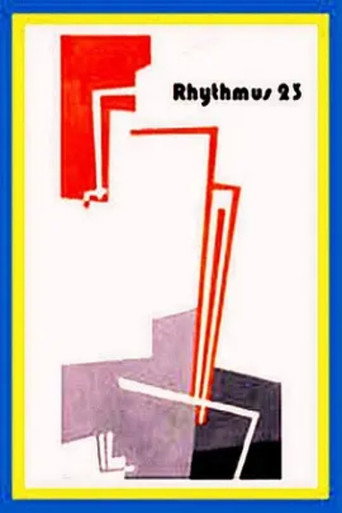
5.7We watch white shapes dancing on black background, which changes when the white shape fills up the screen completely, and black lines and figures bounce around on the now white background.
Rhythm 23
1923
No synopsis available yet.
Die Husaren kommen
1955
 5.8
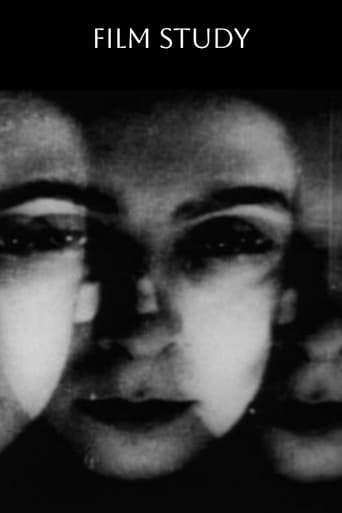
5.8Entertaining Dadaist experimental short, similar to Man Ray's work, full of shifting geometric shapes, stock footage of seagulls, flying eyeballs, and glaring floating heads.
Film Study
1926
5.8Entertaining Dadaist experimental short, similar to Man Ray's work, full of shifting geometric shapes, stock footage of seagulls, flying eyeballs, and glaring floating heads.
Film Study
1926
New architecture and new design, houses and apartments built according to modernist and utilitarian principles.
Neues Leben
1930
New architecture and new design, houses and apartments built according to modernist and utilitarian principles.
Neues Leben
1930
Made for the Zurich National Exhibition in 1939, Die Börse als Barometer der Wirtschaftslage charts the increase of stock exchanges in the history of economic development.
The Stock Exchange as a Barometer of the Economic Situation
1939
 NR
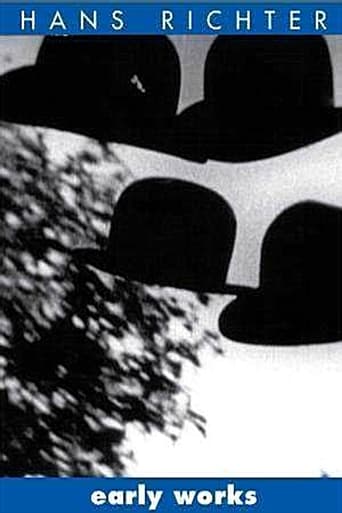
NRSYNOPSIS: 8 films by Hans Richter. Richter's position in the art world was unique. As one of the earliest exponents of Dada, he was also one of the first to recognize the new possibilities cinematography offered the artist. He participated in the first avant-garde film movement alongside Léger, Duchamp, Man Ray, Picabia, Cocteau and Dali, and later in New York his teachings would influence many of the 'New American Cinema' filmmakers.
Hans Richter Early Works
2008
 5.6
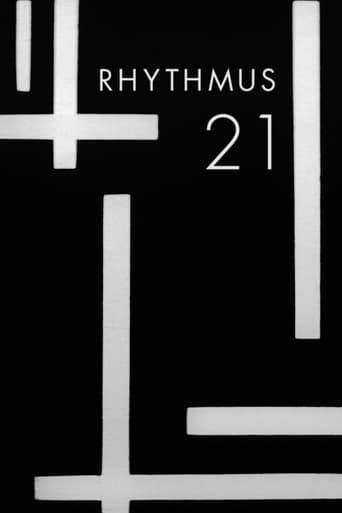
5.6Abstract animated short film. Grey and white squares change size and shape on a black background.
Rhythm 21
1921
No synopsis available yet.
Hallo Everybody
1933
No synopsis available yet.
Hallo Everybody
1933
 7.0
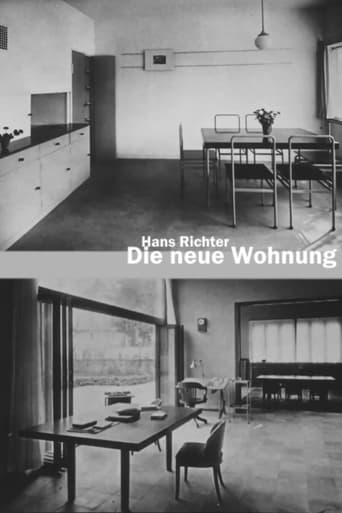
7.0A commissioned film for Schweizerischer Werkbund (SWB), Die neue Wohnung was produced for the Basel architectural and interior design exhibition, WOBA, to demonstrate innovative aspects of modern architecture and highlight their differences from the event’s highly conservative approach. Despite its ad campaign roots, Richter's touch is not absent; The surviving version, aimed at a "bourgeois" Swiss public, presents decluttered, functional architecture and decor as superior to the traditional and luxurious "ancient" ways of living.
The New Apartment
1930
7.0A commissioned film for Schweizerischer Werkbund (SWB), Die neue Wohnung was produced for the Basel architectural and interior design exhibition, WOBA, to demonstrate innovative aspects of modern architecture and highlight their differences from the event’s highly conservative approach. Despite its ad campaign roots, Richter's touch is not absent; The surviving version, aimed at a "bourgeois" Swiss public, presents decluttered, functional architecture and decor as superior to the traditional and luxurious "ancient" ways of living.
The New Apartment
1930
Commissioned by Philips, Europa Radio celebrates the company’s experimental PCJJ shortwave radio station in Eindhoven that went on air in 1927 and broadcasted to Europe as well as the rest of the world in various languages. Hans Richter’s film covers one day from morning to night, showing the range and scope of the daily radio programs – from stock market news and sports events to live concerts and a speech by Albert Einstein.
Europa Radio
1931
Directed by Hans Richter.
Metall
1933