
Acting
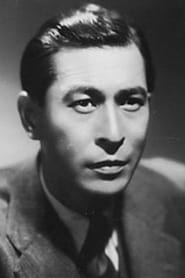
Ichirō Ryūzaki
Born — Died
1912-02-19 — 1988-06-28
Place of birth
Yokohama, Kanagawa Prefecture, Japan
Known for
Acting
Credits
62 titles
Ichirō Ryūzaki (1912-1988) was a Japanese actor.
Known for
A television serial that was in turn adapted from a radio series and a novel, My Daughter And I featured a Japanese novelist who is married to a French woman who have one daughter. The man and his daughter begin a new life when the woman dies. Having difficulty spending time with his daughter, the man sends his daughter to a Christian boarding school. He remarries and brings his daughter back home. After the end of the World War his lot improves professionally, yet his second wife dies.
Musume to Watashi
1961
 7.2
7.2In the summer of 1941, the United States and Japan seem on the brink of war after constant embargos and failed diplomacy come to no end. "Tora! Tora! Tora!", named after the code words used by the lead Japanese pilot to indicate they had surprised the Americans, covers the days leading up to the attack on Pearl Harbor, which plunged America into the Second World War.
Tora! Tora! Tora!
1970
 NR
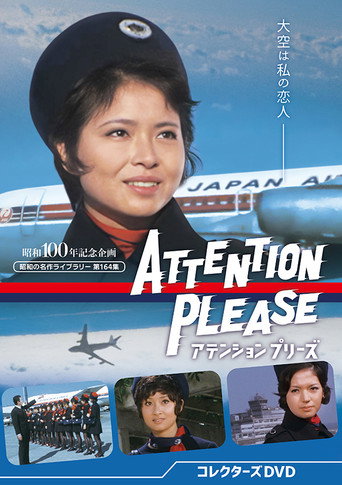
NRFirst Japanese TV drama about flight attendants.
Attention Please
1970
 6.5
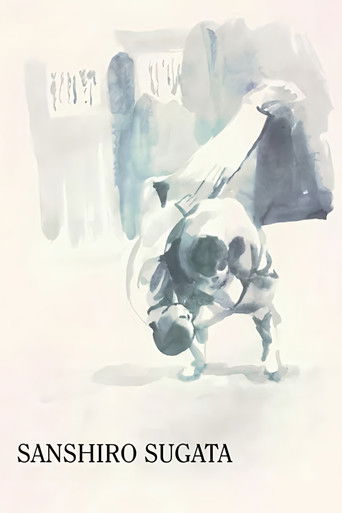
6.5A hotheaded youth in 1880s Meiji Japan apprentices to judo master Shōgorō Yano, trading brute jujutsu bravado for discipline and humility. As Sanshirō matures, he proves judo’s spirit against old-guard challengers—including a deadly duel—while falling for his vanquished opponent’s daughter. Based on the novel by Tsuneo Tomita, son of Tomita Tsunejirō, the earliest disciple of judo.
Sanshiro Sugata
1943
 NR
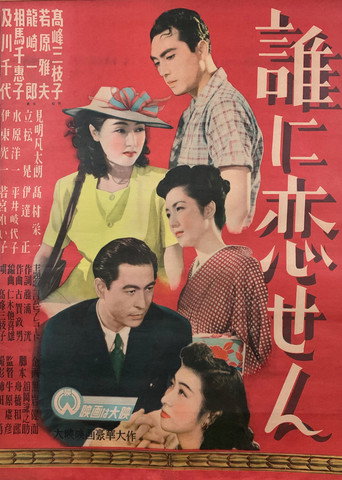
NRNo synopsis available yet.
Dare ni koisen
1948
A film adaptation of Nobuko Yoshiya’s popular novel.
Tsuma mo koisu
1950
Film credits
1970s · 4 titles
7.2In the summer of 1941, the United States and Japan seem on the brink of war after constant embargos and failed diplomacy come to no end. "Tora! Tora! Tora!", named after the code words used by the lead Japanese pilot to indicate they had surprised the Americans, covers the days leading up to the attack on Pearl Harbor, which plunged America into the Second World War.
Tora! Tora! Tora!
1970
 7.0
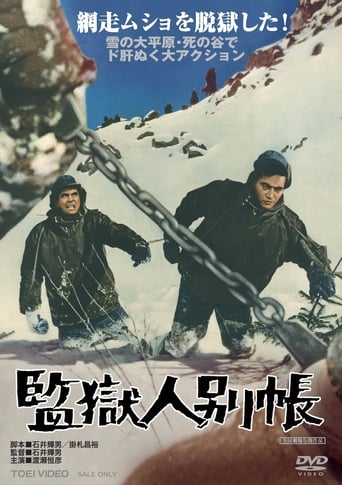
7.0No synopsis available yet.
Prison Tales
1970
 7.5
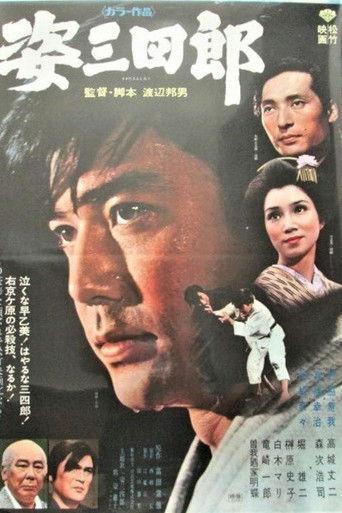
7.5The story of Sanshiro Sugata, a young man who wants to learn the new art of judo. A wise teacher reveals to Sanshiro that judo is not merely a means of combat nor a demonstration of physical skill, but an art which reveals the artist to himself. This is a remake of Akira Kurosawa's films "Sanshiro Sugata" and "Sanshiro Sugata Part II"
Dawn of Judo
1970
 NR
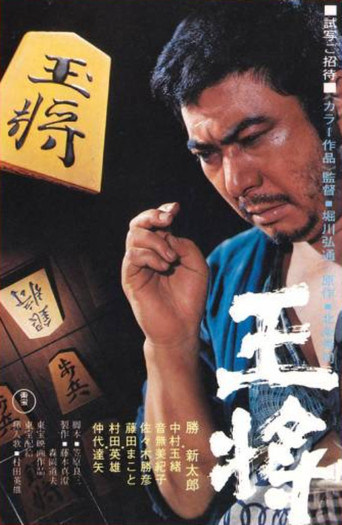
NRSakata Sankichi, an amateur shogi player living in the slums of Osaka, is so obsessed with the board game that he spends all of his family's money to keep playing in the hope of defeating star player Sekine.
The King
1973
1960s · 4 titles
 7.1
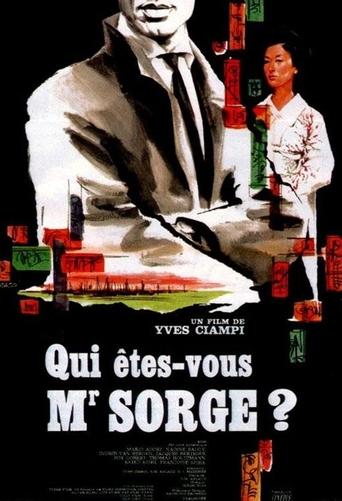
7.1French docu-drama which chronicles the chain of events that lead to the hanging of German-journalist Richard Sorge, who was executed in 1944 after he was found supplying classified information to the Russians.
Who Are You, Mr. Sorge?
1961
 7.7
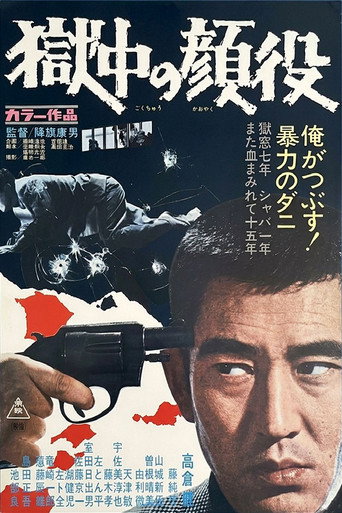
7.7Rival gangs fight over ownership of bicycle race track.
Prison Boss
1968
 NR
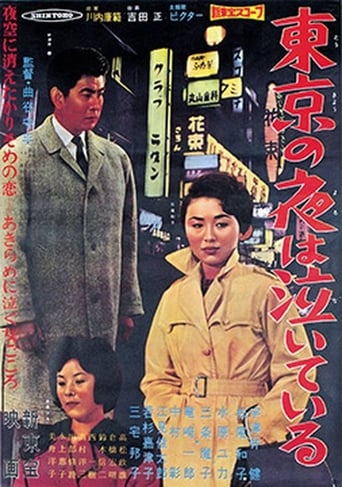
NRKazuko Matsuo sings the theme song to this drama film.
東京の夜は泣いている
1961
 NR
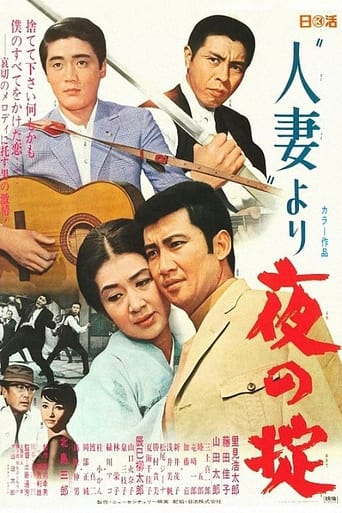
NRThe film takes place in Yokohama, a night city where you can revel in the neon mood. A bartender who wants to become a singer and a beautiful married woman burn fierce and ephemeral love in a confrontation with a ruthless yakuza.
Married Woman: Another Law of the Night
1969
1950s · 31 titles
A film adaptation of Nobuko Yoshiya’s popular novel.
Tsuma mo koisu
1950
 NR
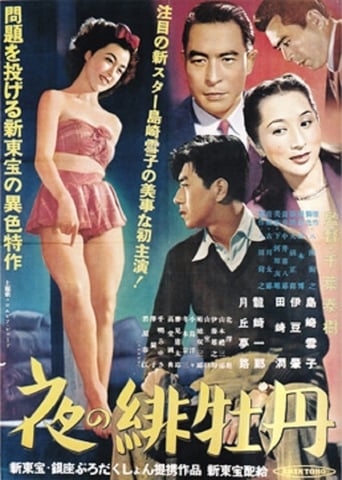
NRA romantic melodrama about the shifting relationship between Ryosuke and Miki as their precarious employment and social circumstances shift around them.
Red Peony of Night
1950
 8.0
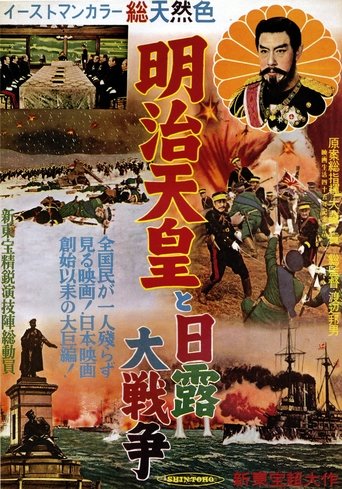
8.0Meiji Tenno portrays the buildup to the Russo-Japan War. In addition to showing the political events that led to war, it also shows the era from the story of a farm family in rural Japan that sends their son off to war. As such, it could be considered an anti-war movie, showing how, while war is devised by governments, the people do not really understand what war is, and its combatants often do not know what they are fighting for.
Emperor Meiji and the Great Russo-Japanese War
1957
 8.0
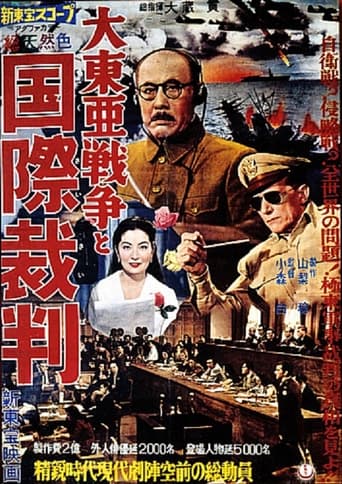
8.0In 1941, overpopulated Japan faces an economic boycott and its armed forces push further to the south. And despite negotiations between Japan and the U. S. A. war is declared with the attack on Pearl Harbour. Victories follow for Japan on land and sea and her forces push forward to the borders of India. But gradually the tide turns in favour of the Allies and after the atom bombings of Hiroshima and Nagasaki, Japan is compelled to accept the Potsdam Declaration and by the order of the Emperor agrees to unconditional surrender. Under the supervision of the occupation forces the International Military Tribunal opens in Tokyo to try the Japanese war leaders. Established in the cause of justice, and to prevent future aggressive wars the trials drag on for two and a half years. And on December 23, 1948, General Tojo and six other war leaders mount the thirteen steps to the gallows at Tokyo's Sugamo prison.
The Pacific War and the International Military Tribunal
1959
 1.0
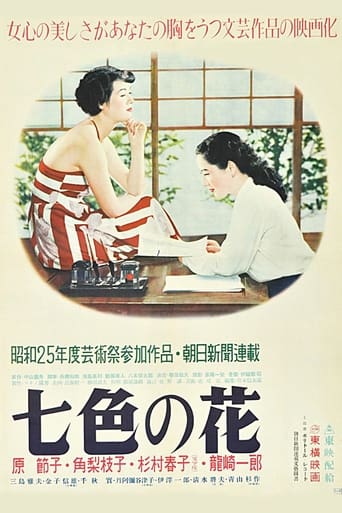
1.0Ebihara is a budding novelist entangled in a complicated web of relationships with three women from three different generations: Kazue, a coquettish teenage war orphan who tries to offer herself for money but is instead taken in by Ebihara, Koyabu, a middle-aged woman who has spent much of her life as the kept woman of a wealthy man, and Teruko, the modest daughter of Ebihara's former teacher who comes to rely on him after the death of her father.
The Rainbow-Colored Flower
1950
 6.5
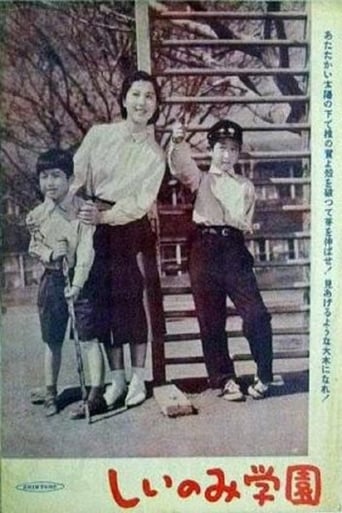
6.5A university professor and his wife have two sons with infantile paralysis. Through trial and error, they struggle to open a school for disabled children at their own expense. Based on a true story, it features natural child performances under Hiroshi Shimizu’s skillful direction.
The Shiinomi School
1955
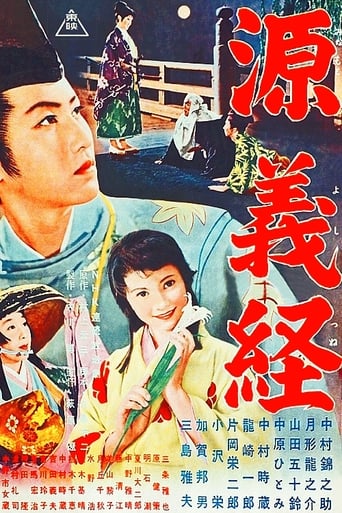 NR
NRA historical scroll depicting the story of the tragic fate of the young samurai Minamoto Yoshitsune, based on the novel by Genzo Murakami. The action of the first part takes place in the late Heian period, when the Taira clan came to power, and Genji was oppressed. The great dream and ambitions of Genkuro Yoshitsune in his youth are depicted, he joins forces with his older brother Yoritomo to raise an army to defeat the Taira clan, and the second part depicts the fall of the clan, persecution and murder.
Minamoto Yoshitsune
1955
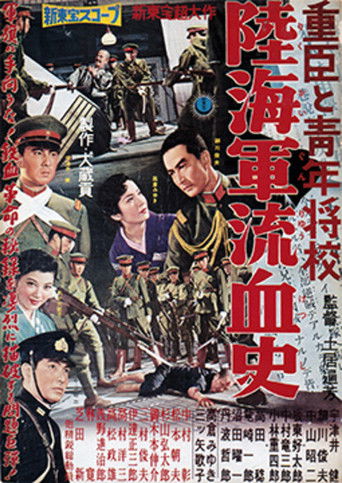 NR
NRA historical film that portrays the fervent and violent actions of young Army and Navy officers, such as the February 26 and May 15 incidents, in a semi-documentary style.
Bloody History of Soldiers
1958
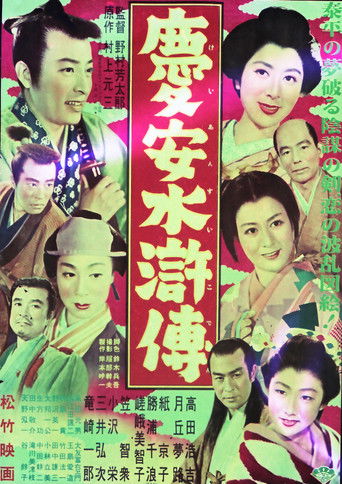 NR
NRChikuzen, a ronin named Yoh Daisuke, after pacifying some ruffians at the theater of Onna-Kata Ogino Sawanojiki, formed a bond with the theater's bodyguard, Maruhashi Tadayasu, and Kaku, a priest. He ended up settling at the Kasugaya, the house of Oko, whom he had saved. When Oko decided to go to Edo, where her biological father lived, Daisuke accompanied her. Along the way, at Suruga Abe River, they encountered Sawanojiki's theater group, which had departed from Osaka earlier heading to Edo. A scuffle initiated by Tadayasu over a ferry boat with the students of Yui Masayuki but was amicably resolved through Masayuki's intervention.
慶安水滸傳
1954
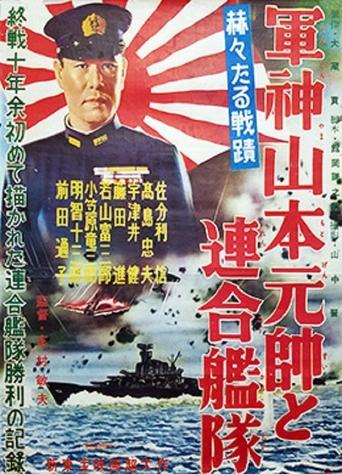 5.0
5.0Admiral Isoroku Yamamoto leads the Combined Fleet of the Imperial Japanese Navy to defeat the American Fleet.
Admiral Yamamoto and the Allied Fleets
1956
 NR
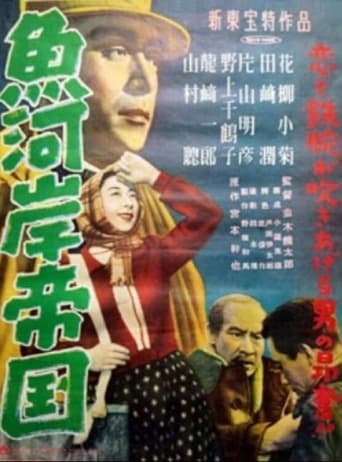
NRObscure Japanese movie by director Kyotaro Namiki
Riverside Fish Market Empire
1952
 NR
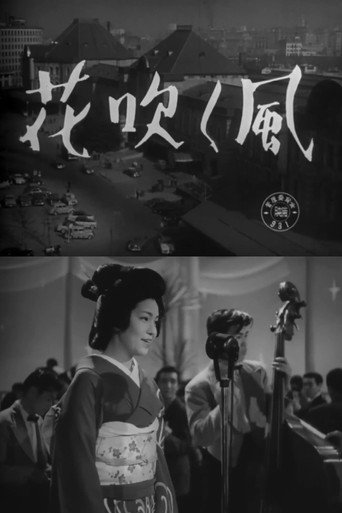
NRNo synopsis available yet.
Hana fuku kaze
1953
 7.0
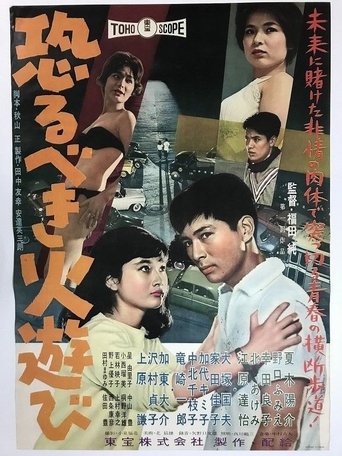
7.0Story of rebellious youth follows the 19-year-old son of a Hokkaido farmer who has an affair with the daughter of a wealthy trading company president.
The Terrible Game
1959
 NR
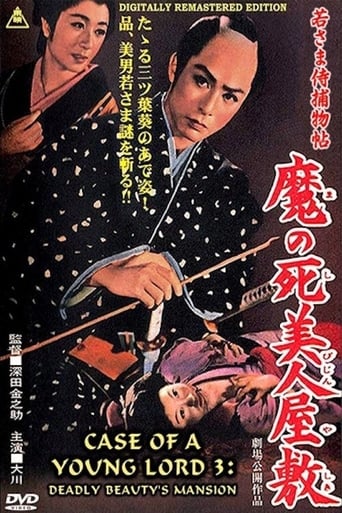
NROkawa Hashizo as 'Young Lord', the unlikely sleuth sets out to untangle the riddle of what went on at the Inner Palace, where a young woman who had served the Shogun came home in fear for her life. Will the Young Lord uncover the truth of what went on at the Palace, and does it relate to a series of murders that have been occurring just before the festival?
Case of a Young Lord 3
1956
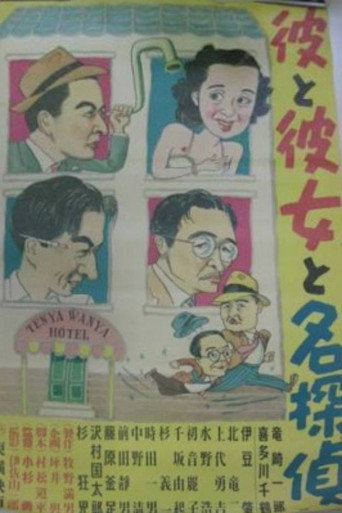 NR
NRWhen Mr. Kurano, a shady Osaka tycoon, had his mistress Yuriko Haruyama run off on him, he hired the bumbling detective Hanawa to track her down. Hanawa deduced she was staying in Tokyo and, using the birthmark on her breast as a clue, headed to Tokyo. He zeroed in on the “Chaotic Hotel” and stormed right in. The hotel’s guests include a motley crew of chaotic characters.
Kare to kanojo to mei tantei
1950
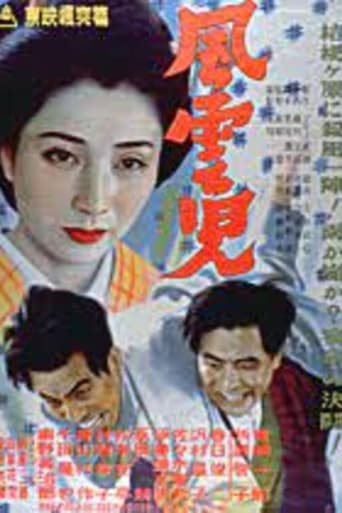 NR
NRYano, a progressive individual who seeks to overcome strength with gentleness and confronts physical power with moral principles, faces off against a man protecting jujitsu in the twilight of Kikyōgahara!
風雲児
1951
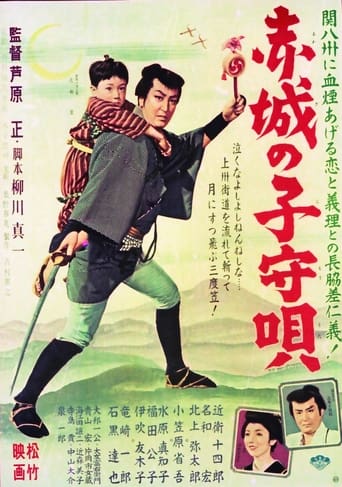 NR
NRFilm directed by Tadashi Ashihara
Akagi no komori-uta
1957
Koji Tsuruta plays a 23-year-old young man who relentlessly defends his purity against the temptations of married women, geishas, and dancers.
Dōtei
1950
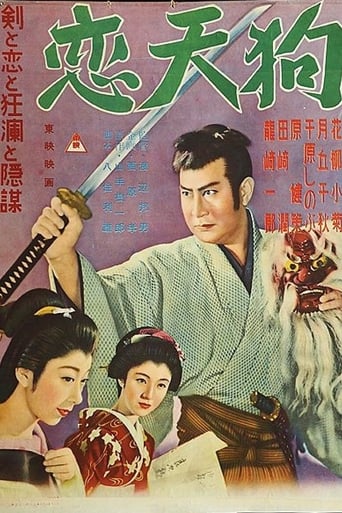 NR
NRNo synopsis available yet.
Goblin Warrior
1955
 7.5
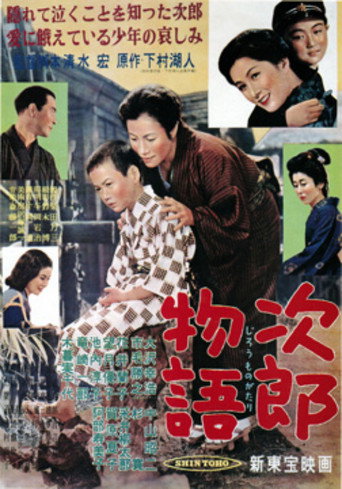
7.5Based on the novel by Kojin Shimomura. Story of a young boy and his adventures in the country. His idyllic life is shattered by the illness and death of his mother.
The Tale of Jiro
1955
 NR
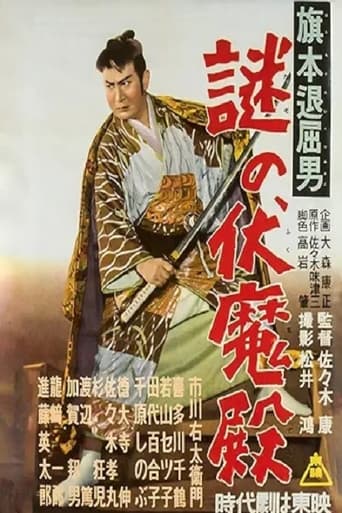
NRIn Kyoto, a samurai named Boredom Otoko, Saotome Mondonosuke , appears and helps a woman being chased by a spy named Genshichi. Unfortunately, the woman is shot and killed. Later, Genshichi explains that the woman was a member of a band of thieves, and because she was let go once, the police officer, Genjuro Mazaki, was demoted to a desk job. Consumed by guilt, Boredom Otoko...
Bored Hatamoto: The Mysterious Demon Palace
1955
 10.0
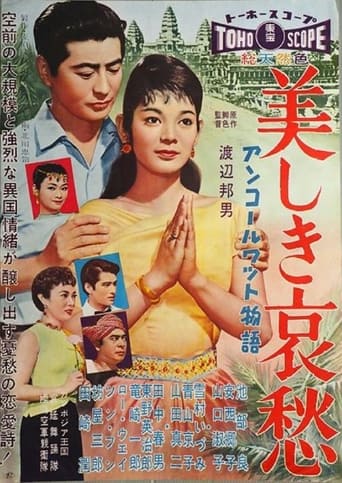
10.0A Japanese artist (Ikebe), who had won the favor of the Cambodian royal family when he rescued their daughter during World War II, returns and falls for the now-grown princess, though neither realizes the other's identity.
Angkor Wat Story - Beautiful Sadness
1958
1952 Japanese film directed by Kunio Watanabe.
Geisha Waltz
1952
 NR
NRBackstage romance about opera singers.
Grease Paint Serenade
1952
 NR
NRNo synopsis available yet.
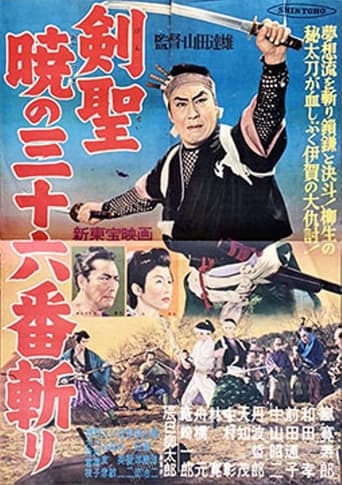
剣聖 暁の三十六番斬り
1957
 6.5
6.5Based on the famous novel by Yamagami Itaro, this is the story of a group of ronin living in abject poverty in the latter days of the Edo period. Starring the great Konoe Jushiro, Ronin Gai is populated by an ensemble of colorful characters, social outcasts who patronize a restaurant and bar on the outskirts of Edo. Among them are masterless samurai reduced to drunkenness and debauchery. One disgraced and disillusioned former warrior gets a chance at redemption when he is hired to retrieve a famous knife from a corrupt lord. This is the third version directed by Makino Masahiro and is considered a true classic.
Street of Ronin
1957
 NR
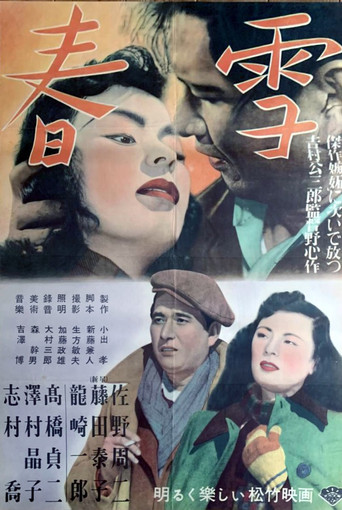
NRThe Yoshikawa family is a typical small town family. With only the father's and daughter's salaries to support the family's six members, life is not easy.
Spring Snow
1950
 NR
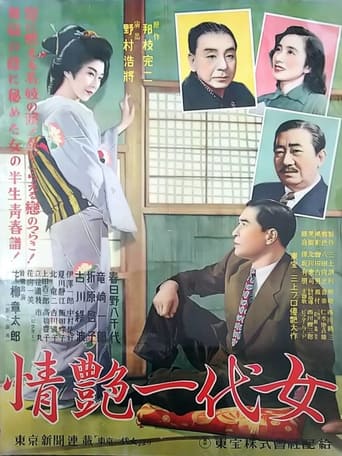
NRBased on the serialized story "東京一代女" which appeared in Tokyo Shinbun. A geisha known for her dancing begins training with the Onnagata Kikugoro VI as a dancer. She leaves her geisha life to pursue this new path, but falls in love with a naval officer who is the younger brother of Kikugoro and who saves her from a stalker monk. Kikugoro hears of this and becomes enraged. The naval officer dies in the Second Sino-Japanese War, causing the lead to go back home to her mother where she meets, and falls in love with, a poet who resembles her now-deceased fiancé. This poet leaves her in order to force her to dedicate her entire life to dancing, which he sees as her true pursuit.
情艶一代女
1951
NRBased on the serialized story "東京一代女" which appeared in Tokyo Shinbun. A geisha known for her dancing begins training with the Onnagata Kikugoro VI as a dancer. She leaves her geisha life to pursue this new path, but falls in love with a naval officer who is the younger brother of Kikugoro and who saves her from a stalker monk. Kikugoro hears of this and becomes enraged. The naval officer dies in the Second Sino-Japanese War, causing the lead to go back home to her mother where she meets, and falls in love with, a poet who resembles her now-deceased fiancé. This poet leaves her in order to force her to dedicate her entire life to dancing, which he sees as her true pursuit.
情艶一代女
1951
 NR
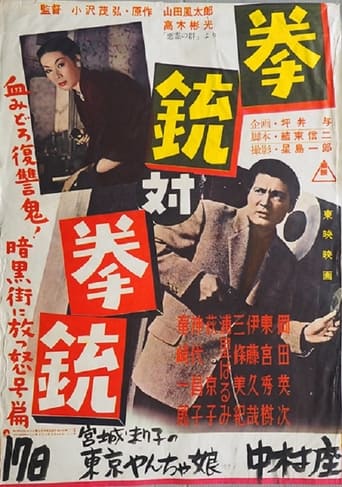
NRThe orphaned son of a count who was assassinated by his subordinates in a conspiracy during the Pacific War becomes obsessed with taking revenge on his late father's enemies.
Five Paths to Revenge
1956
 9.0
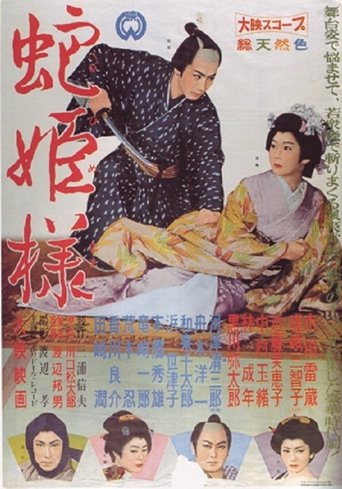
9.0No synopsis available yet.
Snake Princess
1959
1940s · 21 titles
6.5A hotheaded youth in 1880s Meiji Japan apprentices to judo master Shōgorō Yano, trading brute jujutsu bravado for discipline and humility. As Sanshirō matures, he proves judo’s spirit against old-guard challengers—including a deadly duel—while falling for his vanquished opponent’s daughter. Based on the novel by Tsuneo Tomita, son of Tomita Tsunejirō, the earliest disciple of judo.
Sanshiro Sugata
1943
NRNo synopsis available yet.
Dare ni koisen
1948
 NR
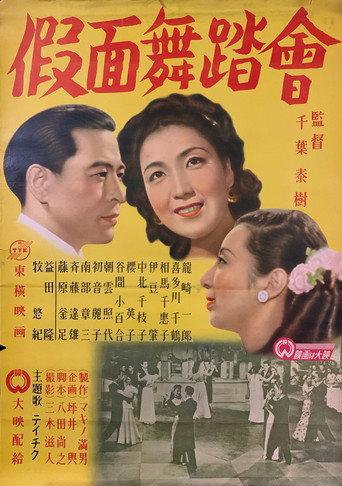
NRNo synopsis available yet.
Masquerade Ball
1949
Shinjiro, the only son of Sakai Hospital, could not forget Mie, a geisha he had met at a munitions factory during the war. He refused to marry Yukiko, his father’s niece, whom the hospital director had arranged for him to wed, and eventually ran away from home to live alone in an apartment. However, following his father’s sudden death, Tsutsui, a newly rich man who had invested heavily in Sakai Hospital, was plotting to seize control of the hospital by taking advantage of the situation.
Hana no jitsugetsu
1949
 NR
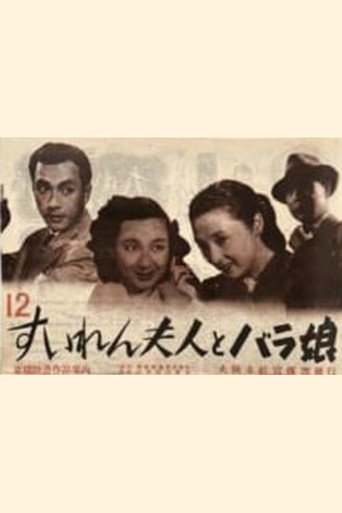
NRWhen pickpocketing runs rampant, detectives step up their game. Yazaki, a detective at the Ohira Private Detective Agency who graduated from the University of Tokyo, bumps into a woman on a street corner. The woman turns out to be Asako, a female detective who works at his uncle Ryutaro’s private detective agency. Asako lives with her stepmother, Kiyoe, a young widow. The mother worries about her daughter’s marriage prospects, while the daughter worries about her mother’s job situation.
Suiren fujin to bara musume
1948
A Daiei erotic film depicting the five passionate love affairs of a voluptuous married woman, driven by her beauty.
Doku bara
1949
 NR
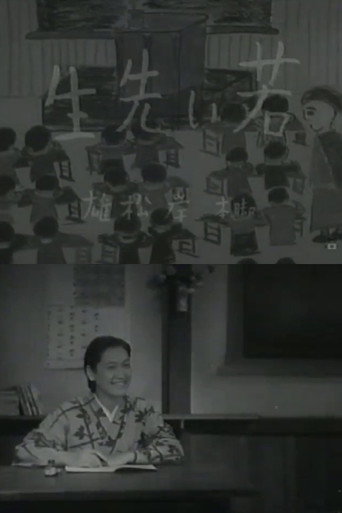
NRA novice city-based teacher's first assignment is to a fishing village's grade school. The young teacher's first week with her new students is enjoyable, but she gradually notices that many of the students are skipping school. Visiting her students after class, she realizes that many of them are charged with work and tasks like making money, toiling on the farm, doing housework or tending to their younger siblings. Many of them live in unhygienic homes due to poverty or overwork. She not only reports and explains the situation to the school's principal, but also attempts to improve the conditions by making textbooks, teaching cleanliness, and making her classes relevant.
Young Teacher
1942
 6.4
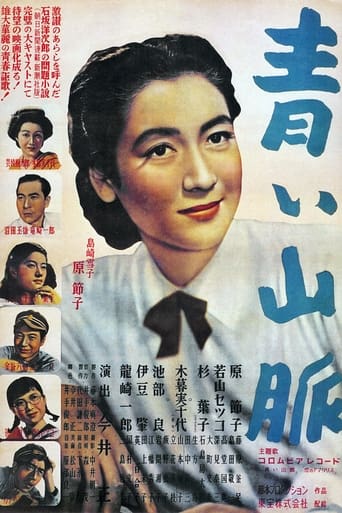
6.4Teacher Yukiko finds herself in opposition to conservative faculty and villagers after defending a student for being in a relationship with a young man from Tokyo.
The Blue Mountains: Part I
1949
 6.8
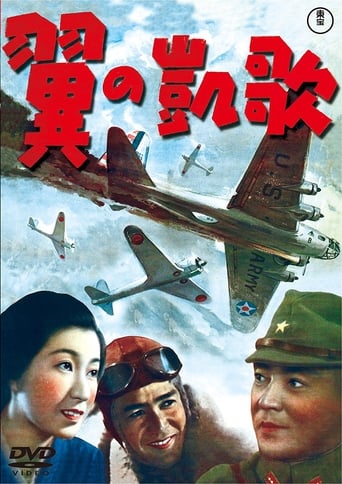
6.8No synopsis available yet.
Wings of Victory
1942
 NR
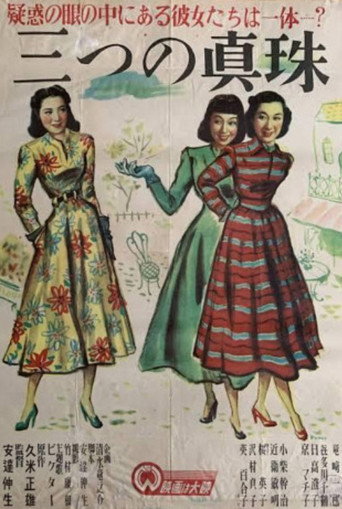
NRExpressing the distinct personalities of the three daughters.
Three Pearls
1949
1941 Toho adaptation of Natsume's novel.
The Poppy
1941
 6.2
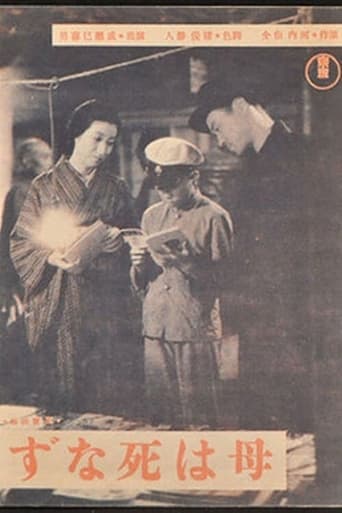
6.2The premature death of a young mother serves as inspiration for her husband and son.
Mother Never Dies
1942
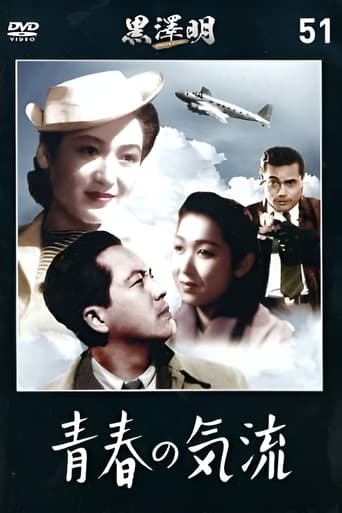 9.0
9.0It was supposed to be about a love story, but it was and was not. An aircraft mechanic working for the government is matched by his boss with the latter man's daughter (Setsuko Hara) who is both beautiful and aggressive. Yet, he picks a woman who is less assertive as his bride.
Currents of Youth
1942
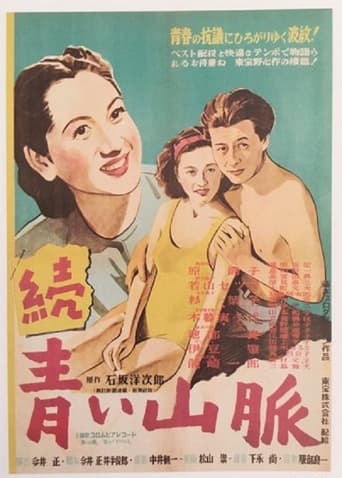 7.1
7.1Continuation of The Blue Mountains: Part I. Released a week later.
The Blue Mountains: Part II
1949
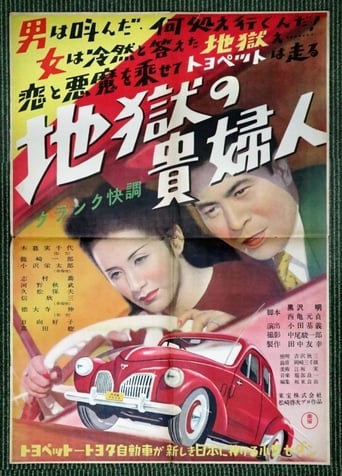 9.0
9.0Three and a half years after Japan was bombed, the tax authorities organized the T-Men. Nango is in love with a girl called Mibu, and the two are against the T-Men organization. Mibu whats to kill all of the T-Men one-by-one.
Lady From Hell
1949
Five regulars at “Maxwell,” a cabaret tucked away in the back streets of Ginza—including Chida and Numai—are once again having a lively discussion with the hostess, Mari, about which of the five she likes best. Upon learning that Mari likes Numai, Chida and the others congratulate the pair, but just then, Mari’s younger brother, Daisuke, shows up to beg for money. Chida, Numai, and other three regulars at the cabaret "Maxwell" in the back streets of Ginza are excited to talk to the hostess, Mari, about which of the five she likes best. After learning that Mari likes Numai, Chida and his friends congratulate them, but then Mari's younger brother, Daisuke, shows up to ask for money.
The Fifth Witness
1948
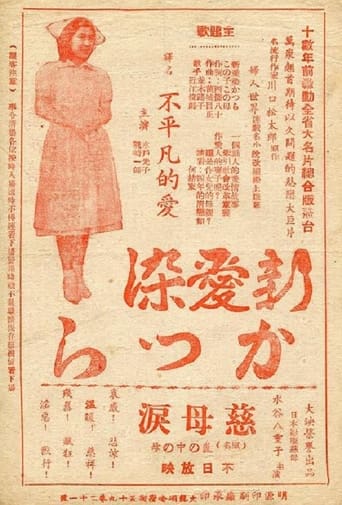 NR
NR1948 Japanese movie
Shin Aizen Katsura
1948
 6.8
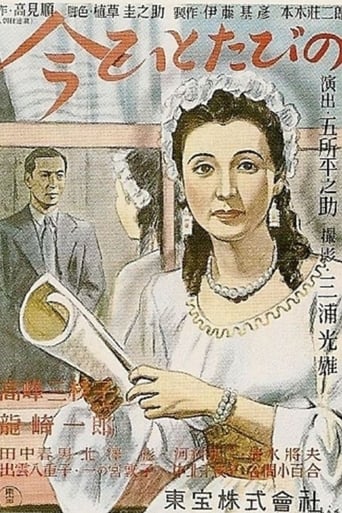
6.8A romance with political overtones about the relationship of a sheltered bourgeois woman and a doctor who devotes himself to caring for the poor. Over a ten-year period - from 1936 through the war - they find each other and are separated again by the events of those tumultuous days.
Once More
1947
 6.5
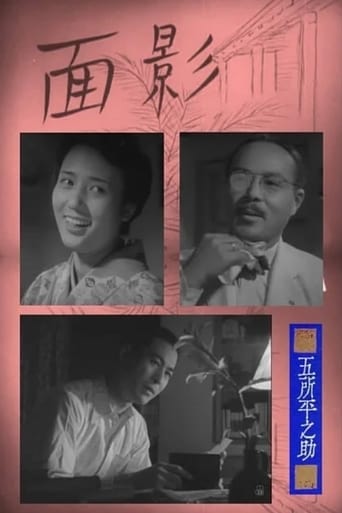
6.5During his summer holiday, Kawasaki Ryuichi (Ryuzaki Ichiro), a handsome engineer in his late twenties, visits his teacher and mentor, Professor Inagaki (Sugai Ichiro), at his seaside home. There he meets the professor's lovely young wife, Sachiko (Hamada Yuriko), and is unsettled by the striking resemblance she bears to his wife, who died three years earlier. Attracted to Sachiko, he does his best to hide his feelings. The couple, however, senses a deep-seated melancholy in him. Attributing it to the loss of his wife, they urge him to marry their niece, Kaoru, but he is not interested. Shortly after, Fumiko , Sachiko's older sister, realizes that Sachiko and Kawasaki have feelings for each other, but she keeps her counsel. One day Kawasaki, Sachiko, and Kaoru go boating when a storm forces them to stay overnight at a hotel. Unable to sleep, Kawasaki takes a walk along the beach where he finds Sachiko, also unable to sleep. He declares his love for her.
A Visage to Remember
1948
 7.0
7.0No synopsis available yet.
Wakaki sugata
1943
 NR
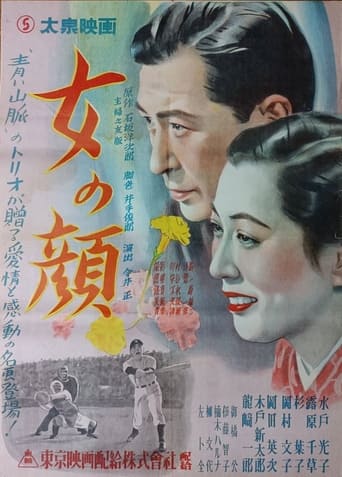
NR1949 drama film
A Woman's Face
1949
Series credits
A television serial that was in turn adapted from a radio series and a novel, My Daughter And I featured a Japanese novelist who is married to a French woman who have one daughter. The man and his daughter begin a new life when the woman dies. Having difficulty spending time with his daughter, the man sends his daughter to a Christian boarding school. He remarries and brings his daughter back home. After the end of the World War his lot improves professionally, yet his second wife dies.
Musume to Watashi
1961
NRFirst Japanese TV drama about flight attendants.
Attention Please
1970