
Directing
Peter Hutton
Born — Died
1944-08-24 — 2016-06-25
Place of birth
Detroit, Michigan, USA
Known for
Directing
Credits
30 titles
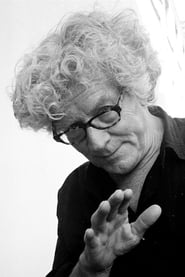
Peter Hutton (born 1944 in Detroit, Michigan) was an experimental filmmaker, known primarily for his silent cinematic portraits of cities and landscapes around the world. He also worked as a professional cinematographer, most notably for his former student Ken Burns. Hutton studied painting, sculpture and film at the San Francisco Art Institute. He taught filmmaking at CalArts, Hampshire College, Harvard University, SUNY Purchase, and Bard College, where he served as the director of the Film and Electronic Arts Program from 1989 to 2016. Hutton's films are distributed by Canyon Cinema in San Francisco. In May 2008 the Museum of Modern Art in New York held a full retrospective of Hutton's fil…
Known for
 10.0
10.0This exhibition focuses on Jonas Mekas’ 365 Day Project, a succession of films and videos in calendar form. Every day as of January 1st, 2007 and for an entire year, as indicated in the title, a large public (the artist's friends, as well as unknowns) were invited to view a diary of short films of various lengths (from one to twenty minutes) on the Internet. A movie was posted each day, adding to the previously posted pieces, resulting altogether in nearly thirty-eight hours of moving images.
365 Day Project
2007
 7.0
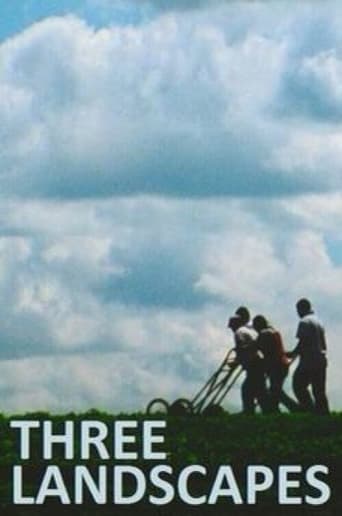
7.0Shot on 16mm, this wondrous silent film study from avant-garde master Peter Hutton (At Sea) observes human movement across three distinct landscapes: Detroit, along the Hudson River Valley and in the Dallol Depression in Ethiopia.
Three Landscapes
2013
 7.1
7.1Three segments depicting the life cycle of a freighter boat.
At Sea
2007
 NR
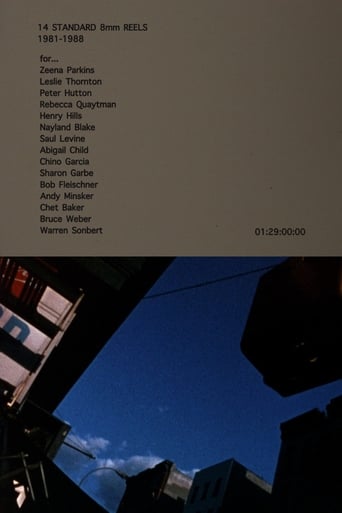
NRPreiss had the rare chance to salvage a selection of 8mm reeled from his archive; 30 years after it was first shot, this lovingly refashioned material returns as…a luminescent ode to the friends, filmmakers and artists with whom Preiss lived and worked during this time.
14 STANDARD 8mm REELS 1981–1988
2018
 7.0
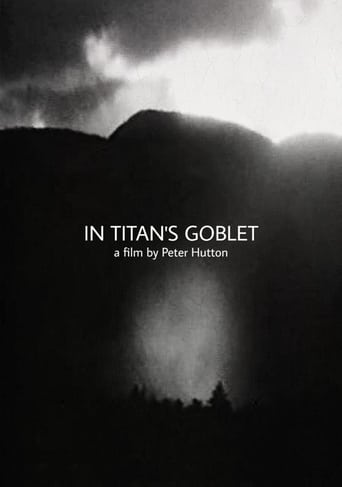
7.0In Titan's Goblet refers to a landscape painting by Thomas Cole circa 1833. The film is intended as a homage to Cole, who is regarded as the father of the Hudson River School of painting.
In Titan's Goblet
1991
 6.7
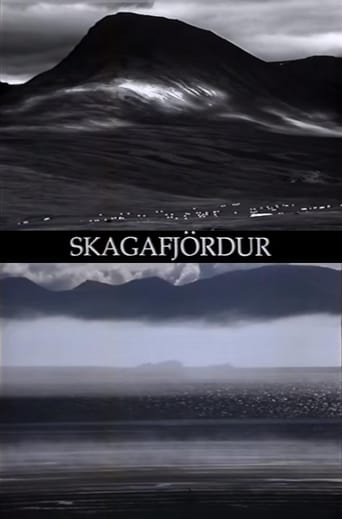
6.7A film documenting the landscapes of northern Iceland.
Skagafjördur
2004
Film credits
2010s · 2 titles
NRPreiss had the rare chance to salvage a selection of 8mm reeled from his archive; 30 years after it was first shot, this lovingly refashioned material returns as…a luminescent ode to the friends, filmmakers and artists with whom Preiss lived and worked during this time.
14 STANDARD 8mm REELS 1981–1988
2018
 NR
NR"I developed a need to try to retain everything I was passing through, by means of my Bolex camera."
All About Bolex
2015
2000s · 2 titles
10.0This exhibition focuses on Jonas Mekas’ 365 Day Project, a succession of films and videos in calendar form. Every day as of January 1st, 2007 and for an entire year, as indicated in the title, a large public (the artist's friends, as well as unknowns) were invited to view a diary of short films of various lengths (from one to twenty minutes) on the Internet. A movie was posted each day, adding to the previously posted pieces, resulting altogether in nearly thirty-eight hours of moving images.
365 Day Project
2007
 9.0
9.0Caldwell's pulp storytelling, proto-feminist stance and unabashed social dramatization of his characters are a distinct vision of the condition of women -- specifically working class women. His broadly drawn themes of small town hypocrisy and restrictive moral values contextualize the titular characters' struggle for sexual expression, stability and independence. Certain Women is a disconcerting parable that pays tribute to but also defies the 50s period style of Caldwell, opting for contemporary small town situations and cinematic style. This cautionary tale of four heroic yet ordinary women is fashioned out of the past but relies on observations of the present historical moment and its political reality.
Certain Women
2004
Behind the camera
7.0Shot on 16mm, this wondrous silent film study from avant-garde master Peter Hutton (At Sea) observes human movement across three distinct landscapes: Detroit, along the Hudson River Valley and in the Dallol Depression in Ethiopia.
Three Landscapes
2013
7.1Three segments depicting the life cycle of a freighter boat.
At Sea
2007
7.0In Titan's Goblet refers to a landscape painting by Thomas Cole circa 1833. The film is intended as a homage to Cole, who is regarded as the father of the Hudson River School of painting.
In Titan's Goblet
1991
6.7A film documenting the landscapes of northern Iceland.
Skagafjördur
2004
Although this grouping of three works shot during Peter Hutton’s yearlong stay in West Berlin seems to have been screened at least a few times, it was never placed in distribution and it seems that Hutton shelved it after these few screenings. 1981-2. 16mm; 45 minutes; black and white; silent.
At Sea, In Berlin, Lenin Portrait
1982
 8.2
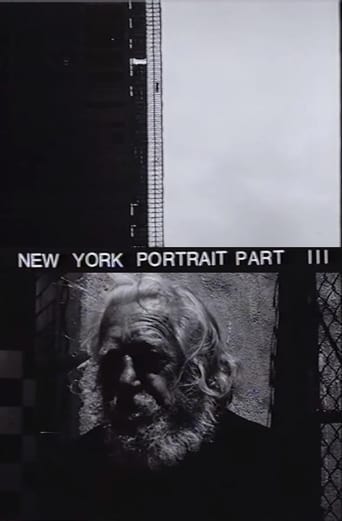
8.2"[Hutton’s] latest urban film, New York Portrait, Chapter III, takes on a unique tone in relation to Hutton’s ongoing exploration of rural landscape. The very fact that Hutton is dealing with older footage, with archives of memory more than immediacy, gives it a different texture than his earlier New York films. Hutton always found the presence of nature in the city, not only in his many shots of sky and vegetation, but also in the geometry and texture of the city itself, which seemed to project an independence from the human." (Tom Gunning)
New York Portrait, Chapter III
1990
 7.5
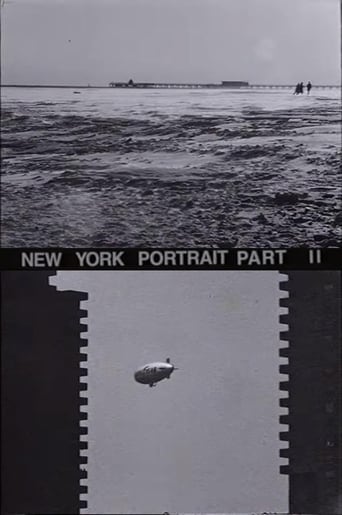
7.5Chapter Two represents a continuation of daily observations from the environment of Manhattan compiled over a period from 1980-1981. This is the second part of an extended life's portrait of New York.
New York Portrait, Chapter II
1981
 5.7
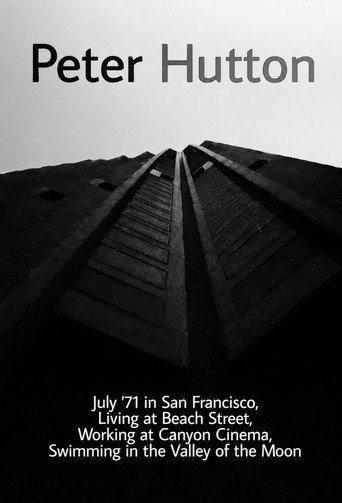
5.7July ’71 is as much a record of the daily experiences of light and shadow as it is a catalogue of domestic life. More involved with “straight photography” than Brakhage, but far more engaged with tactility and the plastics of the image than Jonas Mekas, this early work embraces the mundane—making bread in the kitchen, riding bikes by the San Francisco Bay, hanging out in a cheap-looking flat with friends, plucking a game fowl for supper—while also paying attention to the wind, water, and trees that surround these fleeting moments.
July '71 in San Francisco, Living at Beach Street, Working at Canyon Cinema, Swimming in the Valley of the Moon
1971
Third part of At Sea, In Berlin, Lenin Portrait (1982) that was screened separately. 1982. 16mm; 15 minutes; black and white; silent.
Lenin Portrait
1982
 6.2
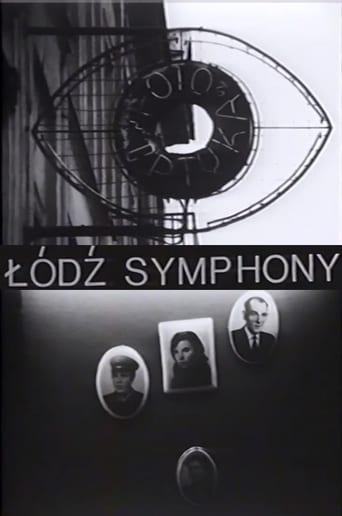
6.2A portrait of Łódź, Poland that exists in a time-warp of sad memory.
Lodz Symphony
1993
 6.4
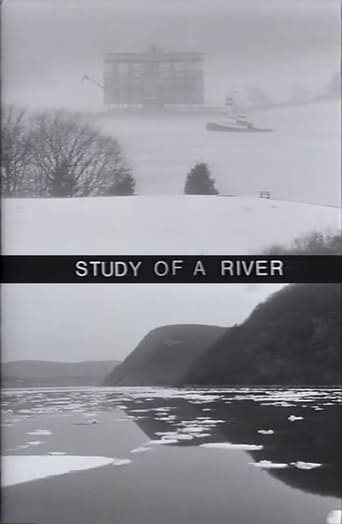
6.4The first part (winter) of a seasonal study of the Hudson river in New York.
Study of a River
1997
Florence is a contemplative study of light and shadows, textures and planes, that makes beautiful use of the tonal qualities of black and white film. (mubi.com)
Florence
1975
BOSTON FIRE finds grandeur in smoke rising eloquently from a city blaze. Billowing puffs of darkness blend with fountains of water streaming in from offscreen to orchestrate a play of primal elements. The beautiful texture of the smoke coupled with the isolation from the source of the fire erases the destructive impact of the event. The camera, lost in the immense dark clouds, produces images for meditation removed from the causes or consequences of the scene. The tiny firemen, seen as distant silhouettes, gaze in awe, helpless before nature’s power.
Boston Fire
1979
“Using exciting juxtapositions of shade and movement, this silent and surreally poetic film examines subtle changes of light and landscape in New York. NEW YORK NEAR SLEEP exploits the basic potential of film for capturing light refractions. Hutton imposes on this film the aesthetics of still photography and uses as a structural device the duration of perception of the subtle reflection of movements and illuminations.” – Bill Moritz, Theatre Vanguard
New York Near Sleep for Saskia
1972
 7.2
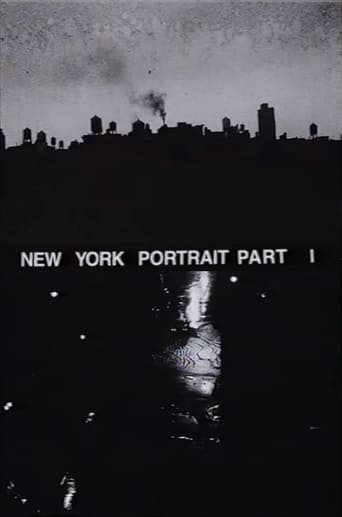
7.2Hutton's most impressive work ... the filmmaker's style takes on an assertive edge that marks his maturity. The landscape has a majesty that serves to reflect the meditative interiority of the artist independent of any human presence. ... New York is framed in the dark nights of a lonely winter. The pulse of street life finds no role in NEW YORK PORTRAIT; the dense metropolitan population and imposing urban locale disappear before Hutton's concern for the primal force of a universal presence. With an eye for the ordinary, Hutton can point his camera toward the clouds finding flocks of birds, or turn back to the simple objects around his apartment struggling to elicit a personal intuition from their presence. ... Hutton finds a harmonious, if at times melancholy, rapport with the natural elements that retain their grace in spite of the city's artificial environment. The city becomes a ghost town that the filmmaker transforms into a vehicle reflecting his personal mood.
New York Portrait, Chapter I
1979
 8.0
8.0“When I was shooting the material that ended up in "Looking at the Sea", I was standing on these cliffs on the west coast of Ireland, looking west into the sun and thinking about the immigrants who wanted to leave Ireland because of the famines and were confronted with that same perspective. They must have seen the sea as this huge complicated obstacle. I was struck by how alluring, how seductive the light on the sea was, and also how, when you’re standing on the shore, there’s something utterly incomprehensible about the sea. I remember being reminded of a piece written by Henry David Thoreau in "Cape Cod", about a ship that crashed at Cohasset, an amazing meditation on the aftermath of the ill-fated St. John, which had come from Galway.” –Peter Hutton
Looking at the Sea
2001
 NR
NRCommissioned by the arts organization Minetta Brook, Two Rivers was inspired by Henry Hudson’s failed 1609 quest to discover a trade route between North America and China. Hutton observes the bustling industry of the Hudson from atop a ship’s deck. "A poetic, comparative portrait of the Hudson River and Yangtze River that speaks to the rise of China in relation to the decline of a post-industrial American region."
Two Rivers
2003
Sketches for Late City Final (Jem Cohen, Peter Hutton, Jeff Preiss, Adam Grossman Cohen, co-produced by Fred Riedel, c. 1991)
Sketches for Late City Final
1991
 7.5
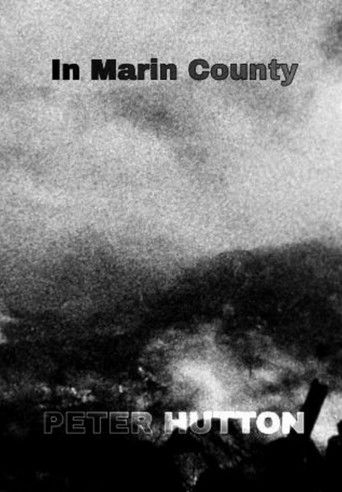
7.5"IN MARIN COUNTY approaches the subject of America's ecological disaster as a comic yet bizarre vision. The tradition of Old MacDonald's farm has long since disappeared and in its place are bulldozer and insect sprays. Our fascination with these mechanized wonders of civilization may well prove to be more lethal than we would have imagined. Peter Hutton has succeeded in making an important statement on ecology and the strange delight Americans take in destroying things." - Whitney Museum of American Art
In Marin County
1970
 7.1
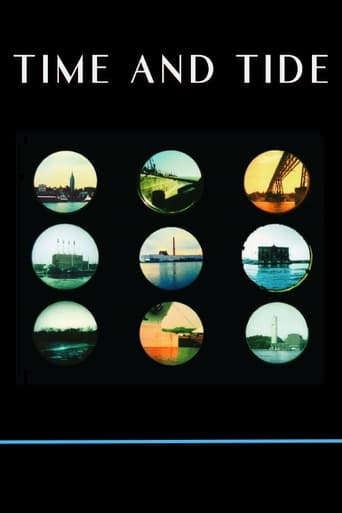
7.1Peter Hutton’s meditation on the Hudson River.
Time and Tide
2000
 6.5
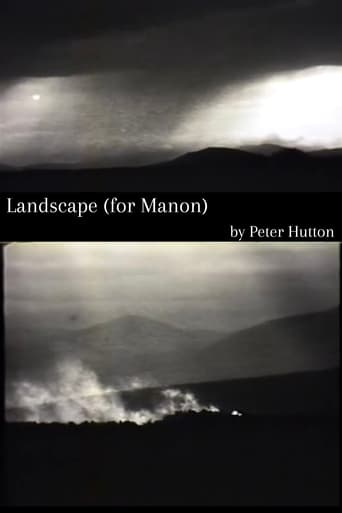
6.5A languid, beautifully shot collection of landscapes, edited into a whimsical and touching film.
Landscape (for Manon)
1987
1970. 16mm; 5 minutes; black and white; sound.
For Horatio Alger
1970
 NR
NRPeter Hutton's New York trilogy. An act of urban archaeology, a chronicle of indelible impressions of the city.
New York Portrait
1990
A contemplative, seemingly timeless record of the years Hutton spent in Southeast Asia while working as a merchant seaman. Jon Jost writes, "The film is rich with truly wonderful visions: a thick, white porcelain cup perched on a ship's rail, the tea within swaying gently in sync with the ship while the sea rushes by beyond the faces of crewmen posing awkwardly but also movingly for the camera; a cockfight on ship; scenes from a bucolic pre–Pol Pot Phnom Penh. Images has the haunting elegiac resonance of Eugène Atget's Paris, the echo of a time and place that was." - MoMA
Images of Asian Music (A Diary from Life 1973-74)
1974
 7.5
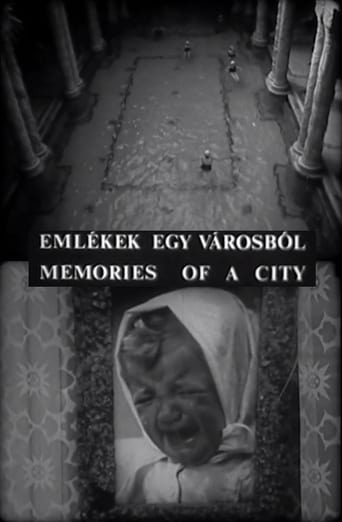
7.5Peter Hutton’s essay on the naturalization of the urban landscape. Voluptuously gray, worn and lived in, the city is like a stage set for an invisible drama.
Budapest Portrait (Memories of a City)
1984